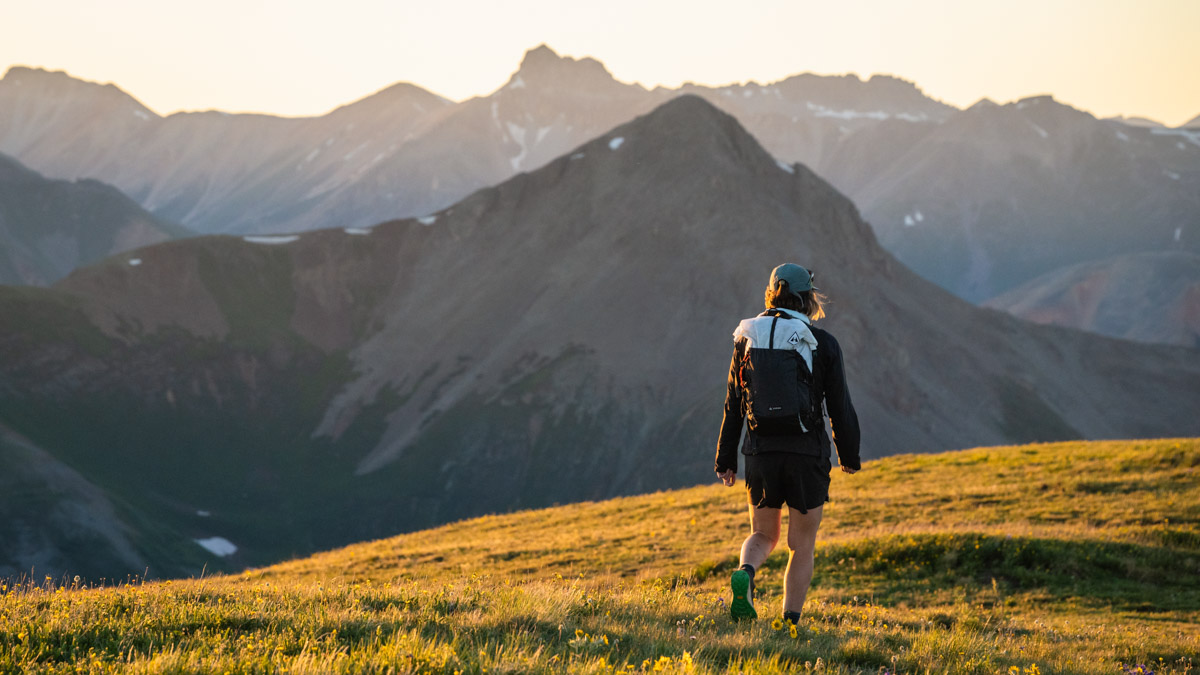
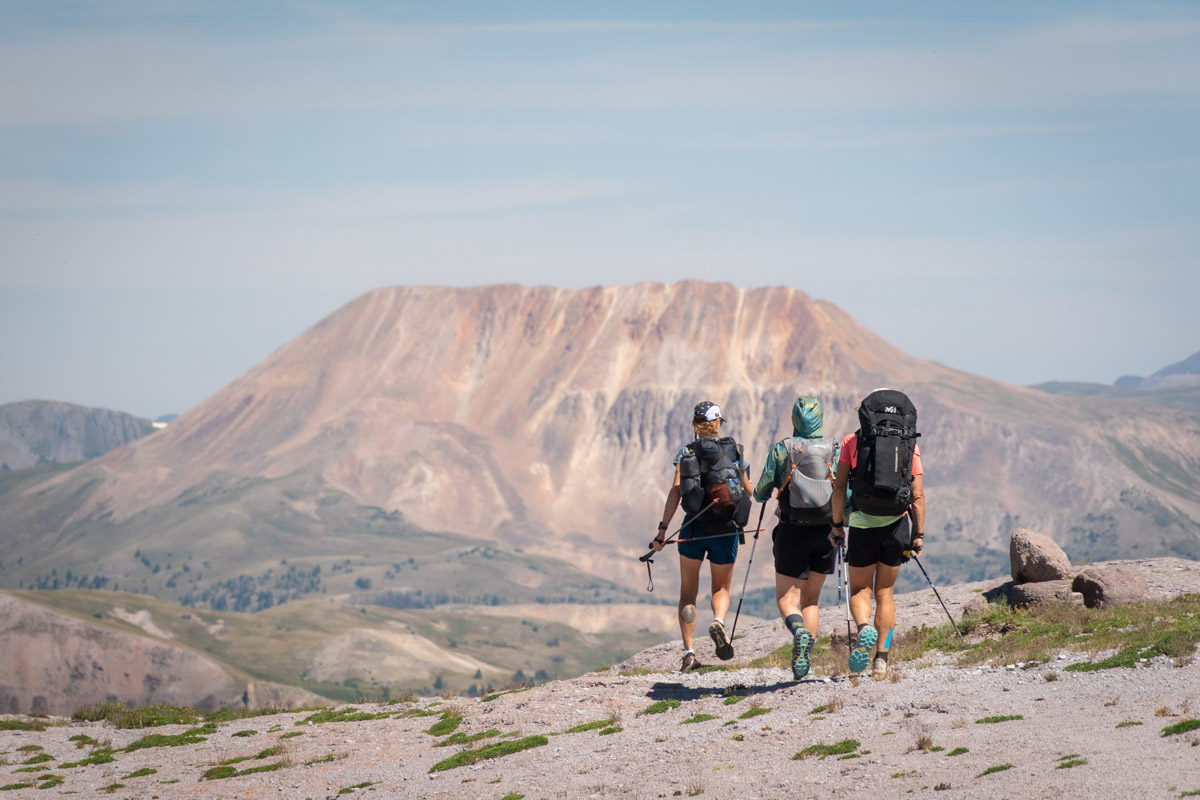
With the right fastpacking gear, you can harness the best of both trail running and backpacking. Photo: iRunFar/Eszter Horanyi
Born from a combination of ultrarunning and backpacking, fastpacking combines the best of both worlds by using lightweight overnight gear to allow for multiday trips covering big miles. The best fastpacking gear is lightweight, functional, and durable and can enable a wide range of adventure outings. By keeping pack weight as low as possible while still staying safe, fastpackers can often run downhills and flat ground and move fast on technical terrain, opening up seemingly endless possibilities for anything from simple overnight trips to many-day outings deep in the wilderness.
The best fastpacking gear balances weight, utility, and durability. An entire kit can fit into a pack under 30 liters in size and won’t bounce around on your back when you run. Often with fastpacking, it isn’t necessarily the gear you have in your pack that will keep it light, rather, it’s the gear that you’re able to leave behind while still staying safe. Good fastpacking gear is often multi-functional — a pack can make a shortened sleeping pad longer, a sleeping pad inflation bag can act as a pillow — and good gear will stand up to the conditions without tearing or breaking.
For this guide, we consulted members of the iRunFar team, who have been fastpacking for years and testing endless amounts of gear, to assemble their ideal fastpacking kits. We’ve fastpacked in everything from shoulder-season conditions in the mountains, where we had to take all the warm gear, to toasty nights in the desert, where we didn’t bother to take a full sleeping pad. We want our gear to strike the right balance between durability, low weight, and price, while being properly suited to the conditions that we find ourselves in. While spending a seemingly endless amount of money to shave grams off of a kit is possible, we try to recommend products that provide great value. We also have budget options for higher-priced items in a fastpacking kit, such as tents and sleeping bags.
When it comes to putting together a fairly universal sleep kit that will work in nearly all conditions, we turn to the Feathered Friends Swallow UL 20/30 Sleeping Bag – 20 Degree, Therm-a-Rest NeoAir XLite NXT Sleeping Pad, and Mountain Laurel Designs SoloMid XL shelter, all packed into a Pa’lante Packs Joey fastpack.
You can read more about ultralight backpacking and fastpacking gear in our Best Fastpacking Packs, Best Ultralight Sleeping Bags, Best Ultralight Sleeping Pads, and Best Ultralight Tents guides.
You can learn more about choosing the best fastpacking gear, find answers to frequently asked questions about fastpacking kits, and find out more about our testing methodology for this guide below our top picks.

Fastpacking lets you set up a home for the night in wild and remote places so that you can travel even farther the next day. Photo: iRunFar/Eszter Horanyi
Best Fastpacking Gear
- Best Fastpacking Pack — Small: Pa’lante Packs Joey
- Best Fastpacking Pack — Large: Red Paw Packs Flatiron 28L
- Best Backpack for Fastpacking: Montane Trailblazer LT 28L Backpack
- Best Fastpacking Shelter: Mountain Laurel Designs SoloMid XL
- Best Budget Fastpacking Shelter: Paria Outdoor Products Sanctuary SilTarp
- Best Sleeping Bag for Fastpacking: Feathered Friends Swallow UL 20/30 Sleeping Bag – 20 Degree
- Best Budget Sleeping Bag for Fastpacking: Outdoor Vitals StormLoft Down TopQuilt 15
- Best Summer Sleeping Bag for Fastpacking: Sea to Summit Spark Down Sleeping Bag
- Best Sleeping Pad for Fastpacking: Therm-a-Rest NeoAir XLite NXT Sleeping Pad
- Best Cooking Pot for Fastpacking: Toaks Light Titanium 550ml Pot
- Best Stove for Fastpacking: BRS 3000T Stove
Best Fastpacking Pack — Small: Pa’lante Packs Joey ($240)
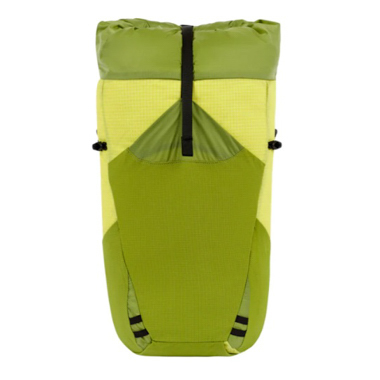 At 24 liters, the Pa’lante Packs Joey is an excellent fastpacking pack ideal for one- to three-night trips. When the pack first came to the market, it was a mad dash to get our hands on one, and we’ve been using it ever since for trips ranging from the Wind River Mountains in Wyoming to the San Juans of Colorado to the slot canyons of Utah. The brand’s production volume has increased since the early days, so the packs are easier to purchase. There are many reasons we chose this as our favorite pack in our Best Fastpacking Packs guide.
The model we tested weighs a scant 395 grams (13.9 ounces) and fits comfortably. The vest-style harness straps are wide enough not to dig into our shoulders, but they don’t feel overbuilt. The two layers of three-dimensional mesh conformed to our bodies and made it so the pack stayed secure when we were running. There is no waistbelt, but we didn’t find this a problem as long we kept our pack weight low enough. The front vest pockets fit most 500-milliliter soft flasks, an array of snacks, and a phone.
In addition to the main compartment, the pack has a large outer back pocket, two side pockets, a pocket underneath — which was more secure than similar pockets on other packs — and the front vest pockets. As long as we kept our kit light, we were able to take this pack out on three-day trips.
The material is durable, and we haven’t caused any significant damage to the pack over countless trips scrambling up rocky peaks, bashing through willows and other shrubbery, or sliding down slickrock in canyon country.
You can read more about the details of this pack in our in-depth Pa’lante Packs Joey review.
Weight: 13.9 ounces (395 grams)
Shop the Pa'lante Packs JoeyBest Fastpacking Pack — Large: Red Paw Packs Flatiron 28L (from $340)
 The iRunFar fastpacking testing team may be known for being a bit fussy about packs, and the customizable features of the Red Paw Packs Flatiron 28L allowed us to add several features that made this pack one of our favorites. Seemingly a one-person show based out of Boulder, Colorado, Red Paw offers custom packs that have become popular in the thru-hiking crowd and run exceptionally well for a relatively high-volume pack. The roll-top design of the pack lets it hold far more than its advertised 28 liters, and we were able to use this pack on an eight-day trip through the San Juan Mountains of Colorado. While when the roll-top is fully extended, it looks quite dorky, we can’t ding a highly functional pack for aesthetics … too much.
For our custom pack, we added a zipper to one of the smaller shoulder strap pockets, elastic drawstrings on both the larger shoulder strap pockets, and a shock cord to the back of the pack to secure items we had sticking out of the rear pocket. With the added features, the bag weighed in at 19.5 ounces and is made of mostly 200-denier Ultra material. The aesthetically minded on our testing team like the fact that custom color combinations are available.
This pack uses a hybrid fastpacking harness that is not quite a running vest but also not a traditional backpack setup. While the padding on the straps is overkill for lighter loads, we didn’t complain about the extra cushion when the pack was fully loaded. The three-dimensional mesh is wicking and quite comfortable, and there’s a waist stabilization belt that we use for heavier loads. For lighter loads, we were able to run without it, and the pack stayed in place.
Since each pack is made custom, there’s generally a bit of a lead time to get one. That said, it’s worth the wait if you have the luxury of time.
You can read more about this pack in our in-depth Red Paw Packs Flatiron 28L review.
Weight: 19.5 ounces (553 grams)
Shop the Red Paw Packs Flatiron 28LBest Ultralight Backpack: Montane Trailblazer LT 28L Backpack ($165)
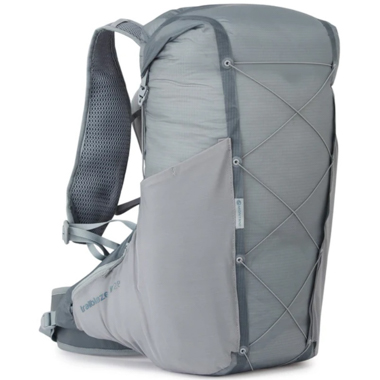 Unlike the other two packs in this guide, the Montane Trailblazer LT 28L Backpack has a much more traditional backpack strap system. It, unfortunately, doesn’t have front pockets for soft flasks, but it has enough other features — including its incredibly low weight — that we still consider it a top pack.
The pack has a 28-liter volume, but we found that we could increase that with the roll-top design. The inner material of the shoulder harness and waistbelt is made of a large-weave mesh, and a bit of padding makes it comfortable. Although we don’t think waistbelts are necessarily for most fastpacks, this one does take some weight off the shoulders when we have the pack full of gear. The main compartment is made of a 40-denier nylon with fully taped seams.
The elastic compression system is lightweight and makes it easy to cinch everything down when the pack is only partially full. While thin, the elastic hasn’t broken on us yet, but we remain skeptical about its durability. Vertical fabric stays along the sides of the pack help it compress more evenly.
Although there aren’t flask-specific pockets, the pack has a hydration bladder sleeve with a Velcro hanger between the main body and back of the shoulder harness. Guides on the shoulder straps ensure the bladder hose stays in place. There is a zippered nylon pocket on each strap that is big enough for a phone. These pockets are also great for some nutrition, gloves, a hat, or other small items. They’re also marginally big enough to fit a 500-milliliter soft flask as long as you’ve taken a sip or two out of the bottle. The only downside is the need to unzip and zip the pocket every time you need to drink. It’s less than ideal, but it works.
On the other hand, the zippered stretch-mesh pockets on the waistbelt are smartly executed, opening to the back of the pack and essentially becoming bottomless pockets. We used them for bulkier snacks or clothing layers. The pockets’ angled zippers made them easy to access.
Montane states that you can attach trekking poles to the front via bungee cords on the shoulder and waist straps, but iRunFar does not recommend storing poles on the front of the body due to injury risk in a fall.
This pack only comes in one size, but we found it to fit all of our medium-sized testers well.
Weight: 13.1 ounces (370 grams)
Shop the Montane Trailblazer LT 28L BackpackBest Fastpacking Shelter: Mountain Laurel Designs SoloMid XL ($275 to $535)
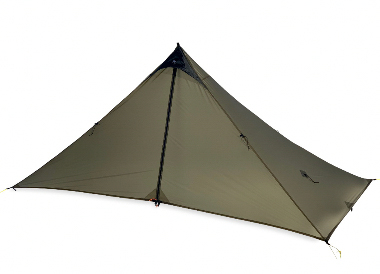 Depending on your budget and specific fastpacking needs, several shelter configurations exist for the Mountain Laurel Designs SoloMid XL. If you’re looking for the ultimate versatility in a shelter, this is a great option that is reasonably affordable, at least in the scheme of ultralight shelters. Big enough to sleep two but light enough to be carried as a one-person shelter, it can be set up as a tarp or a double-wall tent with an inner net if you’re camping in a buggy area, and it pitches with a single center pole. If you’re going to be fastpacking in a lot of inclement weather, you can choose to get the seams sealed for a small additional cost.
This shelter’s versatility, functionality, and low weight all contributed to its being named one of our favorite shelters in our Best Ultralight Tents guide. The seam-sealed tarp weighs 18.2 ounces (516 grams) with guylines attached, the mesh inner is 12.0 ounces (339 grams), and the total package weighs a reasonable 30.2 ounces (855 grams).
We’ve spent more than 120 nights in this tent, so we feel we can speak to the durability of the 20-denier silnylon material. We found that it maintained its waterproof properties longer than similar materials but had a tendency to attract sand, something to be aware of if many of your trips occur in the desert.
This shelter pitched easily and quickly. If faced with rapidly deteriorating weather conditions, we could get it up in 60 seconds. The tarp pitched to the ground without sacrificing volume, a feature we appreciate in inclement weather conditions.
Learn more about other features we loved in our in-depth Mountain Laurel Designs SoloMid XL review.
Weight: 30.2 ounces (855 grams) for the entire shelter
Shop the Mountain Laurel Designs SoloMid XLBest Budget Fastpacking Shelter: Paria Outdoor Products Sanctuary SilTarp ($85)
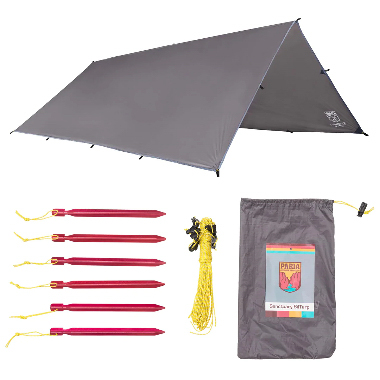 In a world where it’s possible to spend upward of $1,000 on an ultralight shelter for fastpacking, the Paria Outdoor Products Sanctuary SilTarp is an affordable option that will keep you dry in nearly all weather conditions. At 15.5 ounces (440 grams), it weighs more than similar tarps, but its low price makes it a great entry-level option for people looking to assemble a fastpacking kit without breaking the bank. Its value was the main reason we included it in our Best Ultralight Tents guide.
The 8 x 10-foot tarp has 16 ¾-inch webbing loops around the perimeter. While 16 felt a bit much — we didn’t attach guylines to all of them — they add to the tarp’s versatility and make it easy to set it up in different configurations and awkward camp spots. We generally set it up with two trekking poles in an A-frame configuration and found that it comfortably fits two adults and gear.
The 30-denier sil/PU nylon material is durable but not the lightest, and the tarp comes with six stakes and a length of rope to set up guylines as you see fit. The whole package fits into a small stuff sack.
While we wouldn’t recommend heading out into an atrocious weather forecast with this tarp, it’s functional enough for most night rainstorms or sitting out an afternoon monsoon downpour.
Weight: 15.5 ounces (440 grams)
Shop the Paria Outdoor Products Sanctuary SilTarpBest Sleeping Bag for Fastpacking: Feathered Friends Swallow UL 20/30 Sleeping Bag – 20 Degree ($660)
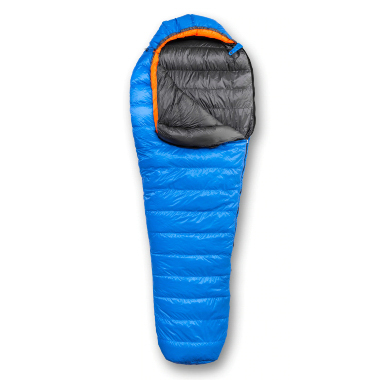 The Feathered Friends Swallow UL 20/30 Sleeping Bag – 20 Degree is an incredibly warm sleeping bag that is light enough for a fastpacking trip where you want to run and move smoothly on technical terrain. While sleeping bags can be expensive, with proper care, a good one will last you many years and is a critical piece of gear for a good night’s sleep when out fastpacking. We believe it’s worth investing in a nice one if you can.
A 20-degree Fahrenheit bag is a versatile option that can be used in a variety of weather conditions, from cold mountain nights fully zipped up and cinched down, to warmer nights in the desert only partially zipped. If you’re going to own a single sleeping bag for all of your fastpacking needs — and you intend to be out in a variety of temperatures — we’ve found 20-degree bags to be in the sweet spot between weight, warmth, and versatility.
Weighing 27.0 ounces (764 grams), this sleeping bag is one of the warmest in our Best Ultralight Sleeping Bags guide and was our overall favorite. Filled with 475 grams of 950-plus fill down — some of the highest-quality down available — this sleeping bag is warm and lofts well.
We found that this sleeping bag fits the dimensions of many different body types, and our female testers didn’t find the 60-inch shoulder width too wide. We stayed cozy and didn’t feel like we were getting to the lower bounds of what was possible with this sleeping bag, even when temperatures dipped below the 20-degree Fahrenheit rating.
The down-proof outer material keeps feathers from leaking out, and it felt thick enough that we weren’t concerned about long-term durability. While we acknowledge this sleeping bag comes with a hefty price tag, we believe it’s worth the investment if you can afford it.
Weight: 27.0 ounces (764 grams)
Shop the Feathered Friends Swallow UL 20/30 Down Sleeping Bag — 20 DegreeBest Budget Sleeping Bag for Fastpacking: Outdoor Vitals StormLoft Down TopQuilt 15 ($355)
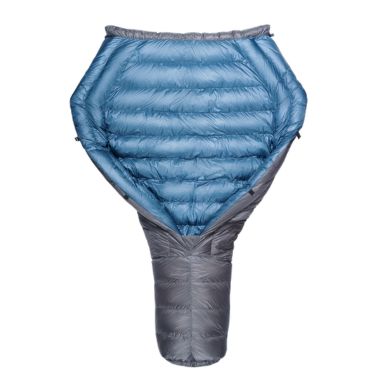 If you’re looking for a reasonably priced fastpacking sleeping system, the Outdoor Vitals StormLoft Down TopQuilt 15 provides warmth at a price significantly lower than many other equivalent sleeping systems. Coming in at 23.0 ounces (652 grams) for a size regular 15-degree Fahrenheit bag, the quilt’s weight is more than competitive with other sleeping bags. While this quilt has a 15-degree Fahrenheit rating, we were skeptical that the 800-fill duck down could provide that level of warmth. One of our testers found that she got chilled when temperatures dipped into the low 30s Fahrenheit, while other testers were plenty comfortable when temperatures went below freezing.
The quilt has a stretchy pad attachment system that we found to be a bit finicky. We even broke one of the clips in trying to adjust it. Still, our tester was able to tuck the quilt under their body to keep it in place, and they stayed warm.
There seems to be extra down in the foot area of the quilt, which we appreciated since we’ve found it’s easier to add additional layers to our core to stay warm than to keep our feet toasty when temperatures plunge.
While this quilt isn’t as warm or comfortable as our top pick for a sleeping bag, the Feathered Friends Swallow UL 20/30 Sleeping Bag – 20 Degree reviewed above, it is nearly half the price. This quilt is an excellent option for someone looking to assemble an affordable, yet still light and functional, fastpacking kit, which is why we included it in our Best Ultralight Sleeping Bags guide.
Weight: 23.0 ounces (652 grams)
Shop the Outdoor Vitals Stormloft Down TopQuilt 15Best Summer Sleeping Bag for Fastpacking: Sea to Summit Spark Down Sleeping Bag ($450)
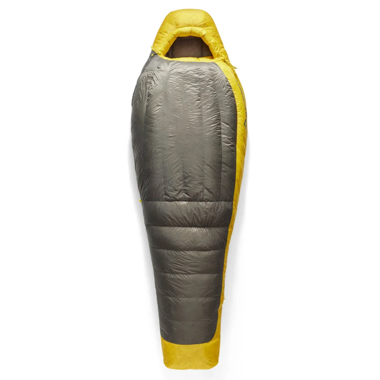 The Sea to Summit Spark Down Sleeping Bag – 30 Degree is our go-to sleeping bag for trips where we don’t expect the temperatures to drop much below freezing. While some would argue that many summer conditions don’t warrant a 30-degree Fahrenheit bag, we feel that anything lighter starts to lose versatility, especially when fastpacking in areas like the San Juan Mountains of Colorado, where we do much of our gear testing. This sleeping bag comes in a variety of sizes and temperature ratings, so you can choose one that best fits the conditions you most often encounter.
Weighing 17.1 ounces (484 grams), the size regular 30-degree Fahrenheit bag is perfect for shoulder-season desert or mid-summer mountain trips. It’s filled with 850-plus fill power goose down that has a non-PFAS Ultra-Dry Down treatment to keep it from clumping as much if it gets damp. The 10-denier fabric feels quite light, but we haven’t had any durability issues after two years of regular use.
We opted for this sleeping bag on a light-and-fast late-summer trip on the Wind River High Route in Wyoming and were pleased that we never got cold. In fact, we found ourselves unzipping the bag to cool off even as temperatures dipped into the 30s.
There is also a women’s version of this bag that has additional insulation in areas where women tend to get colder, but it weighs more than the unisex version.
Weight: 17.1 ounces (484 grams)
Shop the Sea to Summit Spark Down Sleeping Bag — 30 DegreeShop the Women's Sea to Summit Spark Down Sleeping Bag — 30 Degree
Best Sleeping Pad for Fastpacking: Therm-a-Rest NeoAir XLite NXT Sleeping Pad ($210)
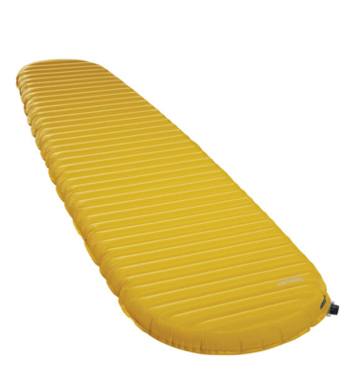 While there are lighter sleeping pads on the market, the Therm-a-Rest NeoAir XLite NXT Sleeping Pad rises to the top of our list of favorites because of its balance of durability and weight. We named it the best overall sleeping pad in our Best Ultralight Sleeping Pads guide. Made of 30-denier fabric, it weighs only 13.2 ounces (374 grams) and is durable enough to trust in the backcountry as long as it’s treated with care. We’ve used this pad, both the most recent version and older ones, for years and years, and many on our testing team choose this as their primary sleeping pad. It crinkles if you roll around on it, but it’s a small price for an overall excellent sleeping pad.
With an R-value of 4.5, this sleeping pad has more than enough insulation to be used as a three-season sleeping pad. We used it on cold fall trips in the high valleys of the San Juan Mountains of Colorado when nighttime temperatures dipped well below freezing, and we felt well insulated from the ground.
The pad comes with a giant inflation bag, which we’ll admit we rarely carry. While it’s generally recommended that you use the inflation bag to keep moisture from degrading the pad’s insulation and prevent the growth of microbes inside, our gram-counting tendencies frequently have us leaving both the pad’s stuff sack and inflation bag at home.
This sleeping pad is available in various sizes and widths, so you can save weight if you’re a smaller person or are willing to sleep on a smaller surface. You can also use a shorter pad under your torso and put your fastpacking pack under your legs to keep them off the ground. The pad folds up quite small, and we occasionally use it as a back pad in our fastpacking pack.
You can read more about our thoughts on this sleeping pad in our in-depth Therm-a-Rest NeoAir XLite NXT Sleeping Pad review.
Weight: 13.2 ounces (374 grams)
Shop the Therm-a-Rest NeoAir XLite NXT Sleeping PadBest Cooking Pot for Fastpacking: Toaks Light Titanium 550ml Pot ($30)
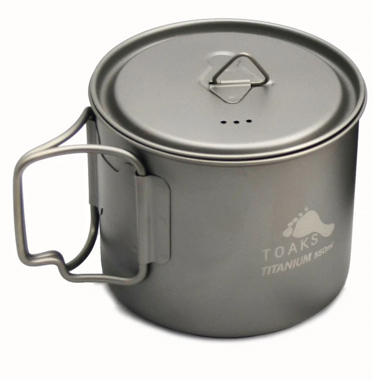 A lot of fastpacking is about making a pack as light as possible, and the Toaks Light Titanium 550ml Pot is big enough for most applications and weighs only 2.4 ounces (68 grams). While some people don’t like titanium pots because of the material’s high heat transfer rate — hot things cool off really quickly if it’s cold out — they’re undeniably lighter than anything else on the market. Also, the handles on titanium pots often require a cloth layer to grab after they’ve been heated, but we consider this a small price to pay for the weight savings.
While the 550-milliliter volume may initially seem small, we’ve found that nearly all instant, pre-packaged backpacking meals require less than this amount of liquid to hydrate, and it’s a good amount for a morning cup of coffee or an evening hot chocolate or tea. The volume is big enough to make a whole packet of ramen, as well.
The thin and light handles have withstood all the abuse we’ve thrown at them, and they’re easy to grab with a buff or the bright orange mesh storage bag included with the pot. We’ve also put this pot directly on the coals of a fire to heat water, and it’s emerged unscathed.
This pot will nest the small four-ounce fuel canisters but not the medium-sized ones. If we need to carry more than a small fuel container, we’ll use the pot to carry an array of bagged foods, generally morning oatmeal or recovery protein powder, so there’s no empty volume in our packs.
Weight: 2.4 ounces (68 grams)
Shop the Toaks Light Titanium 550ML PotBest Stove for Fastpacking: BRS 3000T Stove ($17)
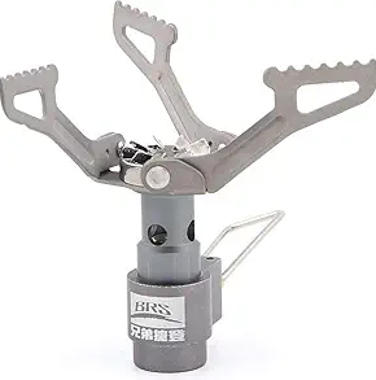 When thru-hikers first started using the BRS 3000T Stove, many skeptics wondered if it was wise to trust their hot meals and drinks to a $16 stove from an unknown brand. But because of its low price and its less than an ounce (27 grams) weight, people kept using the stove, and it has proven to be durable enough. One of our testers destroyed one by attaching it to an overfilled fuel canister under too much pressure, and another tester bent one of the arms by packing it poorly. But a bit of care will keep these stoves functional. Although this stove isn’t as quick to boil a pot of water or as fuel efficient as a Jetboil or similar stove, its ability to fold up into nearly nothing has made it a favorite among fastpackers.
After using a variety of stoves over the years, we have to admit that we haven’t carried much else since stumbling upon this little gem. It is simply so much smaller and lighter than other stoves on the market, making it a no-brainer for fastpacking gram counters. We’ve carried it on countless fastpacking trips in the high altitude Weminuche Wilderness of Colorado, the damp rainforests of New Zealand, and the windy high deserts of Utah and the Colorado Plateau.
The product specs claim that the stove will boil a liter of water in under three minutes in ideal conditions and use 14 to 16 grams of fuel to do so. While we’ve never managed to boil water this quickly with this stove, especially since most of our testing has been done at high elevations and often in the wind, it’s not noticeably slower than any other ultralight stove we’ve used. The flame is powerful enough to boil water in windy and cold conditions, as long as we make a windblock for it.
The three small flip-out legs are big enough to hold small camp pots, though we’re not sure we’d trust them with excessive weight. When folded up, the stove measures a mere five centimeters in length and has a diameter of about three centimeters. (That’s less than one inch by two inches, for you imperial measurers.)
Our one gripe with this stove is the twisting knob that controls the gas flow often opens during transport, which can result in unexpected fuel flow when the stove is first screwed onto the fuel canister.
Weight: 0.95 ounces (27 grams)
Shop the BRS 3000T StoveOther Favorite Fastpacking Gear
- Rain Jacket: Montbell Rain Trekker Jacket ($220). Our go-to rain jacket’s two-layer construction makes it highly waterproof and breathable, and it only weighs 201 grams. Read more in our Best Running Rain Jackets guide.
- Rain Pants: Outdoor Research Helium Rain Pants ($130). These are fully waterproof, light, durable, and easy to put on and take off without having to remove shoes. Read more at our Best Running Pants guide.
- Trowel: DirtSaw Deuce #3 Trowel ($25). Weighing only 28 grams, this trowel can save you seemingly hours of hole-digging frustration for next to no weight penalty.
- Headlamp: Nitecore NU25 MCT UL ($37). Assuming you’re not planning on running too much in the dark during a fastpacking trip, this rechargeable headlamp weighs only 46 grams and provides plenty of light for most fastpacking camp chores and slower movement in the dark. Read more in our Best Running Headlamps guide.
- Trekking Poles: Black Diamond Distance Carbon Z Poles ($220). Light, durable, and stiff, these collapsible carbon poles have wrist straps that are easy on and off, making scrambling, putting on gloves, and eating snacks easy. Learn about them in our Best Trekking Poles guide.
- Water filter: Katadyn BeFree 0.6L ($40). The original soft-flask filter remains reliable with high flow rates, especially when new. Find out more in our Best Water Filters for Trail Running guide.
- Pillow: Sea to Summit Aeros Ultralight Pillow ($50). What can we say? Sometimes even the most meticulous gram counter wants a little comfort, and at 60 grams, we believe this luxury item to be worth it.
- Emergency communication device: Garmin inReach Mini 2 ($350 + monthly subscription). Although an increasing number of phones can send texts via satellite, this remains the most reliable form of emergency communication. In addition to sending text messages, it can provide tracking outside of cell service, making it useful for emergencies, check-ins, and sending messages about changes in plans.
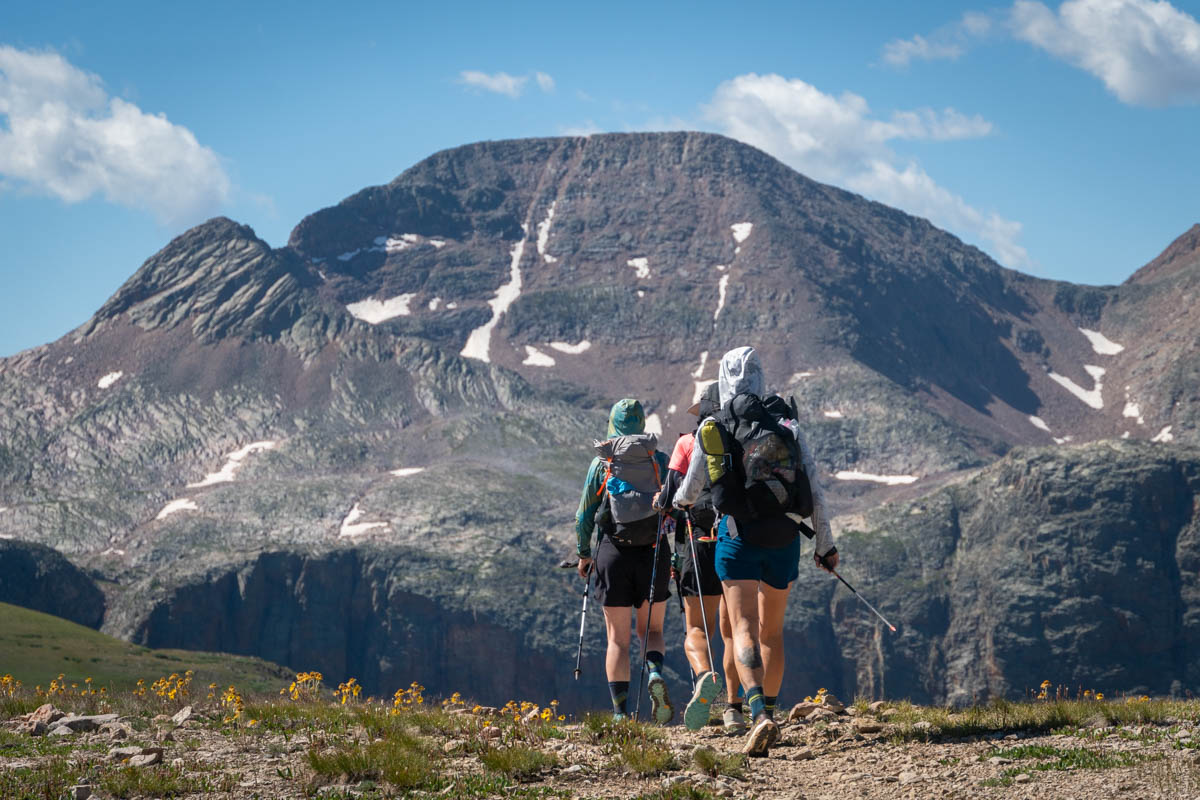
A pared-down fastpacking kit for a couple of nights out should fit into a 30-liter pack. Photo: iRunFar/Eszter Horanyi
Choosing Fastpacking Gear
There’s the old adage that when it comes to fastpacking gear: It can be lightweight, durable, and inexpensive, but it can only have two out of the three features at a time. Something can be lightweight and affordable, but it may not stand up to extended use in rough conditions. Something can be durable and inexpensive, but you’ll pay a weight penalty. And then there’s the ultralight backpacking gear that will last, but you’ll probably have to shell out a fair bit of money for it.
That said, putting together a fastpacking kit is all about balance, and you’ll have to decide how to combine the three elements of gear to best suit your individual needs and budget.
Fastpacking Versus Ultralight Backpacking
It could be argued, and often is, that there’s very little difference between ultralight backpacking and fastpacking. Both sports involve carrying minimal gear to keep pack weight low so that you can cover long distances each day of a multiday outing. The main difference is that fastpackers tailor their gear to allow for running, while most people who consider themselves ultralight backpackers don’t run during their trips.
The pack is the most significant difference in gear between ultralight backpacking and fastpacking. Fastpacks, like the Pa’lante Packs Joey, tend to have a running vest structure with pockets on the front to carry soft flasks, a phone, and a variety of snacks. They’re designed not to bounce while running and generally sit higher on the back than traditional backpacks. Most fastpacks don’t have a waistbelt either.
Some ultralight backpacks, like the Montane Trailblazer LT 28L Backpack, have the structure of traditional backpacking bags, including a waistbelt, but are highly simplified and made of very light materials. The Red Paw Packs Flatiron 28L has a hybrid harness that isn’t quite like a traditional backpack, but is also not a full vest.
Most fastpacks have volumes ranging from 20 to 40 liters and need to be packed light enough not to require the additional support of a waistbelt.

The vest-like harnesses of fastpackings keep them secure so you can easily cover technical terrain. Photo: iRunFar/Eszter Horanyi
Ultralight Shelters
There are four main types of fastpacking shelters: trekking-pole-supported tents, dedicated-pole tents, tarps, and bivvies. Each has its inherent advantages and disadvantages in terms of providing protection from the elements, their weight, bug protection, and ease of use. Our Best Ultralight Tents guide explores a wide variety of options.
Many fastpackers prefer trekking-pole-supported single-wall tents because they strike a good balance between protection and weight, and many fastpackers carry trekking poles, anyway. The Mountain Laurel Designs SoloMid XL is one of our favorite shelters, and it can provide comfortable sleep for one person and two when needed.
For many years, people shied away from single-wall tents in favor of double-wall tents due to condensation issues, but improved designs and technology have created single-wall tents that don’t end up soaked on the inside from condensation. Similarly, many ultralight aficionados used to choose tarps over tents to save weight, and while tarps are still lighter, single-wall tents have significantly closed the gap, making it easy to swallow the weight penalty in exchange for the additional protection they provide.
Shelters are often the most expensive item in a fastpacker’s kit, but there are budget options as well, like the Paria Outdoor Products Sanctuary SilTarp, which protects from the elements with only a small performance and weight penalty.
Bivvies are still a popular option for ultralight trips with good weather forecasts. While they will never be the most comfortable option, they are light, and there’s something romantic about cowboy camping under the stars with no shelter to block your view of the sky.

Bivys can be an excellent option for fastpacking trips with a good weather forecast and in areas without bugs. Photo: iRunFar/Eszter Horanyi
Ultralight Sleeping Bags
A good sleeping bag is a critical part of a fastpacking kit. One that isn’t warm enough will lead to a long, uncomfortable, and shivery night, and one that is too warm — and too heavy — will keep you from running and covering the distance you want. There are three main types of sleeping bags: hooded, non-hooded, and quilts. You can learn more about each style in our Best Ultralight Sleeping Bags guide to determine which style would best suit your needs.
Our upper weight limit for sleeping bags light enough for fastpacking is around 28 ounces (800 grams) for a 20-degree Fahrenheit bag. A lighter summer bag can be as light as 450 grams, or about a pound. Our go-to bag for colder conditions is the Feathered Friends Swallow UL 20/30 Sleeping Bag – 20 Degree, which provides incredible warmth at a weight that still keeps packs light enough for running parts of the trail. The Outdoor Vitals StormLoft Down TopQuilt 15 is a great budget option for those looking to get into fastpacking but don’t have a huge budget to assemble a kit.
The two main numbers to look for in a sleeping bag are the fill power and temperature rating. Fill power measures the loft of the down, and most ultralight sleeping bags have a fill power rating of over 800. The warmest and lightest can have a 950+ rating.
Sleeping bags have different temperature ratings, which can sometimes be difficult to decipher. The two main units for sleeping bag ratings are the European Norm (EN) and the International Organization for Standardization (IOS). For all practical purposes, the two are the same in terms of how they rate sleeping bags. However, it should be noted, that many sleeping bags having been subjected to officially certified tests and, even if a bag has been certified, the temperature in the name is usually 5 to 10 degrees Fahrenheit below the certified comfort rating. That means a bag’s named temperature is often closer to a Lower Limit temperature described below than a comfortable night of sleep.
There are three temperature ratings they give sleeping bags: Comfort, Lower Limit, and Extreme. The basic idea is that the Comfort temperature rating is what a “standard” woman will be able to sleep comfortably through the night with. Since women tend to sleep colder than men for various physiological reasons, this rating is higher than the Lower Limit, which is the temperature a “standard” man can sleep in for eight hours without being uncomfortable. The extreme rating is defined as the temperature at which a “standard” woman will survive for six hours without the risk of death from hypothermia.
When choosing a sleeping bag, determine if you’re a warm or cold sleeper and choose based on how important complete warmth is versus saving a bit of weight.
Nearly everyone on the iRunFar testing team has spent at least a few nights shivering while waiting for dawn because we brought a sleeping bag that was too light, trying to save a few grams.

Meghan Hicks of iRunFar tests a fastpack during an overnight trip in the San Juan Mountains of Colorado. Photo: iRunFar/Eszter Horanyi
Ultralight Sleeping Pads
Sleeping pads are among the most underrated items in a fastpacking kit. While some on the iRunFar testing team have been known to go without a sleeping pad or to use a piece of Reflectix insulation as an ultra-lightweight option, a good sleeping pad is critical for a good night’s sleep. With options like the lightweight Therm-a-Rest NeoAir XLite NXT Sleeping Pad available, there’s very little reason to suffer without a pad.
The four main things to consider when choosing a sleeping pad are its R-value, weight, size, and baffle pattern. You can learn more about these in our Best Ultralight Sleeping Pads guide, but the basics are fairly simple.
The R-value of a pad measures its insulating properties and determines how much of your body heat travels through the pad and is lost to the ground, versus how much is stored in the pad or reflected back to your body, increasing your warmth. A higher R-value means a higher level of insulation.
The R-value of Reflectix insulation, which is little more than two pieces of foil with an air gap between them, is 1.1. A solid three-season insulated sleeping pad, such as the Therm-a-Rest NeoAir XLite NXT Sleeping Pad, will have an R-value between 3 and 5. Uninsulated pads will have a lower rating and not be as warm, while winter sleeping pads can have R-values of 7 or 8.
Of course, more insulation means more weight, so you’ll want to use a sleeping pad that’s the right balance between weight and warmth for your sleeping conditions. Sleeping pads also come in different lengths and widths, and many gram-counting fastpackers will choose a pad that only extends down to their knees, and then use their pack under their lower legs and feet to create a barrier from the ground. Others will use a torso-length pad and supplement it with their pack and extra gear.
Finally, sleeping pads are made with vertical, horizontal, or quilted baffles. Many people find quilted baffles more comfortable, as they are better at cradling bodies and often feel less tippy. Some testers on our team find horizontal and vertical baffles can be uncomfortable, especially if overinflated.

Members of the iRunFar testing team using the Mountain Laurel Designs Solomid XL Tent during a late fall fastpacking trip in the San Juans of Colorado. Photo: iRunFar/Eszter Horanyi
Clothing
Unlike day runs, where you often don’t need much extra clothing, a multiday fastpacking trip inherently involves a wide range of temperatures and potential weather conditions. In addition to the running clothes you plan to wear, we always recommend a good rain jacket and a pair of rain pants for additional protection during fastpacking trips.
Your sleep clothing kit will depend on the conditions at night. A good base layer can help you retain heat, and a warm head cover is also important when the sun goes down. While the idea that we lose 45% of our heat from our head, which may have originated in an old U.S. Army Field Manual, has been proven incorrect, we still lose about 10% of our heat from our head, so it’s worth covering it up. A warm head cover, whether a jacket hood, hat, or buff, is more important if you sleep in a hoodless sleeping bag or quilt.
A down or synthetic insulated jacket provides an excellent warmth-to-weight ratio. We recommend a synthetic insulated jacket for most running situations, but a down jacket is warmer for the weight. And since you’re likely only wearing your insulated jacket at camp, or maybe for a short period first thing in the morning, you don’t have to worry about sweating into it and wetting out the down, which makes the jacket ineffective at insulating.
An extra pair of socks for sleeping in can improve the camp experience. Some iRunFar team members who have issues with cold feet carry a lightweight pair of down booties instead of a second pair of socks since they are both lighter and warmer, but they are less effective for walking around camp.
Of course, what you take on a fastpacking trip will depend on the temperatures you’re expecting to encounter and the weather forecast, but for safety, it’s always a good idea to have a set of dry clothes and a jacket that only come out when you know you can stay dry in camp.
An efficient, well-thought-out clothing system will easily fit into a fastpacking pack like the Pa’lante Packs Joey alongside a sleep kit and food.

iRunFar’s Meghan Hicks wears the Red Paw Packs Flatiron 28L during a six-day fastpacking trip through the canyons of Southern Utah. Photo: iRunFar/Eszter Horanyi
Leave No Trace Principles
Fastpacking takes people into wild and remote places, and it’s important to leave as little impact as possible on the land we’re traveling through. Having the right fastpacking gear can help you adhere to the seven Leave No Trace (LNT) principles, which outline the best practices for minimizing the evidence of your passage through a landscape.
The seven principles of LNT are:
- Plan ahead and prepare
- Camp and travel on durable surfaces
- Dispose of waste properly
- Leave what you find
- Minimize campfire impact
- Respect wildlife
- Be considerate of others
LNT principles can guide a wide variety of situations — from staying off sensitive surfaces to burying human waste to choosing not to have a campfire that leaves ashes to wearing headphones instead of blasting a Bluetooth speaker if you want to travel with music.
A good rule of thumb is always to consider how your actions in the backcountry will affect other people, animals, and the terrain, and to always move through an area as invisibly as possible.
Why Trust Us
Members of the iRunFar team have been fastpacking throughout the world for a long time. We’ve been around to see the evolution of the sport of backpacking go from carrying 50-pound packs and covering 15 miles a day to the light gear kits of today. We’ve also watched ultrarunning take off as a sport, and we couldn’t be more excited about the fusion of two of our favorite activities. Lighter gear, and advances in fastpacking packs, allow runners to cover a lot of miles more comfortably in much shorter periods.
For this guide, we pooled our years of combined experience, knowledge, and mistakes about gear that works and gear that doesn’t. Our goal is to provide options that allow you to build a quality, lightweight kit. We also offer other options for those looking to save a bit of money or for those who are just fastpacking-curious and don’t want to make a huge investment to get started.
All of the items in this guide have undergone trip after trip of testing throughout the American West, from the deserts of Utah to the high mountains of Colorado. Our testing team also frequents the rainforests and often wet weather of New Zealand. We recommend gear we trust will stand up to the elements, let you sleep comfortably, and move quickly through the terrain of your choosing.
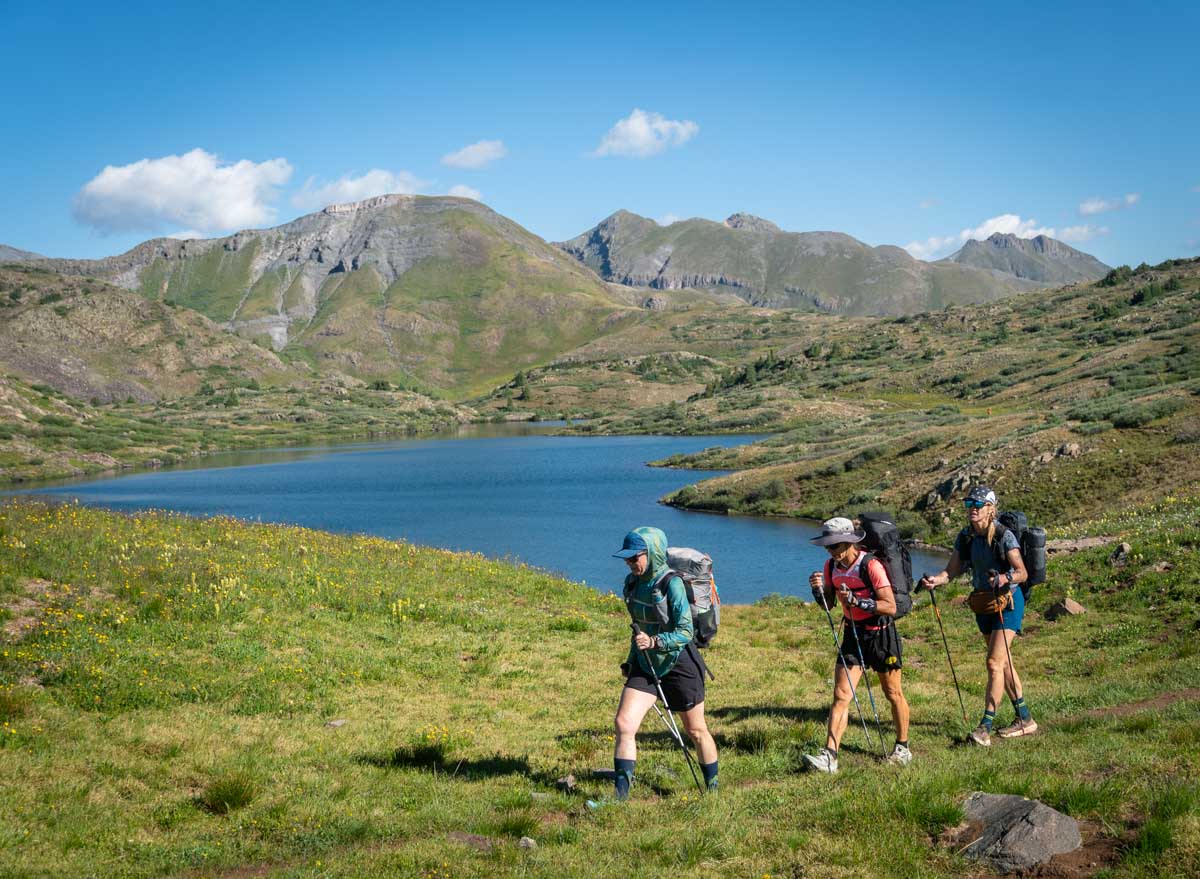
iRunFar’s Meghan Hicks leads Uxue Fraile and Maggie Guterl on a summer fastpacking trip in Colorado. Photo: iRunFar/Eszter Horanyi
Frequently Asked Questions About Fastpacking
What is fastpacking?
Once upon a time, there was adventure running — which consists of long days of moving quickly with a light load but going home at night — and there was backpacking with heavy loads that required slow, deliberate movement. Fastpacking is the fusion of the two sports. By keeping your overnight pack weight low, you can continue to move quickly and efficiently, but stay out for the night instead of having to go home.
Fastpackers are often self-identifying gram counters, striving to minimize their pack weight and optimize the multi-use functionality of everything they carry so they can run as much terrain as possible. Fastpacking packs use running vest designs to stay secure against the back while running, but are big enough to carry a sleep kit, extra clothes, and enough food for an extended outing.
We’ve fit six days of food into the Red Paw Packs Flatiron 28L, which has a hybrid harness system and a stabilizer belt. While we didn’t run much the first few days of the trip, as the pack got lighter, our speed increased significantly.
What’s the difference between fastpacking and ultralight backpacking?
On a gear level, there’s little difference between fastpacking and ultralight backpacking, aside from maybe the pack. With both activities, you want to make your pack as light and efficient as possible. The most significant difference between the two sports is that fastpackers generally hope to run or jog on their trip, so they need a pack that won’t bounce around when they do.
Fastpacking packs, like the Pa’lante Packs Joey, use a vest-like harness similar to running vests that secures them snugly around the chest without restricting breathing or movement. Most fastpacking packs are 20 to 30 liters in volume. While the Joey is on the lower end of the spectrum, the Red Paw Packs Flatiron 28L, with its hybrid harness system, can hold well over its advertised 28 liters.
Ultralight backpacks, like the Montane Trailblazer LT 28L Backpack, tend to have a structure similar to traditional backpacks, with regular shoulder straps and a waist belt to help distribute weight. These packs tend to be slightly larger and lack the shoulder pockets and vest-style design of fastpacking packs. They perform better under heavier loads but tend to bounce if you try to run with them.
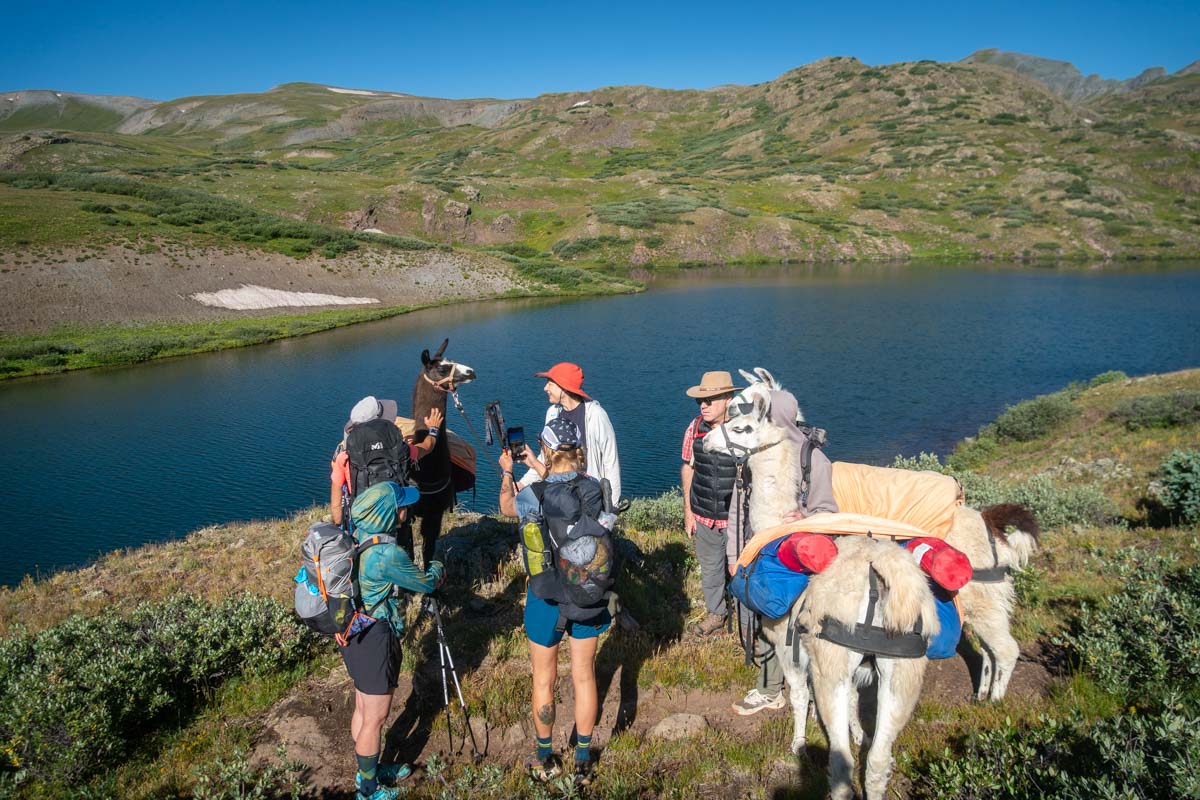
Fastpacks or llamas: There are multiple ways to carry overnight gear into the backcountry. Photo: iRunFar/Eszter Horanyi
How do I choose a fastpacking route?
If you’re new to fastpacking, the easiest way to dial in your gear systems is to choose a longer route you already know, maybe one you’ve run before. Knowing the terrain you’re traveling over lets you focus on the mechanics of fastpacking without worrying about navigation or unknown terrain.
Once you feel confident spending the night out with your kit, the world is your oyster. You can use countless resources to create a route, from a paper map to checking out routes on the Fastest Known Time website. When choosing a route, you’ll want to consider that you will move more slowly than with just a daypack, so it’s important to plan your mileage accordingly.
If you live in an area with a long trail, such as the Colorado Trail, Arizona Trail, Appalachian Trail, Pacific Crest Trail, Continental Divide Trail, or something similar, finding loops using the main trail as a backbone is a great way to see new terrain. Choosing a series of peaks to summit also offers ample motivation. The internet is vast, and there’s a good chance you can find all of the information you could want on a route or trail if you do a little digging.
You’ll want to make sure that you’re camping on public lands. Many navigation apps have a layer differentiating between private and public land, and many paper maps will also show boundaries between different types of land. Camping is legal on nearly all Forest Service and BLM land in the U.S., where state land can be a little more complicated. You’ll want to look into local regulations if you’re traveling over state-controlled land. Local parks occasionally allow camping, but it’s always a good practice to double-check the rules before setting out.
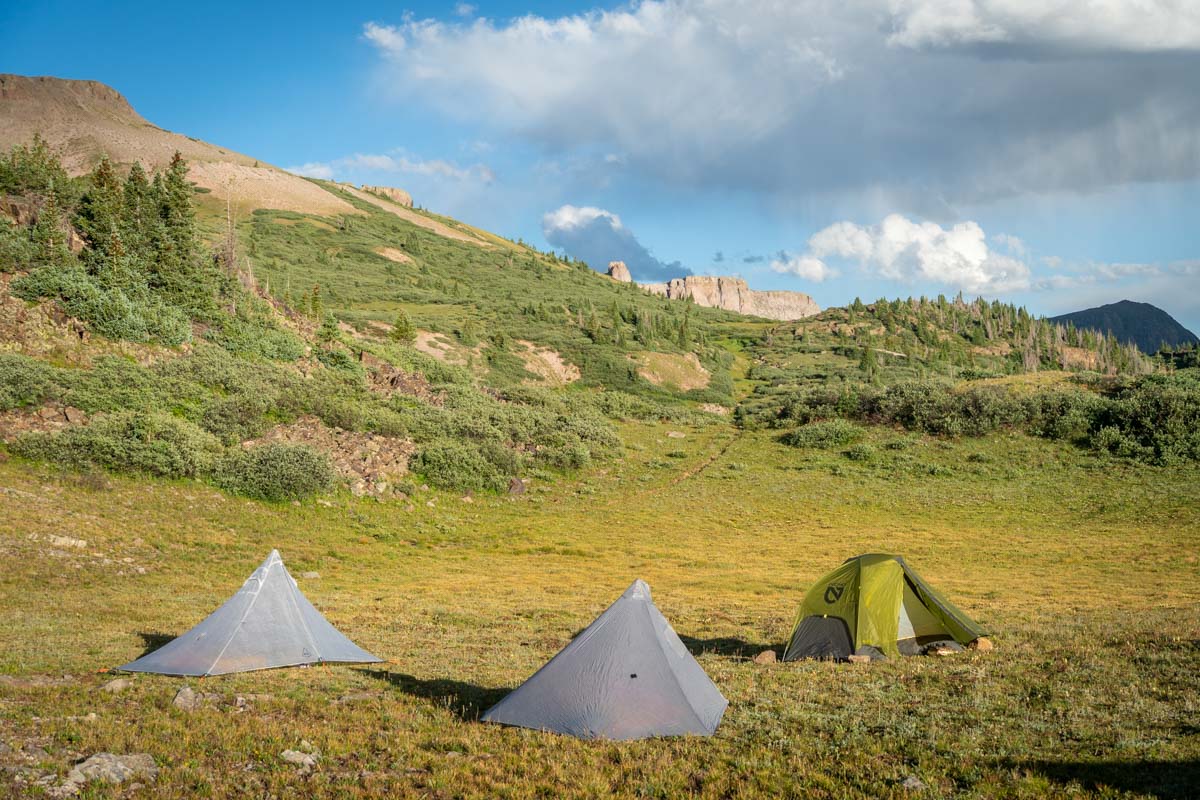
The iRunFar team tests tents on a fastpacking trip in the San Juan Mountains of Colorado. Photo: iRunFar/Eszter Horanyi
What temperature rating should my sleeping bag have?
Most sleeping bags have three ratings: Comfort, Lower Limit, and Extreme. The general rule of thumb is that if you’re a cold sleeper, you want to rely on the Comfort rating, and if you sleep warm, you can probably get away with the Lower Limit rating. Other factors that will affect sleeping comfort and warmth include the type of shelter you’re using, and if you’re sharing your shelter with another person. A well-insulated sleeping pad can also allow for a sleeping bag with a lower temperature rating.
If you want to have a single sleeping bag for all of your fastpacking adventures, a 20-degree Fahrenheit bag, like the Feathered Friends Swallow UL 20/30 Sleeping Bag – 20 Degree, is a good option, as it will most likely cover the lower limits of what you need while still being light enough for a fastpacking kit. If you’re curious about the advantages and disadvantages of different types of sleeping bags — including hooded, hoodless, and quilts — you can read more in our Best Ultralight Sleeping Bags guide.
Why is pack weight so important for fastpacking?
Fastpacking allows you to move as light and fast as possible over rugged terrain, and a heavy pack will slow you down and inhibit your ability to move smoothly and efficiently over technical terrain. A low pack weight can allow for running or jogging, especially on downhill or flat terrain. Although the upper limit of pack weight for running varies from person to person and situation to situation, anything that starts pushing 20 pounds becomes prohibitively heavy for most runners. Using a smaller pack, like the Pa’lante Packs Joey, can help reduce the chance of overpacking.
A low pack weight is one of the key factors in a successful and enjoyable fastpacking trip. The idea that “everything weighs something” acknowledges that a few grams or ounces here or there might not seem like a lot, but when multiple sets of “a few ounces” can quickly add up to an unwieldy and heavy pack.
While it’s easy to spend a lot of money on the lightest gear possible, we’ve also included budget options in this guide, like the Outdoor Vitals StormLoft Down TopQuilt 15 and the Paria Outdoor Products Sanctuary SilTarp, which still form the basis of a light kit at a reasonable price point.
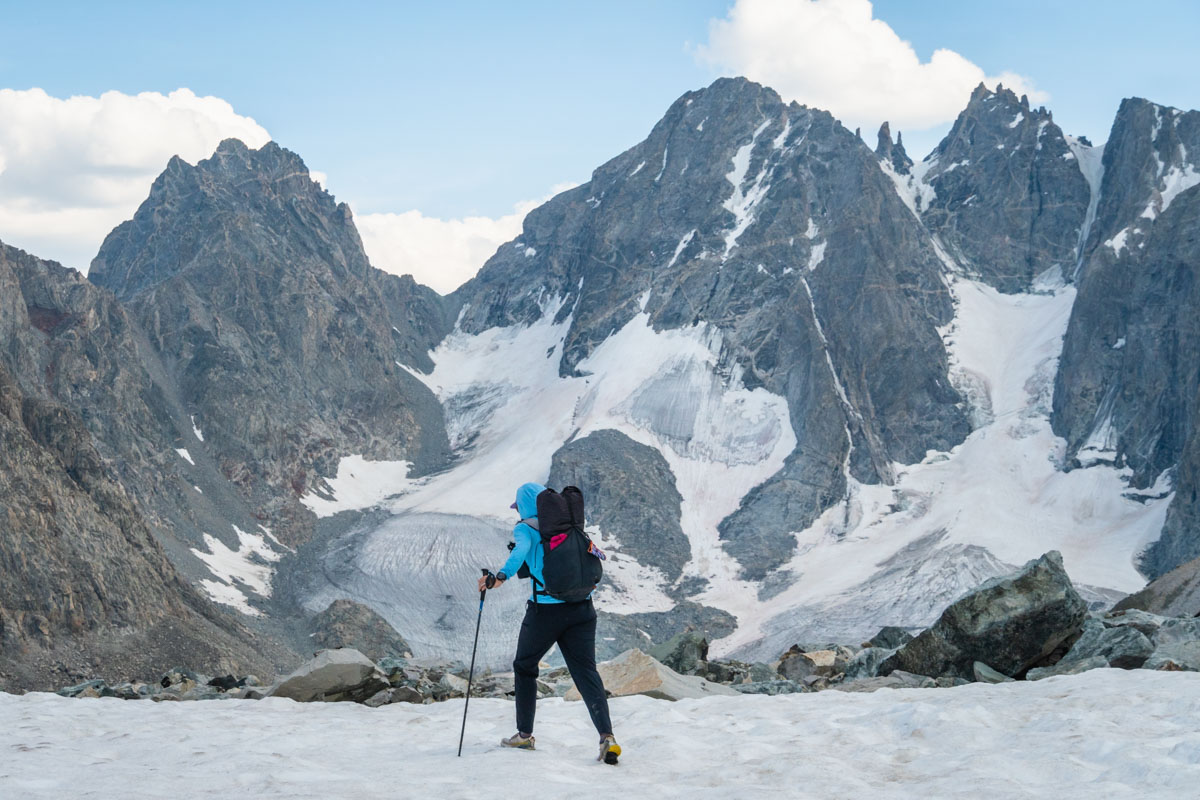
Meghan Hicks of iRunFar used the Red Paw Packs Flatiron 28L during a six-day trip on the Wind River High Route in Wyoming. Photo: iRunFar/Eszter Horanyi
Is it safe to drink wild water if it’s clear and flowing?
Knowing where and when you’ll get water is one of the most critical steps to planning a fastpacking trip. While it’s safe to drink unfiltered, wild water in many situations, especially in remote locations with no livestock, we always recommend filtering to be sure. And when water filters are as light and easy to use as the Katadyn BeFree 0.6L, there’s really very little reason not to filter.
While the ideal water source is a flowing, clear stream, they’re not always available, and water filters and other water treatment options make all types of water safe to drink. You can read more about different types and styles of water filters and treatment options in our Best Water Filters guide.
Most water filters can handle some level of sediment in the water, though they will clog up more quickly when filtering cloudy water. If you’re filtering out of murky water, as is often the case in the desert, prefiltering with a bandana or coffee filter will remove the first round of sediment and can help save your filter from premature clogging.
If you’re concerned about viruses in the water, you’ll want to consider a chemical treatment or using a UV light treatment option like a SteriPen Ultralight UV Water Purifier.
What are the Leave No Trace principles, and why are they important?
Following the Leave No Trace principles helps ensure that wilderness areas are protected from human impact as much as possible. The seven principles are listed above and can also be found at LNT.org. The basic idea is that there should be no (or as minimal as possible) signs that you passed through an area.
These principles cover situations as obvious as not leaving trash on the trail to more subtle actions, such as choosing a durable surface for a campsite and hanging your food or using a bear canister to minimize the risk of creating a human problem for a bear. Carrying a stove and pot, like the BRS 3000T Stove and the Toaks Light Titanium 550ml Pot, instead of building a fire means you don’t have to make a fire ring, create ashes, and risk starting a forest fire.
Fastpackers can travel far into the backcountry and pristine areas, so it’s especially important to follow the ideals of traveling as lightly as possible and leaving as little impact as we can as we pass through.
Call for Comments
- Do you have a favorite piece of fastpacking gear that we haven’t included?
Back to Our Top Fastpacking Gear Picks
Both the Pa’lante Packs Joey (left) and an older version of the Gossamer Gear Murmur 36 Hyperlight Backpack (middle) have plenty of space for a multi-night trip. Photo: iRunFar/Eszter Horanyi

