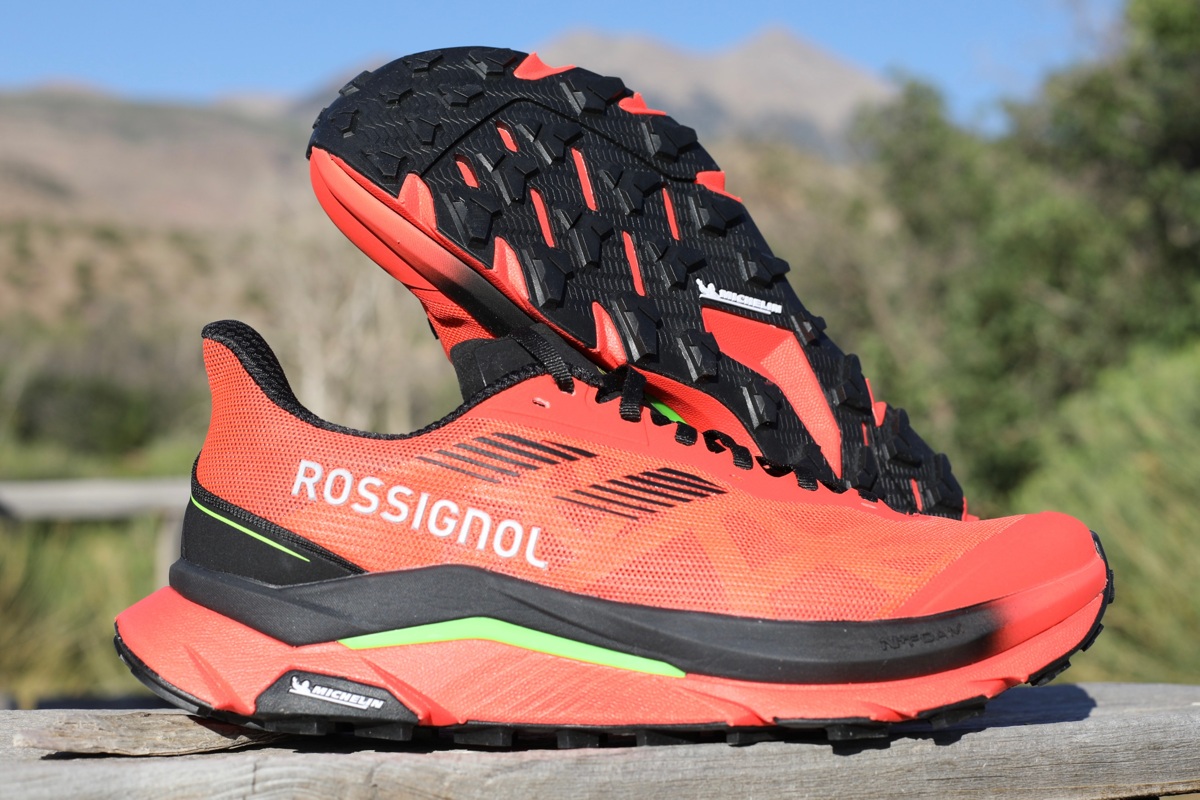
The Rossignol Vezor. All photos: iRunFar/Bryon Powell
The Rossignol Vezor ($180) comes from a brand with a long history across a range of mountain sports and is one of their two debut trail shoes. Brands like Rossignol, which is most well-known as a winter mountain equipment and outerwear manufacturer, often like to test their expert technical knowledge across a range of slopes, faces, rock escarpments, and trails. They’ve now applied their design savvy and product engineering to trail running shoes. The new Vezor model made its debut at the 2024 UTMB, and after turning heads in Chamonix, it continued to gain traction throughout the 2025 trail running season. To see if it is worthy of a summit, I put the shoe to work over variable terrains and conditions this summer and fall. Can Rossignol play across the dirt, rocks, and scree? Let’s see.
Alpine brands bring to the table a wealth of material expertise and an innate concern for the climate. Rossignol realizes that product design has a direct impact on the environment and, concurrently, the ability to pursue mountain sports is inextricably linked to our ever-evolving environment. This is a shoe review, and I will stay on course, but it is important to note that there is an environmental consciousness and effort to integrate recycled materials into the totality of the shoe design without sacrificing the performance of the final product. Rossingol’s trail shoe venture may also be a sign that alpine conditions are changing, and the new launch is a business strategy to stay in the mountains all year round in some capacity.
The Vezor has a listed 30-millimeter heel stack and 24-millimeter forefoot stack for a 6-millimeter drop — a smidge higher than I usually allow myself to wear. Despite the higher stack height, the look and ride both make it seem closer to the ground, an important component to its overall versatile performance and trail presence. The shoe has an actual weight of 9.6 ounces (271 grams) for a U.S. men’s 9, which is par for the course for many mountain trail shoes.
Shop the Women's Rossignol VezorShop the Men's Rossignol Vezor
Rossignol Vezor Upper
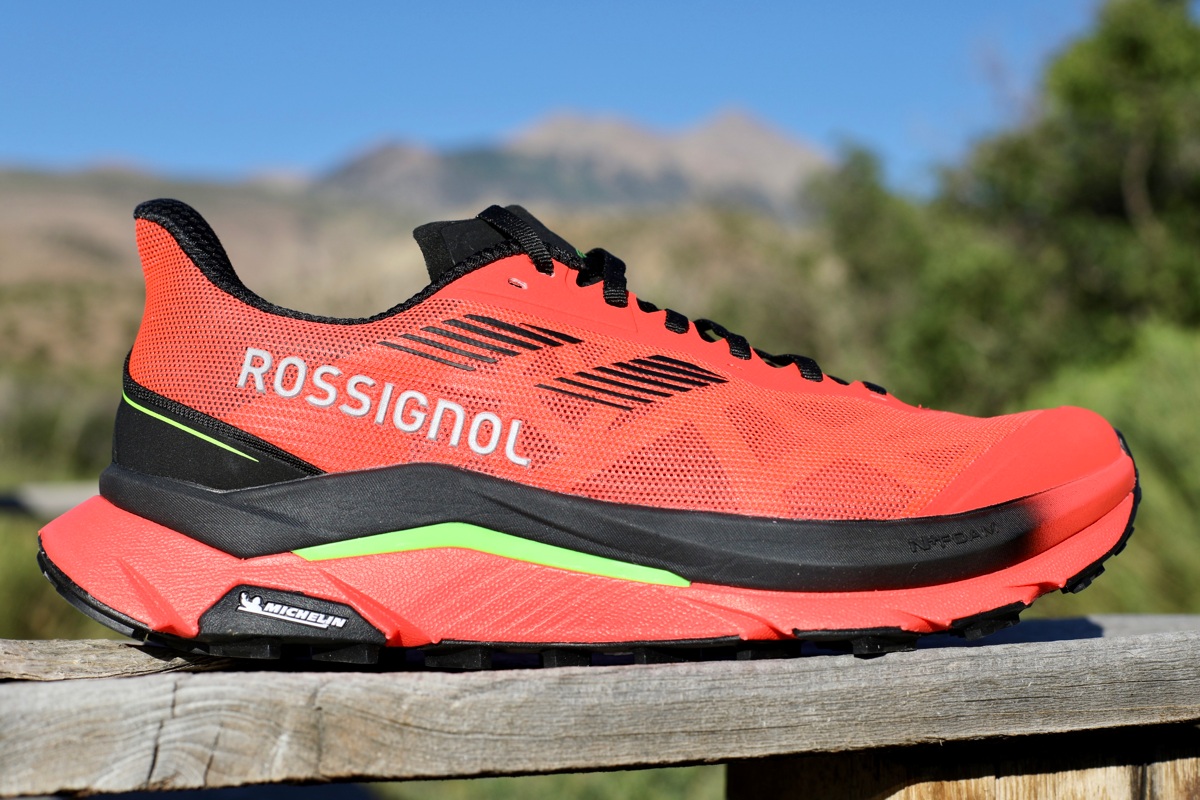
A lateral view of the Rossignol Vezor.
Bright red is the signature colorway for the Rossignol Vezor upper on both the women’s and men’s sides, and it stands out while on the move. The men’s version also comes in blue, and the women’s is available in pink. Another notable feature is the extended and slightly diagonal lacing system that trends medially down toward a slim toebox. It adds an interesting verve to the Vezor’s appearance, as does the elongated tab at the heel, which functions both as a pull tab and Achilles protector.
The last is narrow, and the upper maintains that tight look and fit. The shoe qualifies as super slim and one that I would recommend to people who have blade-like feet and enjoy running fast. The narrow quality was hard to come to terms with initially, but I wanted to explore more since the rearfoot and midsole inspired a novel experience. The snugness felt appropriate, but it was nearly unforgiving in the toebox. Fortunately, the extended lacing system has the capacity to marginally release the upper from a restricted wrap with double lace holes at three distinct locations. This allowed me to dial in the fit at a more precise level for more volume and relaxation. I am used to wide-toebox shoes and uppers with more forgiveness, like the VJ MAXx 2, or shoes with a BOA lacing system, like the Altra Mont Blanc BOA.
Rossignol showed more forethought about precision fit. The shoe features a removable insole system with three customizable options, which furthered my ability to make it work not only for testing, but for experience and enjoyment. I really wanted to make it work, and it eventually did.
The mostly recycled upper material is a breathable engineered mesh atop an extensive underlay web for extra support and superior midfoot wrapping. It is both snag-resistant and technically resilient if venturing off-trail or through fell-like environments. The toebox has a suitably thick TPU bumper and a solidly built heel, notably on the medial side. I appreciated the latter in conjunction with an outsole goat-hoof design that enhanced the shoe’s ability to tackle camber and technical trails.
The heel collar isn’t overly cushioned but padded enough for comfort — all a runner needs for a shoe like the Vezor. In terms of prioritizing fit over comfort, the tongue is slim, light, and attached with a flexible mesh. It’s a touch of utility and a wise decision for finding adequate fit without bulk. There weren’t any alarming flex or rubbing points, just some reworking of the lacing and insole layering for more room and more miles.
Rossignol Vezor Midsole
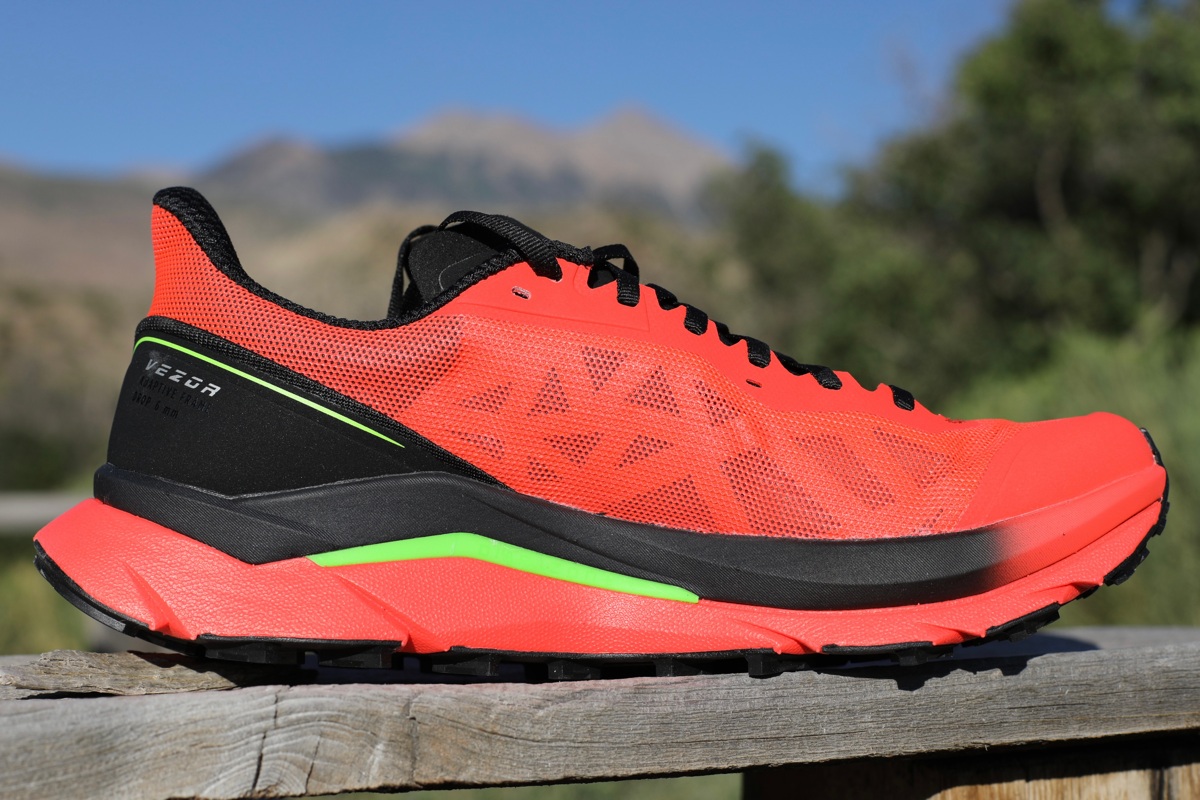
A medial view of the Rossignol Vezor.
One reason I wanted to make the ultra-slim Rossignol Vezor work was that the underfoot experience genuinely has more cushion and rebound than what I am accustomed to. I will admit that I liked the higher cushion and amplified propulsion because it feels like the shoe is giving back. I charge uphill with renewed confidence and tackle the singletrack like I am wearing an aggressive VJ. It reminds me of a cross between the Altra Mont Blanc Carbon and VJ MAXx2.
The Vezor midsole is unusual in its dual EVA foam combination. The interesting part is the layering design, which seems opposite to most typical midsole stacks, but seems to work for the Vezor. The top foam layer is referred to as high-rebound EVA, and the lower is a nitrogen-infused supercritical EVA. The top foam is geared more toward delivering a responsive feel, while the bottom layer is designed for more cushioning and grip assistance.
Between the two foams is a composite Diapazon+ plate, which looks a bit like a tuning fork under the forefoot and has small winglets that cradle the foot further back. The plate adds stability both laterally and rotationally while augmenting foam propulsion. I wouldn’t say that it functions as a rock plate, but it maintains midsole integrity.
At the expense of redundancy, I wanted to test the Vezor, a shoe normally outside my purview, because the underfoot propulsion and cushioned protection offered a renewed running spirit during short to mid-distance trail adventures. The shoe is capable of a lot, and it can really pack a punch.
Rossignol Vezor Outsole
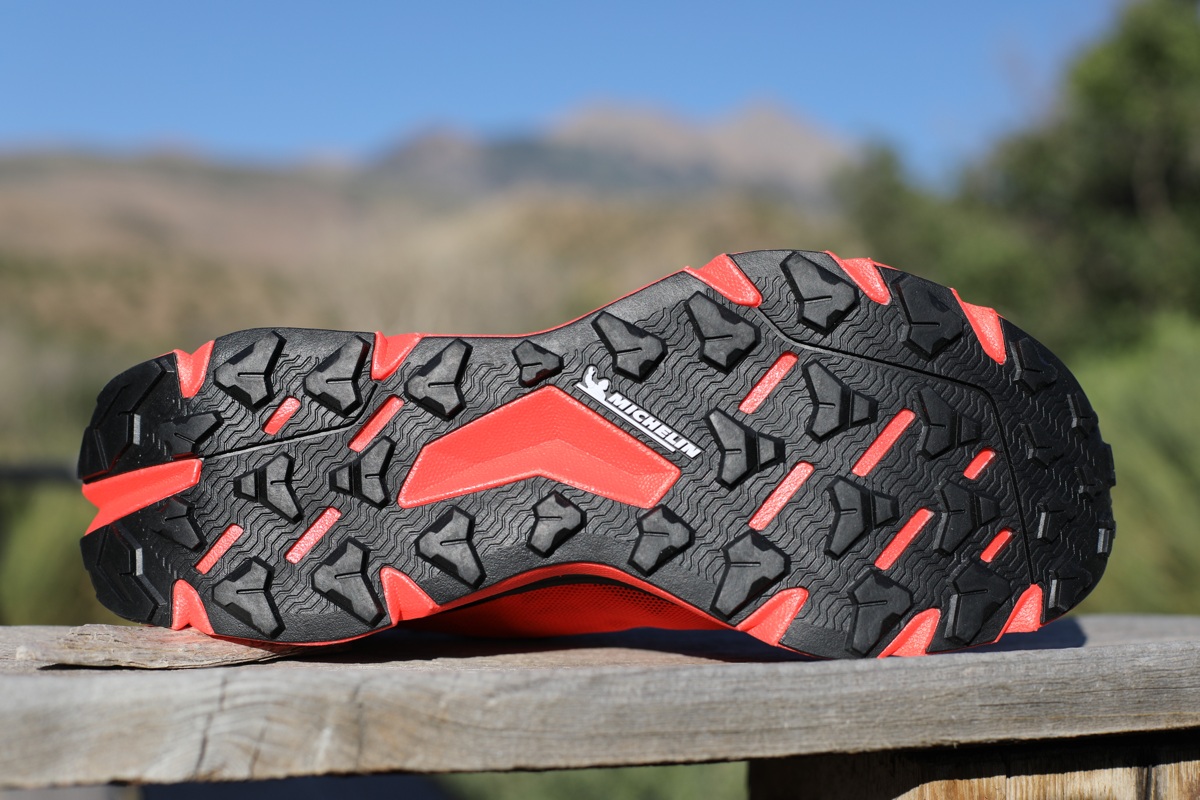
The outsole of the Rossignol Vezor.
Since I tend toward grippy shoes, the Rossignol Vezor Michelin Formula rubber outsole is tops in my book. It works well across all conditions, even the dry granitic soils that dress Southern Oregon’s hills. The Vezor wears the outsole modestly, but with surety.
The lugs range from three to four millimeters, front to back, and are multi-directional, allowing for steering control on more challenging terrain and flexibility on tamer runs. I would note that the road running sections are doable since the shoe owns a lower profile and cushioned propulsive system. The heel is hoofed with a midsole reveal down the middle, and there is another midsole flex point in the midfoot of the outsole. The rearfoot hoof and foam reveal adds to the Vezor’s versatility. There is a time for a full rubber interface, and there is a time when the shoe needs to grip and flex.
Rossignol Vezor Overall Impressions
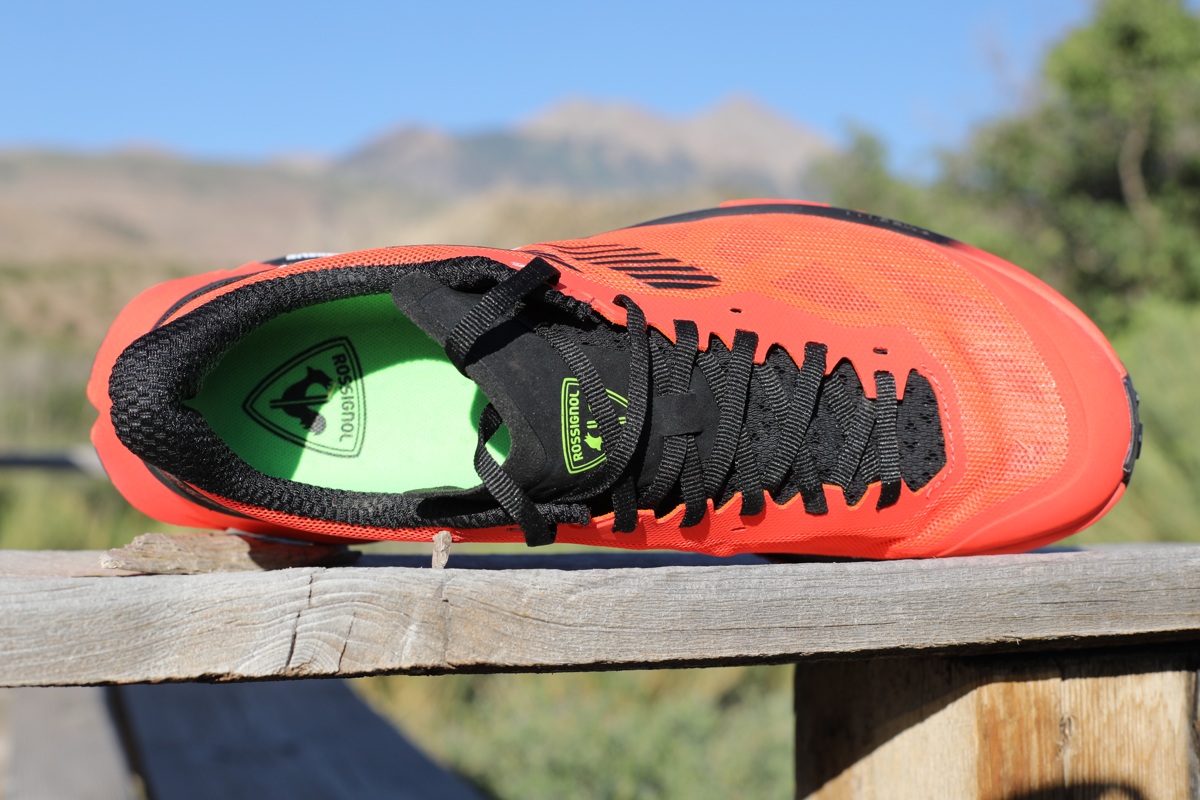
A top view of the Rossignol Vezor.
As a debut trail shoe from an outdoor brand known mostly for winter sports, the Rossignol Vezor is a remarkable make and model. Rossignol’s history in outerwear and equipment shines through with a thoughtful, durable design.
The shoe is narrow, and modifications on total volume and forefoot space are areas that need adjustments in future generations. I have run in narrower shoes, like the VJ Lightspeed and probably a handful of Nikes decades ago, but the tightness was only an issue at the outset. There are ways to modify the shoe to make it work for wider feet and splayed toes, but narrower feet will have a better first go.
The cushion — which isn’t high — and propulsive experience is what drew me in and kept me in the shoe. For a lack of a more artful way to say it, running in the Vezor is fun, and I appreciated the immediate motivation to keep moving forward. The combination of the dual foams and plate heightened this experience.
I wear the Vezor for speedier mid-distance runs. Since it is narrow, I also find it perfect for shorter runs. The outsole material will keep this shoe moving through all seasons, which is another bonus. Well done, Rossignol.
Shop the Women's Rossignol VezorShop the Men's Rossignol Vezor
Call for Comments
- Have you run in the Rossignol Vezor? What was your experience?
- What shoes do you turn to for shorter and faster runs?
Our Favorite Trail Running Shoes
Check out our Best Trail Running Shoes article to learn about our current favorite trail running shoes!