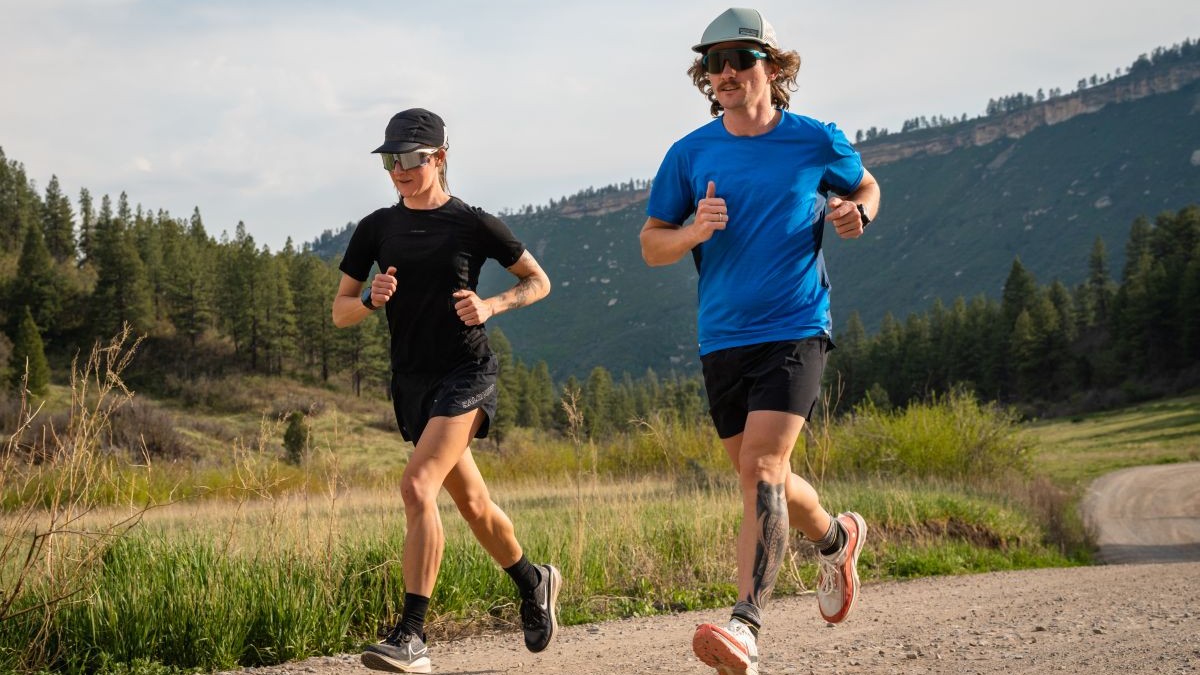
The best road-to-trail shoes will be trusty companions on multiple surfaces. Photo: iRunFar/Eszter Horanyi
Out of necessity or preference, many runners will traverse multiple surfaces throughout the course of a single run or run on roads one day and trails the next — and the best road-to-trail shoes will handle this varied terrain with ease. Whether it’s by adeptly transitioning between pavement and trail or providing a comfortable ride on dirt roads, road-to-trail shoes are versatile options that many runners have in their shoe rotation.
We developed this guide with the expert input from the dozen-strong iRunFar Test Team who log tens of thousands of miles across a wide range of locations, terrains, and surfaces every year. Some of our favorites include tried and true models we’ve loved for ages, while a few newcomers rose to the top of the shoe pile.
Our testers’ favorite road-to-trail shoe was the Nike ACG Pegasus Trail, while they loved the Hoka Challenger 8 for cushion and the Inov8 TrailFly V2 for grip. They also turned to some classics, like the Hoka Torrent 4, and newer options, like the Brooks Ghost Trail and Tracksmith Eliot Range, for road-to-trail runs.
After reading our product reviews, check out a glossary of common shoe terminology, our buying advice for shoes, a summary of our testing methodology, and answers to some frequently asked questions about the best road-to-trail shoes.
[Editor’s Note: Update May 26, 2026 to add the now-vetted Inov8 TrailFly V2 and update some structure. Updated May 9, 2026 to add the Nike ACG Pegasus Trail, note the launch of the Inov8 TrailFly V2, and verify prices and availability.]
Best Road-to-Trail Running Shoes
- Best Overall Road-to-Trail Shoe: Nike ACG Pegasus Trail
- Best Cushioned Road-to-Trail Shoe: Hoka Challenger 8
- Best Road-to-Trail Shoe for (Slightly) Technical Terrain: Brooks Cascadia 19
- Best Road-to-Trail Shoe for Grip: Inov8 TrailFly V2
- Best Zero-Drop Road-to-Trail Shoe: Altra Mont Blanc Carbon
- Best Budget Road-to-Trail Shoe: Hoka Torrent 4
- Other Great Road-to-Trail Shoes:
Best Overall Road-to-Trail Shoe: Nike ACG Pegasus Trail ($155)
Actual Weight (U.S. men’s 9): 10.4 oz (295 g) | Stack Height (heel/toe): 39/31 mm | Drop: 8 mm
Pros:
- Midsole is cushioned and responsive
- Versatile in both terrain and pace
- Breathable, comfortable upper
- Even more trail-worthy than previous versions
Cons:
- Not the best performer on highly technical trails
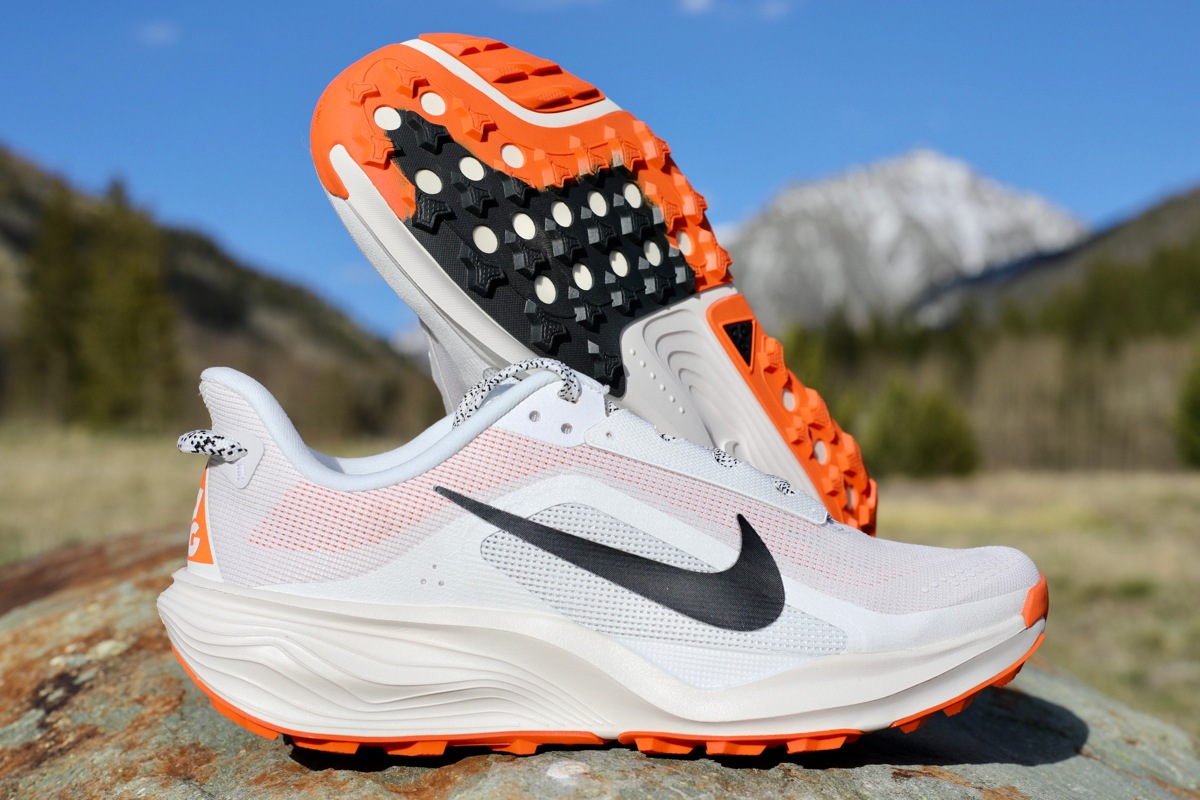
The Nike ACG Pegasus Trail was our top pick for road-to-trail shoes. Photo: iRunFar/Bryon Powell
The Nike ACG Pegasus Trail retains the core features that made its predecessor, the Nike Pegasus Trail 5, our previous favorite road-to-trail shoes while including subtle improvements that made our testers love it even more. It’s incredibly comfortable, versatile, and durable, and with small tweaks to its upper and outsole and some extra cushioning, this version of the shoe is our top choice for road-to-trail shoes.
Nike added 2 millimeters of ReactX foam in the heel and 4 millimeters in the forefoot for extra cushioning, which our primary tester appreciated as the miles added up. Whereas the previous version of the shoe tended to max out in the 15-mile range for her, this shoe could easily be an option for a 50k on non-technical terrain. Our primary tester appreciated the foam’s balance of cushion and responsiveness and felt like she could tick off miles even more easily in these shoes.
The outsole features an upgraded version of Nike’s All Terrain Compound (ATC) rubber, ATC 2.0, and it was a clear upgrade. The shoe performs better on both wet and dry terrain, with better traction on rubble and less sliding on rocks and slabs. The 3.5-millimeter lugs have a new pattern and are still light enough to run well on pavement without feeling clunky, making this a true road-to-trail option. But because of their slightly wider footprint, these shoes could also handle moderately technical terrain as well. The upper is still top notch, with an even more breathable mesh that allows ample airflow and drains water well. The shoe also features a wider toebox, a welcome change for Nike shoes, and a less-curved lateral aspect of the forefoot, changes that allow more room for your toes to spread naturally.
While these changes have pushed these shoes further into the proper trail shoe category, it’s still not suited for the most technical trails. For just about everything else, though, this shoe is hard to beat.
You can read more about this shoe in our full Nike ACG Pegasus Trail review.
Shop the Men's Nike ACG Pegasus TrailShop the Women's Nike ACG Pegasus Trail
Best Cushioned Road-to-Trail Shoe: Hoka Challenger 8 ($155)
Actual Weight (U.S. men’s 9): 9.3 oz (264 g) | Stack Height (heel/toe): 42/34 mm | Drop: 8 mm
Pros:
- Offers a smooth ride on roads and light trails
- Well-cushioned and comfortable
Cons:
- Does not perform well on technical trails
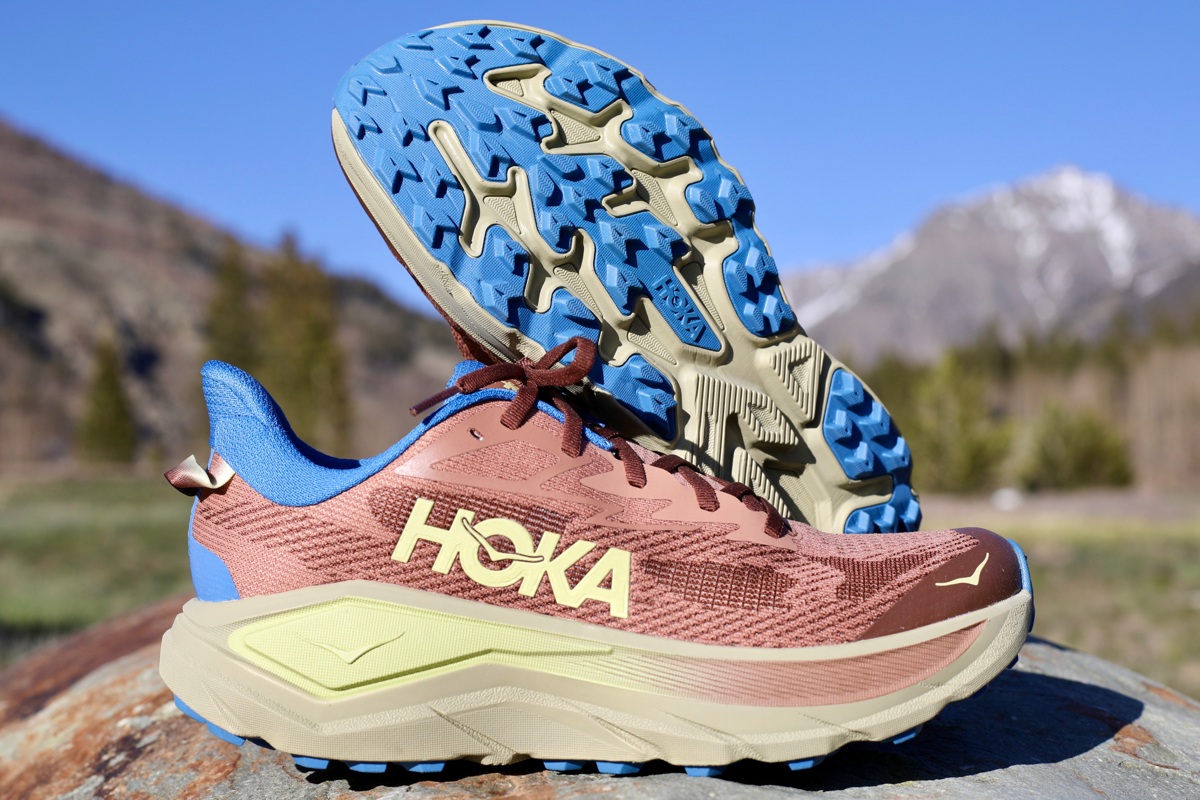
The Hoka Challenger 8 can provide plenty of cushion across varied terrain. Photo: iRunFar/Bryon Powell
The Hoka Challenger 8 can sop up miles on pavement, dirt, and non-technical trails along with the best of them. Like many Hoka shoes, it has ample cushion — it’s often described as the trail version of the Hoka Clifton (see Hoka Clifton 10 review) — and this version significantly increased the stack height to 42 millimeters for men and 39 millimeters for women for an even plusher ride. Both of our testers said that even with this extra cushion, the shoes don’t feel mushy, but it still could be too much for runners used to more responsiveness and a close-to-the-ground feeling.
The outsole features moderate 4-millimeter lugs, which offer a smooth ride for roads and trails. Our testers loved this shoe for those surfaces and everyday easy runs, but they noted that it didn’t perform as well on more technical terrain or faster efforts. After splashing through creeks, this shoe drained and dried well, and after 130 miles, it has shown minimal wear.
Overall, it’s a durable, comfortable shoe that we loved for everyday road-to-trail runs.
For even more detail, you can read our full Hoka Challenger 8 review.
Shop the Men's Hoka Challenger 8Shop the Women's Hoka Challenger 8
Best Road-to-Trail Shoe for Technical Terrain: Brooks Cascadia 19 ($150)
Actual Weight (U.S. men’s 9): 10.7 oz (303 g) | Stack Height (heel/toe): 35/29 mm | Drop: 6 mm
Pros:
- Strong balance between agility and protection
- Can handle technical terrain
- Energetic and well-cushioned ride
Cons:
- High-volume toebox is not for runners with narrow feet
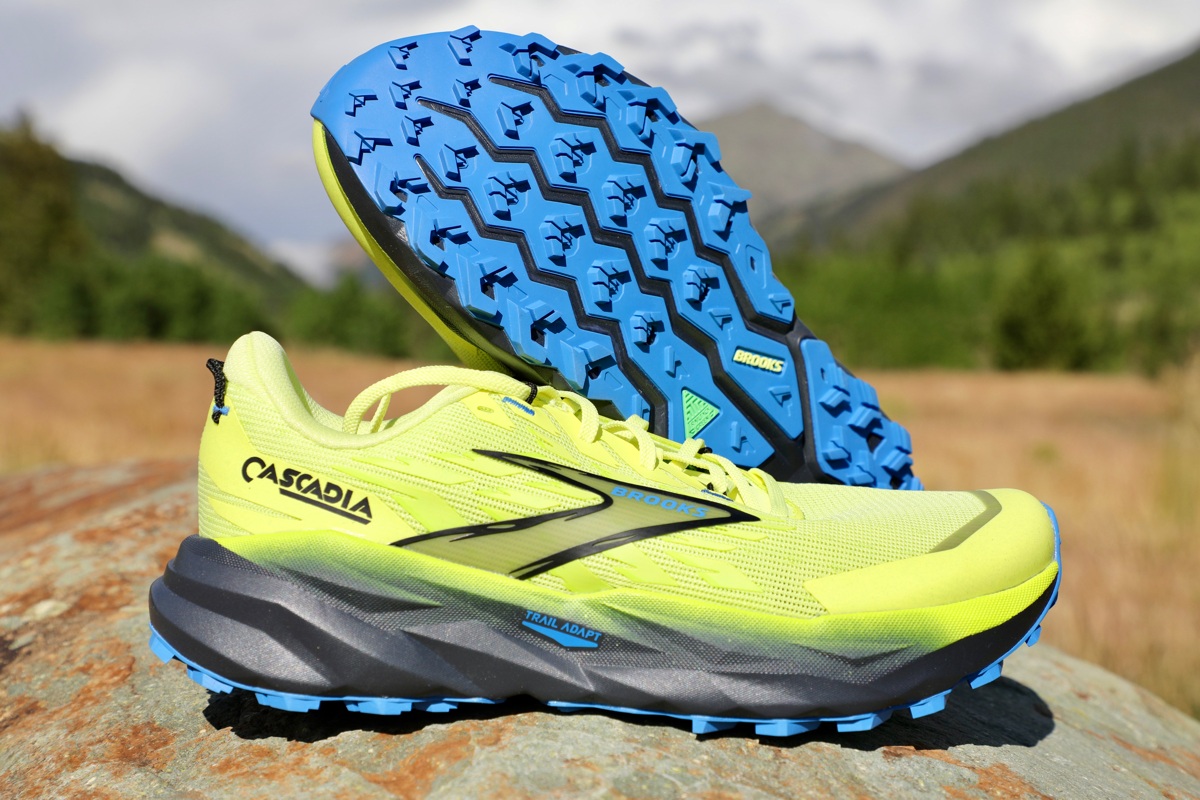
The Brooks Cascadia 19 is an agile shoe on roads and trails alike. Photo: iRunFar/Bryon Powell
The Cascadia line has been around for more than two decades, and the Brooks Cascadia 19 was our tester’s favorite version thus far. It strikes a near-perfect balance between dynamism and protection, allowing it to be a go-to shoe for your road-to-trail adventures.
While most of the other shoes in this guide are primarily suited for smooth trails, this shoe can handle more rugged terrain. In fact, our tester’s first run in these shoes was an 11-mile adventure through the rocks and rubble of Colorado’s Front Range, and they performed admirably. With 4-millimeter lugs that shed mud easily and a durable, sticky TrailTack Green outsole, they offer ample traction for the trails without being overbearing for the roads. If your road-to-trail runs hit more technical trails, this shoe would be a worthy companion.
Even better, they’re also light and agile enough for smoother surfaces. Brooks dropped the weight of this shoe to 10.7 ounces (U.S. men’s 9) and added its nitrogen-infused DNA Loft v3 foam in the midsole, creating a zippy, well-cushioned ride on roads and smooth trails. For a shoe that’s been clunky in the past, this version of the Cascadia is a refreshing change, making it one of our top choices for road-to-trail runs. It also appears in our Best Trail Running Shoes guide.
You can also read more about this shoe in our full Brooks Cascadia 19 review.
Shop the Men's Brooks Cascadia 19Shop the Women's Brooks Cascadia 19
Best Road-to-Trail Shoe for Grip: Inov8 Trailfly V2 ($160)
Actual Weight (U.S. men’s 9): 9.9 oz (281 g) | Stack Height (heel/toe): 28/22 mm | Drop: 6 mm
Pros:
- Excellent grip on dry, hard surfaces
- Anatomically contoured fit with generous toe box
- Nimble and responsive ride
Cons:
- Run a half-size small
- Low profile lugs less suited for mud and inclement weather
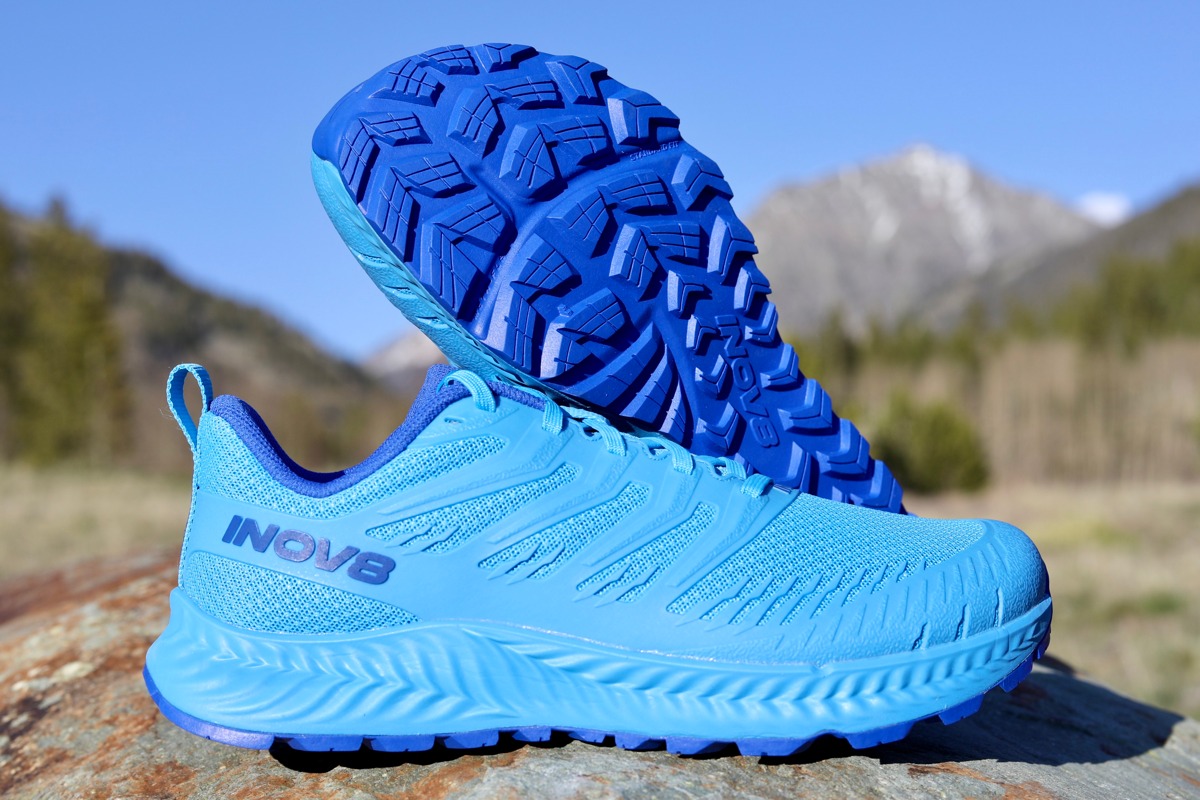
We loved the Inov8 TrailFly V2 because of its fit and versatility. Photo: iRunFar/Bryon Powell
One drawback of many road-to-trail shoes is limited performance across varied terrain. Enter the Inov8 TrailFly V2, a grippy, lower-to-the-ground shoe that excels on dry, hard-packed surfaces ranging from pavement to technical trails. Updates throughout the shoe preserve what our tester loved about the original while improving its all-around performance.
While Inov8, a brand born in England’s famously rainy Lake District, has built a reputation for mud-ready shoes, the TrailFly was designed for the opposite conditions. Its relatively low-profile 4-millimeter lugs are optimized for firm, dry terrain, though the V2’s updated Graphene Grip outsole improves traction when the trail turns wet. Our primary tester found the shoe comfortable on pavement and forest roads while still capable in technical terrain, making it an excellent option for runners seeking extra grip on road-to-trail runs.
Complementing its versatile ride is Inov8’s anatomical Natural Fit. Our tester described it as an ideal balance between hugging the foot’s natural contours while still allowing generous toe splay. Compared to the previous version, the V2 offers additional forefoot volume, appealing to runners who prefer a standard-width heel and midfoot with extra room in the forefoot. The upper has been revamped to improve its resilience to trail hazards and drain water more efficiently, but maintains its reputation of simplicity, comfort, and breathability.
With a 28-millimeter heel stack, 22-millimeter forefoot stack, and resulting 6-millimeter drop, the shoe lands in an approachable middle ground between maximal and minimalist designs. The updated Powerflow Pro midsole foam feels slightly firmer than before, a change intended to improve durability while maintaining ample cushioning for long efforts. The removable insole features hundreds of squishy foam beads that continue to enhance comfort and boost energy return.
It’s important to note that these shoes tend to run small, so it’s best to order a half-size up.
We’ll have a full review of the TrailFly V2 up soon. For now, you can read more about the original model in our full Inov8 TrailFly review.
Shop the Men's Inov8 TrailFly V2Shop the Women's Inov8 TrailFly V2
If you’re looking to save some money on a great pair of grippy road-to-trail shoes, you can still pick up the original Inov8 TrailFly on sale!
Shop the Men's Inov8 TrailFlyShop the Women's Inov8 TrailFly
Best Zero-Drop Road-to-Trail Shoe: Altra Mont Blanc Carbon ($275)
Actual Weight (U.S. men’s 9): 9.4 oz (266 g) | Stack Height (heel/toe): 29/29 mm | Drop: 0 mm
Pros:
- Grippy outsole
- Reliable, comfortable midsole
- Race ready
Cons:
- Expensive
- More of a dirt path shoe than a road-to-trail shoe
- Zero-drop shoes aren’t for everyone
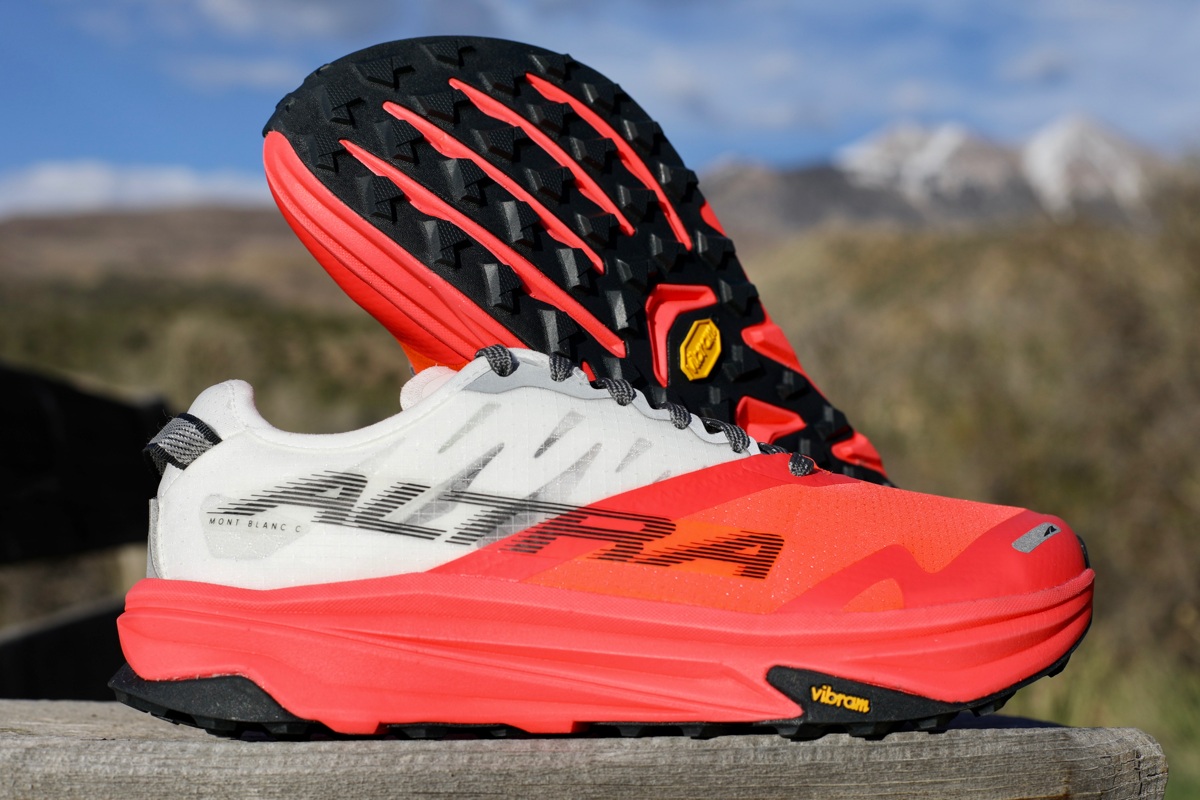
The Altra Mont Blanc Carbon is a race-ready zero-drop shoe. Photo: iRunFar/Bryon Powell
The Altra Mont Blanc Carbon is a zero-drop, carbon-plated shoe ready to move fast on moderate singletrack and gravel roads. This is the first time Altra has produced a true race-ready trail shoe.
The Vibram Megagrip Litebase outsole of this shoe shines. One of the most respected outsole materials across trail running shoes, the Megagrip lives up to its name, offering ample traction without feeling too burdensome when the surface flattens. Our tester loved this shoe on gravel roads and singletrack but found its performance diminished on pavement, so if your road-to-trail runs involve more road than trail, we’d recommend looking for something different.
The midsole of this shoe features a full-length carbon plate that offers both propulsion when you’re moving fast and protection when the pace slows — acting as a carbon-rock plate combo. Altra used its Ego Max foam for the rim of the midsole and Ego Pro foam in the core, a combination that, along with the carbon plate, offers a fast, fun ride, making it a strong choice for race day.
Our tester noted that this shoe feels narrower than other Altra shoes she’s worn, but said it still has an ample toebox and an upper that feels breathable and secure. The shoe’s laces are, in the eyes of our tester and other reviewers, too long, a small but strange issue for a shoe, especially one this expensive.
This shoe also has a sleeker look than many of Altra’s other options. For those who can’t stomach paying $250-plus for a pair of shoes, our tester also liked the Altra Mont Blanc Speed (review), which lacks a carbon plate but offers many of the same features as this shoe for $80 less.
Finally, it’s important to note that zero-drop shoes aren’t for everyone, especially those who’ve never run in them before. We always recommend doing research, figuring out what works best for you, and easing into zero-drop shoes if it’s your first time in them.
For more information about this shoe, you can read our full Altra Mont Blanc Carbon review.
Shop the Men's Altra Mont Blanc CarbonShop the Women's Altra Mont Blanc Carbon
Best Budget Road-to-Trail Shoe: Hoka Torrent 4 ($130)
Actual Weight (U.S. men’s 9): 9.0 oz (254 g) | Stack Height (heel/toe): 33/28 mm | Drop: 5 mm
Pros:
- Versatile
- Performs well on technical trails
- Improved durability and stability
- Approachable price
Cons:
- Not as specialized as other options
- Deeper lugs are less ideal for road running
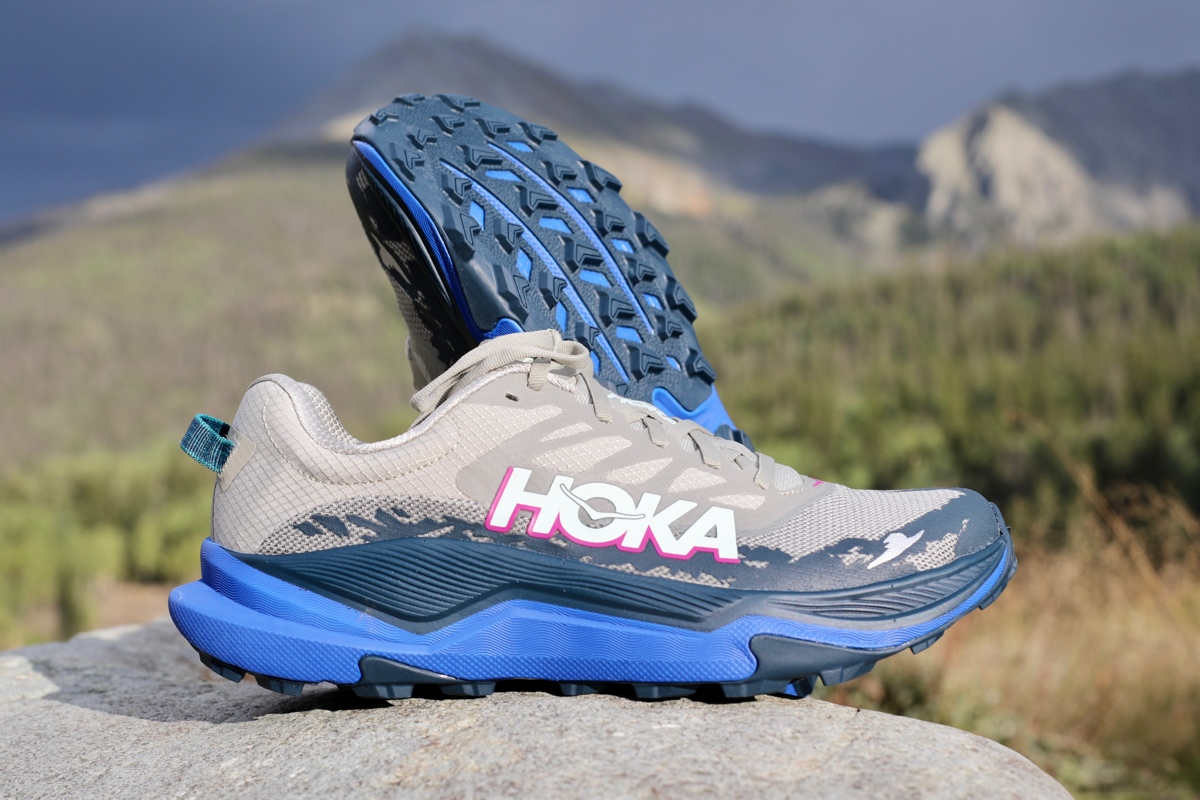
The Hoka Torrent 4 is a durable shoe for everyday road-to-trail miles. Photo: iRunFar/Bryon Powell
The Hoka Torrent 4 is an approachable, everyday running shoe with moderate cushion that can handle a mix of surfaces from technical trails to gravel roads. Our primary tester characterized it as “just a nice everything shoe.”
The upper provides a locked-in fit and a wider, roomier feel than previous versions. Underfoot, Hoka added two millimeters of stack height for some extra cushioning, striking a good balance between cushion and responsiveness and making it a worthy choice for everything from workouts to 100 milers. While it doesn’t have a rockplate, it’s much more stable and durable than previous versions of the shoe, which could feel packed out and mushy after just 100 miles. After 140-plus miles, our primary tester experienced no issues with excessive wear and no ankle turns, an issue that had plagued her in previous versions.
With 5-millimeter lugs, this shoe handles technical trails better than most other shoes in this guide, but it is not as adept on pavement. Aside from that, this shoe does basically everything well — and STILL at $130, that value is hard to beat.
For an even deeper look, you can read our full Hoka Torrent 4 review.
Shop the Men's Hoka Torrent 4Shop the Women's Hoka Torrent 4
Other Great Road-to-Trail Shoes
Mount to Coast H1 ($160)
Actual Weight (U.S. men’s 9): 8.5 oz (242 g) | Stack Height (heel/toe): 35/29 mm | Drop: 6 mm
Pros:
- Well-cushioned and durable
- Runs like a road shoe with enough traction to perform well on dirt
- Lacing system makes it easy to take shoe on and off
Cons:
- Does not perform well in mud
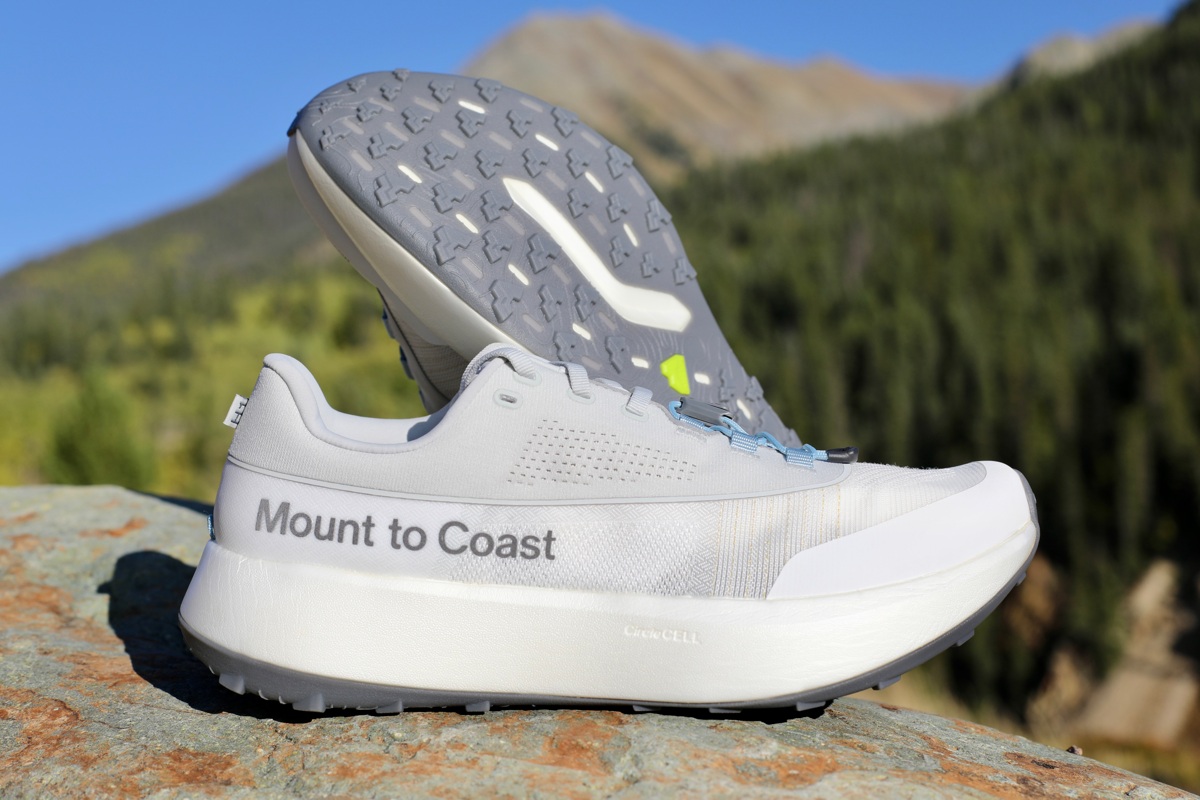
The Mount to Coast H1’s defining feature is its midsole cushion. Photo: iRunFar/Bryon Powell
The Mount to Coast H1 is the only shoe in this guide specifically marketed as “road-to-trail,” and we found that designation to be refreshingly accurate. Their cushion and road shoe ride make it a strong choice for dirt roads and non-technical trails.
The CircleCell midsole foam, which the brand claims is sustainable, offers tremendous cushioning without sacrificing stability on smooth surfaces. Our tester, who primarily runs trails but is gradually shifting to some road running, said that these were much more cushioned than any of her trail shoes and felt like a road shoe in terms of rocker and overall feel. “You can really compress into it and feel the cushion, but also the rebound so it doesn’t feel like you’re losing that much energy,” she said.
The outsole, with 2-millimeter lugs, has just enough traction to perform well on dirt and light trails, and you can hardly feel the lugs on pavement because they’re so minimal. And on dirt, there is noticeably less sliding during the propulsion phase of the stride than with road shoes. “I don’t get that half a moment of ‘Is the shoe actually going to hook up?’ feeling with them,” said one tester. This is not the shoe, however, to take in mud or on more technical pursuits.
These shoes also feature Mount to Coast’s unique dual lacing system, with different adjustment points in the forefoot and midfoot designed to allow ultrarunners to adjust the fit when their feet swell or change shape. Our tester wasn’t convinced the system did much for performance or comfort, but she did appreciate that it made it easy to put on and take off the shoe with minimal lace adjustment.
Shop the Men's Mount to Coast H1Shop the Women's Mount to Coast H1
Brooks Ghost Trail ($150)
Actual Weight (U.S. men’s 9): 10.4 ounces (294 g)| Stack Height (heel/toe): 37/9 mm | Drop: 8 mm
Pros:
- Road shoe ride
- Durable
- Affordable and versatile
Cons:
- Not suited for technical trails
- Laces can be tricky to get right
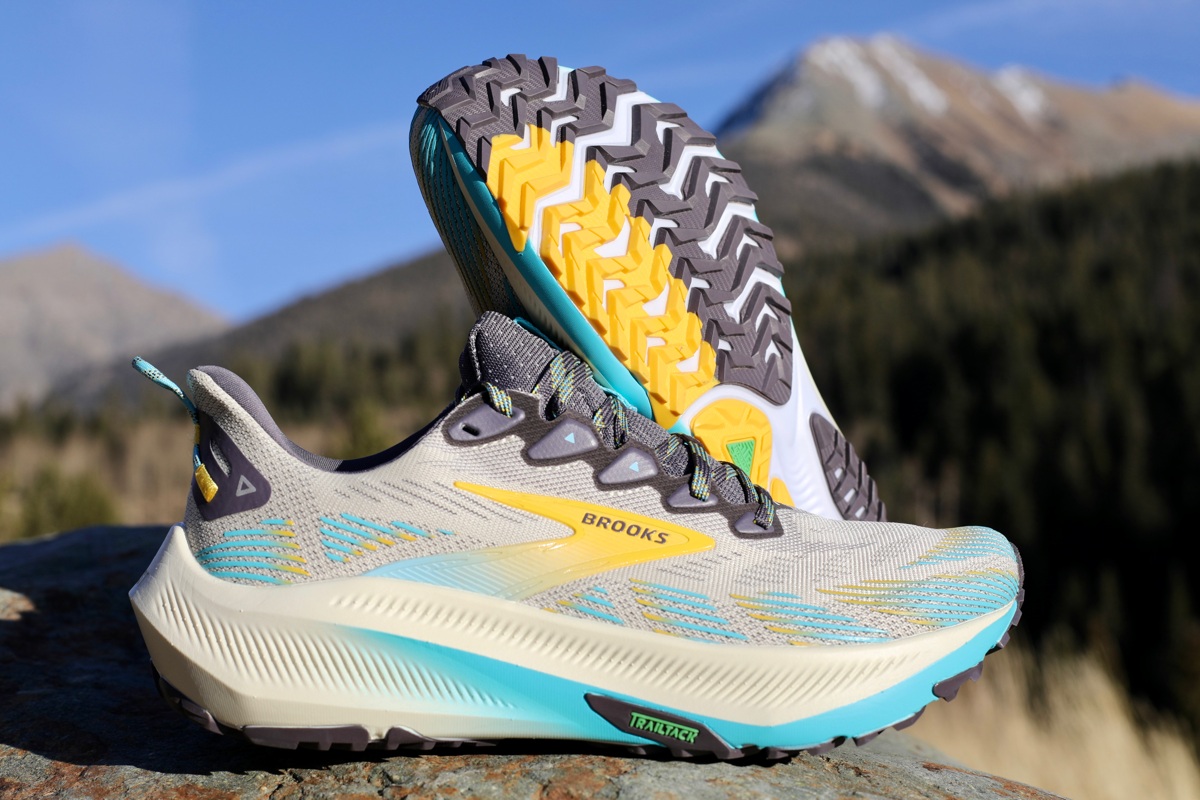
The Brooks Ghost Trail offers a road shoe ride on trails. Photo: iRunFar/Bryon Powell
The Brooks Ghost Trail is the trail version of one of the most ubiquitous road shoes around, and the first edition of this shoe is another excellent option for road-to-trail running. With an 8-millimeter drop and a nitrogen-infused DNA Loft v3 foam, it has a road shoe profile and ride, paired with 3-millimeter lugs for gripping singletrack and dirt roads with ease.
The upper, made from a soft air-mesh material, is breathable and comfortable, and it has enough structure for running switchbacks. The upper also drains well. The midsole is where this shoe really shines, though. It strikes the right balance, allowing smooth forward propulsion like a road shoe without feeling overly boggy or bouncy. Our primary tester has run 200-plus miles in these shoes, including some threshold and tempo efforts, and she reported that they’ve maintained their resilience and energy return and have no major signs of wear. The outsole, made from Brooks’ TrailTack Green rubber, is excellent on smooth trails and gravel and can handle both wet and dry surfaces. It is not, however, designed for the snow or technical trails.
Finally, the value of these shoes is undeniable: For a shoe that’s well-cushioned, versatile enough to perform well on most surfaces, and durable through 200-plus miles of running, $150 is tough to beat.
For even more information on this shoe, you can read our full Brooks Ghost Trail review.
Shop the Men's Brooks Ghost TrailShop the Women's Brooks Ghost Trail
Tracksmith Eliot Range ($240)
Actual Weight (U.S. men’s 9): 9.5 oz (269 g) | Stack Height (heel/toe): 35/26 mm | Drop: 9 mm
Pros:
- Premium materials
- Low-profile ride with solid cushioning
- Classic Tracksmith style
Cons:
- Not for technical trails, snow, or mud
- Very expensive
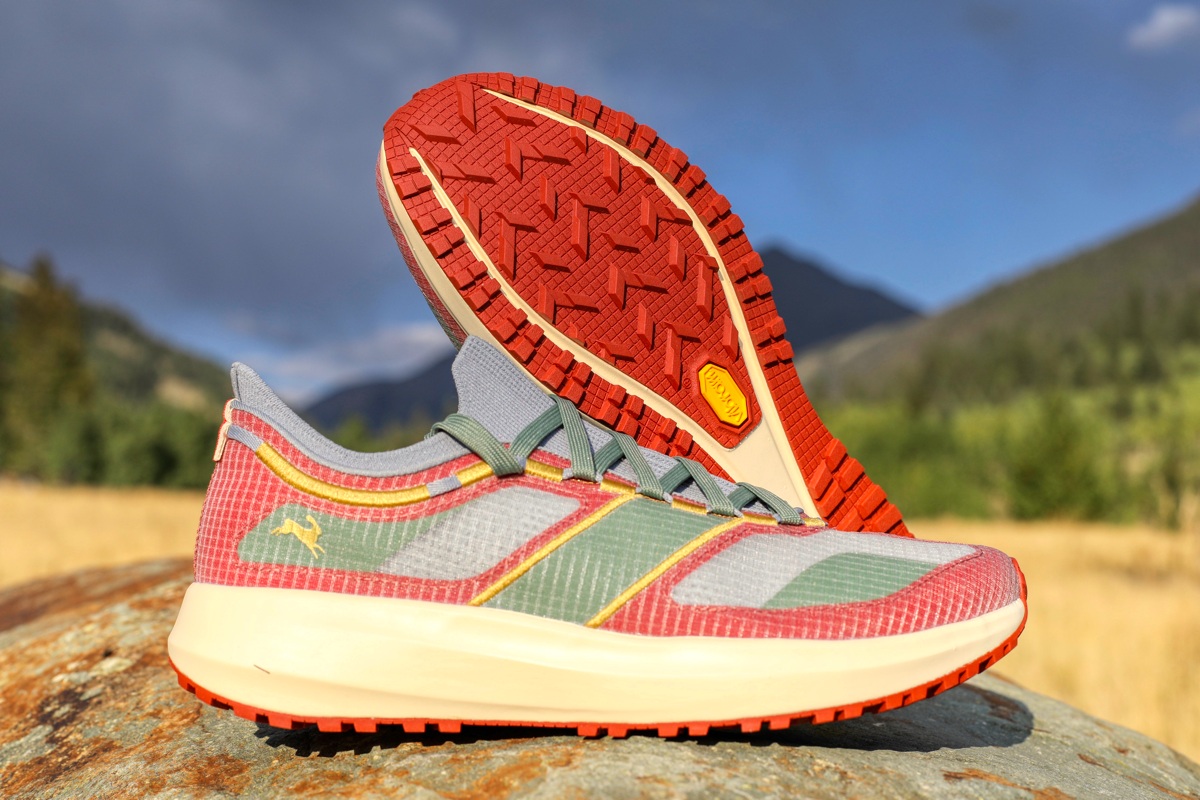
The Tracksmith Eliot Range has a lower-profile ride and a unique aesthetic compared to other options. Photo: iRunFar/Bryon Powell
The Tracksmith Eliot Range is the New England brand’s first trail shoe, and our primary tester found it to be a nimble, classy option well-suited to road-to-trail runs for runners seeking quality materials and a more refined aesthetic.
This shoe is unlike others in this guide and, more broadly, unlike most trail shoes on the market. There are several unique aspects of this shoe, starting with its upper. The outer layer is a breathable woven shell that enhances durability and weather resistance, while the inside is lined with merino wool that extends around the ankle collar to create a bootie-style fit. There are also knit heel pillows to help keep the foot in place. Pulling on this shoe feels more akin to pulling on a slipper than a running shoe: It provides a soft, secure fit that wraps around your foot. One of our other testers didn’t like this unique fit, but it is undeniably snug.
The midsole is a sandwich of PEBA supercritical foam, a nylon plate, and a second, removable layer of PEBA. With a 35-millimeter stack height at the heel and 26 millimeters at the forefoot, this shoe offers a relative low-profile ride and feels at home on well-groomed trails, offering a light, agile running experience. Our primary tester raced a half-marathon that featured a combo of pavement, Forest Service roads, and non-technical singletrack in these shoes, and she found them to perform well on all three surfaces. Another tester, more accustomed to max-cushioned shoes, didn’t like the ride as much, but can see how others appreciate the departure from the current high-stack norm. Its outsole, with low-profile lugs, is not rugged enough for technical or muddy trails, though our tester did throw them on for a few icy road runs when she wanted a bit of grip without having to wear a luggier trail shoe.
True to the Tracksmith ethos, the look of this shoe is much more understated — dare we say elegant? — than that of today’s typical trail shoe. The elephant in the room, of course, is its cost. At $240, it definitely represents an investment, especially for a first edition. But if you want to try something different with a unique aesthetic, snug fit, and closer-to-the-ground ride, this shoe could be worth a try.
You can read more about these shoes in our full Tracksmith Eliot Range review.
Shop the Men's Tracksmith Eliot RangeShop the Women's Tracksmith Eliot Range
Comparing the Best Road-to-Trail Shoes
| SHOE | PRICE | WEIGHT | DROP | DISTINGUISHING FEATURE |
|---|---|---|---|---|
| Nike ACG Pegasus Trail | $155 | 10.4 oz | 8 mm | Go-everywhere versatility |
| Hoka Challenger 8 | $155 | 9.3 oz | 8 mm | Plush cushioning |
| Brooks Cascadia 19 | $150 | 10.7 oz | 6 mm | Rugged enough for technical trail |
| Inov8 TrailFly V2 | $160 | 9.9 oz | 6 mm | Grip on dry ground |
| Altra Mont Blanc Carbon | $275 | 9.4 oz | 0 mm | Speedy shoe for zero-drop lovers |
| Hoka Torrent 4 | $130 | 9.0 oz | 5 mm | Affordable go-anywhere shoe |
| Mount to Coast H1 | $160 | 8.5 oz | 6 mm | Exceptional midsole |
| Brooks Ghost Trail | $150 | 10.4 oz | 8 mm | Road shoe ride on varied terrain |
| Tracksmith Eliot Range | $240 | 9.5 oz | 9 mm | Unique ride and aesthetic |

The best road-to-trail shoes will feel equally at home on pavement as on trail. Photo: iRunFar/Eszter Horanyi
Glossary
- Road-to-Trail Shoe: A shoe that is designed for running on both roads and trails. Depending on their construction, road-to-trail shoes can serve you well on several surfaces, from pavement to trails to packed dirt and gravel roads. Road-to-trail shoes typically have a blend of features associated with both road shoes and trail shoes, like ample midsole cushioning, lugs, and rock plates. Most of the shoes in this guide are not designated as road-to-trail shoes, but all tick the various boxes that make them perform well on a variety of surfaces.
- Stack Height: The total height of the shoe between your foot and the ground, measured in millimeters at both the heel and forefoot. This is often used as a proxy for the amount of cushioning found in a shoe’s midsole. Though stack heights can range from 10 millimeters to 40-plus millimeters, they typically fall between 25 and 35 millimeters.
- Drop: The difference in stack height between the heel and toe, also measured in millimeters. Higher drops indicate more height at the heel than at the forefoot and mean the shoe is better suited for heel strikers. A lower drop indicates the shoe is more evenly heighted throughout its length. Low-drop shoes are typically better for midfoot or forefoot strikers. Drop is the same as “heel-to-toe drop” or “offset.”
- Upper: The top of the shoe, which includes everything above its midsole.
- Midsole: The layer(s) of cushioning foam between a shoe’s outsole and upper. Midsole performance and durability can vary drastically between brands and models, and the materials chosen can often be major factors in the shoe’s price.
- Outsole: The bottom of the shoe, usually made of a rubber-like compound, that makes contact with the ground.
- Lugs: The small rubber cleats on the shoe’s outsole that provide traction on trails and other unpaved surfaces. Road-to-trail shoes typically have lugs 2 to 4 millimeters deep, and, generally, the deeper the lug, the more traction it provides. Road shoes, meanwhile, don’t typically have noticeable lugs because they’re unnecessary.
- Toebox: The front part of the shoe, which surrounds the ball of the foot and toes. Runners with wider feet or squared-off toes may want to search for shoes with a wider toebox. Some brands like Altra or Topo, are know for having wider toeboxes for a more accommodating fit.

The right road-to-trail shoe can transition between surfaces with ease. Photo: iRunFar/Eszter Horanyi
How to Choose Road-to-Trail Shoes
Surface
This is a guide for road-to-trail shoes, so all of our picks perform well on both surfaces, but the relative proportion of your time on each surface and the type of trail you plan to run could influence your choice. Will most of your miles be on pavement with just a little non-technical trail sprinkled in? A true road-to-trail shoe, like the Mount to Coast H1, would be a good pick, as would the Brooks Ghost Trail. Do you plan to run fast on mostly gravel or dirt roads? The Altra Mont Blanc Carbon excels on those surfaces, especially at speed. Will you find yourself on technical trails at some point during your road-to-trail run? The Inov8 TrailFly V2 offers excellent grip in these conditions, and the Brooks Cascadia 19 also performs well when the trails get steeper and more technical.
Or maybe you just want one shoe for every surface, outside of technical trails. In that case, we’d recommend going with our top overall pick, the Nike ACG Pegasus Trail.
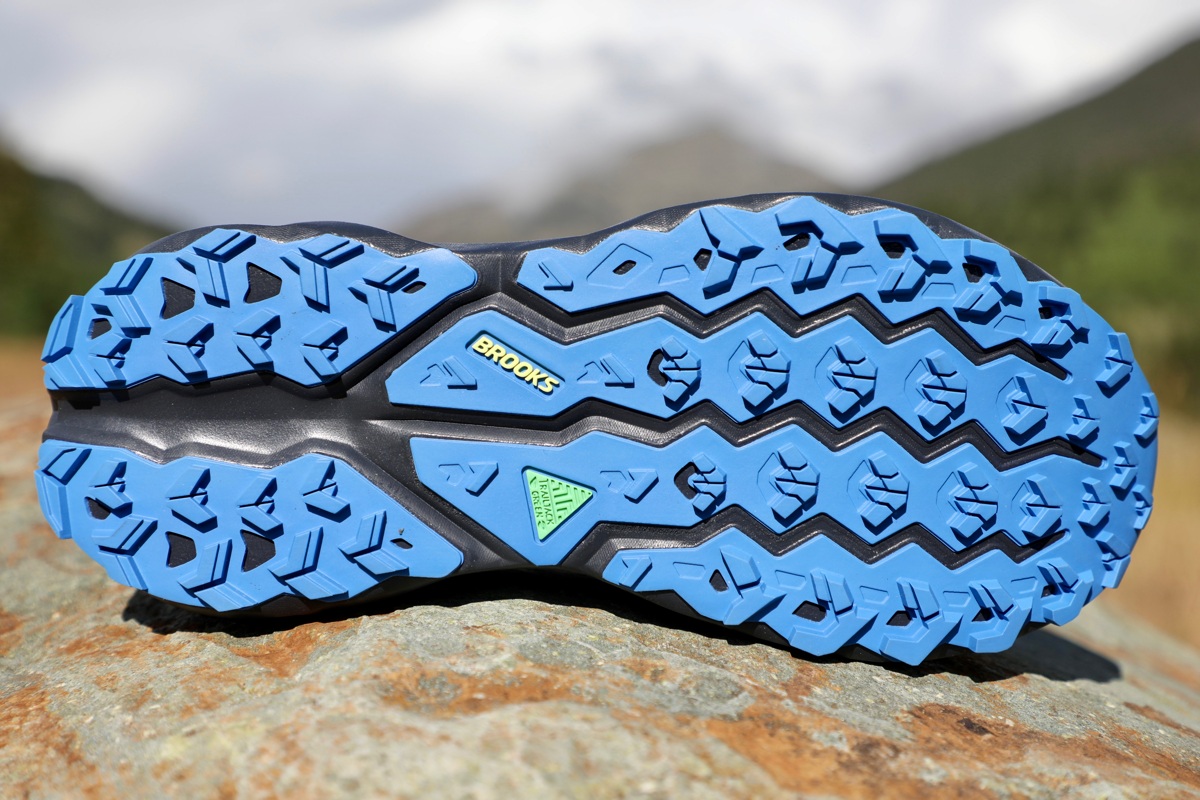
The outsole of the Brooks Cascadia 19 is rugged enough for more technical terrain. Photo: iRunFar/Eszter Horanyi
Use
In addition to maximizing fun, using shoes for their intended purpose is both a good way to extend their lifespan and boost your training. While versatility is one of the top things we look for in most of the shoes we review, the reality is that some shoes are better suited for different purposes.
If you’re looking for a shoe to race on relatively smooth terrain, we’d point you toward the Altra Mont Blanc Carbon — a carbon-plated super shoe that will give you some extra juice when you’re hunting a PR. They’re lightweight, bouncy, and, of course, expensive, costing nearly of $300. Most of the other shoes on our list could be used for racing, too, but none of them would offer the same performance as this one.
For an everyday trainer that could double as a workout shoe, we loved the Hoka Torrent 4. It is light enough to move relatively quickly while still holding up over hundreds of miles.

Wearing road-to-trail shoes on the right surfaces will increase their longevity and your enjoyment. Photo: iRunFar/Eszter Horanyi
Cushion
A shoe’s cushion, characterized by its midsole foam and quantified by its stack height, is often considered its most important feature. Accordingly, companies spend a lot of time and money researching and developing the best foams for running shoes. In the era of highly cushioned shoes, we have entire guides devoted to the Best Cushioned Running Shoes and the Best Cushioned Trail Running Shoes, and several shoes with high stack heights and premium foams made it in this guide.
How much cushioning you need is likely dependent on what you’ll primarily be using the shoes for. If you plan on putting in lots of long efforts, a more cushioned shoe, like the Hoka Challenger 8 or Mount to Coast H1, could be a good option. If you’re seeking a more responsive, low-to-the-ground feel, meanwhile, a shoe like the Inov8 TrailFly V2, which has a stack height of 28 millimeters, might suit your needs better. The Hoka Torrent 4, with 33 millimeters of stack height, strikes a nice balance between cushion and responsiveness.
The type of foam also matters. Our testers love the ReactX foam in the Nike ACG Pegasus Trail. It’s one of the company’s top foams, second only to the foam it uses in its racing super shoes. Likewise, our primary tester of the Altra Mont Blanc Carbon enjoyed the foam combo of the brand’s Ego Max and Ego Pro.

Some runners prefer lots of cushion, while others prefer a more responsive feel. Photo: iRunFar/Eszter Horanyi
Drop
Drop refers to the difference in stack height between the heel and toe, and it can range from more than 10 millimeters to zero. Shoes with higher drop, like the Tracksmith Eliot Range (9 millimeters) or the Brooks Ghost Trail (8 millimeters), offer more cushioning at the heel and are therefore typically better suited for heel strikers. A more moderate drop, like the 6 millimeters of the Brooks Cascadia 19 or the 5 millimeters of the Hoka Torrent 4, signifies the cushioning is spread more evenly throughout the shoe and can encourage a foot strike that lands near the middle or front of your foot. And then there are zero-drop shoes, like the Altra Mont Blanc Carbon, which has the same amount of cushioning at the heel and forefoot. Running in these shoes typically requires ample build-up before your leg muscles and tendons are ready to handle the majority of your miles in them.
Cost
Cost might be the first thing you consider when buying shoes. While it’s hard to find a quality shoe under $100 these days, the upper end of shoe price points can push $300, so there’s a lot of variation. To that end, we included shoes all throughout the price spectrum in this guide, and we believe that even the lower-priced options are great shoes.
Our budget pick, the Hoka Torrent 4 at $130, is also among the most versatile, adept at handling pavement and more technical trails. While there’s nothing super fancy about this shoe, it’s a good, everyday pair that can rack up the miles for half the cost of the most expensive shoe in this guide. In the middle range of prices, you’ll find shoes like the versatile and durable Brooks Ghost Trail ($150), grippy Inov8 TrailFly V2 ($160) and Brooks Cascadia 19 ($150), and the Nike ACG Pegasus Trail ($155), which boasts a stellar foam and outsole. And at the high end, the Tracksmith Eliot Range ($240) offers premium materials and a unique aesthetic, while the Altra Mont Blanc Carbon ($275) is the most specialized, with a carbon plate that makes it race-ready.
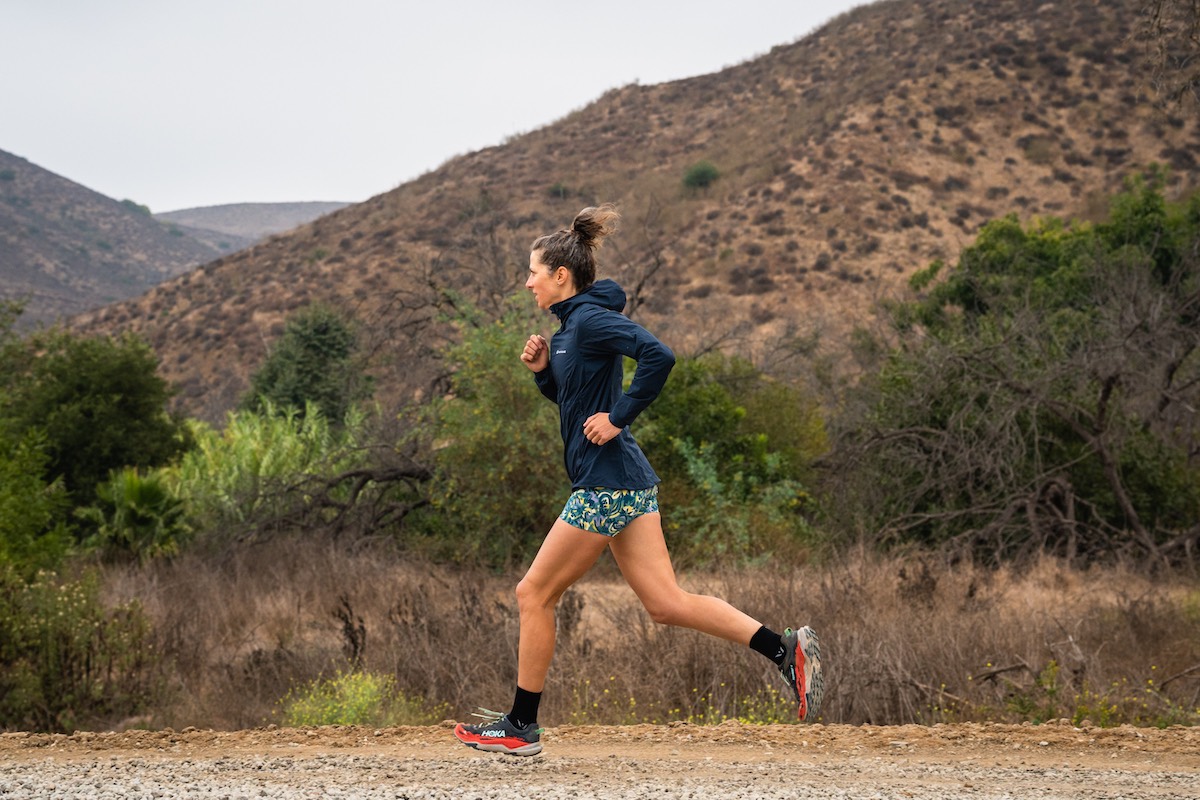
At $130, the Hoka Torrent 4 is a cost-effective option that can handle everyday miles on multiple surfaces. Photo: iRunFar/Eszter Horanyi
Why You Should Trust Us
We developed this guide with the expert input from the dozen-strong iRunFar Test Team who log tens of thousands of miles across a wide range of locations, terrains, and surfaces every year in a nearly countless number of shoe models. Some of our favorites models include tried and true models we’ve loved for ages, while a few newcomers rose to the top of the shoe pile.
For this guide, our testers considered the fit, comfort, cushion, responsiveness, traction, and more across runs of all types. In all cases, our testers logged at least 100 miles — and usually more — in every shoe in this guide before making their recommendations. They ran on a variety of surfaces — roads and trails, of course, but also gravel and packed dirt, from Colorado to California to North Carolina, all in the hope of helping you find the best road-to-trail shoes for your needs.
We’ll continue to update this guide based on our continued testing of new shoes that come on the market.
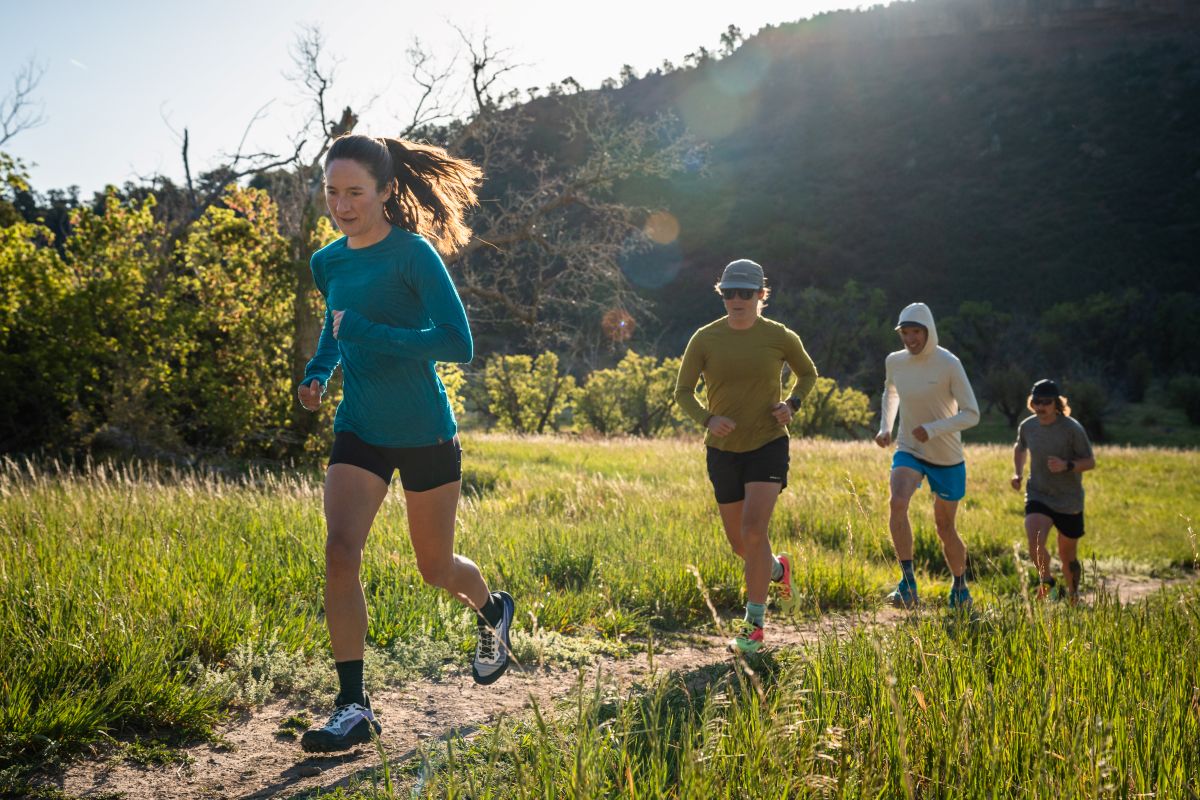
Our experienced testing team logged hundreds of miles on both roads and trails. Photo: iRunFar/Eszter Horanyi
Frequently Asked Questions
Do I need road-to-trail shoes?
The running industry often makes you think you need the next big thing, and right now, one of them is a pair of road-to-trail shoes. While they certainly have benefits, you don’t need to buy a pair of shoes specifically for road-to-trail runs, or a pair that the brand specifically markets as “road-to-trail.” A pair you have right now — or a versatile, affordable shoe like the Hoka Torrent 4 — might do the trick.
The best road-to-trail shoes thread the needle between the two surfaces. They offer protection and stability on the trails, they’re not too clunky or luggy for the roads, and they strike a balance between cushion and responsiveness for both surfaces. In the view of our testers, the Nike ACG Pegasus Trail was the shoe that checked all of these boxes the best.
Can I just wear road or trail shoes for road-to-trail runs?
Yes! In fact, only one of the shoes we selected for this guide — the Mount to Coast H1 — is marketed specifically as a road-to-trail shoe. The other eight, including our top pick, the Nike ACG Pegasus Trail, are trail shoes.
What all of these shoes have in common, of course, is good performance on both surfaces. That means they have some type of traction for the trails — and some of the luggier ones like the Inov8 TrailFly V2 can handle more technical terrain — without being overbearingly sticky on pavement. Lots of road shoes and trail shoes are versatile enough to handle both surfaces. The Brooks Cascadia 19 is another shoe that can transition between the roads and more technical terrain with ease.
All that said, we also want you to get the most out of your shoe for the long haul, which means using it for its intended purpose. Our picks for road-to-trail shoes are purposefully versatile, but several, like the Brooks Ghost Trail, aren’t meant for technical trails, and most aren’t meant for long efforts on the road.
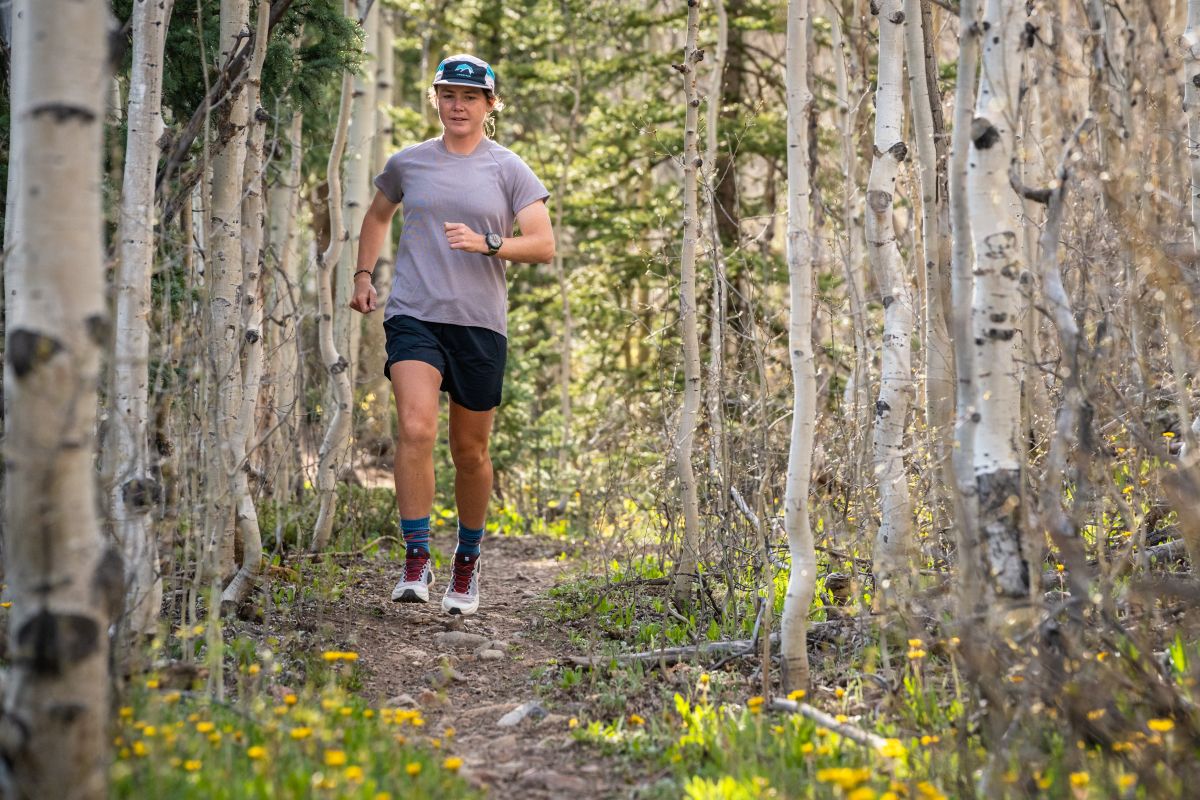
A pair of trail shoes is often all you need for road-to-trail runs. Photo: iRunFar/Eszter Horanyi
How should I choose a road-to-trail shoe?
You should first ask yourself what you plan to use the shoe for: mostly road running, mostly trail running, mostly gravel or dirt running, everyday miles, workouts and races, or some combination of all of these. A shoe like the Altra Mont Blanc Carbon would be an excellent choice for fast efforts on smooth terrain, whereas the Brooks Cascadia 19 would be better suited for runs that feature a bit of road and trails with rocks and roots.
Once you’ve determined your primary purpose for them, consider how the shoe fits and feels when you try it on for the first time. As a basic rule of thumb, you want a shoe to be comfortable out of the box and to get more comfortable as you break it in. You want a pair that’s secure enough to offer a comfortable ride on multiple surfaces without being constricting. Next, you want to determine your preference for cushioning. Are you seeking something with a more traditional low-to-the-ground trail feel, like the Inov8 TrailFly V2, or a more cushioned option like the Hoka Challenger 8? Overall, you want a shoe that’s comfortable and performs well on the surfaces you run.
What’s the best road-to-trail shoe?
The best road-to-trail shoe is the one that meets your needs and budget. For some people, that means going for a unique, stylish option like the Tracksmith Eliot Range, while others just need the everyday simplicity of a shoe like the Hoka Torrent 4.
Because of its versatility and comfort, our top pick for road-to-trail shoes was the Nike ACG Pegasus Trail. It checks almost all the boxes we were looking for in a true road-to-trail shoe.
What’s a “gravel shoe”? Should I also buy a pair of those?
No! “Gravel shoe” is just the latest branding trend that companies like to use to make their products seem new and different. Over the years, shoes that can handle pavement, dirt and gravel road, and mildly technical trails have been labeled hybrid shoes, road-to-trail shoes, door-to-trail shoes, all-terrain shoes, crossover running shoes, and, most recently, gravel shoes. There’ll be a new name for the same type of shoe in a few years, unless companies recycle an old one! Regardless of the label, all of the road-to-trail shoes we chose for this guide will serve you very well on gravel.
Call for Comments
- What’s your go-to shoe for multiple surfaces?
- What do you look for in a road-to-trail shoe?

