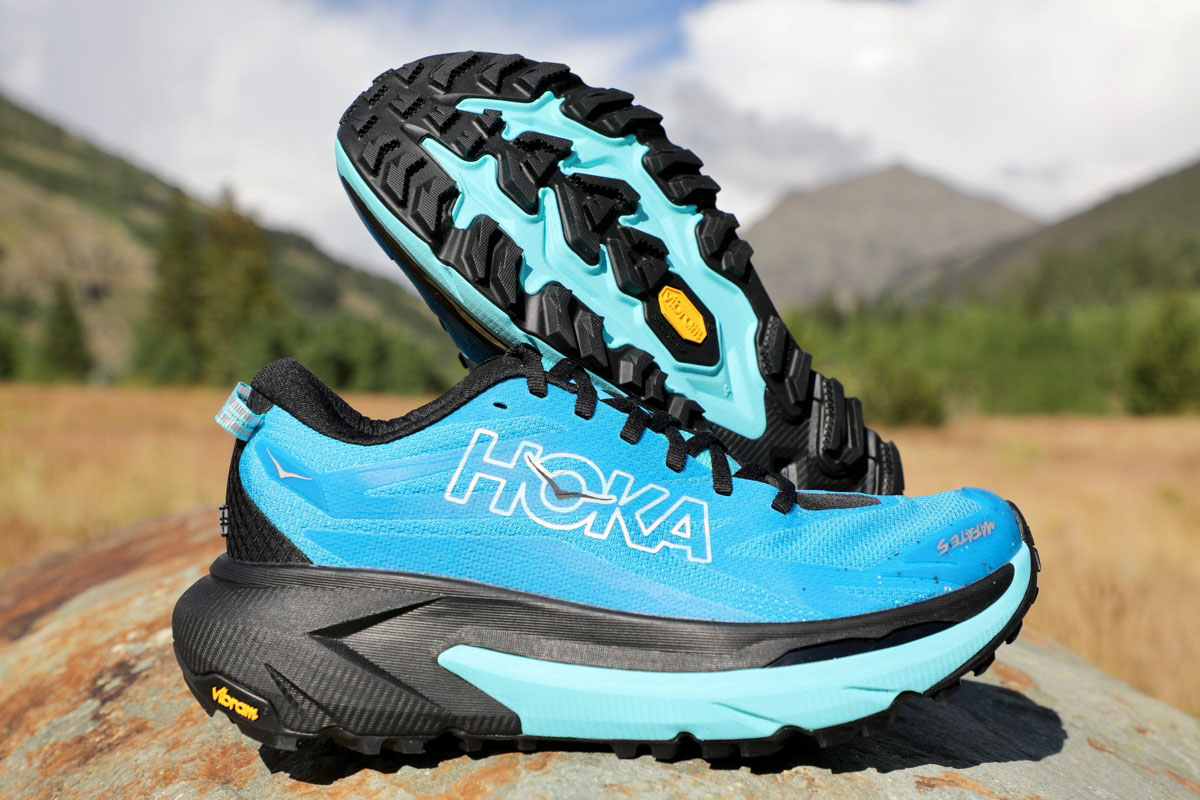
The Hoka Mafate 5. All photos iRunFar/Bryon Powell unless otherwise noted.
When it comes to marketing the Hoka Mafate 5 ($185), the brand describes the shoe as “gnarly,” which is no exaggeration. This latest iteration offers more cushioning and protection than ever, with an outsole that looks like it could be tread on a small bulldozer. Its generous 43-millimeter stack height at the heel and 35 millimeters under the forefoot for women, with 2 millimeters more on the men’s side, and actual weight of 11.1 ounces (314 grams) for a U.S. men’s 9 make it anything but svelte, yet the ride is surprisingly forgiving — absorbing impact without feeling sluggish. During my recent training buildup to a 100-mile race, the Mafate 5 had no shortage of miles or conditions to tackle, and it emerged as a resilient, protective companion that proved reliable for long hauls on rugged terrain.
The Mafate 5 also represents a notable design shift from the Hoka Mafate Speed 4. Dropping “Speed” from the name was wise — this is a very different shoe, if we can even call it a true successor. Key updates include Hoka’s new Rocker Integrity Technology in the midsole, intended to maintain smoother transitions over long miles, and a refreshed upper for improved durability, breathability, and gaiter compatibility. The drop has also increased from 4 millimeters to 8 millimeters.
Shop the Women's Hoka Mafate 5Shop the Men's Hoka Mafate 5

Annie Behrend testing the Hoka Mafate 5 on the shoe-eating granite of Yosemite Valley. Photo: iRunFar/Annie Behrend
Hoka Mafate 5 Upper
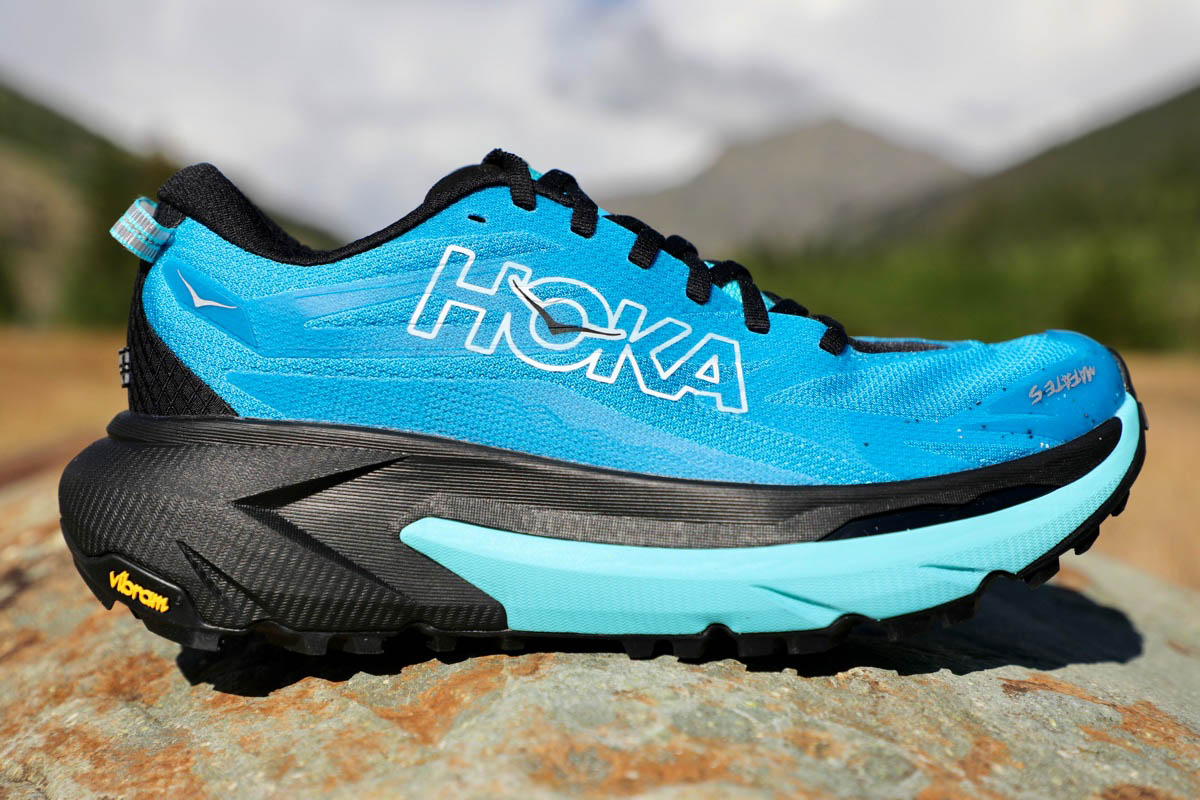
A lateral view of the Hoka Mafate 5.
The Hoka Mafate 5 was added to my Strava shoe list as “Big Blue,” as the skyward blue and black colorway is hard to miss. The upper features a warp-knit construction with anti-fray treatment. A TPU cage surrounds the shoe for improved structure and durability, and gaiter attachment points, a dynamic vamp, and reflective detailing round out the design. After roughly 100 miles on mixed terrain, Big Blue remains impressively intact. A friend who thru-hiked the John Muir Trail asked specifically how they held up to long days in Yosemite Valley this summer, remembering how granite once shredded his own trail shoes. The Mafate 5 scampered across various domes with zero notable wear on the upper, or anywhere else. I would consider this shoe a great choice for thru-hiking or fastpacking efforts in similar areas.
The Mafate 5 runs true to size. I tested my usual U.S. women’s 9, which is a half-size up from my everyday shoe size, and it handled long training efforts without claiming any toenails. The post-race casualties from my fall 100 miler were … complicated, but I’m not convinced the Mafates are to blame. The toebox comfortably accommodates my bunioned forefoot, and the lockdown kept my narrow midfoot secure.
My biggest gripe involves one of its smallest components: the tongue. It attaches in a U-shape to a thin piece of fabric anchored at the base of the laces. Although it isn’t gusseted, I haven’t had issues with it sliding side to side. Instead, what I’ve noticed is that the tongue is short and thin. Straight out of the box, it can bite the front of the ankle, especially if you’re wearing shorter socks. It has softened some with use, but it still feels like an odd area for Hoka to trim some weight. The laces themselves are refreshingly simple and work well, and any mid-run adjustments I’ve made were strictly to improve tongue comfort, not lockdown.
Hoka Mafate 5 Midsole
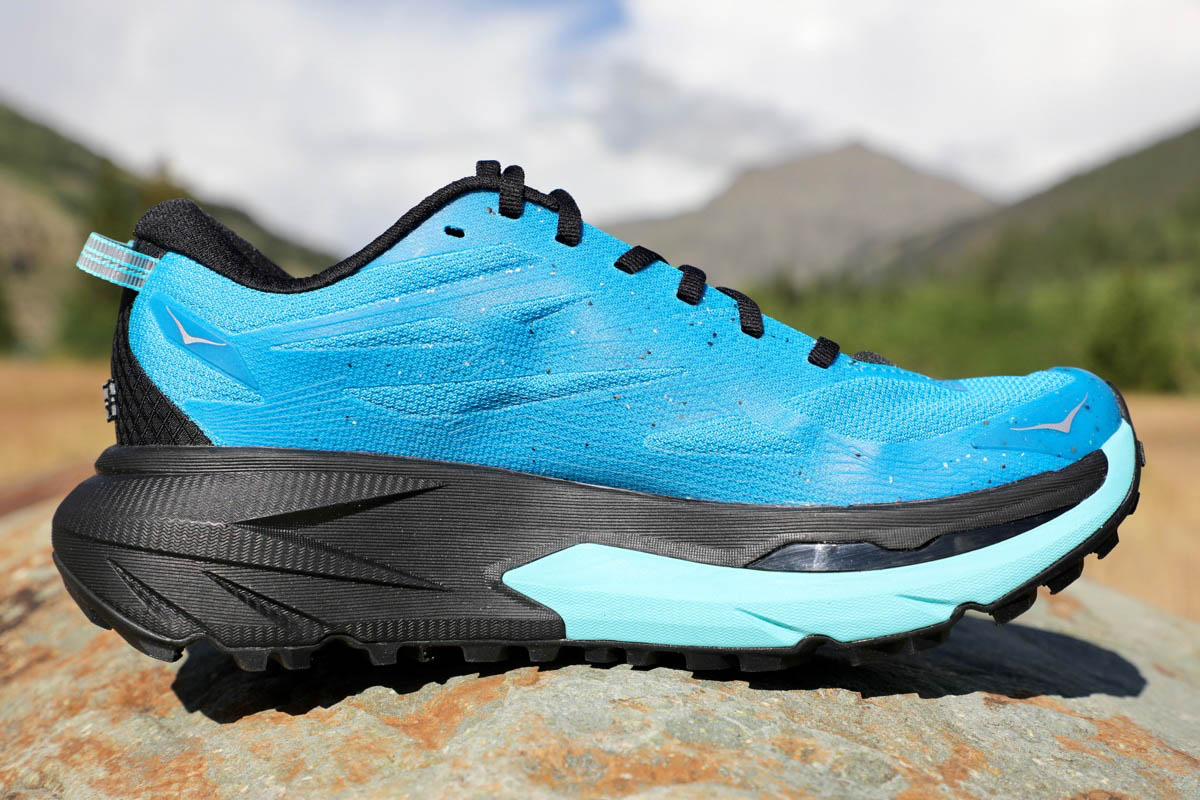
A medial view of the Hoka Mafate 5.
The Hoka Mafate 5 midsole uses a burly, dual-density stack of EVA foam with a softer, supercritical foam as the top layer, and a firmer layer underneath. The combination provides generous cushioning for long technical days. Compared to the Mafate Speed 4, which has a 31-millimeter stack height at the heel and a 4-millimeter drop, the Mafate 5 is a big jump in both stack and drop, with a 43-millimeter stack height at the heel and an 8-millimeter drop. Underfoot, it may feel more reminiscent of the substantial platform of the Hoka Speedgoat 6 than its own predecessor.
Hoka’s new Rocker Integrity Technology is a key addition here, designed to keep heel-to-toe transitions smooth and preserve the rocker geometry over long miles. A curved TPU plate sits between the two foam layers, and you can actually see it on the medial and lateral sides of the forefoot. The result is a blend of bounce and stability, with the top layer giving a touch of spring while the lower layer and wide platform keep things controlled.
My favorite outing in these shoes was a steady-state climb up Clouds Rest in Yosemite, followed by a summit break with a peanut butter and jelly sandwich, and a slightly reckless — but shockingly well-controlled — descent toward Half Dome. Considering the shoe specifications on paper, especially the weight and stack, I shouldn’t have felt as smooth and unbothered as I did, but the combination of foam and platform width delivers a solid, confidence-inspiring ride that never once felt tippy or precarious.
Hoka Mafate 5 Outsole
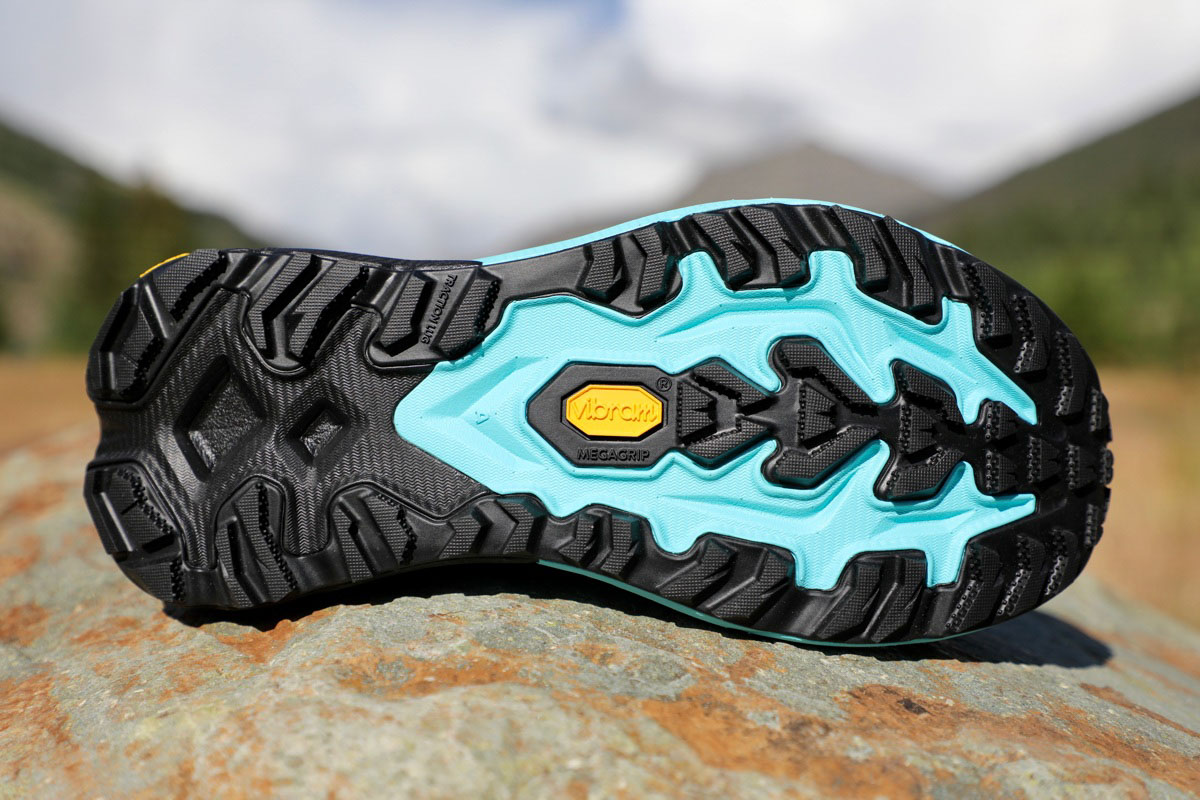
The outsole of the Hoka Mafate 5.
The Hoka Mafate 5 Vibram Megagrip outsole with Traction Lug technology feels familiar to the Mafate Speed 4 or Speedgoat 6. Lined up next to the Speedgoat, the Mafate’s multidirectional 5-millimeter lugs appear noticeably burlier, adding to the overall beefiness that justifies every bit of the shoe’s bulldozer reputation. The outsole bites into rock, dirt, and everything in between with confidence. I haven’t found the Mafate overly clunky on the flats, but I also used them mostly for 100-mile training, so I was not operating in a particularly high gear while running flats. As a fellow reviewer jokingly reminded me, having a solid strength coach might also influence my nonchalance around training and racing in heavier shoes.
After lacing these shoes at mile 65 of the Pine to Palm 100 Mile, they carried me up rocky Wagner Butte, down one of the race’s most technical descents, and through the long grind back to Ashland. It was well into the night, and I was blissfully unaware of what I was even stepping on — a testament to how protective the outsole and midsole really are. Stability and security were delivered in spades through the wee hours of the night to the finish line.
Hoka Mafate 5 Overall Impressions
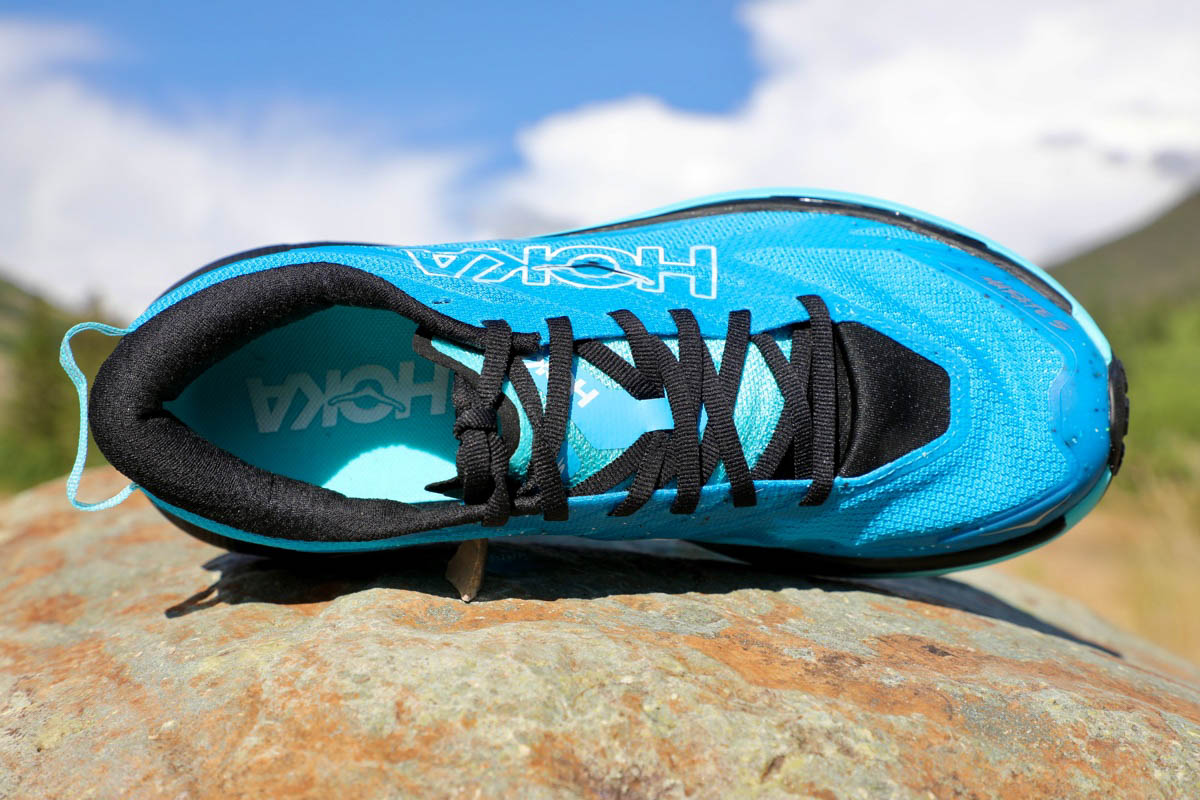
A top view of the Hoka Mafate 5.
The Hoka Mafate 5 clears the bar for what I expect from the brand’s shoes. I’m far from having run in every Hoka model, but after plenty of miles in the Speedgoat 6, my expectations for the brand’s trail lineup sit pretty high. The Mafate 5 delivers a cushioned yet controlled ride ready for long, gnarly miles. If you prefer lightweight or minimalist shoes, you probably bowed out the first time I used the word gnarly, and for good reason. But, if you’re in the market for a tough, highly protective shoe that can take on all the elements — rocks, roots, granite slabs, and whatever else your routes throw at you — while keeping your feet from feeling every one of those miles, the Mafate 5 is a compelling choice.
If your local running store carries it, try it on and see how the tongue feels with your go-to socks. I didn’t love the tongue, but I did train long and race hard in this shoe, which says everything. Quirks aside, I genuinely liked it, and it proved itself where it mattered.
Shop the Women's Hoka Mafate 5Shop the Men's Hoka Mafate 5
Call for Comments
- Have you run in the Hoka Mafate 5? What did you think?
- What features of Hoka shoes do you like? Dislike?
Our Favorite Trail Running Shoes
Check out our Best Trail Running Shoes article to learn about our current favorite trail running shoes!
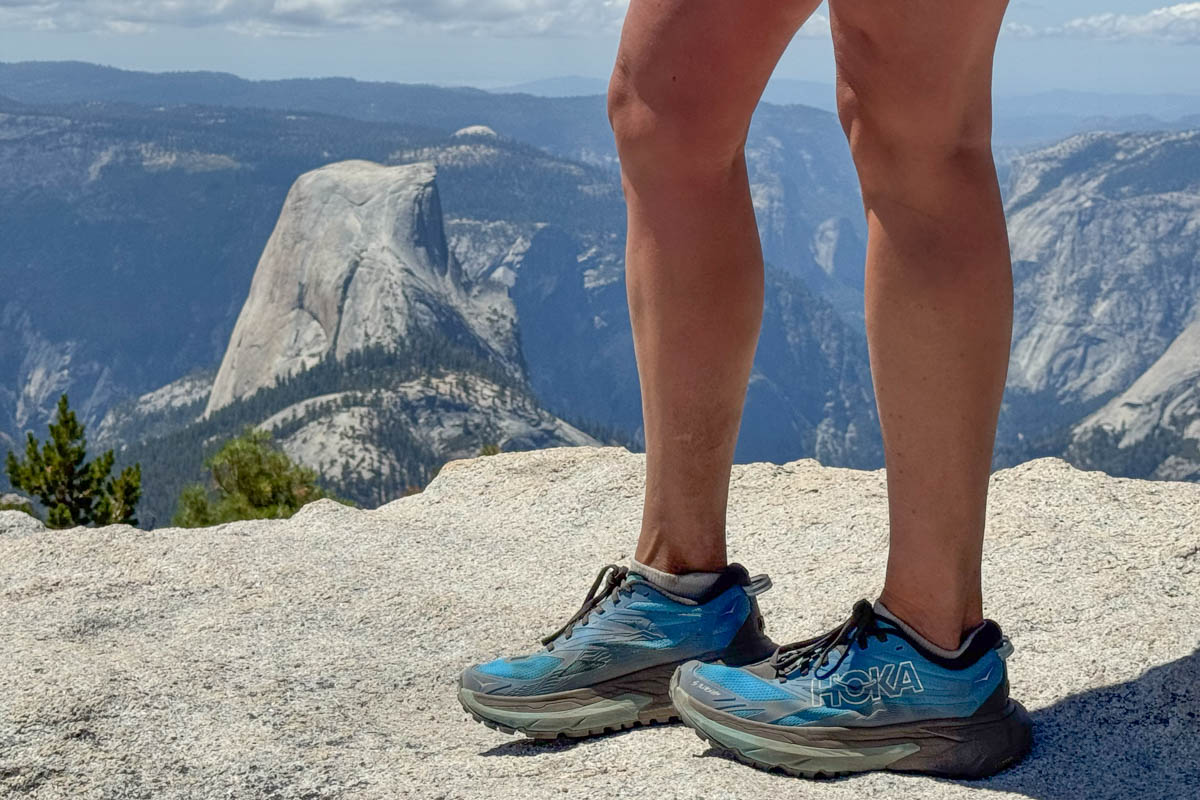
They’re not svelte, but the Hoka Mafate 5 are ready to handle anything. Photo: iRunFar/Annie Behrend