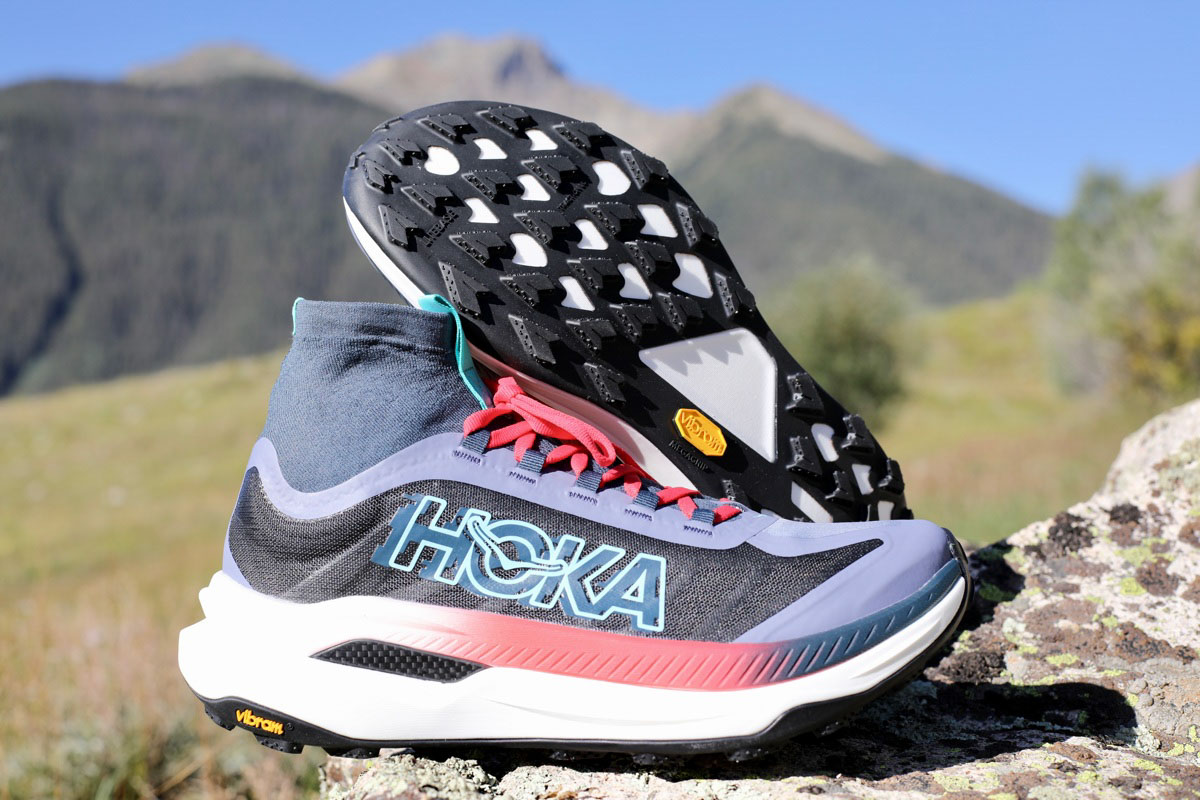
The Hoka Tecton X 3. All photos: iRunFar/Bryon Powell
The Hoka Tecton X 3 ($275) is the current model in the brand’s Tecton X line of carbon-plated, maximally cushioned trail running shoes. Key changes to this version include the addition of winglets to the shoe’s carbon plates for increased stability, two layers of PEBA foam in the midsole, and a knit ankle gaiter. Hoka also tweaked the outsole lug design, added a couple more millimeters to the shoe’s stack height, and gave the toebox a bit more wiggle room. The shoe has a 39-millimeter stack height at the heel for the women’s shoe, and 40 millimeters for the men’s version. The shoe has a 5-millimeter heel-to-toe drop and an actual weight of 9.3 ounces (265 grams) for a U.S. men’s 9.
This shoe is designed for both technical trails and ultra distances. Over the summer, I put nearly 300 miles on the Tecton X 3, and it became my go-to for both workouts and long runs as I trained for a fall 100 miler. I was generally pleased with the shoe, and it still seems to have some life left.
You can find the Tecton X 3 in our Best Trail Running Shoes guide, as well as our Best Cushioned Trail Running Shoes guide.
Shop the Women's Hoka Tecton X 3Shop the Men's Hoka Tecton X 3

iRunFar’s Bryon Powell runs in a pair of Hoka Tecton X 3. Photo: iRunFar/Eszter Horanyi
Hoka Tecton X 3 Upper
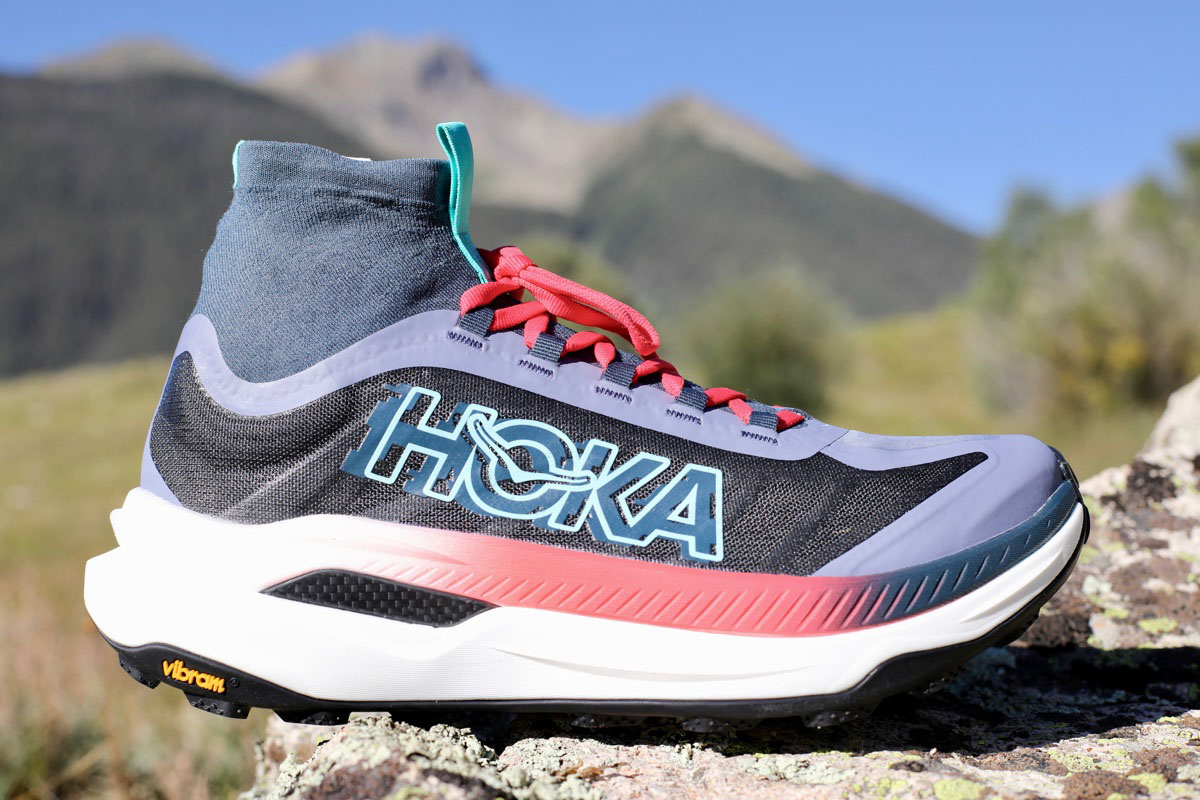
A lateral view of the Hoka Tecton X 3.
The Hoka Tecton X 3 uses the same Matryx textile upper that debuted in the Hoka Tecton X 2, and it has proven comfortable, secure, and durable. The major change to this version is the addition of the knit gaiter, or collar, that also connects the tongue and upper as one unified piece. Initially, I was skeptical — if not a little grumpy — to see this change. If I wanted gaiters, I would wear gaiters!
Despite my early grumbles, I am sold on the new upper after taking the shoe on a few laps on South Sister in Oregon this summer, which is known for filling shoes with its dusty, abrasive volcanic scree and requiring a mid-descent shoe dump. The gaiter-tongue combo kept those pesky bits of pumice out and eliminated the need for a stop. I still think the gaiter looks dorky — especially paired with crew socks — but I have to admit, it works.
I also noticed that the shoe felt a little stiff out of the box, was not particularly easy to get on — and could be even more challenging for someone with a high instep — and the tongue fabric over the instep could easily wrinkle under the laces, causing a potential for hot spots. However, the shoe became easier to put on over time, and I never experienced discomfort where the fabric wrinkled on top of my foot.
The other change I noticed compared to the previous version was a little extra room in the toebox. I was very happy with this, because I thought the Tecton X 2 toebox was just a bit too snug, at least for ultras when my feet would swell. The Tecton X 3 keeps the midfoot lockdown, resulting in a very secure-feeling fit, even on steep, loose rock, with more space for the toes to splay.
After about 300 miles, the knit collar is showing some wear around the inside of the ankles, but the rest of the upper is in good shape, which is impressive.
Hoka Tecton X 3 Midsole
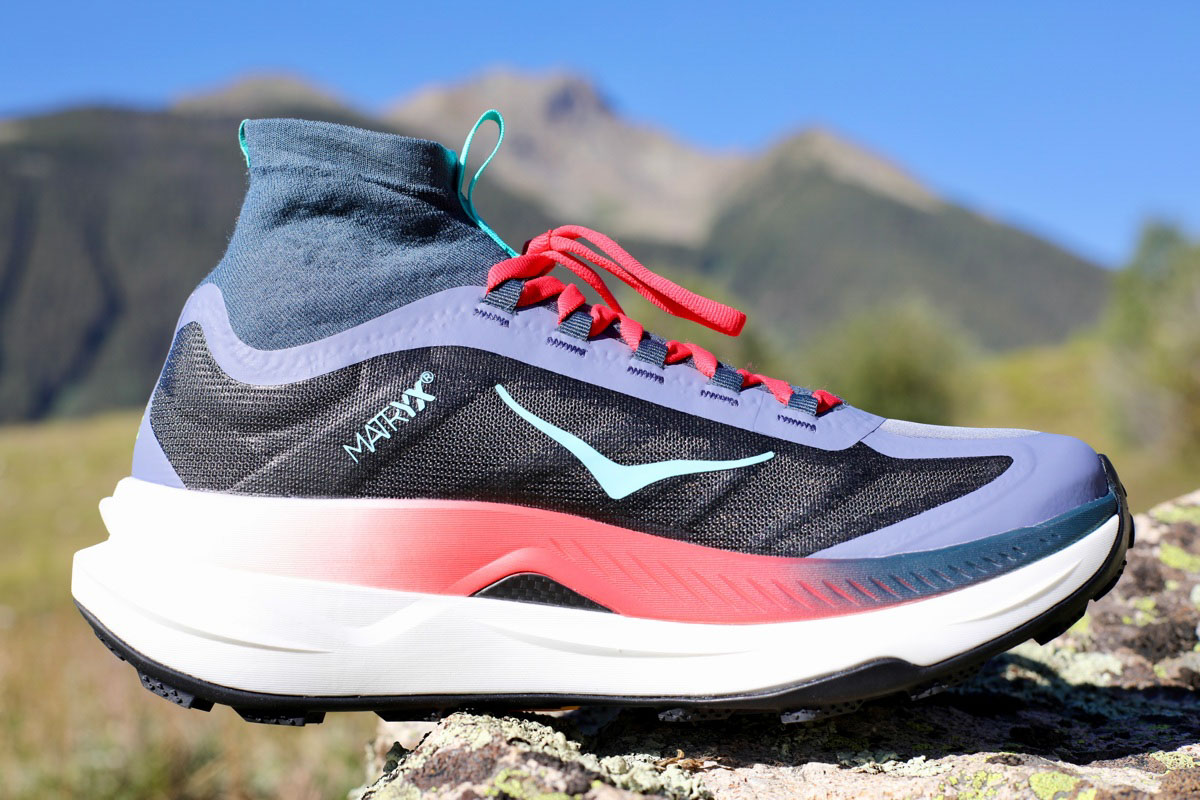
A medial view of the Hoka Tecton X 3.
New with the Hoka Tecton X 3 is the use of two layers of PEBA midsole foam, with a carbon plate sandwiched in the middle. PEBA is a thermoplastic elastomer — a compound that’s both flexible and easy to mold — that is known for being lightweight and bouncy with a high energy return. The upside is that it can make a running shoe feel light, responsive, and efficient, while the drawbacks are that it’s expensive and potentially less durable than other midsole materials.
In this latest Tecton X model, the parallel carbon plate also got a redesign. With the addition of winglets to the shoe’s carbon plates, Hoka addressed runners’ complaints that the prior model lacked stability. Indeed, even with a slight boost to the shoe’s stack height, it felt sufficiently stable on a wide variety of trails, including descents down loose dirt, rubble, and talus.
My friend was also running in the Tecton X 3 over the summer, and he put upward of 350 miles on a pair. He noted that the midsole foam and plate lost their stiffness before the outsole tread wore down, but the shoes served him well for 16 hours of pacing at the Ouray 100 Mile. I never wore my pair longer than eight or nine hours at a time. After lacing up the Tecton X 2 for a section of Western States 100 in 2023 and regretting it, I opted for the tried-and-true Hoka Speedgoat 6 in my 100 miler this year. However, I believe I could have worn the Tecton X 3 and been happy with that choice.
As I approach 300 miles in this shoe, I’m still pleased with the responsiveness of the midsole foam and carbon plate. I feel the midsole shows typical wear that you’d expect from this amount of mileage.
Hoka Tecton X 3 Outsole
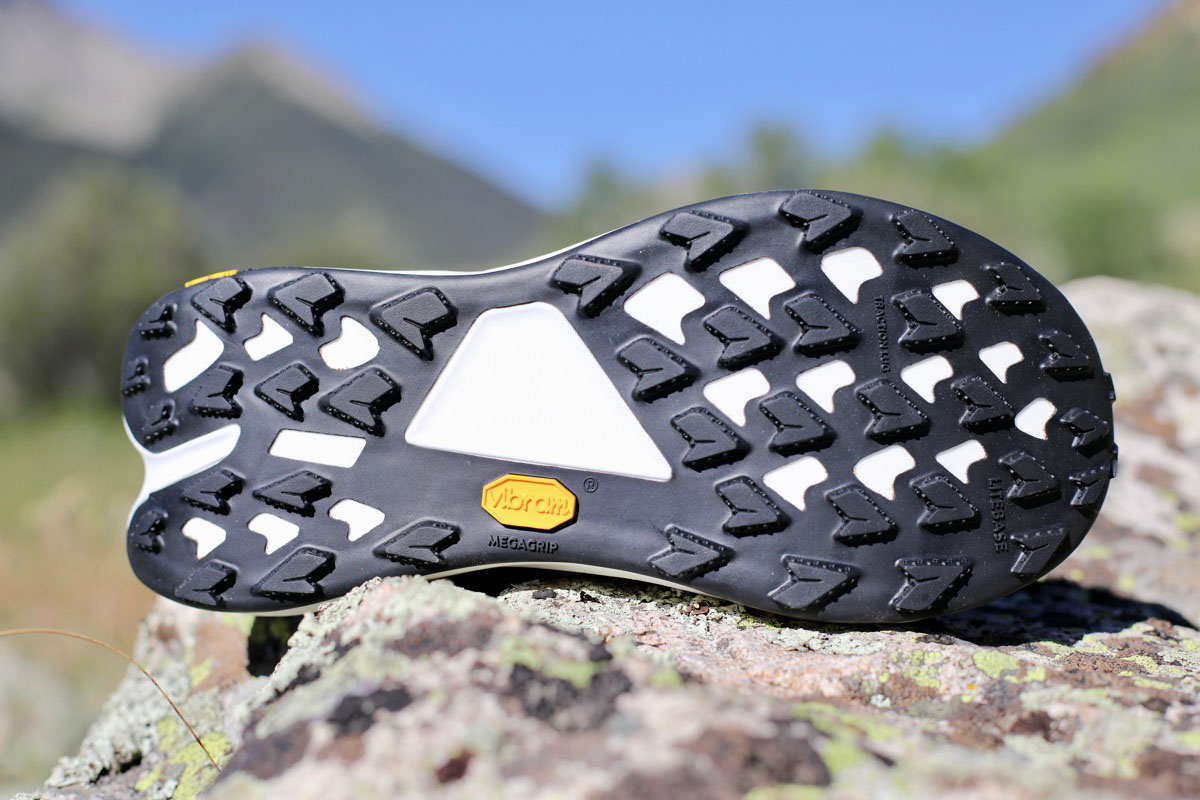
The outsole of the Hoka Tecton X 3.
The Hoka Tecton X 3 outsole has a redesigned lug pattern but otherwise continues with the Vibram Megagrip with Litebase material and design, and a 4-millimeter lug depth. The outsole has a bit more coverage than the Tecton X 2, as well as Vibram Traction Lugs, which are tiny bumps around the outside of each lug for additional traction on loose dirt. The lugs are shallow enough for the shoe to work as a road-to-trail option.
During testing, I mostly wore the Tecton X 3 on dirt trails and gravel roads, with the occasional stretch of pavement in the mix. The lug depth and design worked well for a wide range of surfaces, and I never had any traction issues on steep trails, loose rock, or creek crossings. At the same time, the shoes don’t feel clunky or overly grippy on asphalt. Since I tested these shoes through the summer and on mostly dry trails, I can’t speak confidently to their performance in serious mud or on snow.
Hoka Tecton X 3 Overall Impressions
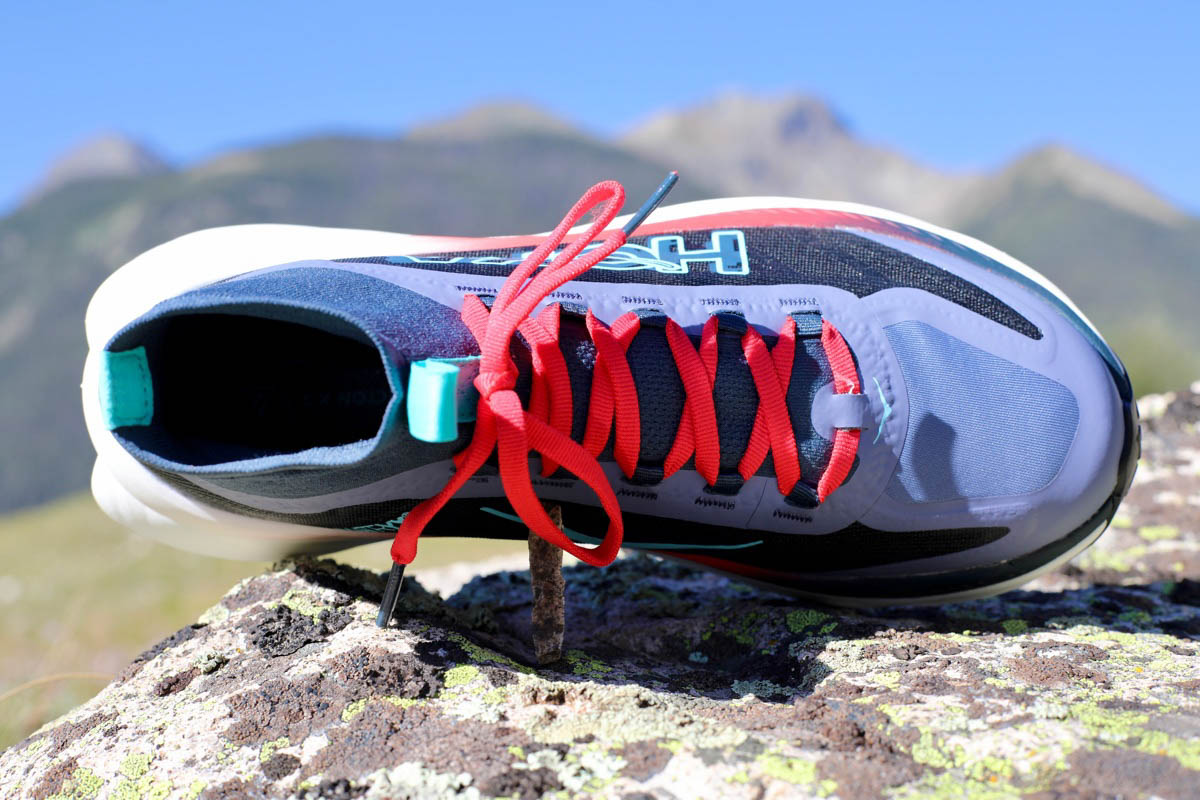
A top view of the Hoka Tecton X 3.
The Hoka Tecton X 3 is a lightweight, responsive, yet cushioned trail running shoe designed for ultra distances and technical trails, and it performs well on just about any surface. I found it to be a great shoe for mid-week workouts and races, and although I was hesitant to use it for a 100 miler, I think it could be a great option.
With a high stack height, this is a highly cushioned shoe that will inevitably be too much for runners who prioritize feeling the ground with their feet. Additionally, this shoe has a hefty price tag compared to mid-range shoes on the market, and it simply won’t make sense as an entry-level or everyday running shoe. Finally, the ankle gaiter may be a dealbreaker for some folks, but if your running includes periodic stops to dump debris, you might end up pretty happy with it.
Shop the Women's Hoka Tecton X 3Shop the Men's Hoka Tecton X 3
Call for Comments
- What’s your favorite Hoka trail running shoe?
- Have you tried the Hoka Tecton X 3? What do you think?
- What are your thoughts on carbon plates in trail shoes, built-in gaiters, and other current shoe trends?
Our Favorite Trail Running Shoes
Learn more about our current favorite trail running shoes in our Best Trail Running Shoes guide.