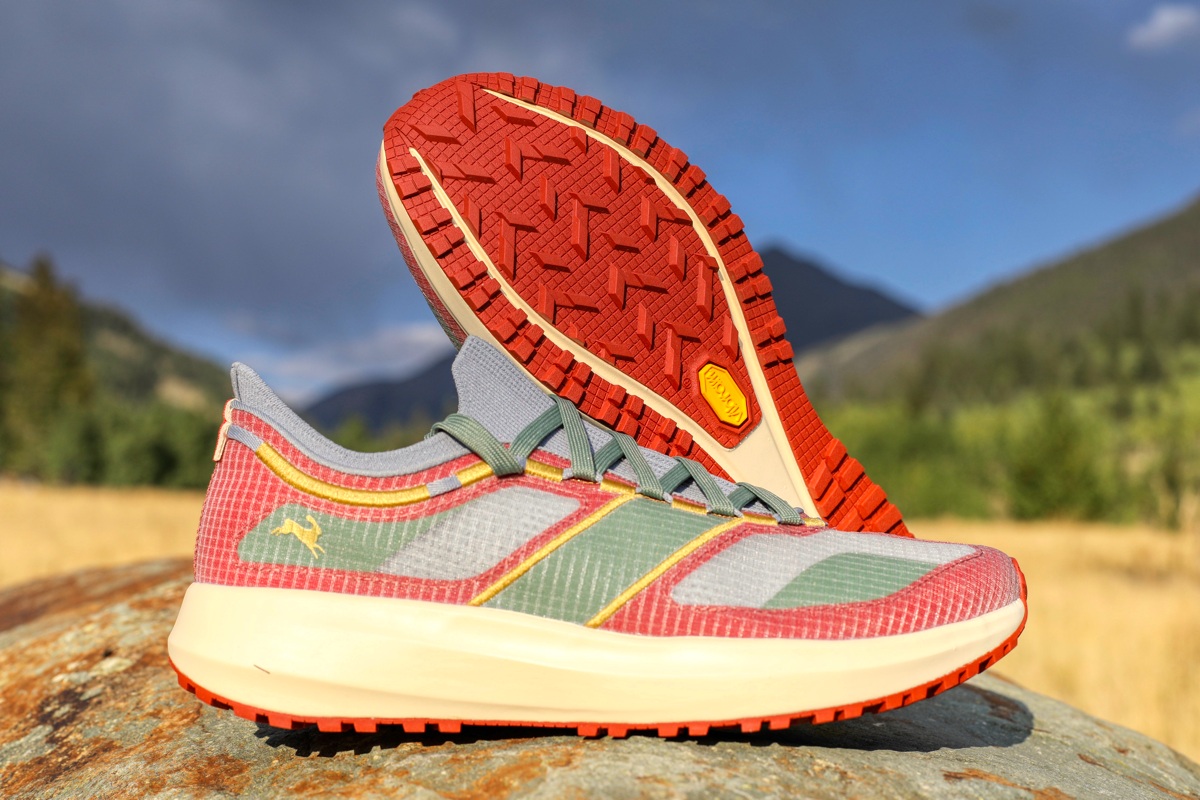
The Tracksmith Eliot Range. All photos: iRunFar/Bryon Powell
The Tracksmith Eliot Range ($240) is the brand’s first foray into trail shoes, and it keeps up the distinctly New England aesthetic for which the Boston, Massachusetts, company is known. Founded in 2014, the brand built its reputation on classic collegiate-inspired running apparel, muted color palettes, and an emphasis on quality materials and U.S. manufacturing. In a shoe category increasingly dominated by maximal silhouettes and loud colorways, the Eliot Range feels like an intentional departure from the expected.
The Eliot Range doesn’t resemble anything else in my current shoe rotation. I spent most of the summer running in highly cushioned shoes meant for the long haul, often clad in colors best described as aggressively bright. As my training shifted back toward the road this fall, the Eliot Range became my go to for moderate distance trail runs. I’ve now surpassed 200 miles in the shoe, primarily on manicured trails and Forest Service roads.
The fit is true to size, and the shoe feels remarkably svelte on the foot. A U.S. men’s 9 has an actual weight of 9.5 ounces (269 grams) and a 34.5-millimeter stack height at the heel and 25.5 millimeters at the forefoot, resulting in a 9-millimeter drop. Runners familiar with the Tracksmith Eliot Runner will likely recognize elements of its construction — including merino wool in the upper — though the shoe’s been reworked with trail-appropriate foam, a nylon plate, and a Vibram outsole.
This was my first experience with Tracksmith footwear, so I can’t directly compare the Eliot Range to the Eliot Runner. My exposure to the brand dates back early in its existence, when I was in Boston for the marathon. My initial impression could be summed up as “classy” and, like other merino-forward brands, a bit outside my typical budget. At $240, the price will be the first thing many readers will notice, and it very well could make the shoe a nonstarter. I run in some circles that prize performance-per-dollar, and others where brand ethos, materials, and long-term durability matter just as much. For those curious, regardless of price, about how the Eliot Range performs and holds up, keep reading.
Shop the Women's Tracksmith Eliot RangeShop the Men's Tracksmith Eliot Range
Tracksmith Eliot Range Upper
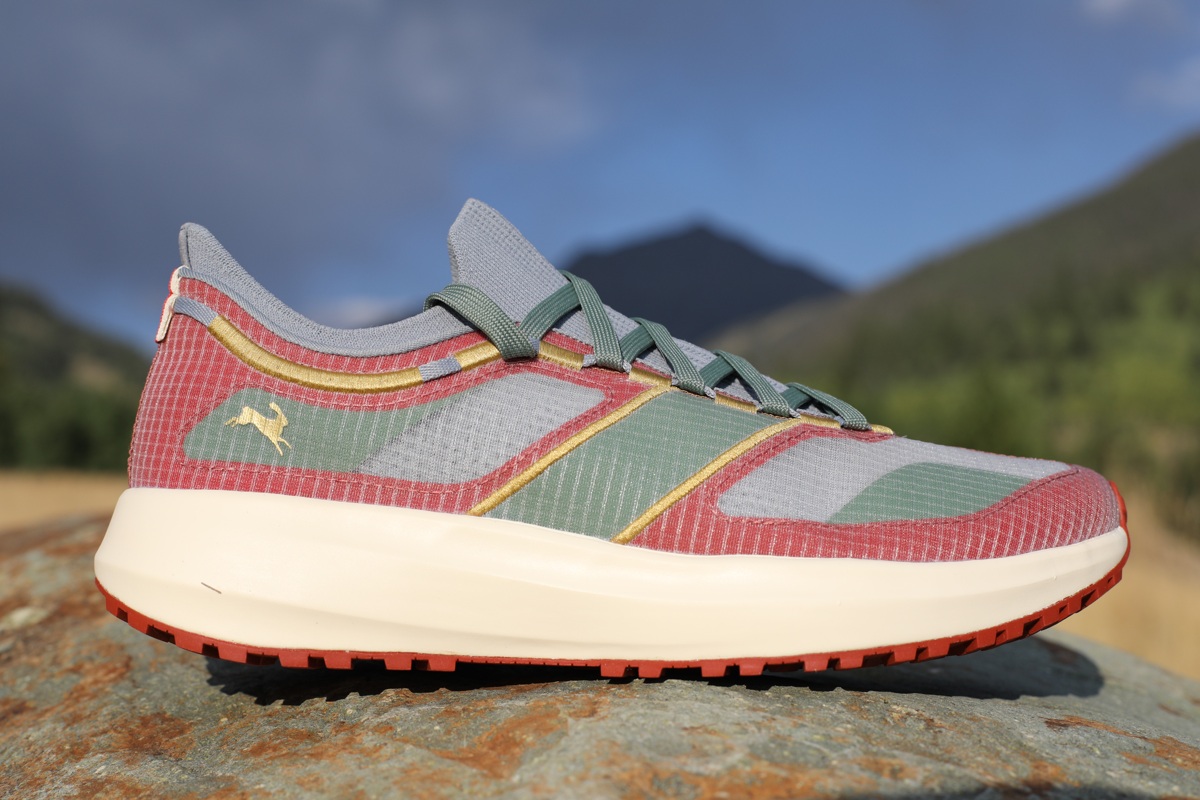
A lateral view of the Tracksmith Eliot Range.
Everything about the Tracksmith Eliot Range upper is interesting in a simple, old school, well-stitched kind of way. Merino wool lines the interior and seamlessly extends into a bootie-style construction around the ankle collar. Integrated knit heel pillows fill the space around the narrowest part of the ankle and keep the foot perfectly in place. Wool’s thermoregulating and odor-resistant properties are well known, and while I haven’t tested these in summer heat, the upper has performed exceptionally well in cold, snowy conditions and somehow still smells fresh.
A breathable woven shell forms the upper’s outer layer, adding durability and light weather resistance. The laces thread through reinforced lace loops that are stitched directly into the upper, providing a comfortable and effective lockdown. The laces do require a firm or double knot to stay put.
The toe bumper is very petite by trail shoe standards, but it aligns with the shoe’s intended use. This is not a shoe designed for highly technical terrain. The fit skews narrow, which suits my midfoot. The toebox opens up enough that my bunioned forefoot remains comfortable over moderate distances, though I suspect it could feel restrictive over longer efforts at harder paces. Runners accustomed to the generous forefoot space of brands like Topo or Altra may find the Eliot Range comparatively snug.
Tracksmith uses merino wool to enhance the overall running experience. But unlike other merino-infused apparel, footwear simply can’t be expected to enjoy the same longevity as the base layer you’ve been skiing in since college. The longevity of wool in apparel makes it worth the premium price tag, but I’m not sure if the same can be said for its use in shoes. While long-term durability remains to be fully proven, I wouldn’t expect the Eliot Range to meaningfully under- or over-perform typical trail shoe lifespan norms. With over 200 miles logged, I’ve observed no notable breakdown to date.
Tracksmith Eliot Range Midsole
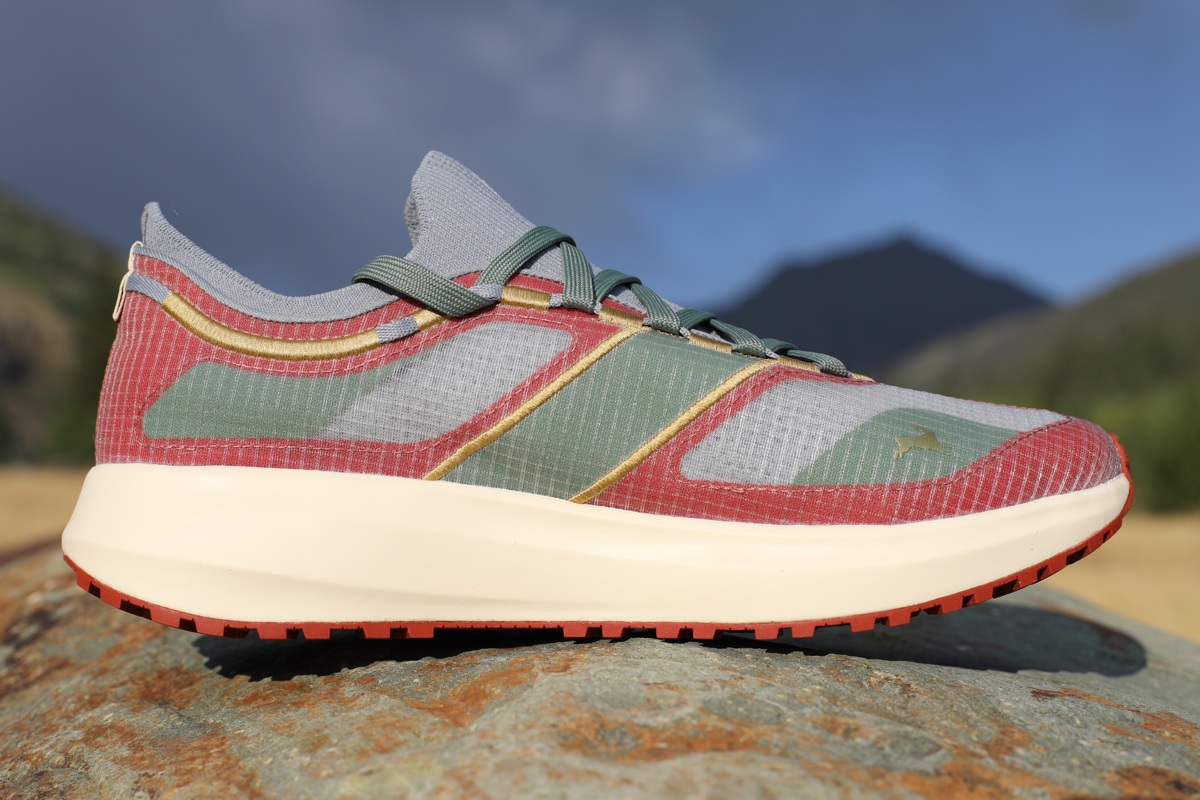
A medial view of the Tracksmith Eliot Range.
The Tracksmith Eliot Range midsole is made of three layers: two PEBA supercritical foam layers sandwiching a full-length nylon plate. The upper foam layer is removable, and there is no additional sockliner. The nylon plate is intended to provide both protection underfoot and energy return. The midsole offers a 34.5-millimeter stack height under the heel, with 25.5 millimeters under the forefoot, which is fairly moderate and gives the shoe a lower-profile, lightweight feel.
This setup has been nearly ideal for the buttery trail systems around Ashland, Oregon. I raced a fall half marathon that featured sustained climbing on Forest Service roads and non-technical singletrack descents, with a mile of pavement at the start and finish. The shoe facilitated an efficient, confident chase on the descents and transitioned seamlessly on and off pavement. It did require one quick lace re-tie mid-race. The half marathon proved a strong test of running economy, underfoot protection, and energy return. The shoe felt nimble throughout and maintained a light, floaty sensation on both dirt and paved descents.
My primary midsole complaint is forefoot protection. I have felt the sharp edges of rocks more than I’d like, particularly as the stack tapers toward the front of the shoe. While the nylon plate offers some defense, it doesn’t mute all trail hazards.
Tracksmith Eliot Range Outsole
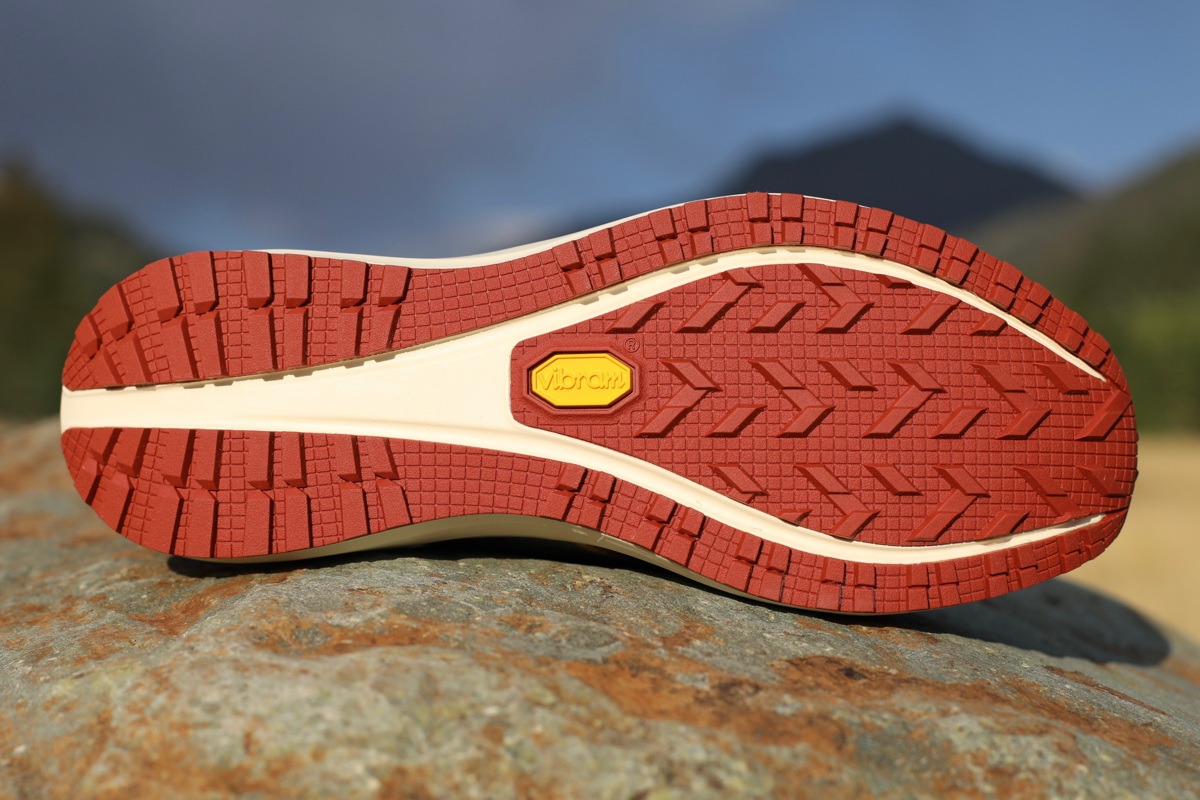
The outsole of the Tracksmith Eliot Range.
The Tracksmith Eliot Range sports a Vibram Trek Evo rubber. It’s worth pointing out that this is different from the Vibram Megagrip compound seen on many other trail shoes. Low-profile multidirectional lugs cover most of the forefoot, while the perimeter and heel areas feature rectangular lugs.
Based on appearance alone, my expectations for traction were modest. This shoe would not be my first choice if running on anything particularly muddy or technical. However, this is not generally a limiting factor in southern Oregon, and I have been pleasantly surprised by the outsole’s performance when conditions err toward inclement in the Rogue Valley. On fresh snow during moderately paced climbs and descents, I surprisingly experienced no slipping. I’ve also reached for the Eliot Range on road runs during weeks of freezing fog. While mild by trail standards, the outsole provides noticeably more grip than my road shoes without being too aggressive on smooth pavement.
During routine two- to three-hour trail runs, I haven’t encountered any issues with stability, but my own risk tolerance has led me to moderate speed on tight switchbacks and more technical descents. The Eliot Range reminds me of the adidas Terrex Speed Ultra from several years back — stealthy, fast, and fun, but with a stability ceiling that would likely become more apparent as distances and time-on-feet creep into ultra territory.
Tracksmith Eliot Range Overall Impressions
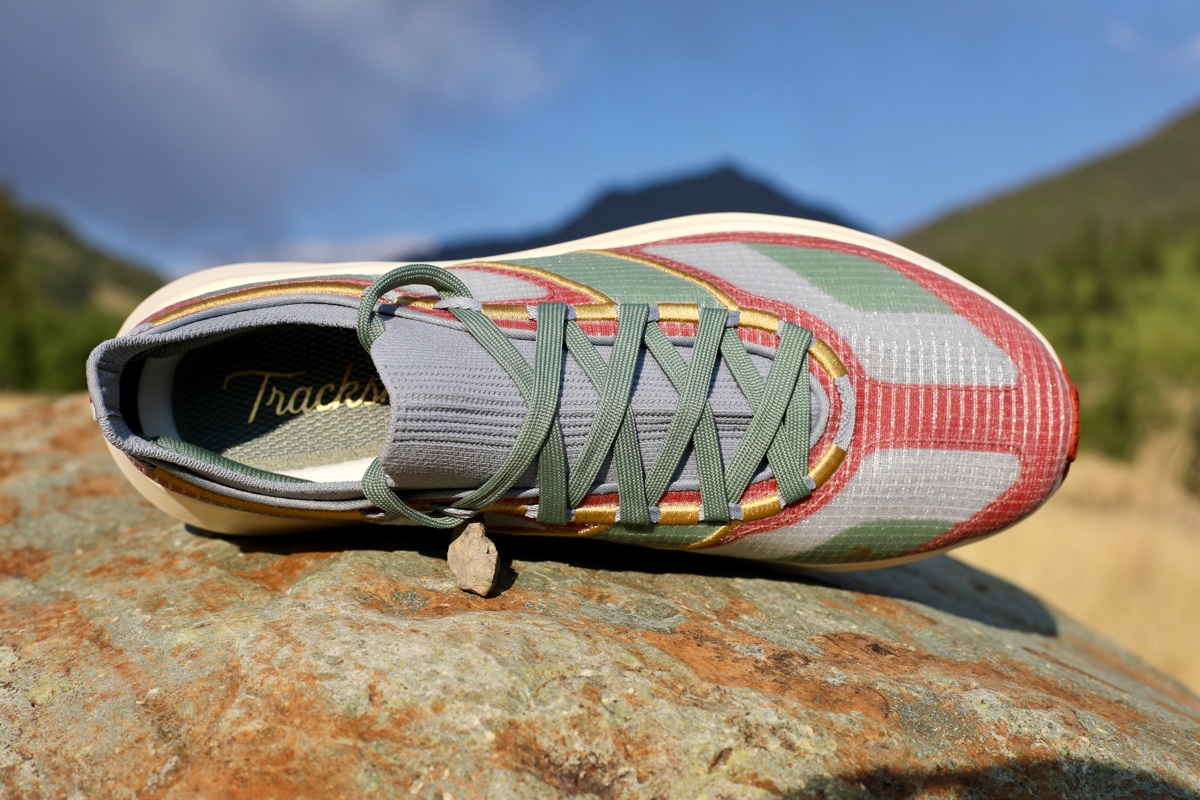
A top view of the Tracksmith Eliot Range.
The Tracksmith Eliot Range is a bold entry into a crowded trail category. I’ve logged easy miles, snowy miles, paved miles, and race efforts in this shoe, and it’s proven versatile for the moderate distances and non-technical terrain that have defined my winter training.
I tend to approach first-generation shoe models with caution, and I’m similarly cautious with premium-priced gear, expecting near perfection to justify the cost. The Eliot Range’s price point will be a lightning rod for criticism. However, determining whether the cost aligns with your priorities is ultimately a personal decision. Tracksmith maintains a pretty generous return policy, allowing returns and exchanges within 100 miles or 30 days. This may offset the risk of a higher price point.
This shoe isn’t for everyone. If you regularly train on more technical terrain, run in persistent snow and mud, or need a wide fit, this likely isn’t the right choice. However, if most of your miles are mid-distance efforts on well-groomed trails, mixed surfaces, or pavement — and you value a nimble, low-profile ride wrapped in a refined, understated aesthetic — the Eliot Range may be worth a closer look.
Shop the Women's Tracksmith Eliot RangeShop the Men's Tracksmith Eliot Range
Call for Comments
- Have you tried the Tracksmith Eliot Range? What did you think?
- How important are shoe aesthetics to you?
Our Favorite Trail Running Shoes
Check out our Best Trail Running Shoes article to learn about our current favorite trail running shoes!