In this monthly article series, ultrarunner, race director, and coach Gabe Joyes answers reader questions about anything and everything running. Learn more about this ask-the-athlete column, and be sure to fill out the form below to submit your questions for a future article!
In this article, Gabe answers questions about race directing, carrying large amounts of water, and dealing with race-day anxiety.
Gabe’s Tip of the Month
Did you miss out on yet another race lottery? Good news — you don’t have to miss out on the event entirely! You can still be a critical component of the event and volunteer instead. Trail running races are the community events of our sport, and they would shrivel up and disappear without extensive volunteer support. The best races take great care of volunteers and make them want to come back and be a part of the fun year after year. Plus, your stoke for the event will only grow after experiencing it from a different lens, and you will likely appreciate the chance to run even more when the lottery gods finally grant you entrance in 2089.
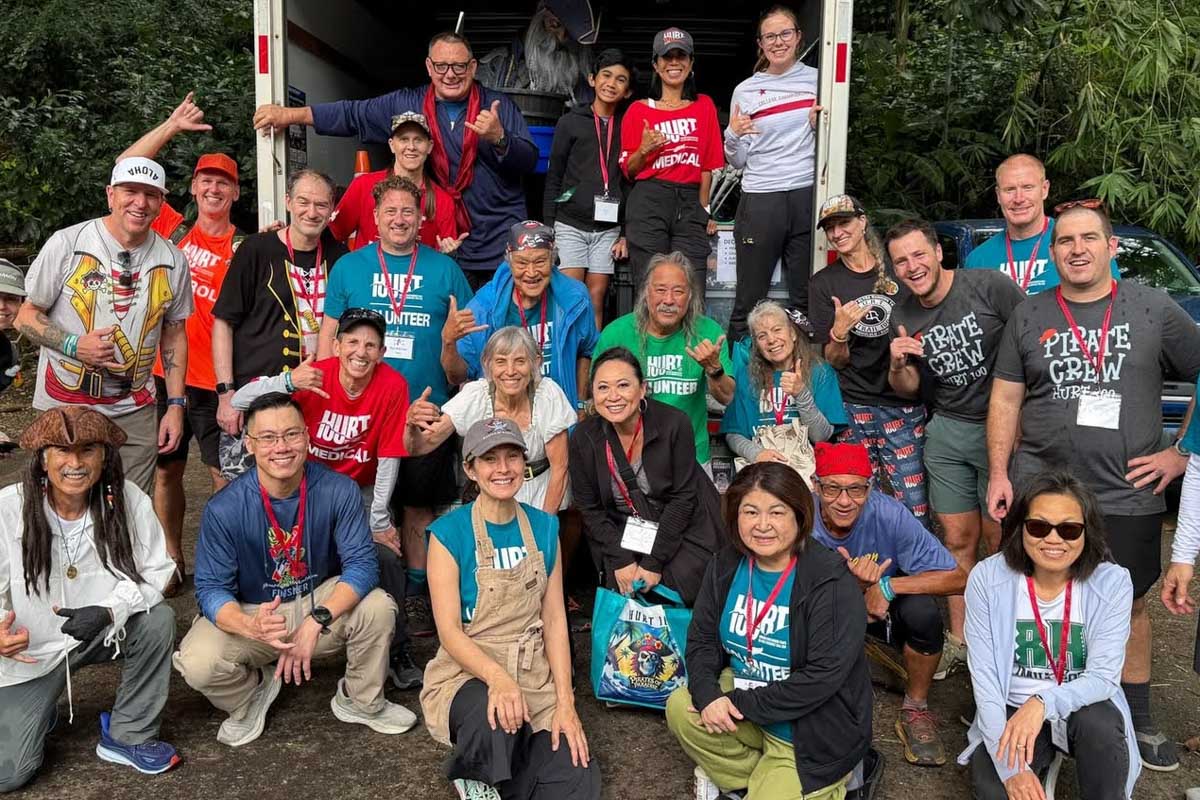
The incredible volunteers at the 2026 HURT 100 Mile. All photos courtesy of Gabe Joyes.
Creating Trail Events
I’m just starting to brainstorm on the idea of creating a trail running event, maybe toward the end of summer/fall this year, and wanted to see if you had any advice. -Jenna
Super cool, Jenna! The fact that more and more races require lotteries for entry — and waitlists for events are hundreds of people long — shows that demand is there for more events. Here are a few things to consider when putting together a new race.
- The course. Your course has to be appealing to runners for at least a couple of reasons, such as the scenery, feel, logistics, speed, elevation profile, or environment. Many people are drawn to aesthetic loop or point-to-point courses — think the Hardrock 100 or Western States 100 — but that doesn’t mean more contrived routes can’t provide a good experience too. I love the out-and-back format of the Running Up For Air events, and I just had an amazing run at the HURT 100 Mile, a five-loop race. Regardless, something about your course must draw runners in.
- The people. Races must be a community event on some level, and you will certainly need support and volunteers in some capacity. It is just as important to create a positive experience for your volunteers as your runners, because in all likelihood, your volunteers will be local, and you need those folks to be stoked about your event year after year.
- The resources. Races require a lot of stuff, including access to water, signage, aid station tables and chairs, shelter, communication devices, food, and more. Oftentimes, other groups in your community may be happy to share many of these resources, but otherwise, you’ll need to figure out how to acquire all of these things.
One of the races I direct, Run the Red Desert, used to take place in a mega-remote area of Wyoming. Previous iterations of the race started and finished in a parking lot without bathroom facilities, no cell service, no access to water, and about an hour’s drive from the nearest community. The course itself was sensationally beautiful and absolutely worth running, but it was just so hard to get the resources and people into place for the event that interest began to dwindle.
We eventually moved the event closer to the trail running community in Lander, Wyoming, and now it finishes in a state historic site with all the facilities needed to put on an event. And the course is just as amazing.
Putting together a successful trail running event is a complex puzzle, but it is incredibly rewarding and fun.
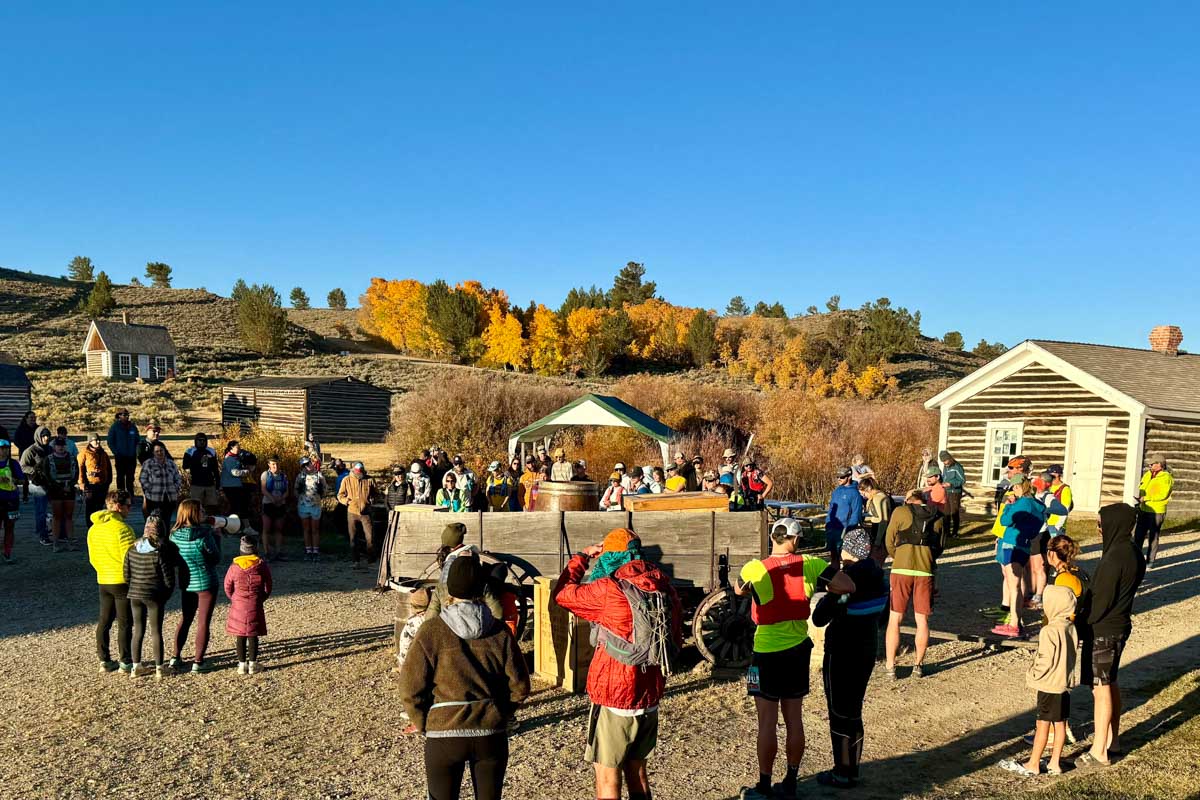
Runners and volunteers at the South Pass City historic site in Wyoming before the remote and scenic Run the Red Desert races.
Increasing Water Capacity
How do you carry extra water for long solo training runs or self-supported adventures? Summer just keeps getting hotter, and drinking enough feels impossible. Sometimes creeks are too low for me to filter water or are full of cow poo. -Alex
I have struggled with this as well, Alex, as water is the heaviest and most annoying item in my pack! If not carried correctly, water will bounce around, slosh, or just be difficult to access or keep track of. A reservoir carried against the back with a hose is helpful for carrying a lot of water, but I have found that most folks do a poor job of actually drinking it, as you cannot visually see how much water you are consuming.
I also once coached someone who was incredibly fit for the Leadville 100 Mile, but DNFed after his reservoir leaked water down his butt for the entire race, leading to unspeakably horrendous chafing.
Carrying extra water in a waist belt — worn in addition to a pack — is a decent strategy, but I have found the combination of a running vest and waist belt to be too much constricting fabric for long-term comfort. Plus, all that material traps a lot of heat. My favorite setup at the moment is a pack that can carry two soft flasks along the chest, and also an additional one or two soft flasks horizontally across the back. The bottles generally stay stable, it is easy to monitor how much fluid is being consumed, and the water is all fairly easy to access. Plus, you can have some bottles with plain water and others with electrolytes, high-calorie drink mixes, or whatever else you need.
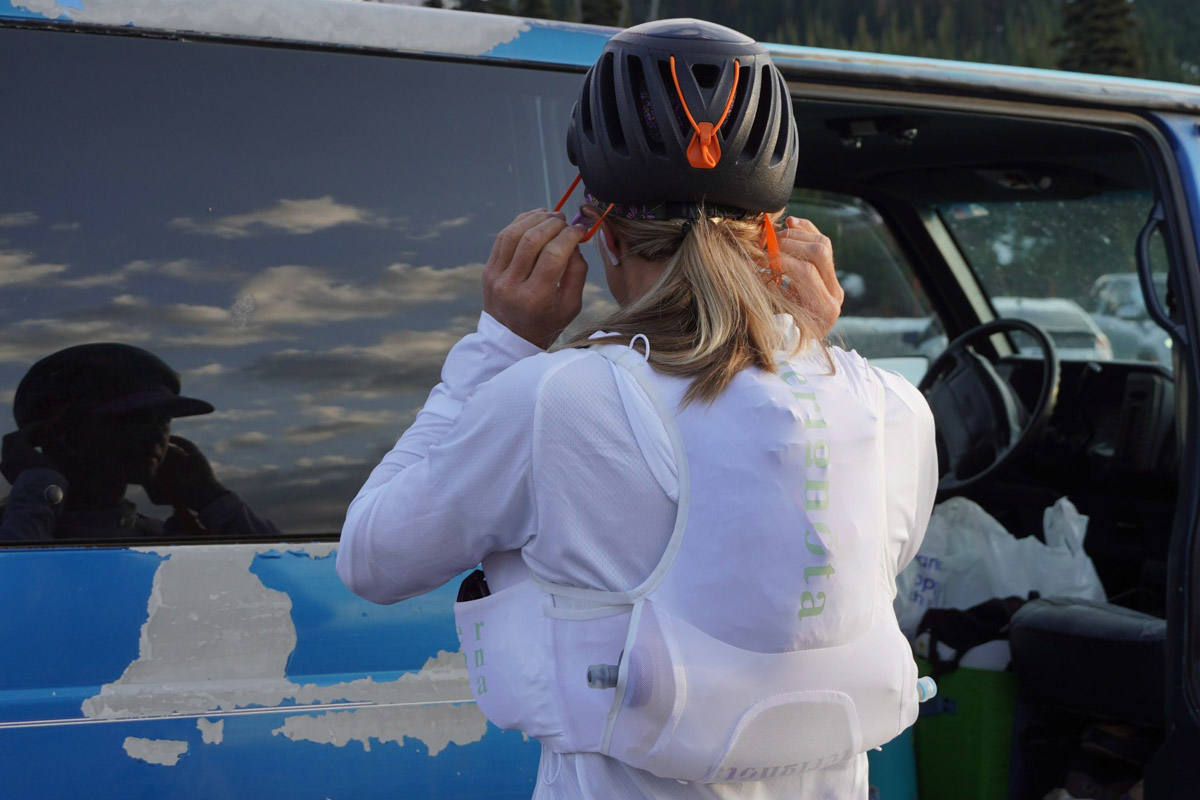
Jenny Abegg with two soft flasks in the back pocket of a fully loaded running vest before breaking the unsupported women’s fastest known time on Mount Rainier in 2025.
Winter Warmth
Can you share some winter layering tips? -Simeone
My all-time favorite piece of winter running gear is a minimalist windbreaker. A light, high-quality, three- to four-ounce shell with a hood can pack into almost any pocket, cut the chilliest of winds, and trap a fair amount of warmth, as well. This piece of gear is effective because it works just as well with a t-shirt underneath as it does with a wool long sleeve or a warm polyester fleece.
Not all wind jackets are created equal. Some are very weather-resistant but vent poorly, and others breathe well but repel very little wind and moisture. Neither option is necessarily better or worse; it just depends on your weather situation.
My newest favorite piece of winter gear is an insulated five-panel hat with a brim and ear flaps. This style has long been worn by sheepherders and ranchers, but has been revamped with performance materials to be excellent for running in cold and variable conditions. Take what you will from this, but I think you get mega style points with these hats as well.
You can also check out iRunFar’s Best Cold Weather Gear guide for other pieces of clothing our team uses to stay warm.
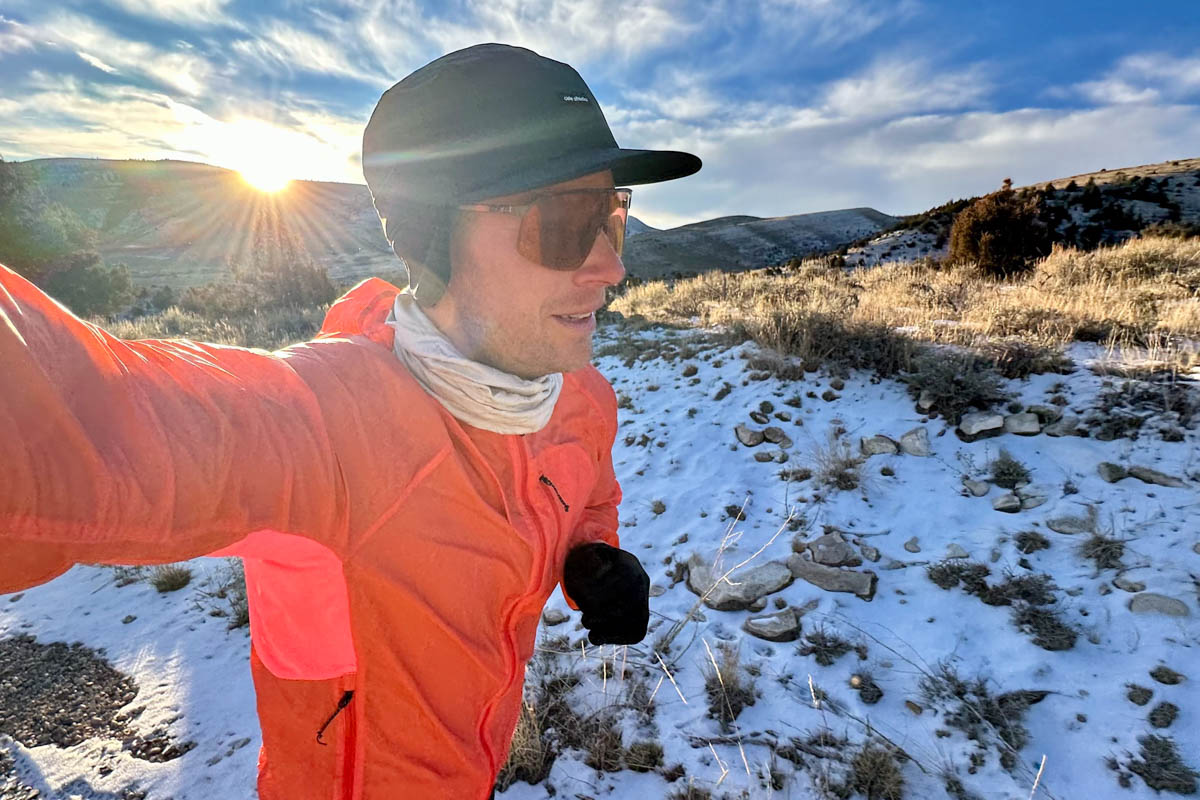
Ear-flapped running hat and ultralight windbreaker in action on a January run in Wyoming. Photo courtesy of Gabe Joyes.
Performance Anxiety
How do you handle anxiety/nerves/fear of failure with racing? I only race once or twice per year because it is so expensive, so it feels like everything is on the line. I get so wound up that I feel physically ill and do not actually have fun racing. -Annabelle
I definitely get that, Annabelle. Pre-race nerves are often a good thing, as they show that you care a great deal about what you are doing. Nerves are the brain’s natural way of preparing the body for an event that is big, challenging, and meaningful. But if all that anxiety is misdirected, it becomes more debilitating than helpful.
Accepting that many race-day variables are out of your control is helpful. Sometimes we over-engineer the day and spend too much energy planning and attempting to control every single detail — like exactly how many Nerd Gummy Clusters we are going to eat at mile 42.5 — and can be derailed as soon as things don’t go to plan. Sometimes, as soon as the plan changes, athletes get stuck in a “today just isn’t my day” mentality, which usually is not true.
Planning is super important in trail racing, but having the ability to adapt and be flexible is even more important. I often recommend athletes “pre-problem solve” for the race by anticipating likely things that could go wrong and deciding how they will adapt to the situation. Inevitably, something will happen on race day that you did not think of, but having the problem-solving mentality already in your brain helps you to be resilient, flexible, and have the ability to enjoy the ups and downs. Approaching the race with a sense of curiosity — instead of hard goals or plans — leaves room for the day to play out. No matter how much we plan and think we know what is happening on race day, there will always be plenty of surprises.
Lastly, the more you can familiarize yourself with the race-day experience before the actual day, the better. Practice fueling and hydrating with the specific products you’ll find at aid stations, and do some training in your full race-day kit so that you have confidence in your shoes, socks, shorts, shirt, hat, pack, and everything else. If you can, arriving at an event one day early to spend a couple of miles on course can be massively helpful, as you will be able to see for yourself exactly what you are getting yourself into. Watching YouTube videos of other people’s race experiences can be helpful for this as well.
Being familiar with the race-day experience before it happens can help us visualize what the day might actually look or feel like, which often helps take the anxiety down a notch.

Your author previewing the HURT 100 race course before the big day. Photo courtesy of Gabe Joyes.
Submit Your Questions
Send us your questions! Use the form below or send us a message on Instagram, and we’ll consider your questions for future articles.
Call for Comments
- What are your thoughts on Gabe’s answers this month?
- What pressing running questions have you always wanted answers to?

