From September 25 to 28, some of the world’s top mountain running and trail running athletes gathered in Canfranc, Spain, for the 2025 World Mountain and Trail Running Championships (WMTRC) to represent their countries in four different events. Historically, many top runners have opted to skip the world championships for various reasons, including busy race schedules, sponsorship conflicts, and financial considerations. In its third running, this year’s event brought in the deepest fields across all four of the championships events — plus under-20 races — indicating a shift in how the event is perceived and valued among professional off-road runners and their sponsors.
With the next WMTRC scheduled for Cape Town, South Africa, in October 2027, now is a good time to look back on Canfranc and ask where the event stands in the global trail and mountain scene, where it sits in the athletes’ minds and priorities, and how it can be grown and improved in the future.

Countries proudly displayed their flags at the 2025 World Mountain and Trail Running Championships opening ceremony. Photo: iRunFar/Eszter Horanyi
The WMTRC is a result of World Athletics’ vision of working with the three globally recognized governing bodies for mountain running, trail running, and ultrarunning: the World Mountain Running Association (WMRA), the International Trail Running Association (ITRA), and the International Association of Ultrarunners (IAU). The event, now held every other year, combines the longstanding Trail World Championships and the World Mountain Running Championships into a single event featuring Long Trail, Short Trail, Uphill, and Up and Down races.
In many ways, the third edition of the combined global federation-driven championships came of age.
This is certainly true in terms of numbers. At the inaugural WMTRC in Thailand in 2022, which was postponed from 2021 due to the COVID-19 pandemic, 642 athletes from 49 nations participated. The following year, in Innsbruck, Austria, the number of runners had almost doubled to 1,190 across the various start lines, with athletes coming from 68 countries. At Canfranc, there were 1,298 racers on the start lines from 70 countries. You can read more about the history of the Trail World Championships through 2023 for more background on the event.
In terms of performance, the racing at Canfranc was certainly a big step up, with much deeper fields, resulting in more competitive races. For a variety of reasons, some of the current stars of the sport, including Americans Jim Walmsley, who won the men’s Trail World Championships Long Trail, and Katie Schide, who won it for the women, targeted a national vest and a world title over more lucrative paydays at other races.
In this article, we examine some of the barriers that the WMTRC has faced in attracting top talent and why, despite these barriers, top runners continue to prioritize the event. We talked with full-time professional runners Francesco Puppi (Italy) and Schide, as well as Britain’s Andy Symonds, who has combined a full-time day job and a family with competing at a high level for many years, including wins at the 2016 Laveredo Ultra and 2011 Les Templiers 80k, and a fifth place at the 2019 UTMB.

Francesco Puppi racing in the Team Italy team kit during the 2025 Trail World Championships Long Trail. Photo: iRunFar/Eszter Horanyi
While Schide says, “I would say, after conversations with other athletes and my own experience, the Trail World Championships, at least for the longer distances, hasn’t been held to quite the same level of prestige in terms of brand awareness or recognition as some more commercial events,” the event is growing quickly and has the potential to eventually hold a top spot in the trail racing calendar.
Several barriers exist for events like the WMTRC in attracting professional runners, particularly when considering the event’s future.
Prize Money
Modern-day professional runners make their living from a combination of sponsorships, prize money, and bonuses for wins at major events, and it would be naive to believe that prize money at events doesn’t factor into decisions to participate in certain races. The WMTRC must contend with competing against year-round commercial series, such as the Skyrunning World Series, the UTMB World Series Majors, the Golden Trail World Series, and the WMRA World Cup — all of which are significant draws for athletes in many running disciplines.
World Athletics provides funding for nations to bring athletes to world championships — part of the reason the events exhibit greater diversity than typical commercial races — but the funding amount pales in comparison to the prize money associated with larger events. To encourage top runners to participate in the WMTRC, some leading nations offer their athletes a training stipend if they prioritize the event. For example, in 2025, French athletes participating in the WMTRC weren’t allowed to line up at races for a period of time beforehand, including at the UTMB World Series Finals held just a month earlier, but they received funds to offset potential prize money payouts from missed races.
Still, for top professional athletes, the prize money on offer at the WMTRC, even when supplemented by their federations, is relatively modest compared to other events.
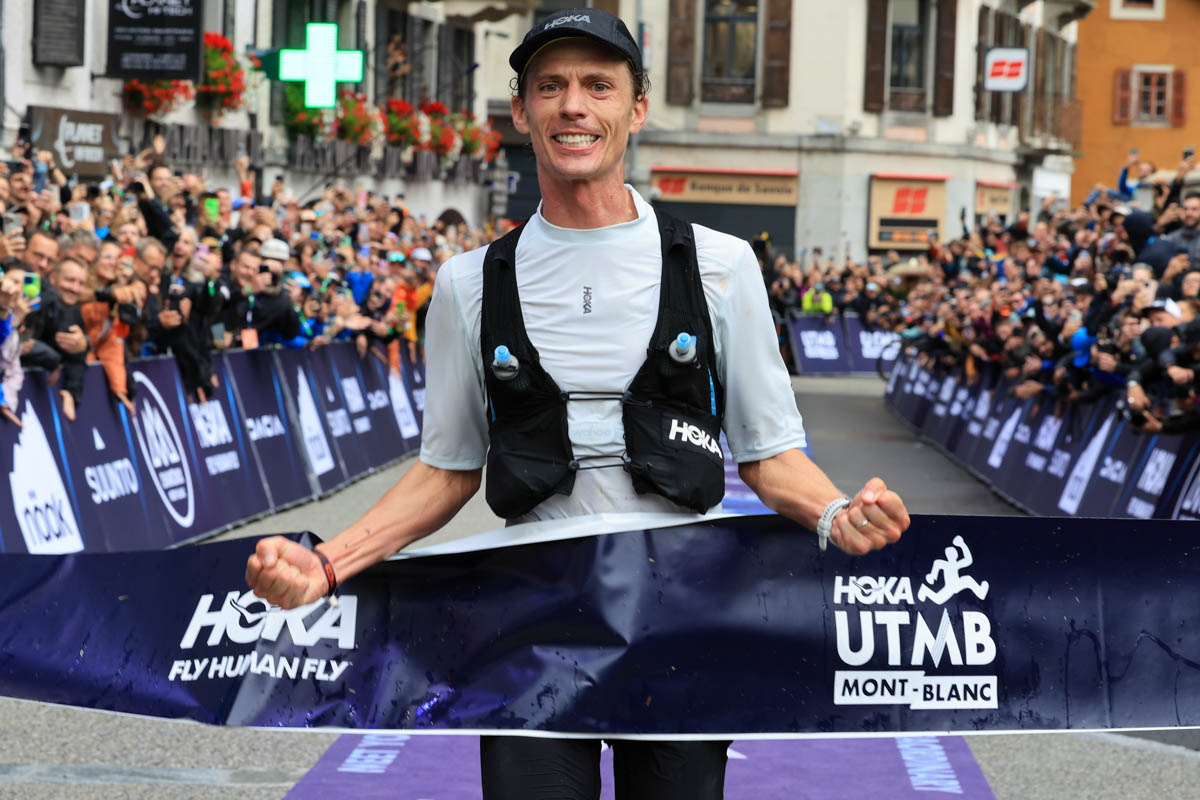
Jim Walmsley wins a hard-fought 2025 OCC. Photo: UTMB
At the UTMB World Series Finals, the top 10 in UTMB, CCC, and OCC all receive prize money, with the winner of UTMB walking away with 20,000 Euro. Winners of CCC and OCC both receive 13,000 Euro. In addition to the Finals, the UTMB World Series Majors events also pay out five deep, with the winners of each event pocketing 5,000 Euro. The Golden Trail World Series offers a total prize purse of more than 300,000 Euro across the race series, including 15,000 Euro for a series win, and 3,000 Euro on offer for the winners of each individual race. The Skyrunning World Series offers 93,800 Euro in prize money for the overall series rankings spread among the top 10 athletes, with a prize of 15,000 Euro for individual series winners. The WMRA World Cup offers a total prize pot of 30,000 Euro, with the series winners each receiving 5,000 Euro.
By comparison, the total prize money available at WMTRC was a modest 24,000 Euro prize purse for each event, split between the men and women, with 5,000 Euro for a win and prize money going five deep.
Given the participation in the WMTRC this year, it’s clear that money isn’t the only driving force for top athletes, and it is apparent that athletes who target the various commercial series are also keen to represent their country in a national vest on the world stage.
Puppi, whose resume includes wins at the 2025 CCC, Lavaredo Ultra, Canyons 100k, and Transgrancanaria, says that for a professional athlete, “You can start with the assumption that an athlete is racing where it makes sense from a financial perspective. I also look at things from a running perspective and discuss with my coach, ‘What do we want to improve and focus on this year, and what are the best opportunities to compete with the best athletes in the world?'” Puppi is quick to admit that not every athlete gets to make these choices freely, saying, “Maybe I am in a privileged position, that I don’t have to worry that much about it. I mean, it’s not that I’m making a ton of money from the sport. I think I just want to live simply, and I value other aspects in sport more than a super high bonus or a super high payday. I also come from a culture in Italy that values wearing the national vests way more than other racing opportunities.”
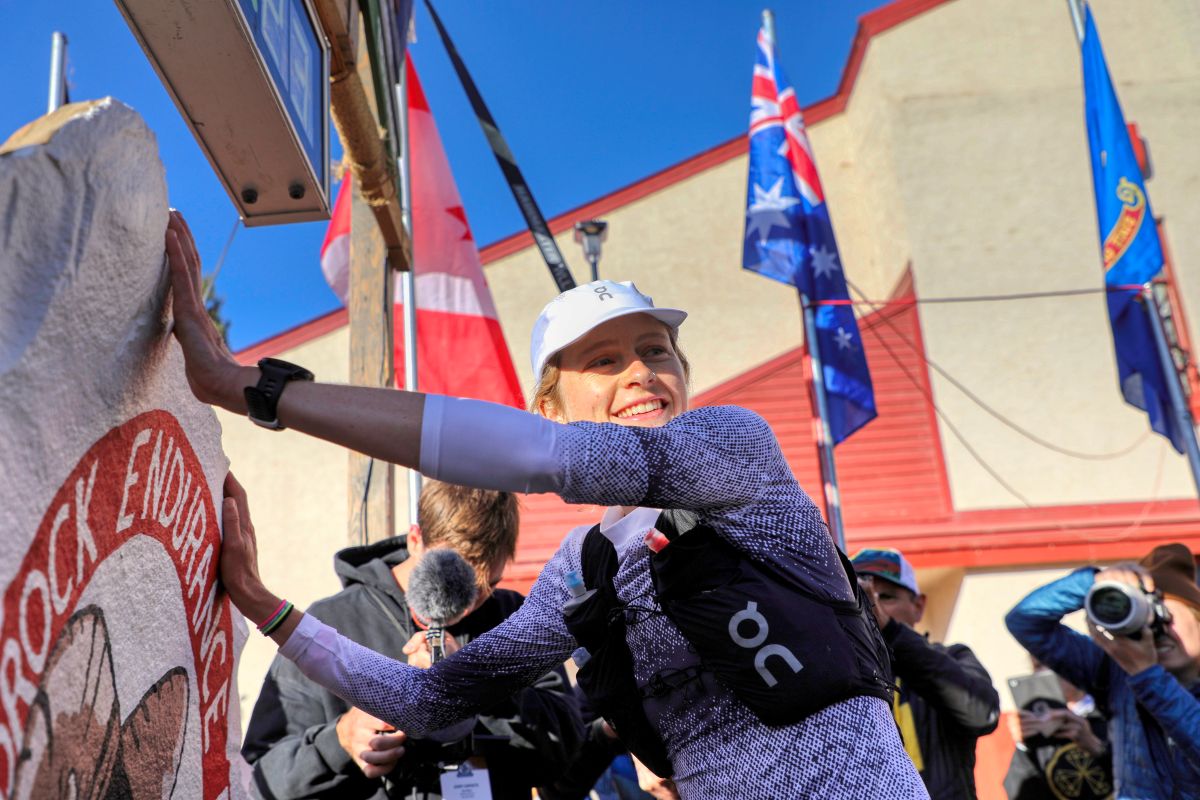
Katie Schide touches the rock after winning the 2025 Hardrock 100 in course record time. Photo: iRunFar/Bryon Powell
For Schide, winner of the 2025 Hardrock 100 and 2024 UTMB, who is undoubtedly at the top of women’s trail running right now, it’s about choosing races that get her excited. She says, “I realize that’s sort of a privilege I have at this point in my career, that I don’t need to target something for somebody else just to prove a point. But I also think that because I always target races I’m excited about, I have a better chance of performing well because I show up really happy and motivated to be there, usually coming in from training that I was happy and motivated to do, because I’m going to a race that I’m happy and motivated to be at.”
Schide believes in taking a long view of the financial payout of choosing certain races, saying, “Sometimes that will mean choosing races that might not necessarily have the biggest bonus or the biggest payout. I think if your only goal in this sport is to make money, then there are better ways to do that than by only choosing the races that motivate you, but I think that in order to maintain longer-term success and just happiness in the sport, it’s important to follow what is motivating you intrinsically.”
Sponsorship Conflicts
When competing at the WMTRC, athletes race in their national team kit, which is often sponsored by a company other than their personal sponsors. While this was a major barrier in the past, with some brands reportedly discouraging their athletes from racing at world championships because they wouldn’t be representing their sponsors, this barrier seems to have softened in recent years. Athletes are still allowed to wear their sponsors’ shoes and use various other products, but the visibility is limited compared to a commercial race.

Women’s Trail World Championships Long Trail winner Katie Schide (U.S.) is flanked by Team Great Britain’s Andy Symonds (left) and Luke Grenfell-Shaw (right) after the race. Photo: Adrian Stott
Symonds is quite open on this, saying, “I recognize that my sponsor is not particularly interested in my taking part in the Trail World Championships — not least because I must wear clothing from a competing brand. Having said that, it’s not something I’ve been encouraged to avoid in favor of alternative commercial races. This is not, however, the case for all runners. Those who are 100% pro and are looking at optimizing their earnings from running are naturally likely to be inclined to favor a big commercial event where they can potentially walk away with several thousand Euro, more likes on the internet, and more sponsorship opportunities.”
Symonds continues by saying, “As trail running becomes more popular and mainstream, it is increasingly seen as a commercial opportunity, attracting brands, sponsors, organizations, and random businesses who might not have anything to do with the sport but can see commercial gain from investing or being associated with it. The advantages of this are that it allows more athletes to make a living from running on trails and over mountains, and consequently, it increases the level of competition at events. One of the downsides, however, is that athletes, more often than in the past, will make decisions based on money, rather than the love of the sport.”
Symonds points out that this is mostly an issue for those at the very front of the fields, and says, “I personally have always seen running as a hobby. I don’t compete to make money — I have a day job for that. With that in mind, my personal choices as to the events I take part in are generally based on the quality of the events, the beauty of the courses, and the level of competition I might find on race day.”
Growth of the WMTRC
The growth of the WMTRC has led to it becoming an increasingly important event on the trail running calendar, and combining the Trail World Championships and the World Mountain Running Championships has accelerated this growth.
According to Puppi, “The previous standalone Trail World Championships or Mountain Running World Championships were one-day events. Now it’s a four-day program which feels more like the proper championships that happen in cycling, triathlon, or track and field. I think historically, the fields in mountain running have always been really strong, but less so with the Trail World Championships. Since Thailand in 2022, when World Athletics combined the two, it has been way more competitive, and that is proven by the numbers and how close the time gaps are closing between leading runners.”
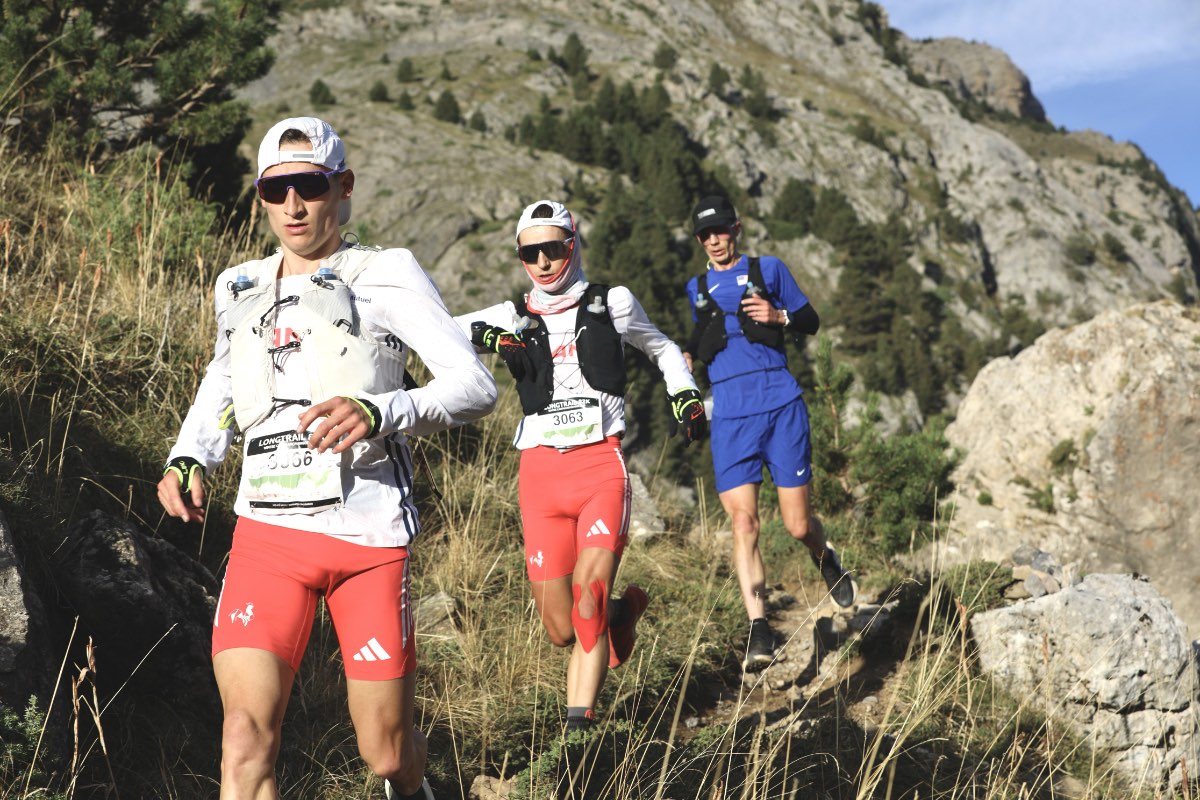
The racing was close between France’s Louison Coiffet (left) and Benjamin Roubiol (middle), and American Jim Walmsley at the 2025 Trail World Championships Long Trail. Photo: iRunFar/Meghan Hicks
Symonds, who ran in the Mountain Running World Championships as a junior as far back as 1999, also believes the combined event is good for the sport, saying, “It is attracting more and faster athletes, which is reflective of the sport in general. I’m of the opinion that it’s a good thing that the “mountain” and “trail” events have been combined, as the sport does suffer from being pulled in many directions, under different, competing federations.”
On the other end of the Trail World Championships experience spectrum is Schide, who competed for the first time this year after more than a decade of racing ultras. She says, “One of the reasons I targeted WMTRC in Canfranc was because I knew that there would be a competitive field there, and maybe it would attract slightly different people than I would have run against at UTMB.” She’d also run into scheduling issues, having placed her year’s main focus on the Hardrock 100 and felt that UTMB would be too close to put together another quality performance. Schide appreciated the event’s ability to host a wide variety of runners, saying, “I also felt like it was a cool way to bring different runners together. We’re often at different events in different parts of the world, and even if we follow other parts of the sport, it’s pretty rare we’re actually all racing in the same place.”

Team Malaysia celebrates at the opening ceremony of the 2025 World Mountain and Trail Running Championships. Photo: iRunFar/Eszter Horanyi
With its growth and increasingly competitive fields, the event has gained credibility with each edition. For some, like Puppi, the chance to represent their country has always held the Trail World Championships as a worthy endeavor. Puppi says, “The credibility has always been there. For me, the championships have always been important, and it’s always been a priority in my calendar. Personally, if I had to make a list of the top, most high-profile events in our sport, the Trail World Championships, for sure, would be in my top five.”
The deeper fields have led to an increased media presence at the WMTRC, a factor that is drawing more eyes and attention to the events. Puppi feels that increased media is great for the event, “From a commercial point of view, more media, more communication, and more involvement from the brands ensures the event is not only relevant for the elites but also for the wider general public. Leaving aside the elite, sponsored runners, that is where the value really can grow for the fans of the sport, and for brands to help inspire people who are not even into trail running, but who could potentially discover trail running thanks to the world championships.”
Scheduling Considerations
With off-road running becoming increasingly popular, there is a growing number of races vying for the attention of top athletes. While this is an issue for all athletes, it’s especially relevant for the long-distance specialists who must carefully schedule their peak efforts throughout the year, only competing at their top level two to three times annually. The proximity of the WMTRC to the UTMB World Series Finals a month earlier this year certainly required choices by many athletes. Training for and running a race like UTMB a month before the Trail World Championships wasn’t seen as compatible, so many longer-distance athletes, including Walmsley and Adam Peterman, ran the shorter CCC or OCC races instead. Puppi also ran CCC, and won. Others, like France’s Vincent Bouillard, who won the 2024 UTMB, skipped the event entirely to focus on the Trail World Championships.
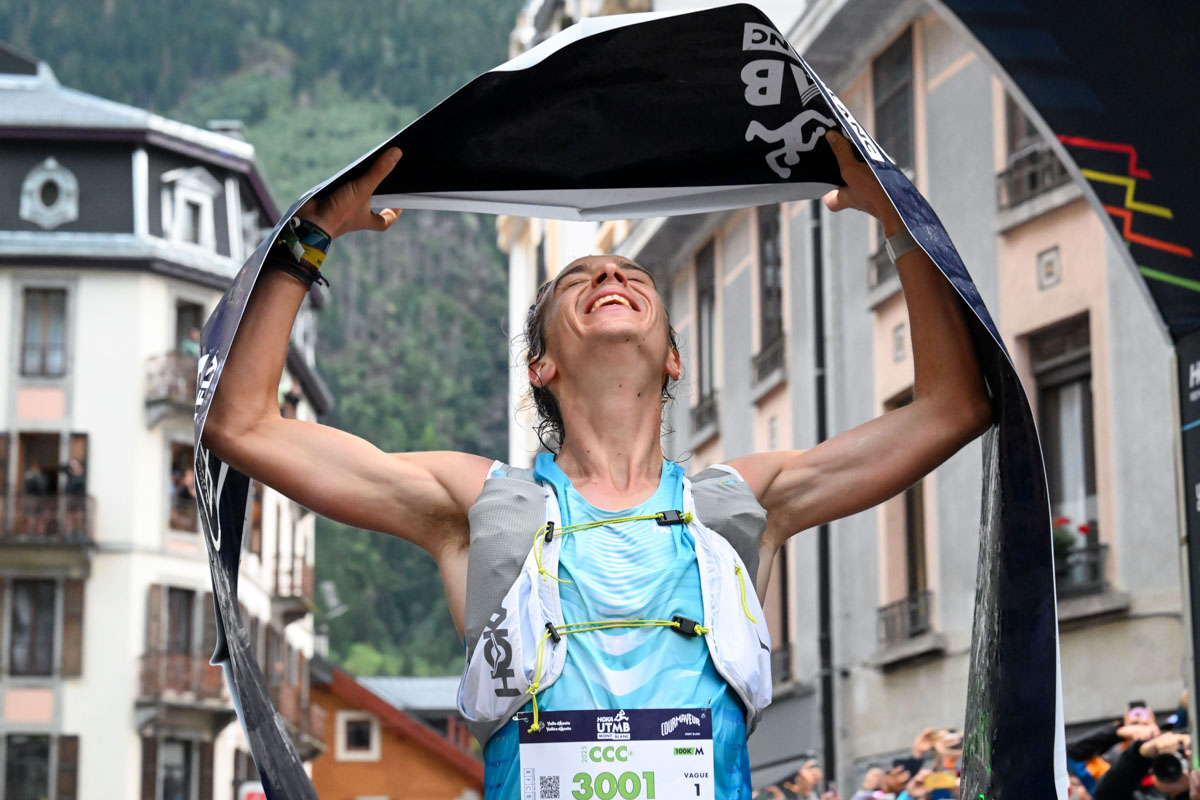
Francesco Puppi winning the 2025 CCC. Photo: UTMB
Shorter-distance racers are often able to recover more quickly and race more frequently, but their peak efforts must also be considered in the space of a year. Many of the leading runners in the WMRA World Cup, as well as the Skyrunner World Series, which are generally shorter races, were at the WMTRC. Frédéric Tranchand (France), Manuel Merillas (Spain), and Luca Del Pero (Italy), all of whom featured prominently in the Skyrunner World Series, placed in the top six in the Trail World Championships Short Trail event.

Manuel Merillas running to second place at the 2025 Trail World Championships Short Trail. Photo: iRunFar/Eszter Horanyi
Finding a spot in the race calendar that works for both the short- and long-distance specialists is incredibly challenging. Schide says, “ I think the most important thing for keeping the Trail World Championships an enticing option to the most number of people possible is to keep it away from those key weekends that already exist in the calendar, like the last weekend of June, when we have the Western States 100, the Broken Arrow Skyrace, Lavarado Ultra, the Mont Blanc 90k, and Marathon du Mont Blanc. Then also, keeping it away from the UTMB weekend.” Schide goes on to offer some options and their pros and cons: “Either placing it early in the season, like May, which is tough for people living in the mountains where it snows in the winter, and it’s hard to train outdoors, or later in the year when the [race calendar] is less crowded.”
Puppi, who won CCC a month before WMTRC, says of the scheduling, “This year was not ideal. I think it can be a little later in the season, mid-October maybe or even November.”
Final Thoughts
The WTMRC provide a venue for off-road runners from around the world to come together and compete on a global stage that is unique to all others on the racing calendar. Although mountain and trail running have their star athletes who can provide headlines, these races are not just about them. Runners of all abilities, from all nations, including those finishing well down in the field, generate interest in their own countries, providing that priceless trickle-down effect that inspires the next generation of trail runners. For the majority of competitors at the championships, it is still more about fulfilling a childhood dream of representing their country than finishing on the podium or claiming a bonus from a sponsor.

The 2025 World Mountain and Trail Running Championships can provide the inspiration for the next generation of trail runners. Photo: iRunFar/Eszter Horanyi
The ongoing dilemma for all competing organizations and governing bodies is trying to sustain those simple dreams in athletes while striking a balance between the reality of the commercialism needed to grow and sustain the sport. For the three athletes interviewed for this article, it is evident that, despite their success, they all still possess a pure love of running, and although there is an acceptance of the modern commercialization of the sport, trying to balance that reality while not losing the almost childlike joy of running for its own sake will always be important to them.
With the 2027 WTMRC scheduled for Cape Town in 2027, it’s up to the organizing committee and federations to create an event that will continue to build on the momentum generated in the past three editions. It’s also arguably up to brands, commercial event organizers, and other stakeholders to support federated competitions like these, the success of which can be considered a key component of a fully fledged sport.
Call for Comments
- Did you follow the WMTRC in Canfranc this year?

Team Ukraine at the opening ceremony of the 2025 World Mountain and Trail Running Championships. Photo: iRunFar/Eszter Horanyi

