In this monthly article series, ultrarunner, race director, and coach Gabe Joyes answers reader questions about anything and everything running. Learn more about this ask-the-athlete column, and be sure to fill out the form below to submit your questions for a future article!
In this article, Gabe answers questions about uphill training frequency, finding crew members, and embracing learning opportunities. Also, snacks!
Gabe’s Tip of the Month
If you are reading this article, for better or worse, there is a solid chance you are the type of person who gets advice from the internet. There is indeed a lot of good information out there, but without a doubt, it is muddled in with all sorts of questionable opinions and beliefs as well. Rather than earning your trail running education through seemingly authentic and reliable Instagram content, YouTube videos, or Reddit posts, kick it old school and find yourself a trail running mentor. Seek out your own local legend — that community leader who has been there and done that for years — to glean a bit of their hard-earned knowledge and experience for yourself, too. You’ll gain infinitely more wisdom than you will from yet another social media post, and you just might make some friends for life as well.
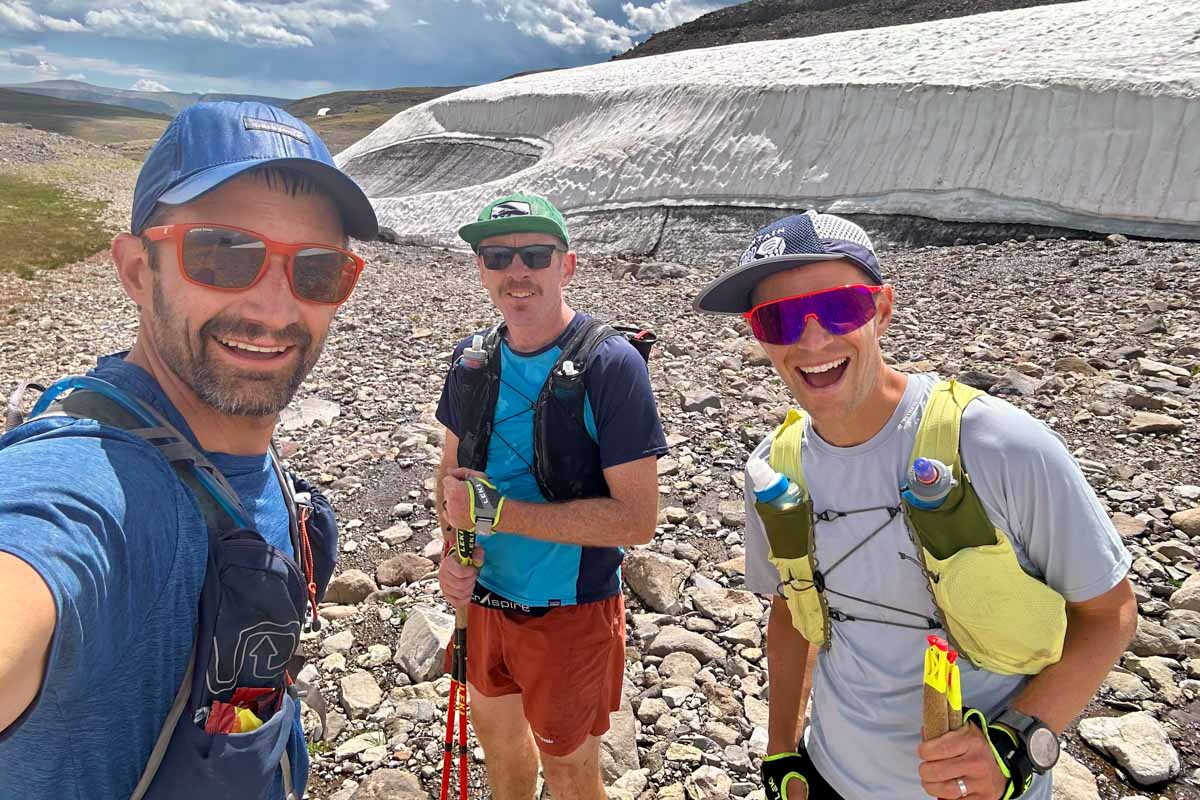
Class is in session at the School of Hard Knocks with Ty Draney (center) and Jared Campbell (left), two of Gabe’s (right) mentors in the sport. Photo courtesy of Gabe Joyes.
Uphill Training Frequency
How many days a week should I be doing uphill training for a mountain ultra? -Jeff
You are not alone in wondering this, Jeff, as I get this question a lot! It’s a bit tricky to answer, as it can depend a lot on where you live, the type of terrain you have access to, and how much climbing you have done in the past. However, as a general recommendation, aim to have your long runs and regular training runs have similar elevation gain and loss per mile as your goal event. For example, if you are training for the Hardrock 100, with roughly 33,200 feet of climbing and descending over 100 miles, you want your runs to have about 332 feet of elevation gain and loss per mile.
This is just an average, so it doesn’t have to be precise. When I trained for the 2025 Hardrock 100, most of my long runs averaged somewhere between 290 and 360 feet per mile — totally close enough to that 332 goal number.
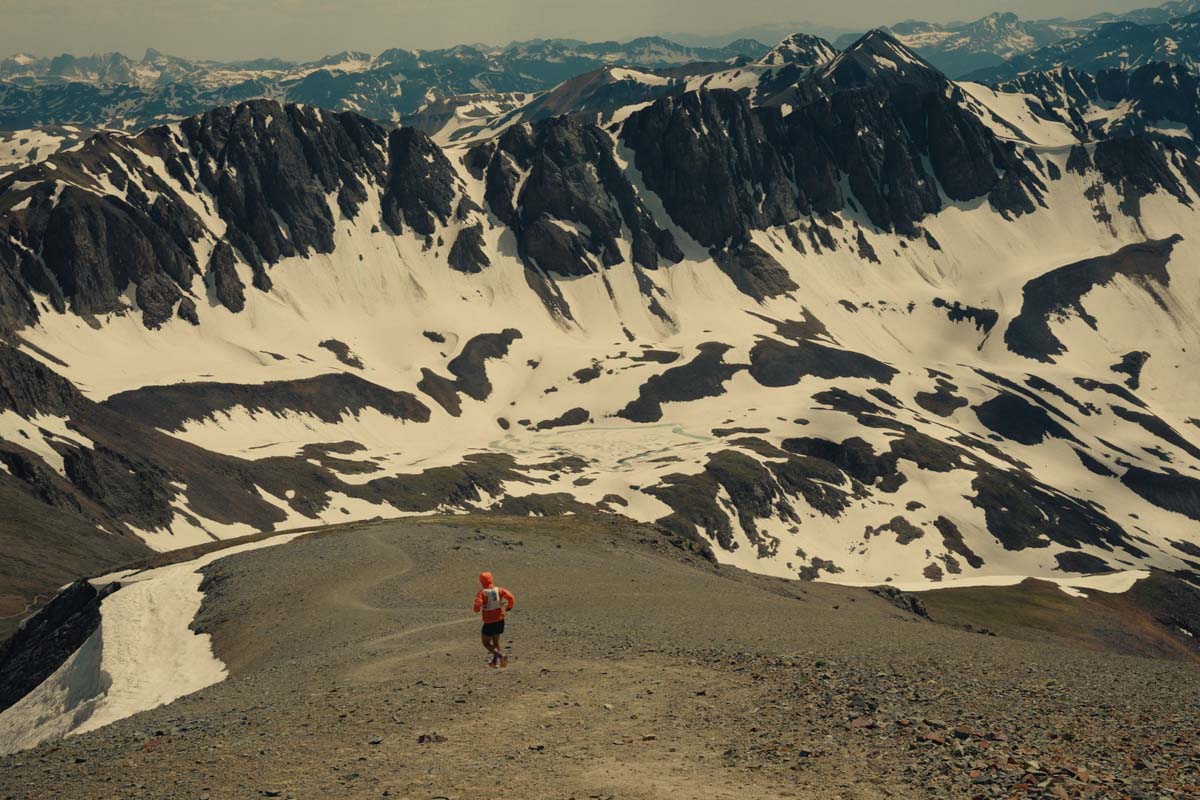
Train your legs for both the ups and the downs of mountain running. Photo: Niko Carste
The math is a bit different for recovery runs and high-intensity workouts. The point of a recovery run is to help your body feel better, not to add more training stress. Even if you have a climbing-heavy race on the schedule, doing recovery runs on mostly flat terrain is a savvy choice to help shed some muscular fatigue. For high-intensity, interval-type workouts, I would suggest the total elevation gain and loss per mile be less than your goal race. Continuing with my Hardrock example: I’m not able to do many intervals on super steep terrain and still keep my running pace and cadence high, so I lose the speed benefit of the workout because I simply can’t go that fast. Instead, I did my uphill intervals on hills in the range of 150 to 250 feet per mile. That’s steep enough for a lot of strength development from running uphill, but at a grade where I could actually run and not just feel like I was spinning my wheels and going nowhere.
With this approach, your weekly average elevation gain and loss per mile will be less than your goal race, but you will definitely still be prepared for the demands of race day. Many runners utilize treadmills for vertical training — either because they lack access to steep terrain or for convenience — but I’d urge you to take a measured approach to this. Most of the time, when runners’ legs fail them in steep terrain on race day, it isn’t on the up, but on the down. Treadmills are a great tool for uphill intervals and offer a fantastic training stimulus, but because they lack the descent and terrain specificity — your race isn’t on a smooth rubber mat — they should be used as a training tool, and not a complete substitute, for vertical training.
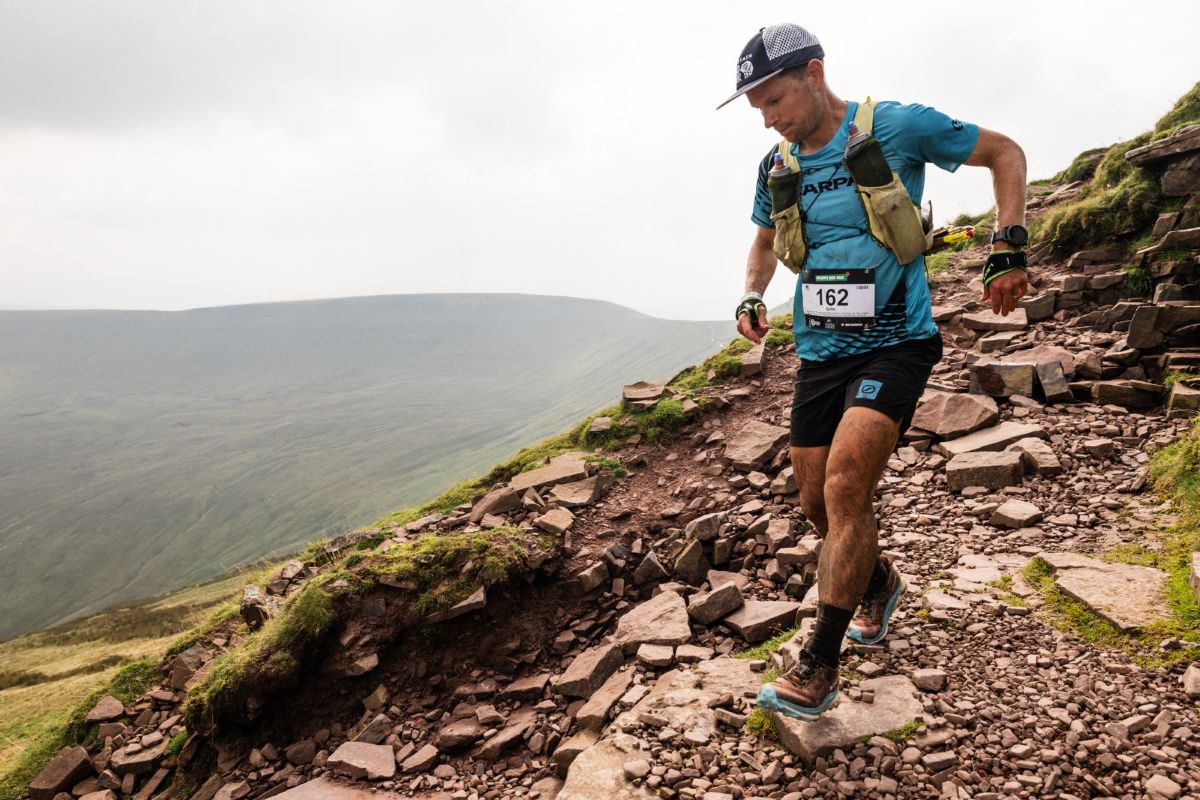
Gabe finding terrain-specific downhill training handy in the Brecon Beacons mountains of Wales during the 2025 Dragon’s Back Race. Photo: @nolimits.photos
Crew Conundrum
I’ve done a couple trail races but haven’t approached the ultra distance yet. One of my big hang-ups about trying an ultra is asking people to crew for me. Not only does it feel somewhat selfish to ask people to commit their time in such a way, but I don’t have very many friends who are familiar with ultra racing. How would you go about this? -Matt
From the outside looking in, ultrarunning can appear to be a selfish act, but I don’t buy into that sort of thinking. Countless athletes have learned that ultrarunning really is a team sport, and they could not do it without the support of friends, family, and volunteers.
Consider going to a theatre for a show. There probably is a lead role, but that doesn’t mean the supporting actresses and actors, extras, light crew, sound crew, director, and costume designers don’t all serve important roles. When you put together a support team for an ultra, it isn’t for these people to serve you, but to be a critical part of the team and be on the journey with you. As you make your race weekend plans, be thoughtful about how to create a fun, memorable experience for your support crew and how to ensure they feel appreciated and valued. When talking to your prospective crew, make sure you discuss plans in terms of “we” and not “me.” Lastly, give your friends and family a chance. I’ve found that most people are really excited about supporting others who are pursuing a big, scary goal. In fact, some of my favorite race experiences are as part of a support crew, and not as a racer.
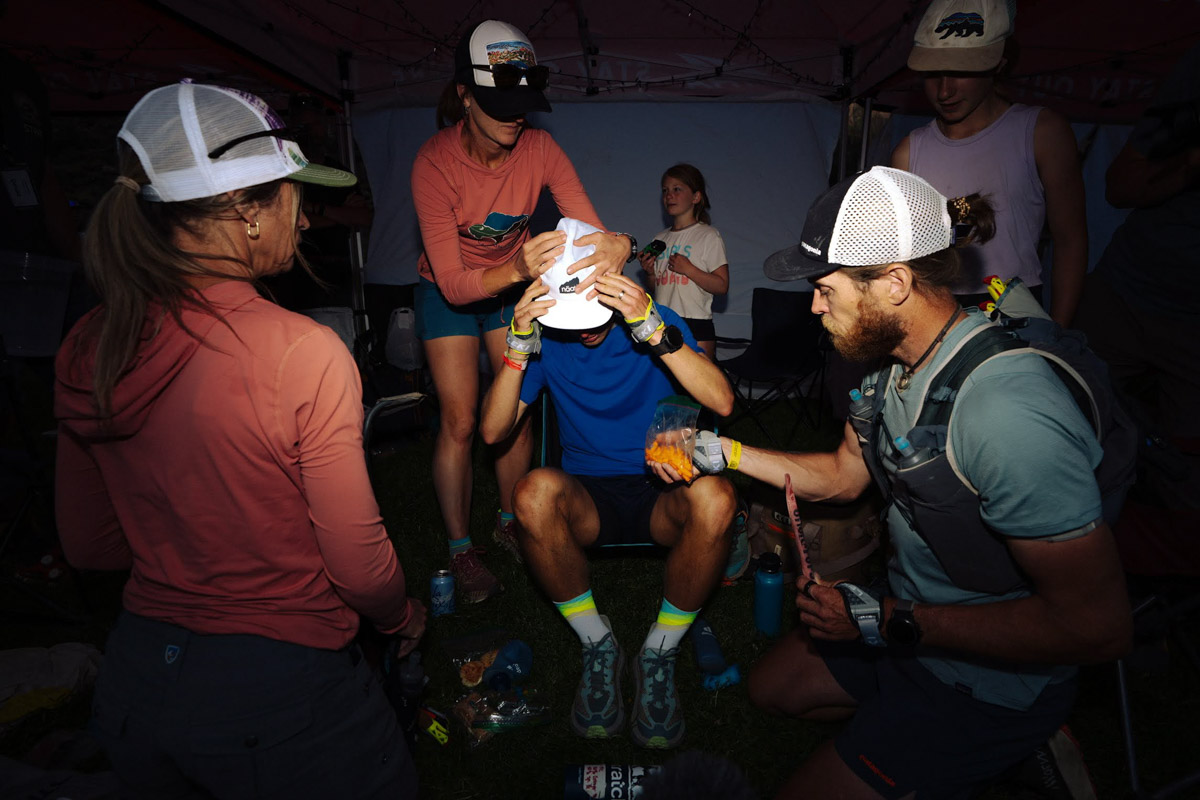
My crew at the 2025 Hardrock 100 proving once again that ultrarunning is a team sport. Photo: Niko Carste
Learning From Failure
What’s the worst climb or descent you’ve ever had to do? -Gilbert
Ah, Gilbert, I appreciate this question! However, I admit I might not be able to give you the answer you are looking for, as instead, I’m going to tell you about one of my favorite descents ever. About halfway through the first day of the 2025 Dragon’s Back Race in Wales, runners climbed up Tryfan, a craggy and rock-strewn mountain in the heart of Snowdonia. Most of the ascent, I was below the clouds, but somewhere near the summit, I was engulfed in fog that made macro navigation impossible, and I could barely see a few boulders in front of me. It had been raining most of the day, and each rock was slick in a way that I had never experienced before. Furthermore, in my view, there was no defined trail on Tryfan, and I was moving blindly forward in the dense fog. Descending the mountain was an immense challenge for me and required a level of concentration and emotional management I had never experienced before: I tensed up, could hardly breathe, and moved with zero confidence in my footing or myself.
Later that night, as I lay in my tent, my head was spinning as I went over all of the skills I needed to improve to get through the rest of the race — and to never move so poorly in terrain like that again. That descent off Tryfan was the catalyst for me to improve my technical descending skills, pursue shoes with better rubber compounds, and work on my breathing, body control, and self-talk while descending. I can draw a direct line from that day on Tryfan to improved descending skills in similar slippery, rocky conditions. Although difficult at the time, I am so glad I had that experience!
Without a doubt, Tryfan is one of my favorite descents ever!
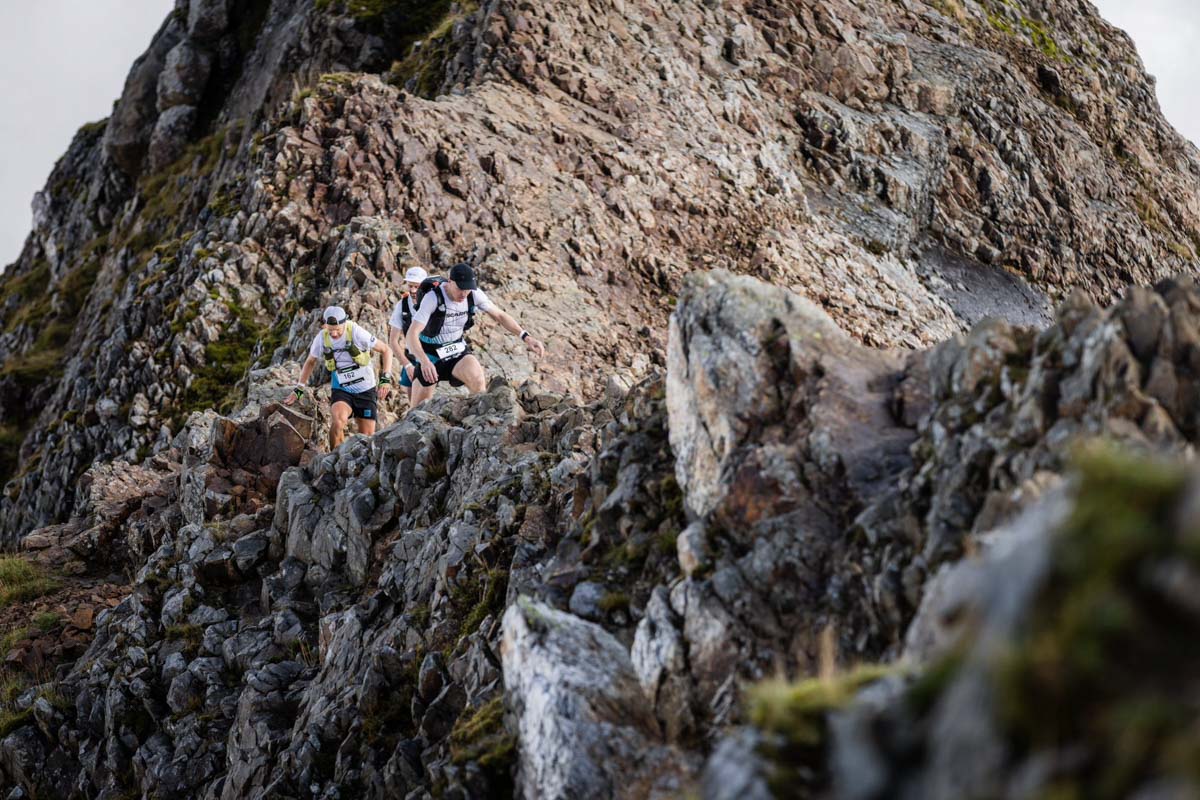
Gabe running full-on technical terrain during the 2025 Dragon’s Back Race. Photo: @nolimits.photos
Snacks
Best gas station running fuel or aid station food? -Annabelle
Behold the great trifecta of ultrarunning fuel: Potato chips, Peanut M&Ms, and Coke! It’s a high-calorie, cost-effective, and satisfying trinity of highly processed and easily accessible running fuel. Without a doubt, it has the sweet, salty, fatty, and yummy all going on.
Unpopular opinion: Nerds Gummy Clusters are profoundly overrated.
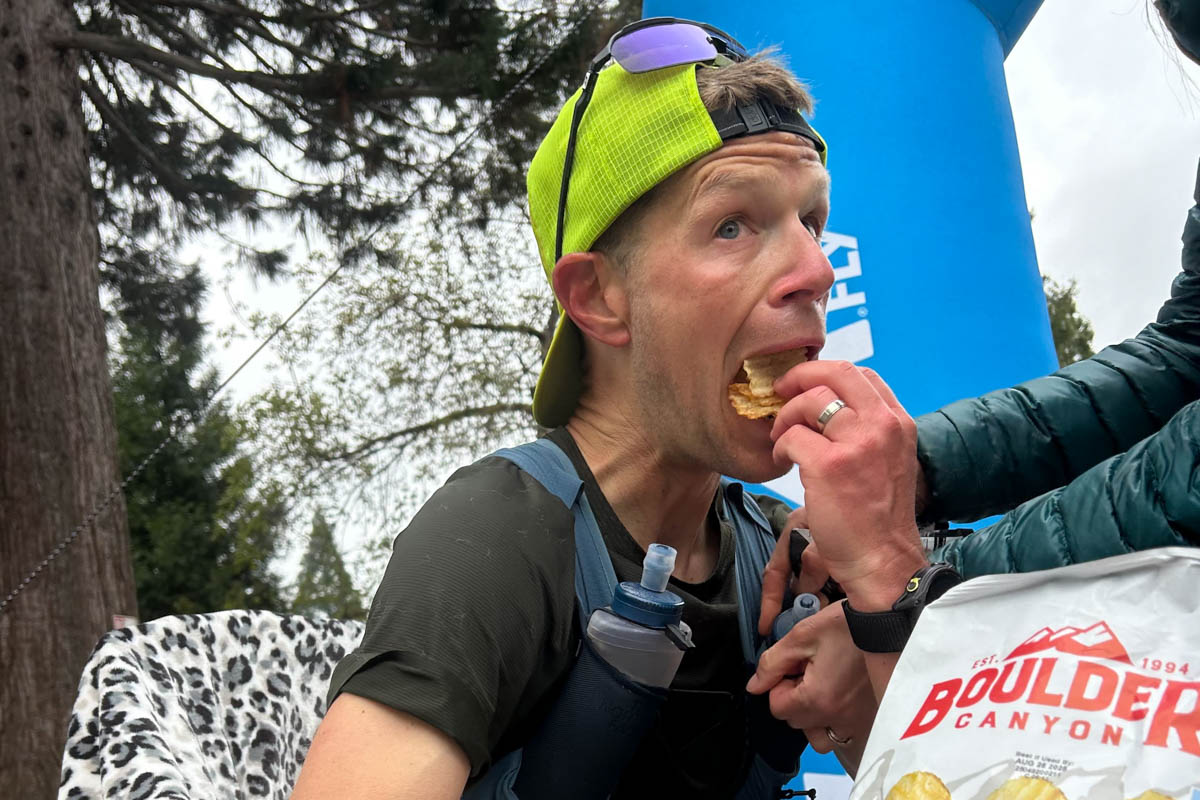
Your author not even the slightest bit embarrassed by his potato chip consumption at the 2025 Canyons 100 Mile. Photo courtesy of Gabe Joyes.
Submit Your Questions
Send us your questions! Use the form below or send us a message on Instagram, and we’ll consider your questions for future articles.
Call for Comments
- What are your thoughts on Gabe’s answers this month?
- What pressing running questions have you always wanted answers to?

