Molly Seidel was 12 years old when she read the now-iconic book “Born to Run” and learned about the Western States 100. It was an early introduction to the historic race, and now, nearly two decades later, the 2020 Olympic Marathon bronze medalist is lining up for her first ultramarathon at the January 2026 Bandera 50k, using it as a stepping stone that she hopes will eventually lead to the Olympic Valley, California, start line for the 100 miler that has held a place in her running psyche for so long. “The Western States 100 was always a dream for me,” she says, adding, “I’m such a Scott Jurek fangirl.”
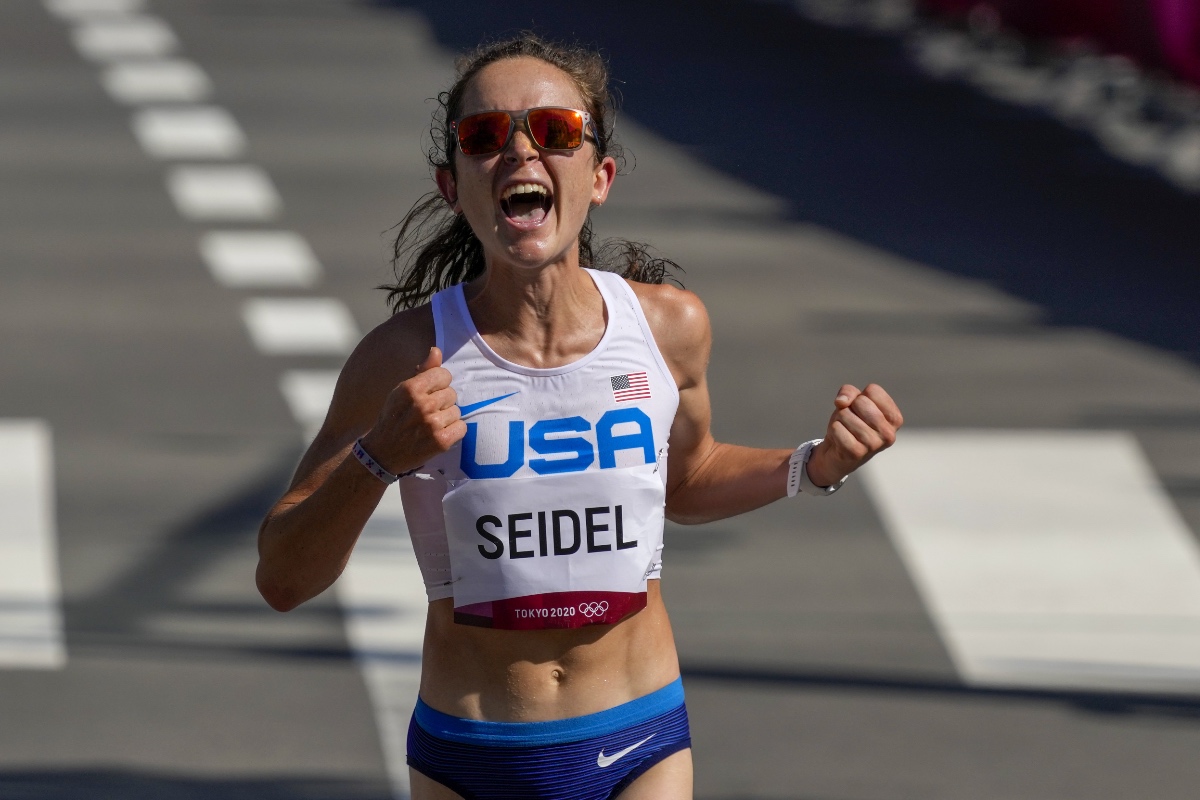
Molly Seidel, of the United States, celebrates as she crosses the finish line to win the bronze medal in the women’s marathon at the 2020 Summer Olympics, Saturday, Aug. 7, 2021, in Sapporo, Japan. Photo: AP Photo/Shuji Kajiyama
Seidel isn’t the first road runner to give trail running and ultramarathons a nudge, though others have had variable success over the years. She says, “I think a lot of trail runners get weirdly intimidated by road running, and I think they forget that we’re all the same. It’s just different flavors.” She doesn’t think the intimidation factor is one-directional either, “On the other side of things, a lot of road runners are deeply intimidated by anything trail running. It has its own specific knowledge.”
When asked how accurate she finds the memes comparing road runners to trail runners, she laughs and mentions the YaBoyScottJurek Instagram meme account, saying, “It is so funny because it’s literally so hyper-specific. But it is just a different side of the same mildly spectrumy coin.”
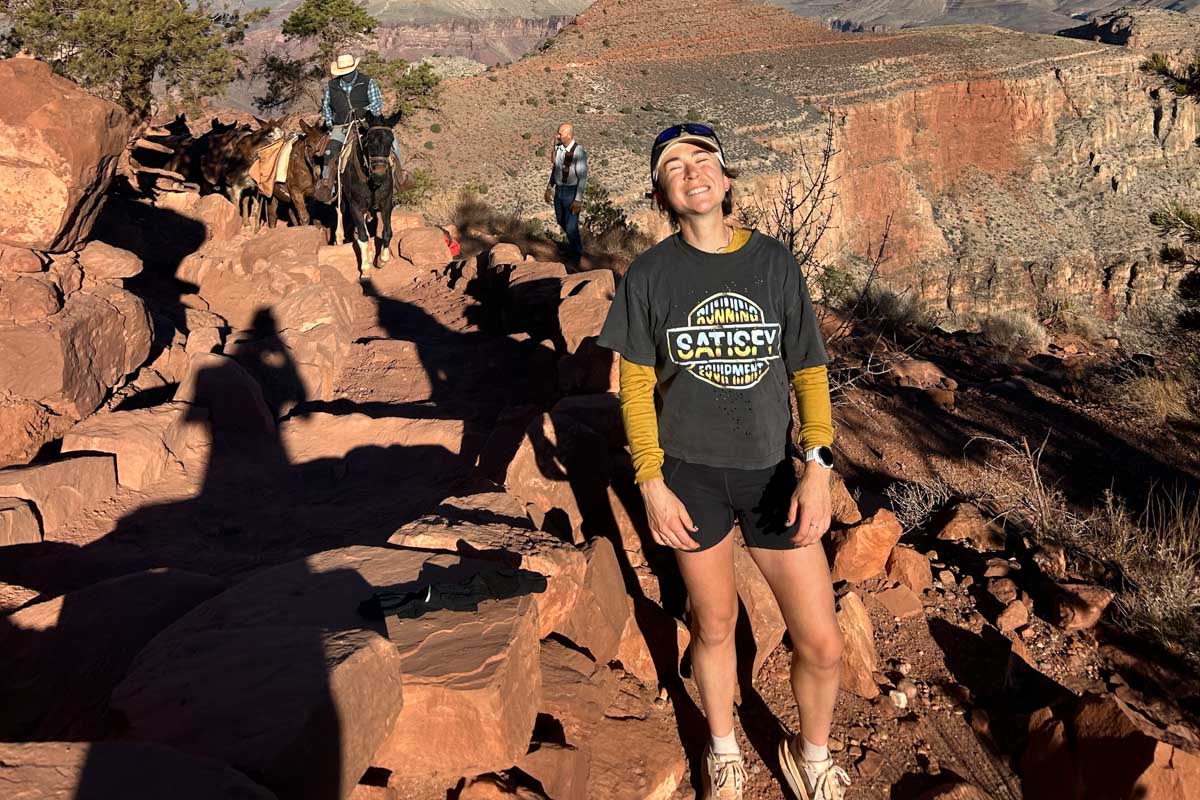
Molly Seidel is all smiles while training on trails in the Grand Canyon of Arizona, not far from where she lives. All photos courtesy of Molly Seidel unless otherwise noted.
Seidel’s new focus on trails comes after several difficult years on the road, including dealing with an array of injuries, missing out on the 2024 U.S. Olympic Marathon Trials, and leaving her long-time sponsor, Puma, at the end of 2024. She says that while some of the transition was driven by her body needing a break from marathon training, there was more to it. “Once I actually opened up the space to listen to what I wanted to do, [trail running] is what I wanted to do.” She goes on to explain, “I enjoy being up in the mountains. I enjoy getting to run with my friends on trails. I enjoy getting to have the freedom.”
Seidel has a history of taking major pivots in the sport, especially after injuries and setbacks, and coming out flying. Only time will tell how far she can take herself with her new venture in trail and ultra.
Childhood Success
Growing up in a small town in Wisconsin, Seidel says she always “had this real deep internal sense that running was what I wanted to do.” Her earliest memories of running involve going out with her dad on their neighbor’s 150-acre property. Her dad was training for soccer, and Seidel, who was eight at the time, remembers narrowly being able to beat him. She fell in love with the sport and started going out on her own runs. While neither of her parents fully understood her obsession with the sport, they were supportive of it. “[My mom] would drive me to this local farm road, and I would run out and back solo, and she would just sit in the car while I ran. They sacrificed a lot to make sure that I had a safe and supportive environment to run.”
Seidel found quick success once she started running at school. She says, “In fifth grade, we ran the mile in gym class, and granted, it was a very small school, but I broke our whole school’s record.” It was a kindergarten through 12th-grade school, and the gym teacher encouraged her to pursue the sport. It was clear she was good at it.
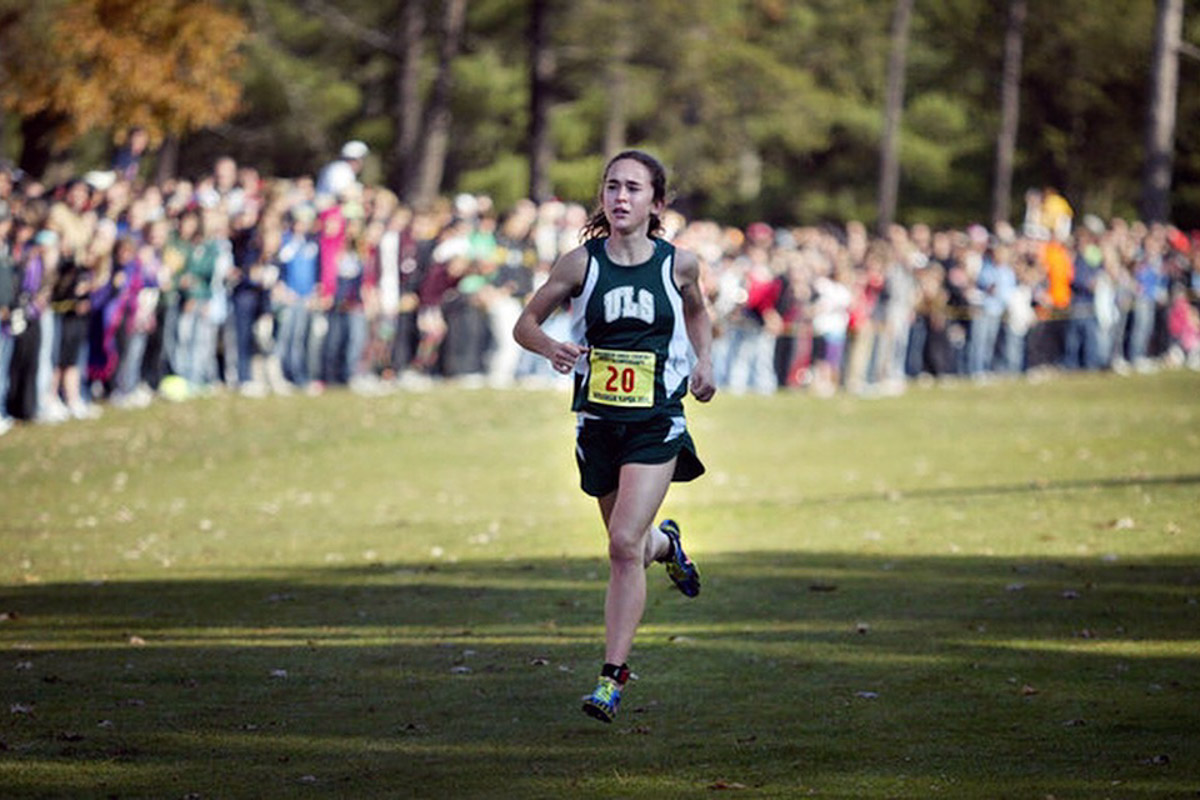
Molly Seidel on her way to winning the 2011 Wisconsin Cross-Country State Championships during her senior year in high school.
For Seidel, running gave her a space to grow. “I was a really awkward kid, and running was the place where it just felt like everything kind of made sense and lined up. It was the place where I could finally feel confident in myself because in every other sense of my life, I did not feel confident.” She laughs, “I was just not cool.”
Seidel’s parents continued to support her running. Her mom, a former cheerleader, was her loudest sideline supporter and did what she could to connect with the sport, even though she didn’t understand it. Seidel says, “She would make me a peanut butter and jelly sandwich before every single race because she saw on TV once that Bonnie Blair, the speed skater, ate a peanut butter sandwich.”
Twelve high school state titles later, spanning both track and cross country, and a win at the Foot Locker Cross Country National Championships her senior year in 2011, Seidel had a multitude of full-ride scholarship offers from the top running colleges across the country waiting on her family’s answering machine on July 1 when official recruiting opened up. “It was wild,” she says of the approximately 50 messages she sorted through. She ultimately chose to run for Notre Dame in Indiana. It was nearby, and her family had always been Notre Dame fans.
Collegiate Challenges
While Seidel’s high school running wasn’t without challenges — her junior year was rough — collegiate running provided a new set of challenges. She says, “I felt like I was thrown to the wolves a little bit.” She goes on to say, “I don’t think I had a concept of just how hard it would be. I think in my mind, anything that I’d struggled with, I’d immediately been able to will my way through or just train harder and push through and accomplish it.” That belief fell apart under a difficult coaching situation. She says, “Going from a place where I was just surrounded by so much love and support in high school to suddenly — I’ll call it out — being verbally abused on a weekly basis in college was just so hard.” Seidel, who spent much of her freshman year at Notre Dame sick, says, “I went from being the top recruit in the country to finishing last at nationals and being told constantly that I’m a waste of a scholarship and a disappointment.”
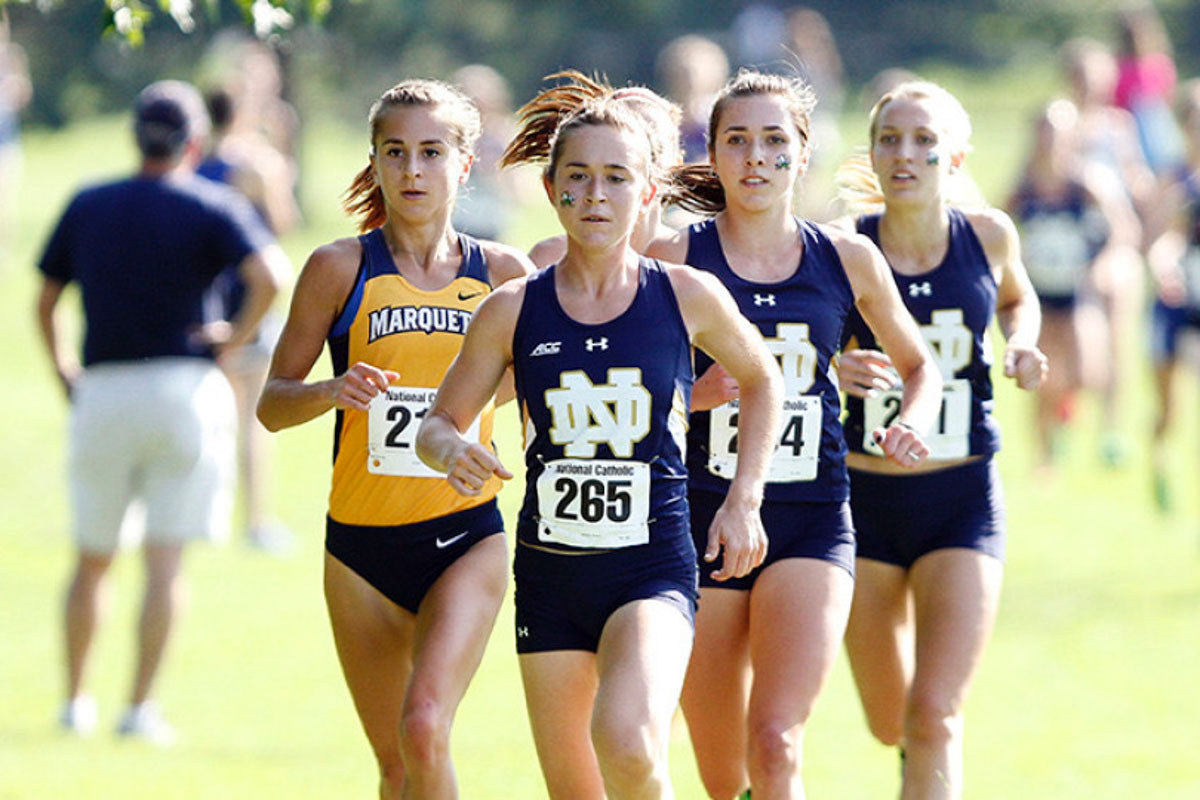
Seidel leads a group during a 2014 home cross-country meet at Notre Dame.
Seidel was considering quitting after her sophomore year. She admits, “I purposely bombed my final meet of the season so I didn’t have to go to regionals.” With a deteriorating relationship with running, she took the summer to travel to Argentina to study archeology. She became friends with another woman on the archeology crew who was a trail runner, and Seidel was soon running 100 miles a week. “It was very calming and relaxing. And I think I got back in touch with that love of the sport again.“
While she was in Argentina, Notre Dame hired Matt Sparks as the school’s new coach. Seidel says he completely changed the program, and under the new structure and coaching, with a newfound love for the sport, she started to thrive. She says, “I would go to war for Sparks. He’s the reason that I’m a pro runner.” She went from finishing last at cross-country nationals and not qualifying for track nationals to winning both at the end of her junior year. “It was that shocking of a transition,” Seidel says.
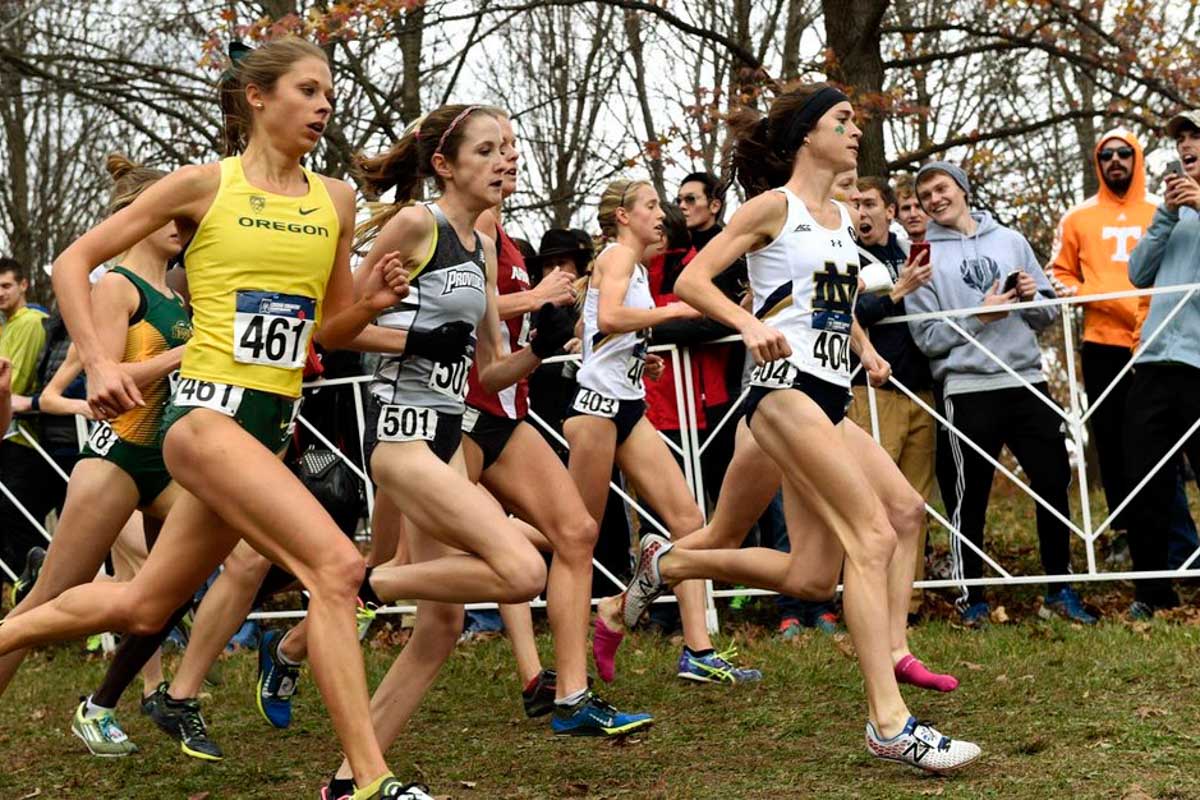
Seidel on her way to winning the 2015 NCAA Division I Cross Country National Championships.
Seidel had a successful final two years of collegiate running, but the damage had been done. After winning four NCAA championships between track and cross country, Seidel was once again a hot commodity. But, instead of going pro in 2016, she checked herself into an eating disorder clinic. She spent a couple of months there, and by the time she returned to running, she says, “Everything had dried up, which is just the nature of it. Nobody wants to touch you with a 10-foot pole. At that time, it was such a taboo to talk about eating disorders in the sport.”
Stumbling into the Marathon
After college, Seidel moved to Boston, Massachusetts, to join a new running team sponsored by Saucony, but it soon became clear her body couldn’t hold up to the rigors of training for the 10k and other shorter races. She ran her first year as a professional with a broken pelvis that eventually required an experimental surgery involving a bone graft to repair. When she returned to running, she says, “I was asked to leave the team.” Seidel backtracks, “I chose to leave, but it was pretty clear they didn’t want me on that team anymore because I was damaged goods.”
Instead, Seidel started training under the guidance of her friend Jon Green, and says, “He was the first person in a really long time who was just willing to meet me where I was.” She started doing high mileage instead of high intensity. Three months later, while “high on a rooftop,” Seidel decided to sign up for the 2020 Olympic Marathon Trials. Three months after that night, she placed second and earned herself a spot with Team USA at the 2020 Olympic Games in Tokyo, Japan. Of the whole progression of events, Seidel says, ”It wasn’t this concerted thing of ‘I’m going to be a great marathoner.’ It was just, ‘This is something that I’m trying to do to keep a contract.’” Seidel was just 25 years old, relatively young for the sport, and suddenly a respected marathoner. “I felt like I stumbled into it a little bit.”

Seidel training with friend and coach Jon Green in 2021 in preparation for the Olympics.
The 2020 Olympics were delayed by a year due to the COVID-19 pandemic and were finally held in August 2021. Seidel placed third in what was her third marathon ever.
Life changed. Following her second place at the Olympic Marathon Trials, she says, “I went from having 5,000 followers on social media to 100,000 within a couple of weeks.” And everything continued to accelerate after the Olympics.
That November, she ran 2:24:42 at the New York City Marathon, the fastest ever by an American woman, and placed fourth. Injury kept her from finishing another marathon until the 2023 Chicago Marathon, where she finished eighth with a new personal best of 2:23:07.
Making it to the 2024 Olympics in Paris, France, was the next goal, but in early 2024, Seidel withdrew from the Olympic Marathon Trials with a broken patella, a result of overuse.
From Trials to Trails
It seems that one of Seidel’s strengths is the ability to get back up time and time again to keep trying, but her superpower might be her ability to reimagine and reinvent her running every time she comes back.
At the end of 2024, Seidel decided to part ways with long-time sponsor Puma, allowing her to race wherever, whatever, and whenever she wants. She recalls, “When I was struggling with injury and track running, it was thinking outside the box and being, ‘Ok, what can I do to stay in this? How good can I be if I’m willing to veer off the main track a little bit?’”
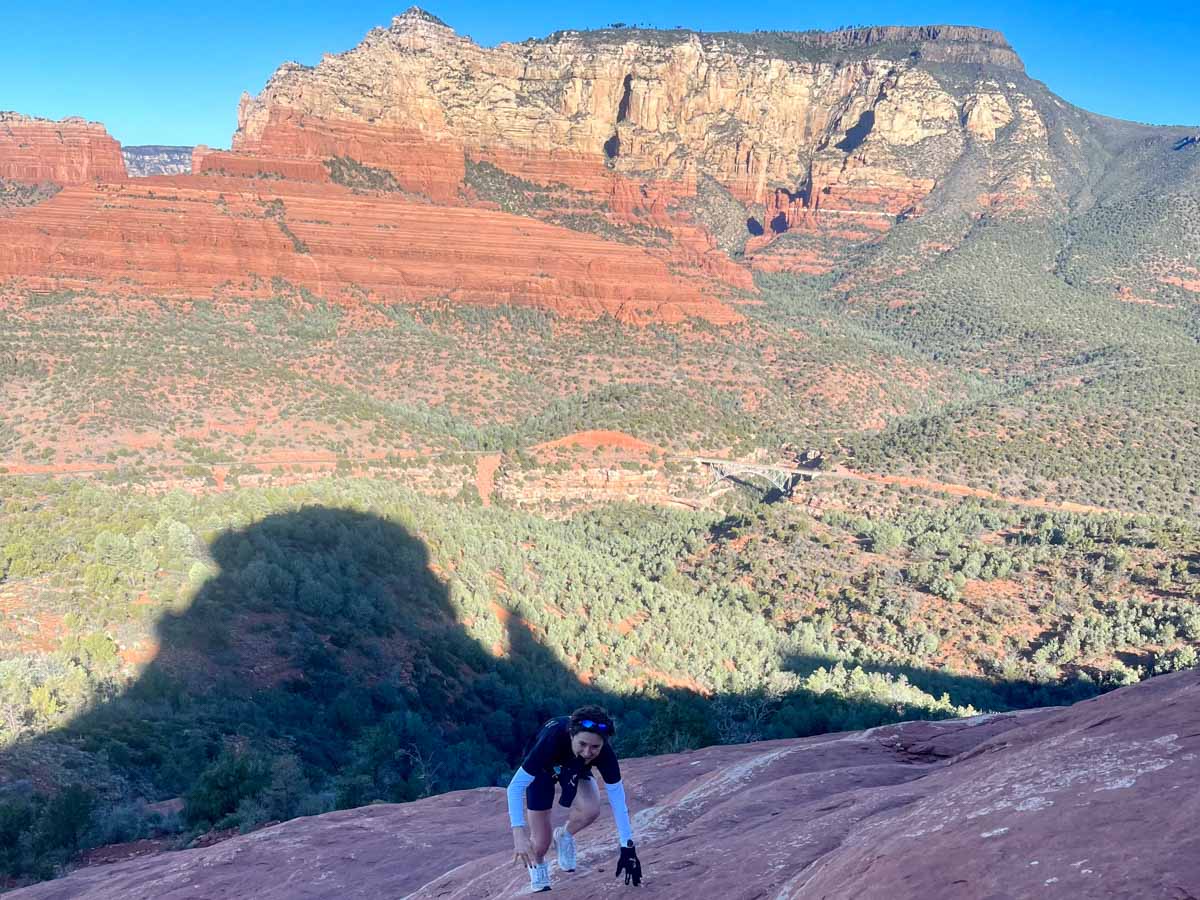
Seidel scrambling in Sedona, Arizona, as part of her trail training.
Like with her transition to the marathon, Seidel says, “I think sometimes we don’t get to necessarily choose our path. Your path chooses you a little bit. It’s definitely that same feeling of, ‘Hey, I can either keep banging my head against this wall that’s not going to move, or I can try going around the wall. Trail running is a little bit of being, ‘Ok, we’ve got to change course a little bit, even if it’s difficult.”
While Seidel originally wanted to race the 2025 JFK 50 Mile this past November, she ultimately signed up for the New York City Marathon instead due to a scheduling conflict. She wanted to use the race preparation as threshold training for the 2026 Black Canyon 100k, and says that after dropping out of the marathon at mile 18 due to knee pain, she knew her heart was on the trails. “I took a couple of days to make sure everything was ok, and then the minute I got back on trail, I was like, ‘Yeah, this is it.’”
Seidel explains, “Ultimately, even if I don’t prove to be all that successful on trail, I think I just get to honor the fact that I do love getting to do this and I genuinely love the training. I’m having a lot of fun with it, and mentally I feel like it puts me in a really good place. That is ultimately what makes it worth it, regardless of what the end result is.”
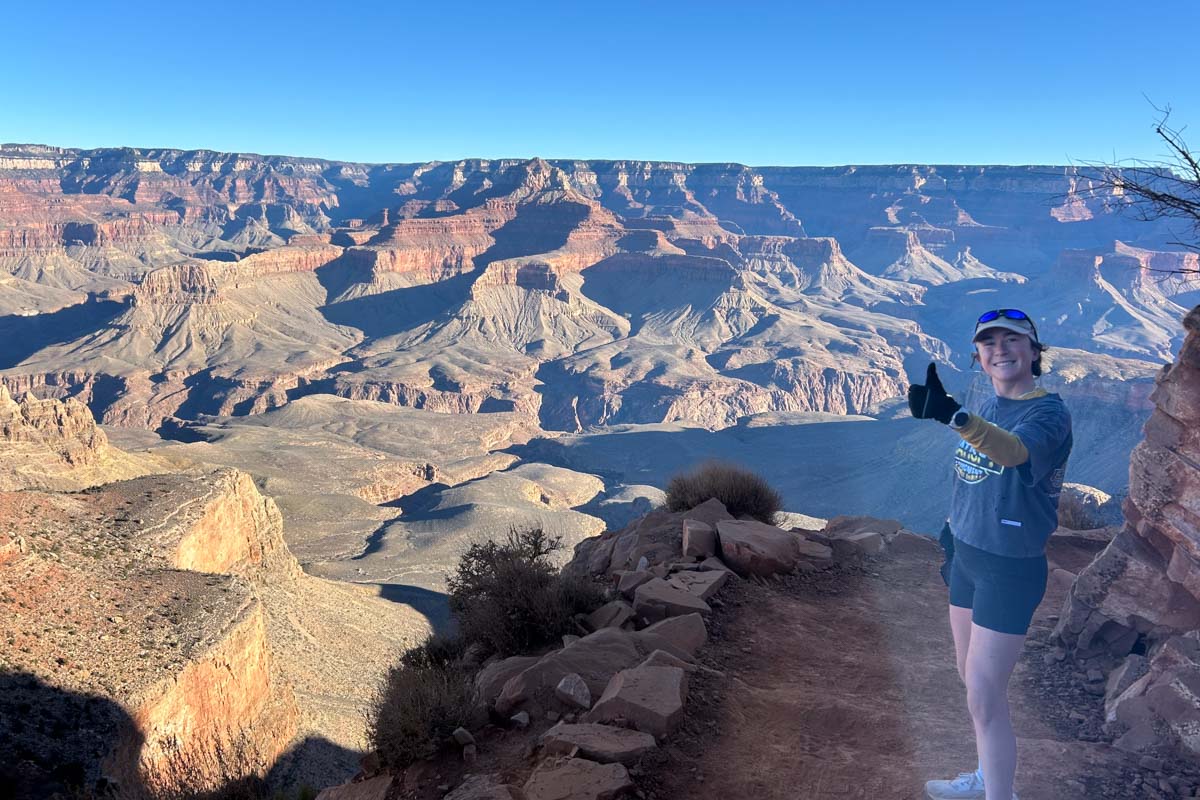
Seidel’s turn to trails includes plenty of miles in the Grand Canyon.
“Marathon has been something where I’ve been incredibly successful, but it has been really mentally tough on me. And I think it took me a while to recognize that while I was really succeeding at the sport, I wasn’t happy and I wasn’t healthy.”
Seidel could walk away from the sport today with her head held high and an Olympic bronze medal in hand, but that’s not what she wants to do. Instead, she says, “I’m trying to look at how I can have the most longevity in the sport and what my body wants to do.” And right now, that’s trail running. In the end, she says, “This is me choosing me, and choosing what I love to do.”
The Future
There are a lot of unknowns for Seidel to navigate in her transition to trail running and ultrarunning — including what it feels like to run more than 50k — and she’s taking it one step at a time. Hopefully, after the 2026 Bandera 50k, there will be the Black Canyon 100k, and then maybe the Javelina 100 Mile in October, a Golden Ticket Series race where the top two finishers receive an automatic entry to the 2027 Western States 100. Like with the marathon, Seidel has no idea how it will all turn out, but that’s never stopped her before.
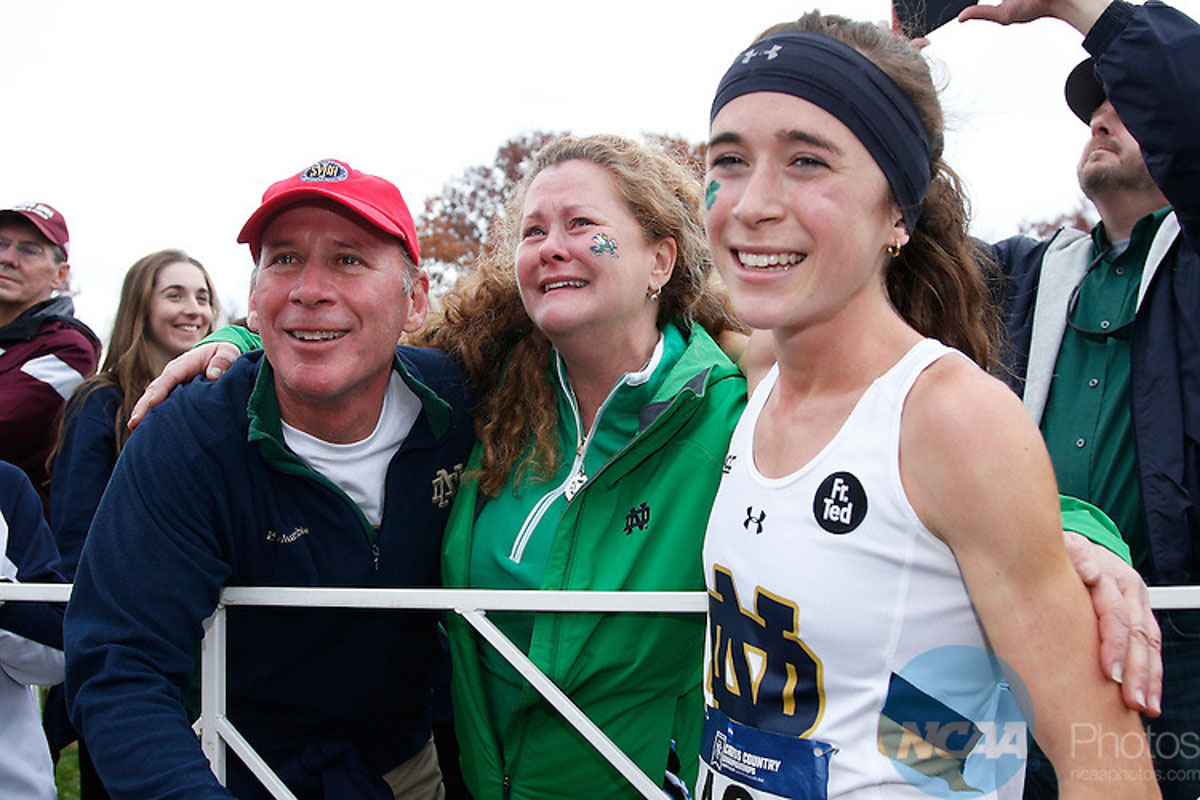
Seidel celebrates with her parents after winning the 2015 NCAA Division I Cross Country National Championships after several rough years in the sport.
“The Olympics seemed like a very far-off dream. If you’d told 12-year-old Molly, ‘Someday you’re going to run in the Olympics and win a medal and then train for a 100 miler,’ I think that would have been everything I could have asked for in a running career.”
Then Seidel mentions an interest in UTMB in the future, but quickly qualifies it, “Let me get through the 100k first. We’ll see from there.”
Call for Comments
- Do you have a Molly Seidel story you could share with us?
- Have you ever made a big pivot in your running with a positive and unexpected result?

