With our morning coffees in hand, Alex Elizabeth, Brianna Corremonte, CJ Carter, and I gather on a video call to talk about running. Over the course of the summer, we’ve been having an ongoing conversation about feeling disenchanted by the increasingly commercial world of the sport. In a landscape that feels increasingly dominated by big-production-value events and brands pushing their latest gear as more people take up the sport, it can feel like there’s less space for those who want to celebrate the simple act of putting one foot in front of the other.
Through lengthy text threads and other video conversations, our small group of passionate runners has discussed and brainstormed whether it’s possible for commercialization and culture to coexist in a sport we’ve all come to love, and how to create a space that’s welcoming to all types of runners. In other words, how does trail running survive this boom with its soul intact?
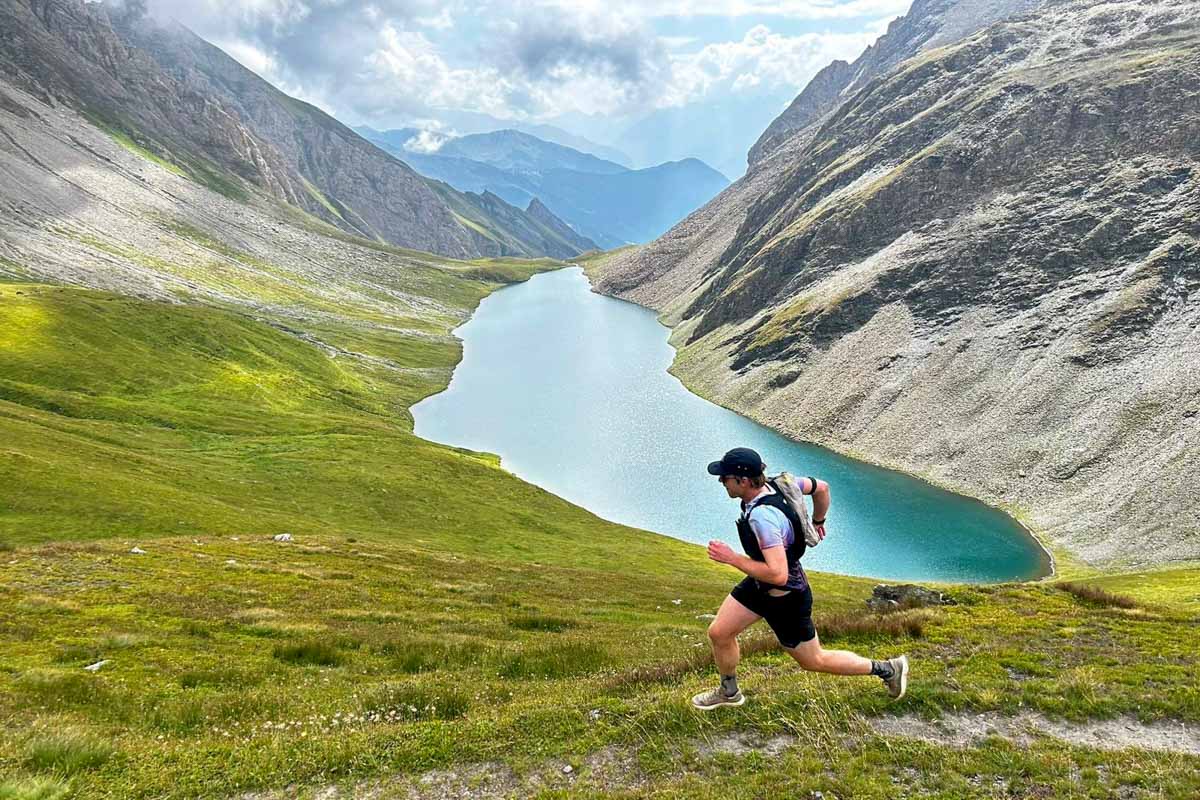
CJ Carter runs by a high alpine lake far from civilization. All photos courtesy of Hannah Green.
All four of us had unique pathways into running, and the sport has enriched each of our lives in countless ways. Alex, who works in public and environmental health planning and policy, says, “Growing up in a small U.S. Midwestern town as a Korean adoptee in a family dealing with a lot of illness, addiction, and instability, I never felt like I belonged anywhere. Running became the one steady thing I could count on. For the first time, there was no judgment, no expectation, and no one could take it from me.” CJ, a regional planner and visual artist based in Leavenworth, Washington, followed his parents into the sport at a young age, and as he grew up, he used it as training for alpinism. Brianna, who previously worked as a deputy manager at a NASA data center, initially found inspiration from her middle-school cross-country coach and later rediscovered the joy of the sport through her group of running friends.
Increasing Commercialization
Trail running, once a fringe sport, has become mainstream over the past few decades. I don’t think any of us are alone in lamenting the dichotomies of a growing sport. The term “sport” alone brings its own set of issues and misconceptions to the table. Running wasn’t always a competition or a way to make money; it was a tool to carry messages or hunt down food for our families. Our feet were a form of transportation, not a game that modern society created. Running was a necessity for families, just like farming, raising children, or making textiles. Whether the ascetic wandering monks of ancient Buddhism, the Tarahumara runners of Mexico’s Copper Canyons, or the nomadic tribes of ancestral peoples, nearly every culture is steeped in the tradition of travel by foot over long distances.
Looking around running media today, much of what is celebrated centers around the commercial aspects of the sport: racing, sponsored elite athletes, and the newest and flashiest gear. An activity that was once a priority for survival becomes a privilege. According to the Sports and Fitness Industry Association’s 2024 Topline Participation Report, trail running saw a 12.3% increase in participation between 2022 and 2023, growing from 13.2 million to 14.8 million participants. For better or worse, with the influx of people comes an influx of money, as the commercial world — including investors, brands, events, media, and others — tries to capitalize on an otherwise very simple activity. Each brand advertises the latest, greatest, fastest, and lightest gear for runners. Each race offers the most challenging and beautiful course. Running media covers the stories of professional runners and their feats of athleticism.
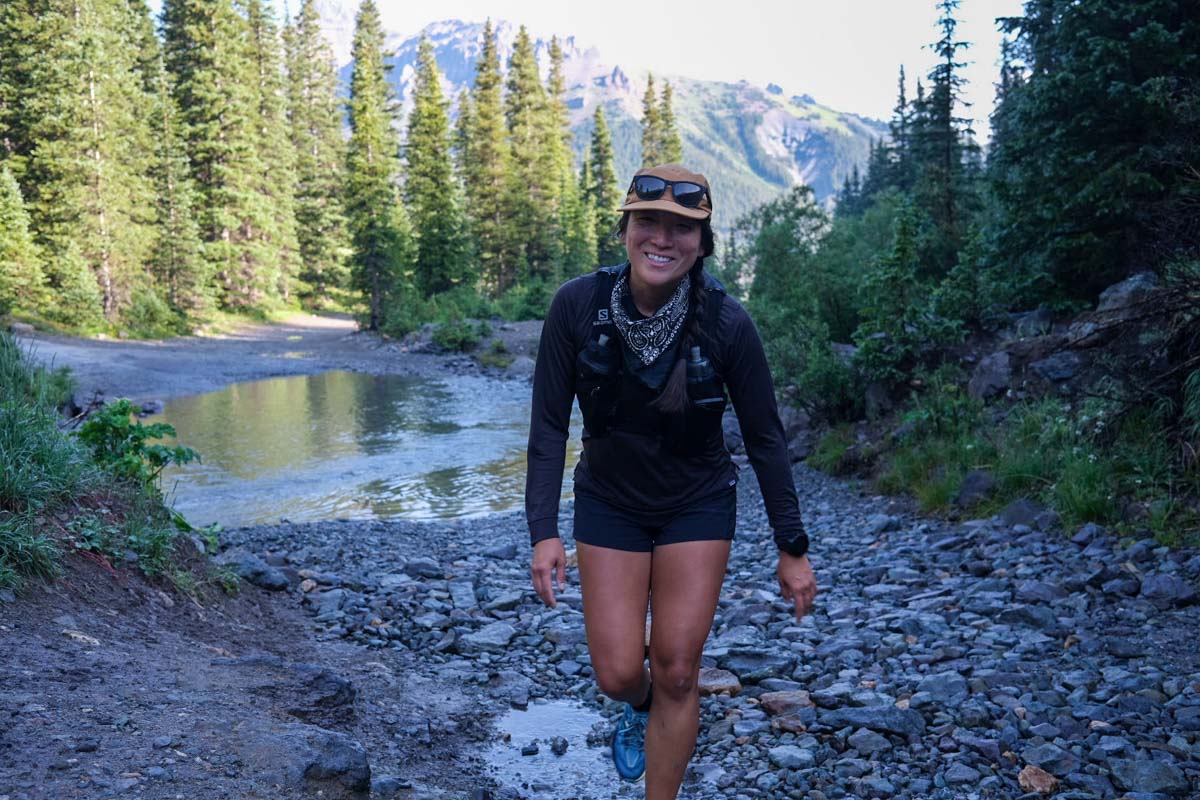
Alex Elizabeth enjoying a day in the mountains.
While increasing the number of people who run is an overall positive trend, the influx of money is not without consequences, including the effects of capitalism on social hierarchy and the environment. There just seems to be a rising chasm between those who just love to run and those who make money off of it. We can’t escape commercialization in the modern era, but perhaps we can help steer it in a better direction. Professional runner Emelie Forsberg once said on Instagram that she hopes to raise her kids to know the names of plants rather than brands. It was a poignant statement from the Swedish runner about how we can teach future generations to care about what really matters.
What Makes a Runner?
Sipping our coffee, our group of four discusses how racing and running are a part of our lives. All four of us have raced in the past, but lately, we’ve all found ourselves wondering where running holds space for those who don’t want to pin a bib on and toe a start line. For CJ, running has been a way to get fit for alpinism in high mountains. Once in the hills, running became a means to reach a summit safely and efficiently, and he says, “The thought of racing never crossed my mind.” Brianna says that running initially mirrored the chaos of her life: “I would impulsively sign up for marathons. Sometimes I would train religiously, other times I would just run a marathon cold turkey, bawling at the start line, knowing the pain I was about to endure. Running gave me the facade that I was somehow still balancing things and making time for myself, but in reality, I could not fathom doing anything for joy or fun.” After undergoing a life reset and returning to trail running, she quickly discovered that competing wasn’t the driving force. She says, “I sign up for a race or go for an FKT [fastest known time] every now and then, but anytime I feel a strong need to compete, I remind myself that I have worked hard enough and stressed enough in life … running is for reconnecting with myself, my friends, the community, and the land.”

Brianna Corremonte has found that competition no longer drives her running.
Yet, if we look around, it’s easy to believe that if we don’t race — and if we don’t strive to compete at the biggest races — perhaps we don’t fit into the sport of running. For the four of us, it feels like the appeal of only seeing elite runners compete in races around the world tends to wear off. People get bored. Winning, jet-setting, and new gear and shoes every month aren’t attainable for the masses. The entourage of support vehicles, film crews, and pacers that elite athletes have access to — giving them an advantage over a runner who travels to an event by themselves — is a bit disconcerting. And then there’s the often paradoxical claim that these athletes are environmentalists but have a greater carbon footprint than the vast majority of runners who mostly train and race locally. It is all a bit comical at times.
Running Inspiration
We choose to believe that there’s more to our sport than this. What are the sources of inspiration beyond the elites with full financial and crew support chasing their dreams? Are they the self-supported folks with full-time jobs who train just as hard and go out on their own for the love of adventure rather than to advertise the shoes they wear? Or what about that interesting route the guy up the street ran? Or that new link-up a friend just put together? Or that group run that someone started? Or that painting a friend made, inspired by a beautiful moment on a run? CJ tells us about how he sticks a sketchpad into his running vest and often stops to draw, journal, or write some poetry during his runs as “an attempt to capture the journey and how it made me feel.” Or what about the person recovering from some significant setback in life, who used the hope of being able to run again as the motivator to wake up each day? Or the fact that many of us use running to heal in hard times? Alex lost her parents in 2022 and 2023, and used running to help process her grief.
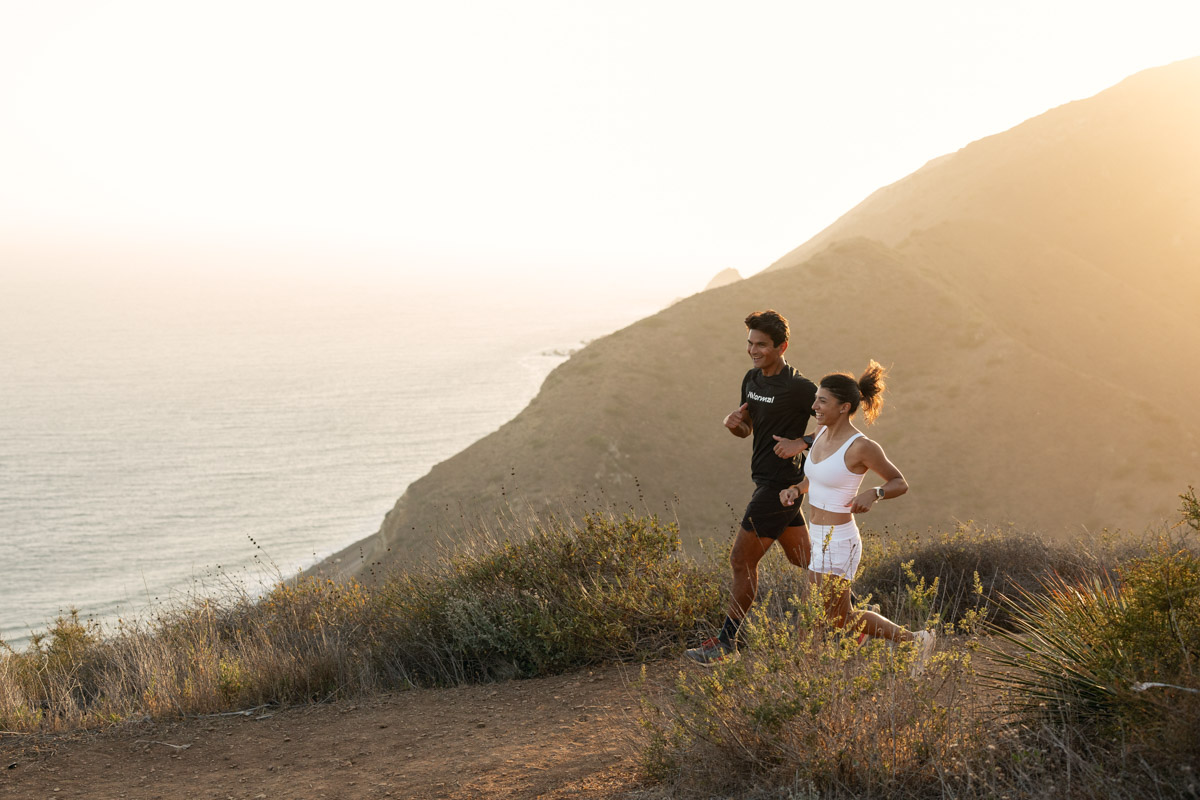
Brianna Corremonte running oceanside at sunset.
Inspiration is plentiful beyond the top 1%, who win the races; yet, no one seems to be focusing on these stories. Yes, the elites deserve to be recognized, but there are so many other stories and people, too, and it’s especially disconcerting when lesser-known athletes get passed over in favor of someone with more name recognition. CJ’s work — based in the Karakoram mountains of Pakistan, where he works with the Balti people to plan the future of their remote and dangerous headwater region, home to the highest concentration of 7,000- and 8,000-meter peaks in the world — has introduced him to some amazing people. “I have met some of the strongest and kindest mountain people and athletes I have ever met. I try to run and move in the mountains with them whenever I can. There is so much running and endurance talent across the world’s ranges and regions; connecting that talent to opportunity is a value of good running culture.”
The Soul of Running
All brands and races are made to sell things, whether it’s an entry fee or a pair of shoes, but that’s not the soul of the sport. We are the soul. It’s the people who lace up every day, good weather or bad. It’s the people who use running as their chance to decompress and think. It’s the people who use running to connect with their friends and communities.
The question then becomes: Can culture and commercialization coexist? Connection in running can show up in a multitude of ways. For Brianna, it was having her middle-school cross-country coach, who’d regaled the team with stories of running 100 miles from Palmdale to Pasadena, California — which Brianna later realized was the Angeles Crest 100 Mile — show up unexpectedly to cheer her on 15 years later as she raced the Leona Divide 50 Mile. For CJ, community is in connecting with local runners and mountaineers to get out in their home mountains and “exploring their important places, transects, trails, and routes.” He says, “I love how running forges this nexus of expression and connection. Running changes the way I think of nature, myself, and others.” For Alex, community means “helping people make informed, thoughtful choices — especially in a world where the options can feel overwhelming. Whether it’s choosing the right gear, finding accessible outdoor spaces, or navigating representation in outdoor culture, I want to be a trusted guide.”
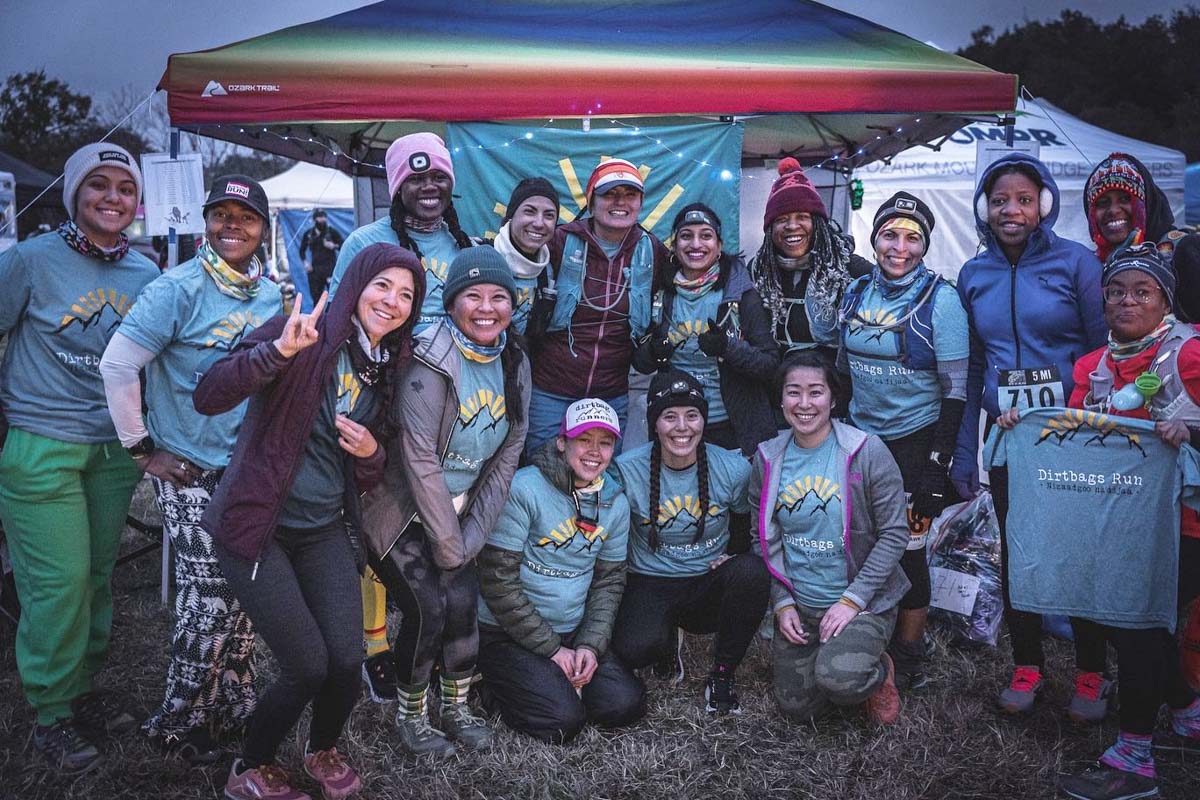
A We Run Long event brings together people whose stories aren’t often told by brands or running media.
Community is the soul of trail running. It’s helping each other find our own paths in the sport. Trail running is a collective of amazing individuals, and we have the choices and the power to change the discourse into an interconnected web of positive stories.
Being the Change
The running community is filled with people positively impacting the sport, often asking for nothing in return. Alex, who graduated from the University of Minnesota School of Public Health with a Master of Public Health in Administration and Policy, says, “Much of my work involves facilitation and planning. From the meeting spaces I host to the programs I help develop, I think a lot about equity, access, and accountability. Those values definitely show up in how I move through outdoor spaces, too.”
Each person in our group has drawn inspiration from others in the trail running space who’ve worked hard to make a difference.
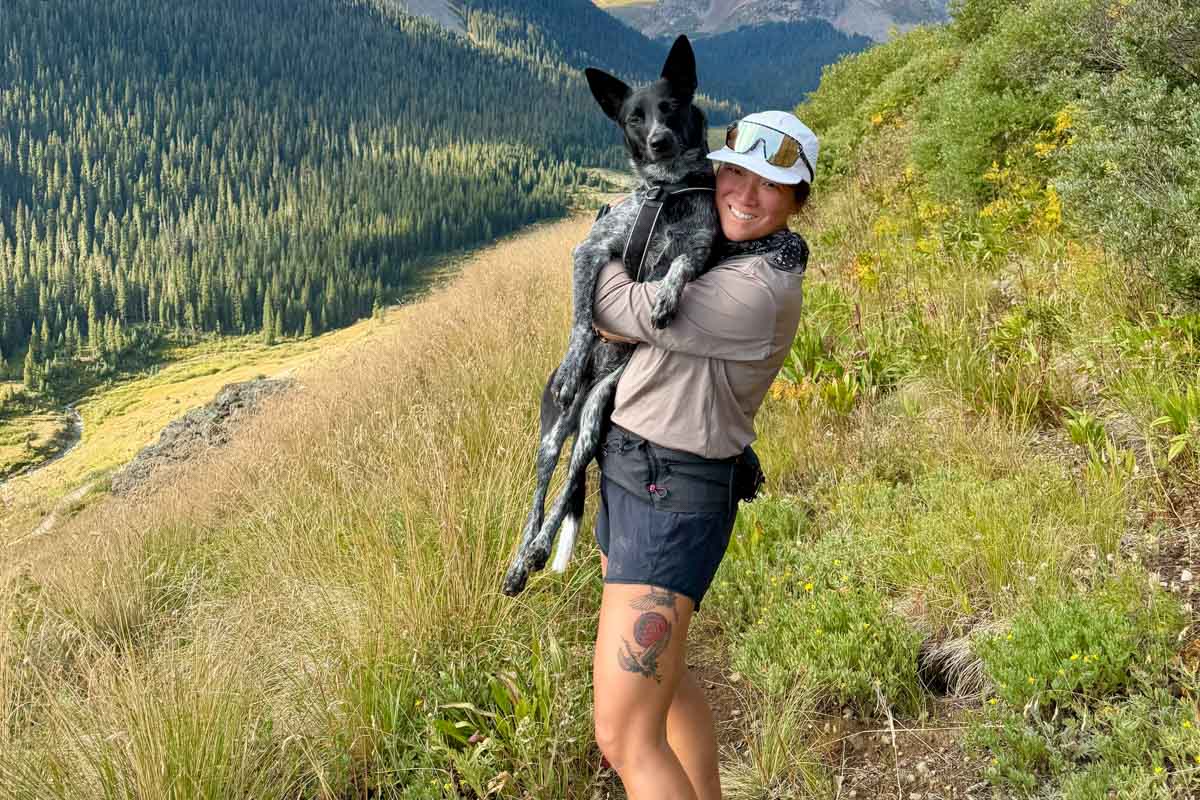
Alex Elizabeth with a favorite running companion.
There is Tierra Libre founder Lauro Silva. Lauro’s group advocates for BIPOC athletes by hosting inclusive events or funding race entries and travel for athletes who need additional resources. Rather than focusing on elites, Tierra Libre prioritizes accessibility, a facet that the commercial world of running has largely neglected.
Gina Lucrezi has grown her Trail Sisters organization into one with real sway in the trail running world. As a female in the sport of ultrarunning, Gina saw a gap in the sport and filled it. Through group runs, storytelling, and even women-specific events at races, Trail Sisters shows up to let women know they have a place in the sport. Trail Sisters has created a global community of women who love the trails and show up for each other.
Footprints, created by Dakota Jones, is a running camp that brings together runners and scientists with a passion for solving our environmental calamities. The focus is on helping participants develop real, tangible plans to put their environmental initiatives into action. The hope is that these actions will resonate with the broader world and lead to positive change. Dakota cites the power of coming together as his primary motivator for establishing the camp.
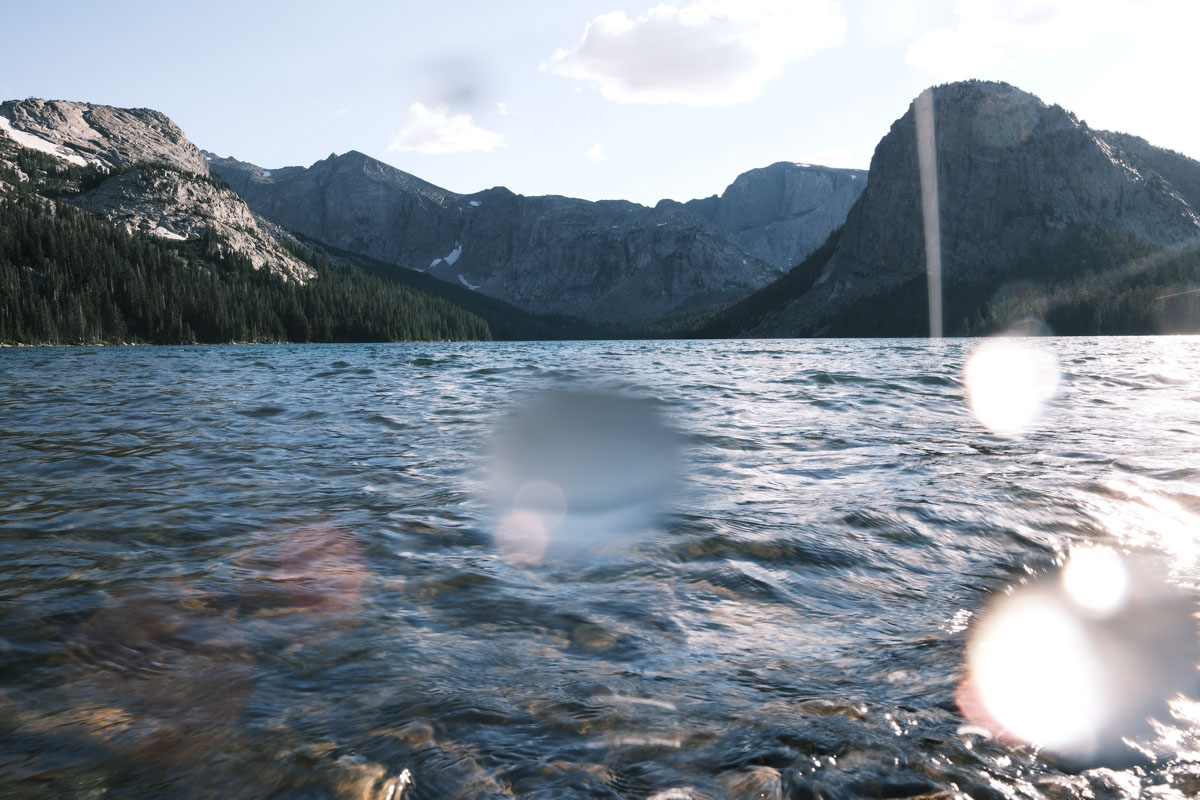
Hannah Green’s photography tells stories of running that aren’t often seen in mainstream running media.
Runners thinking beyond the competitive confines of sport are also important. Rickey Gates, Joe Grant, Beau Miles, Kelly Halpin, Anton Krupicka, and Justin Simoni are a few more obvious names who rarely, if ever, run races — at least anymore — and continue to put movement, art, and storytelling first. Brands continue to find value in supporting them in their ventures. Imagine the depth of stories that could be told if more opportunities were presented for non-racers to pursue their dream running project and tell about them.
Trail running hasn’t completely lost its soul, but we can’t lose the runners who help us see our sport and world a little differently.
What Next?
On the surface, it seems so simple. If we want to keep the soul of trail running intact, we — the millions of humans who comprise our sport — must put the soul first.
Media and brands should showcase a broader range of runners, not just those racing. Running is more than racing, or even just putting one foot in front of the other. “Exploring trails helps me learn about the land, the people, and the issues that shape a place,” says Alex. According to CJ, running helps him be “a more thoughtful, patient, and empathetic human, and a harder working environmental professional alongside our world’s most vulnerable communities at risk in the Arctic, coastal Canada, and Bangladesh.”
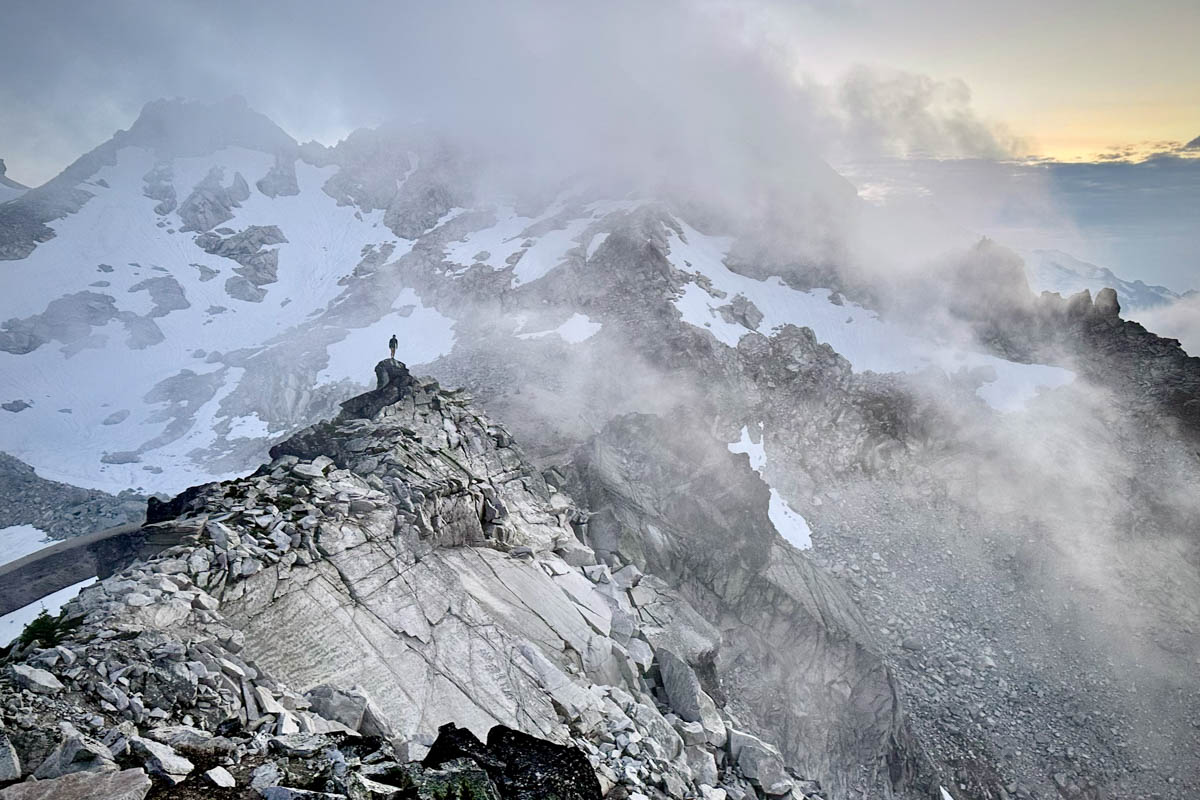
CJ Carter uses running as a way to access high peaks in faraway places.
A huge and very simple step is letting folks tell their own stories and not commodifying them for the sake of selling some gear. Brands should sponsor local events centered around storytelling, art, or even books related to running. Even something as simple as a blog where community members could share adventures or thoughts would widen the storytelling demographic beyond the elites. Or better yet, brands should sponsor projects by lesser-known athletes, ones who wouldn’t otherwise have the means to complete their dream adventure or project. These could function like a scholarship, residency, or a “Call for Entry,” as the art world calls them.
And just like art, there are countless motives and ways of looking at the world. Perhaps if we showed a broader range of people and perspectives, it could demonstrate to all kinds of people that there is a place for them in running, thereby creating a more inclusive community.
Putting the soul first can be complicated, though. Investors, brands, and the media tend to focus their attention where the rewards are greatest, with the least effort. Profit and capturing market share are prime tenets of capitalism, not supporting culture or the environment. But both sides of that proverbial coin can coexist when the market requires it. Consumer demand is powerful, and if enough of us require a soul-first approach from everyone operating in the sport before we reward them with our attention and money, they will develop one. Ultimately, by spending our time and money wisely, each of us helps shape the sport we love.
Call for Comments
- Where do you seek inspiration for your running?
- What are your motivations to lace up your shoes and get out the door?
[Author’s Note: Thanks so much to Alex Elizabeth, Brianna Corremonte, and CJ Carter, who helped create this article.]