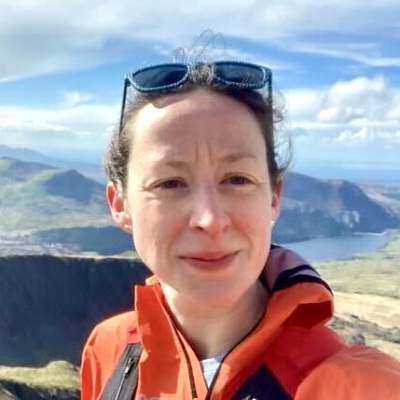
Blaine Kebede wasn’t a runner before she joined the Girls Gotta Run Foundation as its executive director in 2024. It was when she visited the Bekoji, Ethiopia, where the U.S.-based non-profit — which focuses on girls’ and women’s education and empowerment in Ethiopia — operates, that she says, “I was so inspired by watching the students that I started to pick up running myself.”
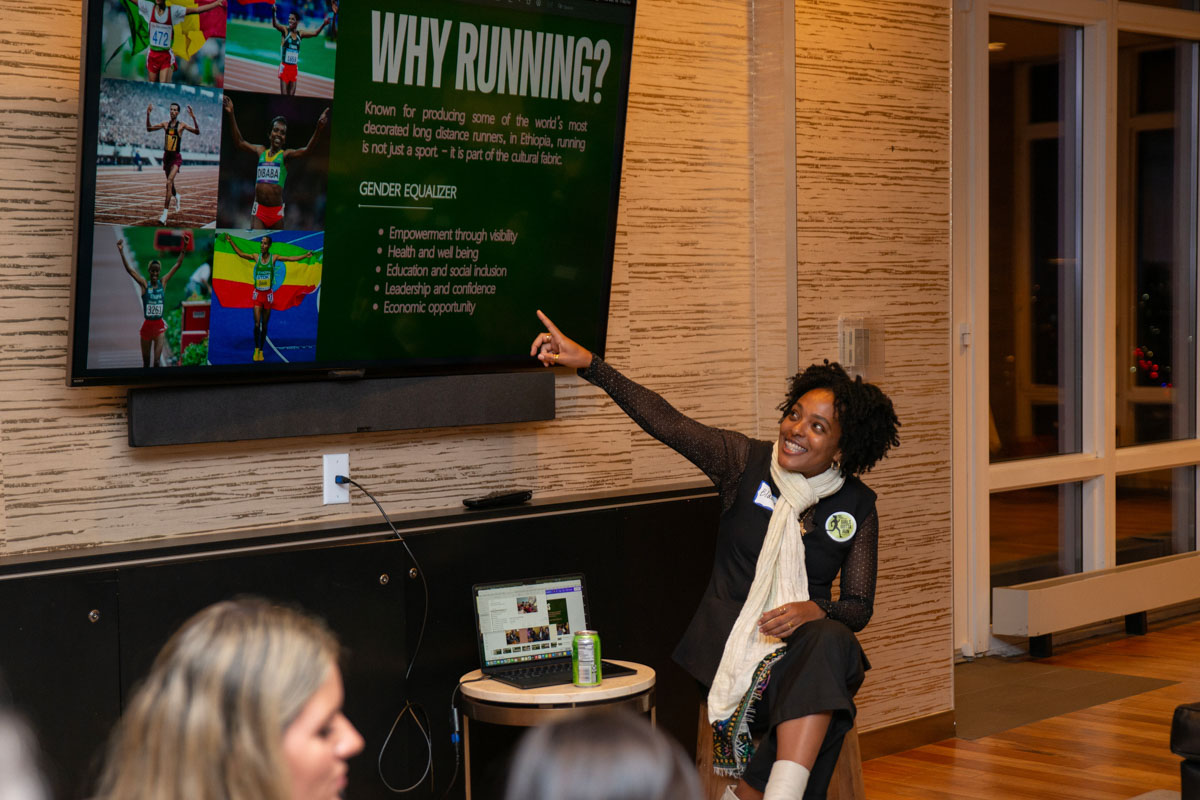
Blaine Kebede presenting on the Girls Gotta Run Foundation. All photos courtesy of Blaine Kebede unless otherwise noted.
The program operates in the city of Soddo and the town of Bekoji in Ethiopia, and accepts 200 girls into a three-year athletics scholarship. After three years, it also provides them with access to an alumni program through high school graduation. Alongside run coaching for the girls, the foundation covers school tuition and provides the girls and their mothers with crucial life skills and economic opportunities. The overarching goal is to equip Ethiopian women with the skills to support themselves. Kebede, the American-born daughter of two Ethiopian immigrants, is the first executive director of the foundation of Ethiopian heritage and is committed to expanding the program’s reach and helping more women in Ethiopia lead independent lives.
Kebede explains that girls in Ethiopia enter child marriage because their options for financial support are limited, and marriage is seen as a way to solve this. Kebede asserts, “We want girls to be able to make choices for themselves.” Through the Girls Gotta Run program, some girls go on to have a fruitful career in running, while others pursue higher education, seek vocational training, find work, and mentor the next generation of girls. The program is currently only available to the neediest families, prioritizing the children of single mothers and families with many children.

The Girls Gotta Run Foundation team practicing on the dirt track at the Bekoji, Ethiopia, stadium in 2019. Here they warm up before a 3 x 1,200-meter workout. Photo: iRunFar/Meghan Hicks
Origins of Girls Gotta Run
Dr. Patricia E. Ortman started the Girls Gotta Run Foundation in 2006. A now-retired women’s studies professor, she’d read an article in the “Washington Post” about a girl in Ethiopia trying to escape child marriage and domestic responsibilities. The girl tried to pursue a career in running — known in Ethiopia as a valid pathway to securing an income — but she couldn’t because she didn’t have any shoes. Ortman was deeply moved by this story and started shipping running shoes from the U.S. to Ethiopia. Over the years, this grew into the athletic scholarship that forms the basis of Girls Gotta Run today. Kebede, who is based in Philadelphia, Pennsylvania, started with the program in 2024. Her parents immigrated to the area more than 45 years ago, and Kebede was already involved in the Ethiopian community there.
While being in a leadership position wasn’t new to Kebede, the running was. “I was not a runner before this,” says Kebede. “I was an athlete; I played volleyball and tennis in high school.” After she visited Bekoji as part of the onboarding process for the job, Kebede started running herself and is currently training for her first half marathon. She says she’s enjoyed witnessing the benefits of running firsthand: “Most importantly for my mind, it’s created a space of peace and calm for me.”
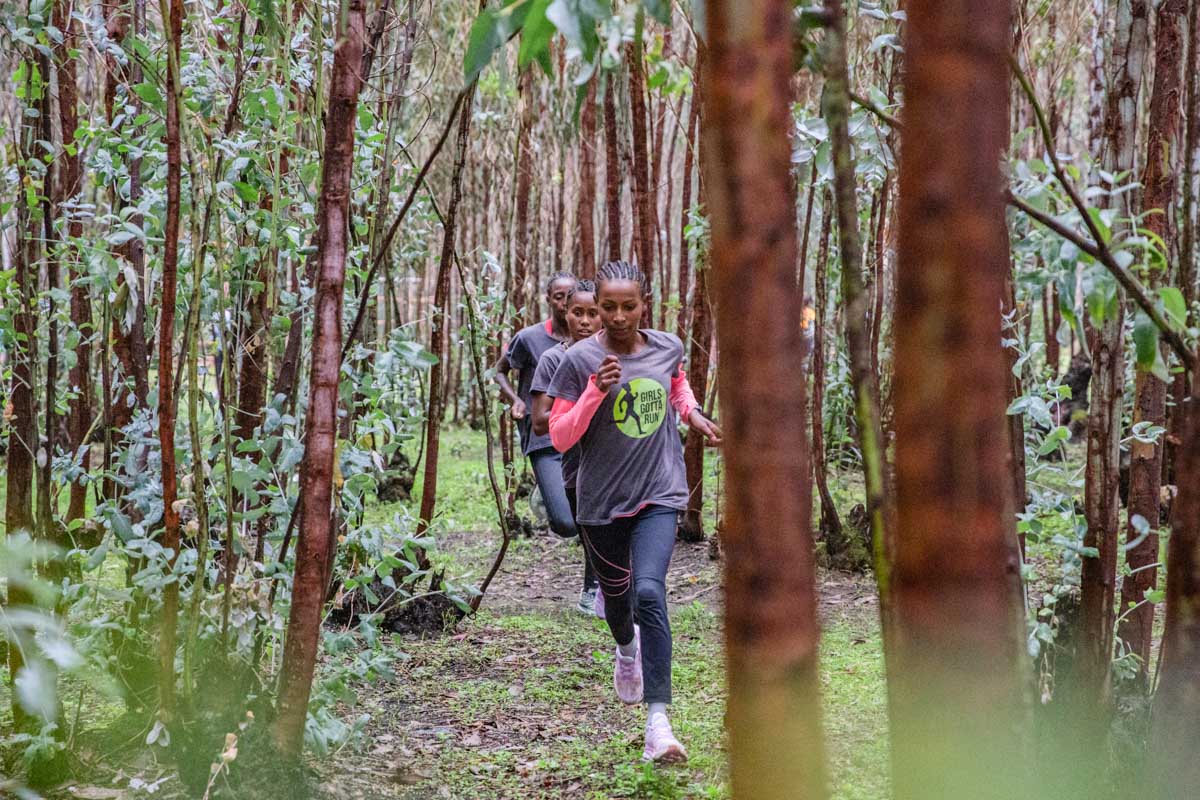
Regular running training in the Girls Gotta Run program includes running in the forests in the Bekoji, Ethiopia, area.
Pillars of Girls Gotta Run
The national high school graduation rate for girls in Ethiopia is soberingly low at 20%, but an incredible 96% of the girls enrolled in the Girls Gotta Run program graduate. And girls who graduate from high school have extremely low child marriage rates. Thus, the Girls Gotta Run Foundation understands that educating girls is one of the best ways to improve their future opportunities.
The numbers tell a clear story, but the guiding principle for the foundation is the real narrative: “Whatever it is they may feel in their hearts,” says Kebede, “we want that to be available for them.” Whether that’s a career in science, the arts, sport, or anything else they feel inspired to pursue, getting an education and delaying marriage and pregnancy gives the girls time to make informed decisions. After the girls complete the three-year athletic scholarship, they can join the alumni program, where they receive all the same benefits as the athletic scholars, except for the running training.
The program is built on four pillars designed to offer girls a range of opportunities.
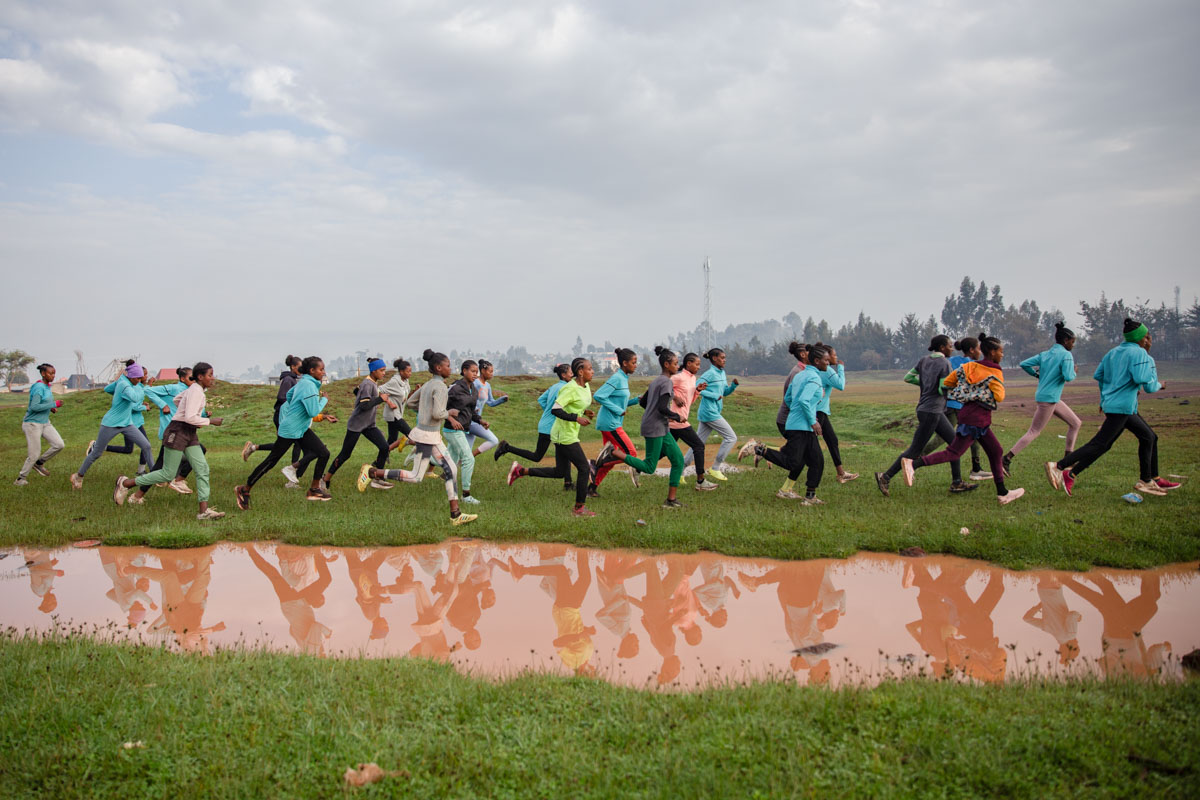
The Girls Gotta Run program offers three-year scholarships that help with running, education, and life skills.
Education
For members of the program, the foundation covers school tuition and provides school uniforms, school supplies, daily lunch, menstrual kits, and underwear. Kebede explains that menstrual absenteeism is a big problem for girls seeking an education. If they miss too many days of school, they are unable to graduate. It’s a problem that hinges on providing access to sanitary supplies. Kebede says that for any obstacle they’ve witnessed girls encounter on their way to graduation, they’ve tried to include it in the scholarship.
Running
Bekoji has a rich history and culture in running that the program builds on. Fatiya Abdi, the coach of the Bekoji program, offers three to five running practices a week, and Amsale Ayele does the same in Soddo, the program’s other location. According to Kebede, Abdi is like a mother to the girls, and her way of teaching and educating them goes beyond the technical element of running. Kebede says she instills in them discipline of the mind, confidence, and the skills to set positive intentions when they have doubts.
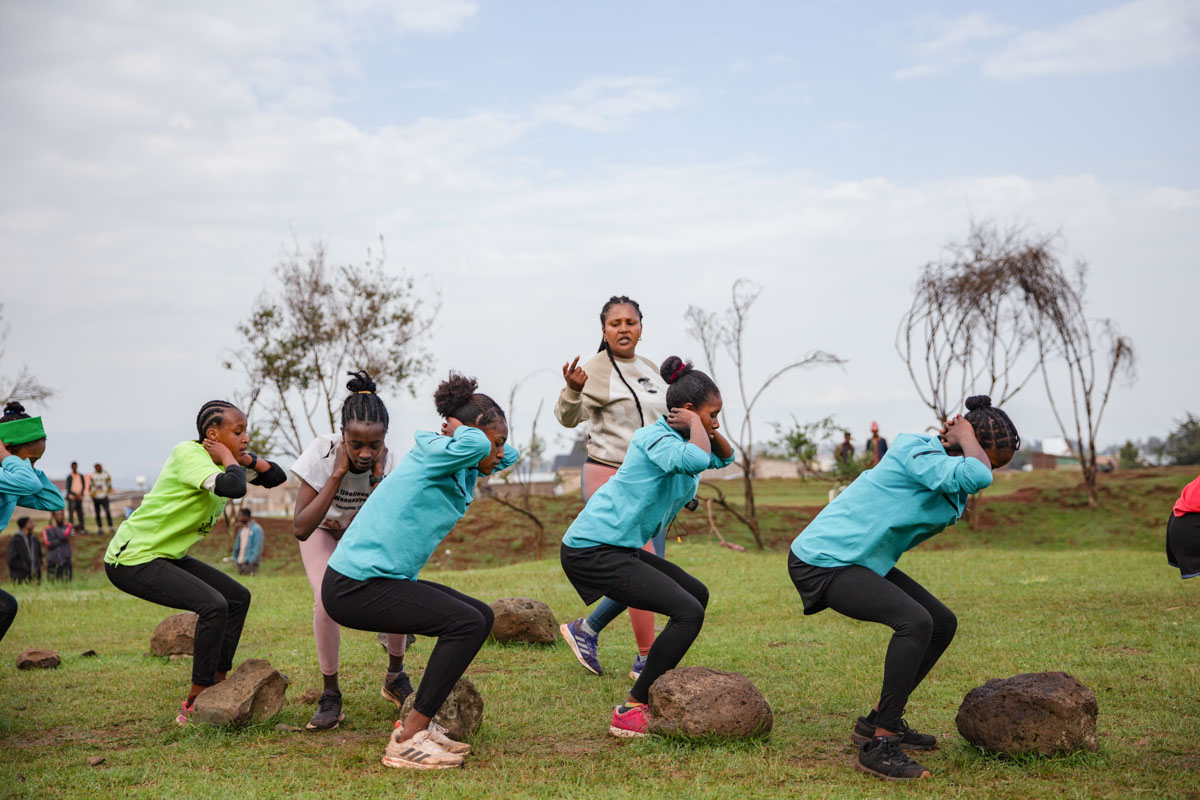
The Girls Gotta Run athletes doing running drills under the instruction of coach Fatiya Abdi.
The first practice of the day starts at 6:30 a.m. From there, they go to school. According to Kebede, Abdi tells them that they must shower beforehand, and she teaches them about hygiene, bacteria, and sicknesses. She tells them they must show up at school and be present and focused on education. “She is so good at what she does,” says Kebede, “and has a really strong presence about her,” so the girls listen to and respect what she tells them. But equally important is a sense of joy, fun, and love that she brings to the program, and as soon as training is over, the girls join together for a dance circle and prayer.
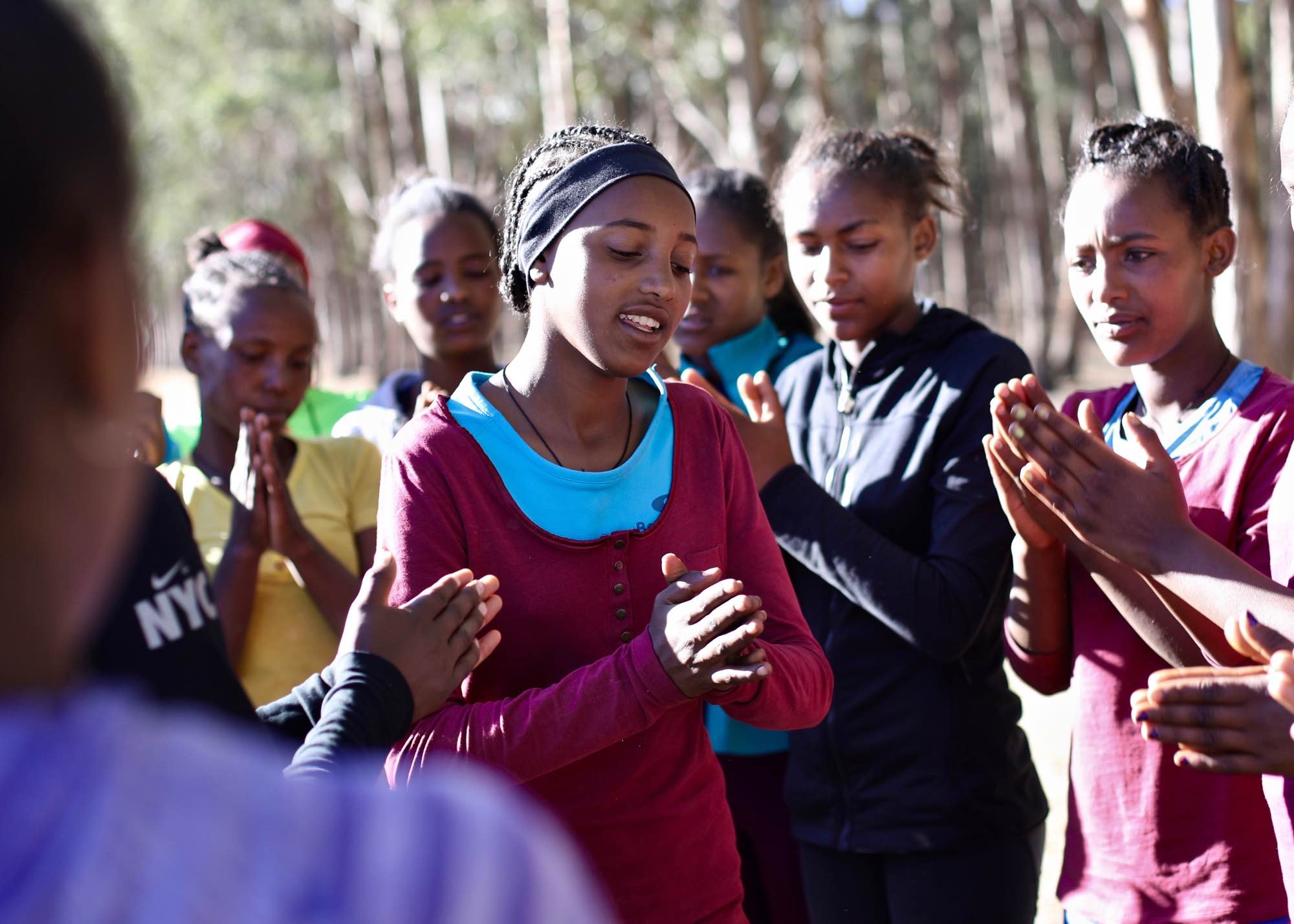
Every Girls Gotta Run practice closes with a couple quiet, intimate moments of singing and dancing. This tradition is shown after a 2019 practice in Bekoji. Photo: iRunFar/Meghan Hicks
Life Skills
Once a week, the girls meet with mentors to learn how to navigate adolescence, build healthy relationships, understand HIV risks, and develop leadership skills. In the last two years, the program has added lessons in financial literacy and entrepreneurship. “The economic landscape in Ethiopia is very challenging,” says Kebede. “Girls graduate but then still have limited access to higher education or finding a job.” These classes are where they learn the skills to move into vocational training or learn how to start a new business themselves. Graduates of the Bekoji program can receive additional vocational training. Last year, the foundation launched a sewing studio where the girls can make bags, dresses, and school uniforms and earn a bit of money.

Coach Fatiya Abdi speaks to the Girls Gotta Run team in Bekoji, Ethiopia, ahead of a speed workout in 2019. Photo: iRunFar/Meghan Hicks
Family Support
The Girls Gotta Run Foundation aims to offer holistic support to the girls by also supporting their mothers. Part of the thinking behind this is that if the mothers are invested in the girls’ education, the girls will be, too. “Our goal is to not just exist,” states Kebede. “We want these girls and these women and these mothers to be able to sustain themselves instead of continuously having to rely on someone else to support them.” As such, the mothers join together to learn basic saving and business skills. The group is self-organized — they delegate their own leader, accountant, and secretary — and they decide the amount they want to save as a group each month. From those group savings, they can take out loans to invest in micro-businesses and build economic independence. From the outside, it’s entirely possible to imagine a future in which those small businesses can employ girls graduating from the program.
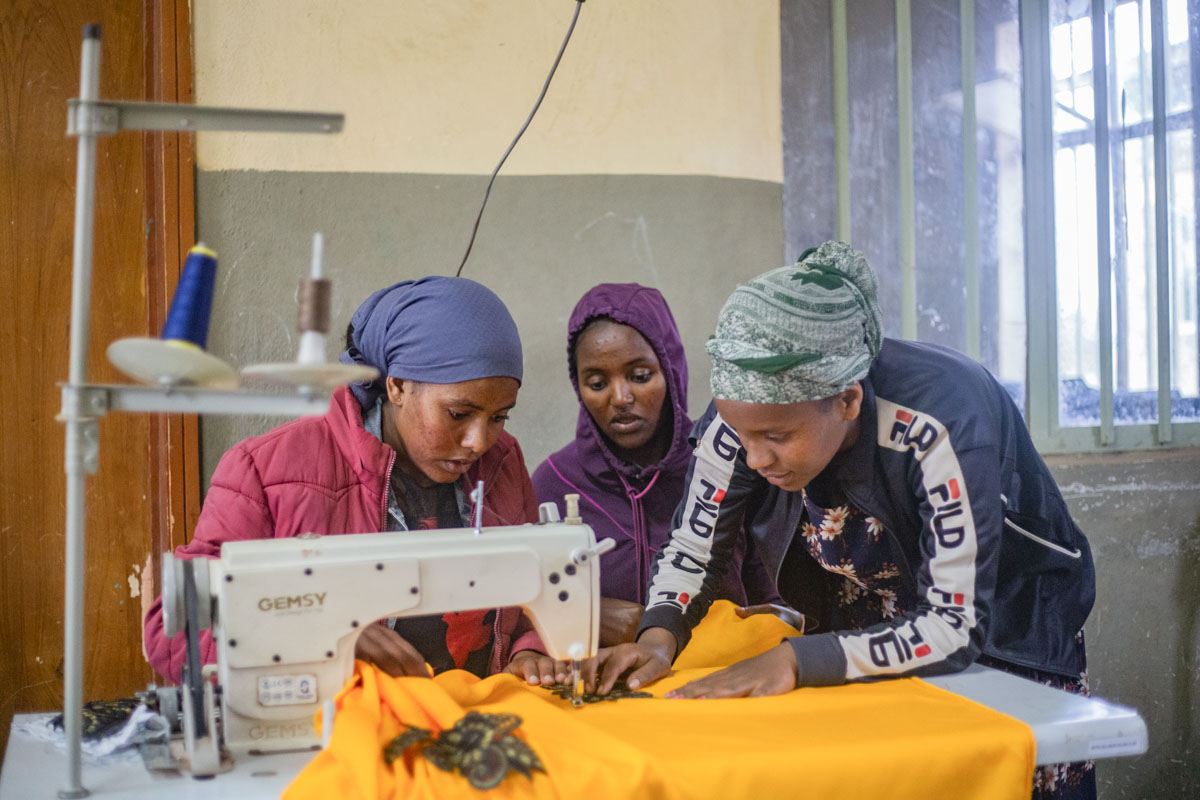
As part of the Girls Gotta Run program, girls are taught skills that they can use to support themselves as adults.
Bekoji: Small Town Grit
The program in Bekoji is heavily focused on running. Bekoji might be familiar to some as the town that has produced some of the best Ethiopian runners, including Olympic gold medalists Kenenisa Bekele, Tirunesh Dibaba, and Derartu Tulu. At more than 9,000 feet above sea level, Bekoji is higher than lots of other towns in the Great Rift Valley, but it’s not just the elevation that creates champion runners. As author Michael Crawley observes in his 2020 book “Out of Thin Air,” in which he writes about his time training with athletes in Bekoji, “Training is not an individualistic, survival-of-the-fittest pursuit, but rather a communal endeavour.”
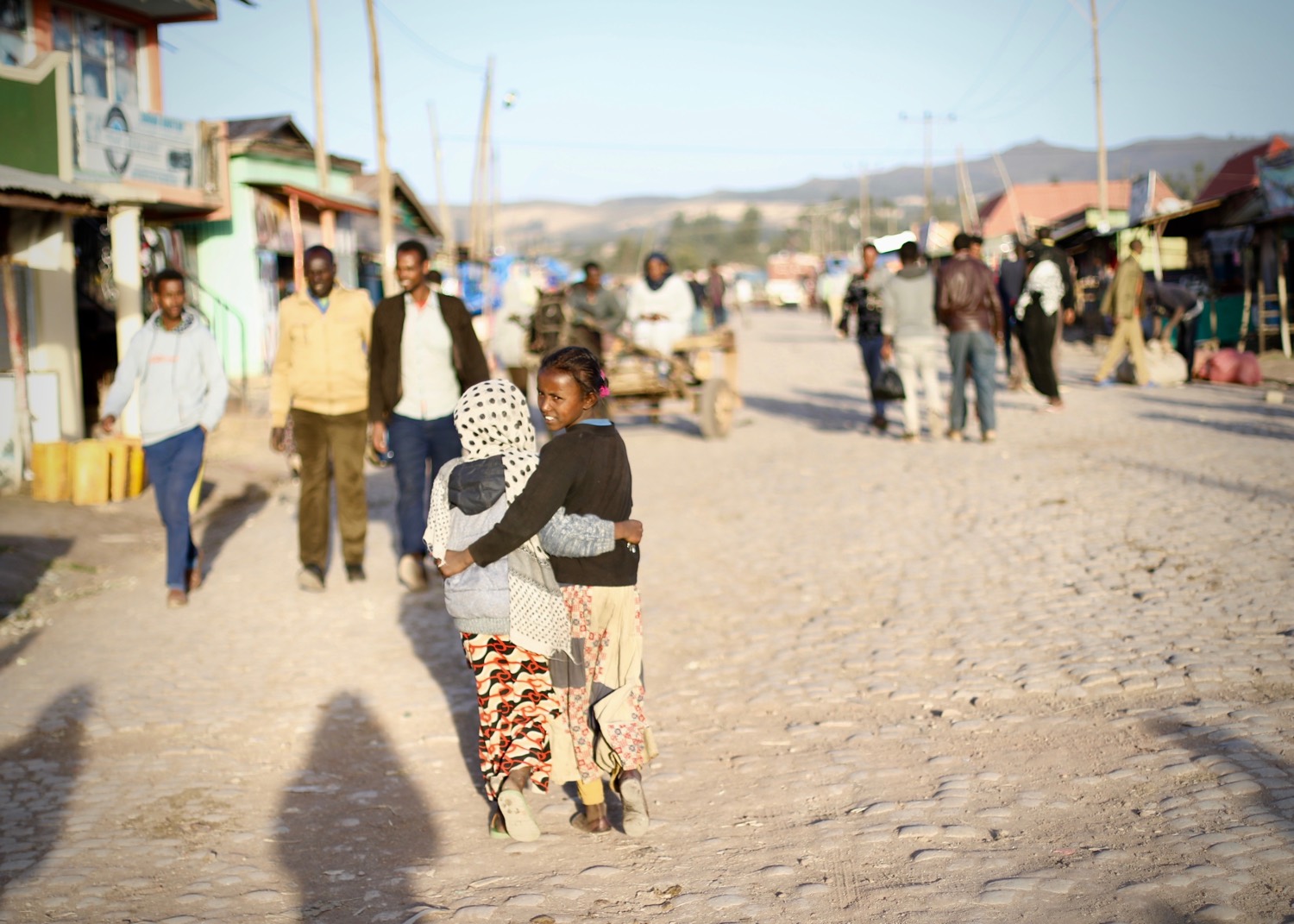
Two girls walk one of Bekoji, Ethiopia’s main streets in the long light of early evening. Photo: iRunFar/Meghan Hicks
Kebede echoes this observation: “If you ask me, there’s a little bit of a ‘small town energy’ that builds that kind of grit.” She continues, “There’s an underdog mentality” and a hunger to “make it big.”
Kebede believes the program works because it builds on a culture that already exists in Ethiopia. “It’s been beautiful for us because as a non-profit organization based in the U.S, we’re not importing anything, we’re not saying, ‘Oh, you guys have to learn ice hockey, and that’s how you’re going to become empowered,” Kebede quips, “it’s already ingrained into the culture.” Bekoji is a place with many inspiring success stories for young girls to follow. As an example, Kebede excitedly shares that Wosane Asefa, a program graduate, recently placed second in the 2026 World Cross Country Championships Under-20 race in Tallahassee, Florida, sending waves of pride and hope back through the foundation.
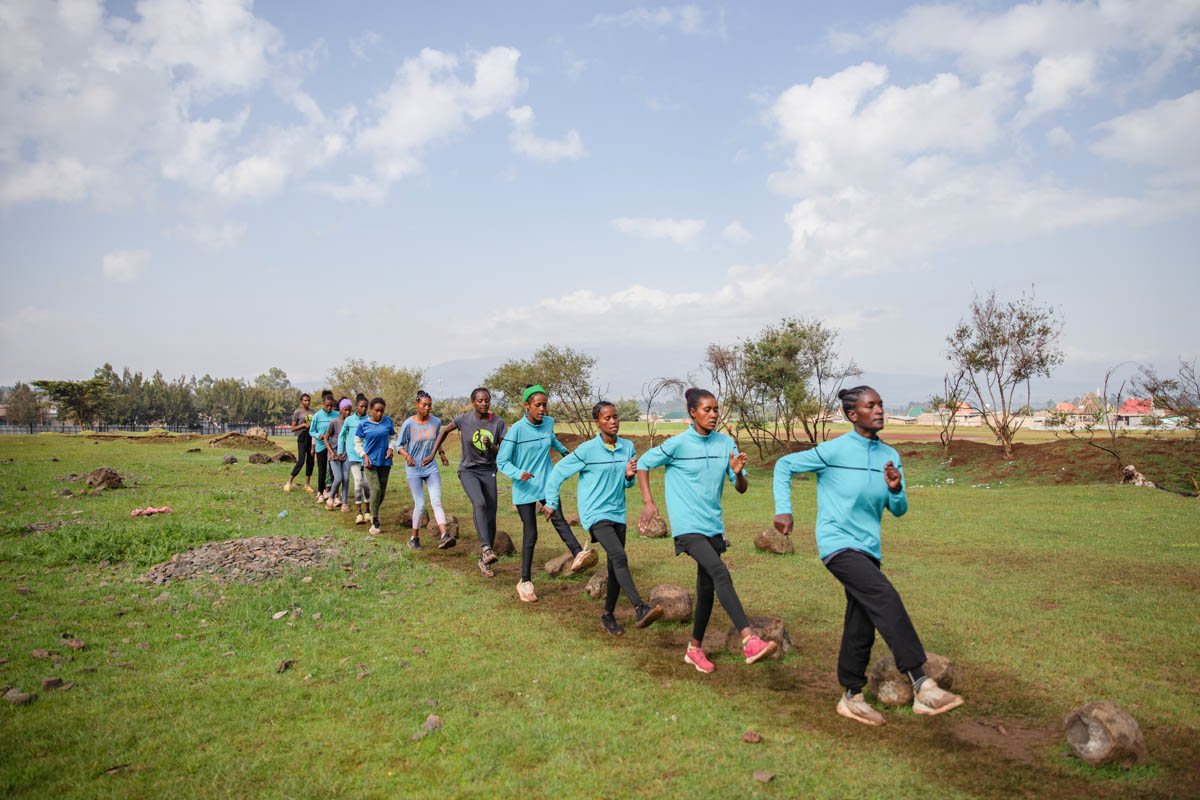
The Girls Gotta Run program has helped girls in Ethiopia chase their dreams.
Growing the Program
Kebede visits the groups in Ethiopia a few times a year. “It’s really been a blessing for me,” she says. With every visit, she reflects, “You learn more, and you become much more inspired. You can see the challenges on the ground, and you come back home, and you’re more motivated to be like, ‘How can we fundraise around this, how can we bring a solution to this issue?’” The reports she receives from the team in Ethiopia throughout the year share the positive news and successes, but she credits her ability to improve the program to actually being on the ground, in the community. Crucially, she’s always been able to speak Amharic — the official language of Ethiopia. She says it has made it much easier to communicate with program stakeholders, as well as with the girls and the coaches. “I think that’s a step in the right direction that the Girls Gotta Run Foundation needs to go,” says Kebede, “because it makes these processes so much easier.”
There is a very long waitlist for the program. Kebede’s dream is for the program to expand toward a brick-and-mortar infrastructure, a physical academy, and to reach more girls. The biggest obstacle is funding, and Kebede speaks with deep gratitude about the funding they received from the Girls Opportunity Alliance, part of the Obama Foundation, which enabled them to accept 40 more girls into the program. Kebede says they are also exploring ways to expand into new regions of Ethiopia: “Our model is highly replicable and scalable,” she says, “and can be adapted to different regions in Ethiopia as well as other global majority contexts where girls face similar, interconnected barriers to education.”
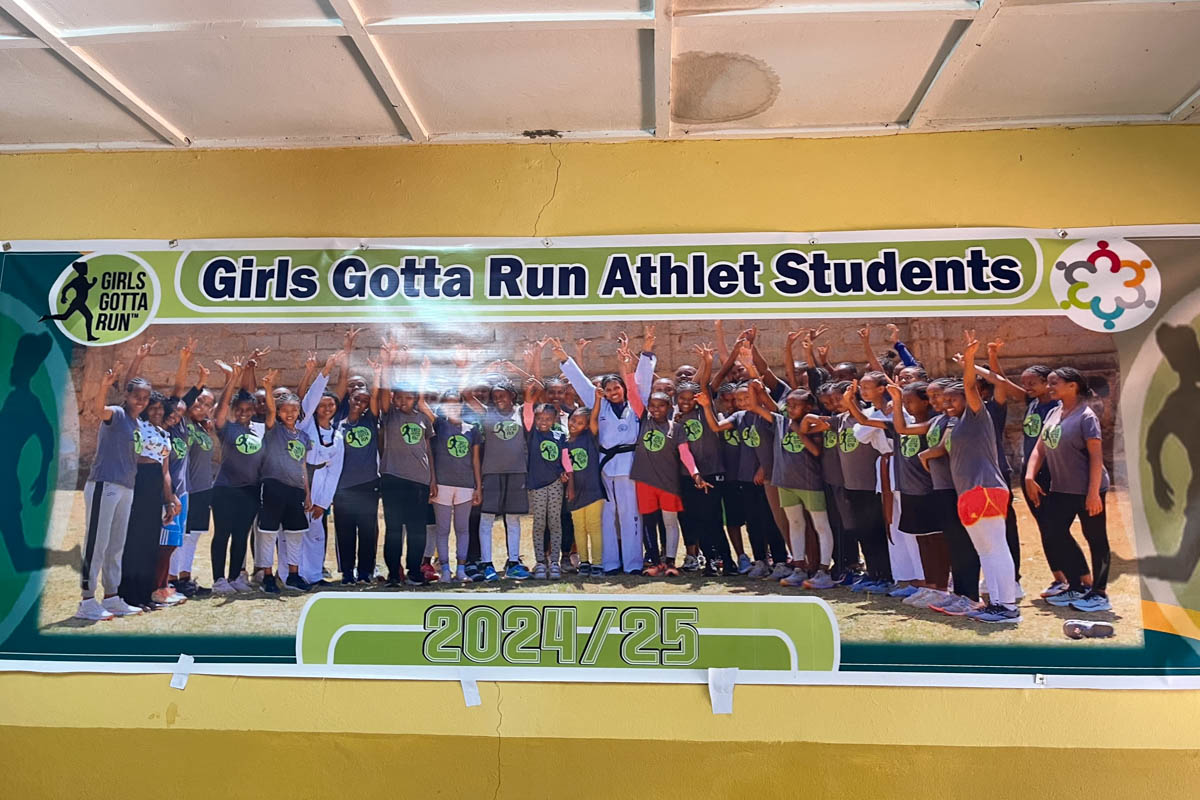
A poster celebrating the Girls Gotta Run participants in Soddo, Ethiopia.
Guided by Kebede and the rest of the team, the program’s success is already clear in the numbers. More girls are graduating school, and girls are progressing to podium positions in world championships. But what is most striking is the effect on the girls’ outlook. As Kebede observes, “We can see how the confidence of these girls is changing … even after one year, how they’re better able to carry themselves, how they’re better able to speak publicly or in class, they’re much more active. I think that’s really a testament not only to our life skills [classes] but to our running program as well.” As Kebede says, “The community it creates, the bonds it creates, the mentorship, the peers, it’s all building an individual’s sense of self, of who they are.”
[Editor’s Note: iRunFar was privileged to spend time with the Girls Gotta Run program in Bekoji in 2019. Enjoy our feature narrative on the experience. Visit the Girls Gotta Run website to learn more and contribute.]
Call for Comments
- Have you heard of the Girls Gotta Run Foundation before?
- Do you know of other programs working in the global majority with similar missions?

Three Girls Gotta Run team members arrive for practice at the Bekoji stadium in 2019. Deep friendship has always been one of the team’s core principles. Photo: iRunFar/Meghan Hicks