This is my first U.S. Midwest winter. Not to be dramatic, but my city is a giant popsicle at the moment. It reminds me of Narnia’s Hundred-Year Winter instated by the White Witch. It feels like Cocytus, the frozen lake in the innermost circle of Dante’s Inferno.
I typically dislike being cold, to the extent that I avoid the frozen food aisle at the grocery store. However, the weather report indicates that there is no reprieve in sight. So, I am rising to the occasion and embracing the conditions. I am wearing multiple layers to run — three shirts and two pairs of pants. My pants are wearing pants. Even so, the elements are a bit uncomfortable (1).
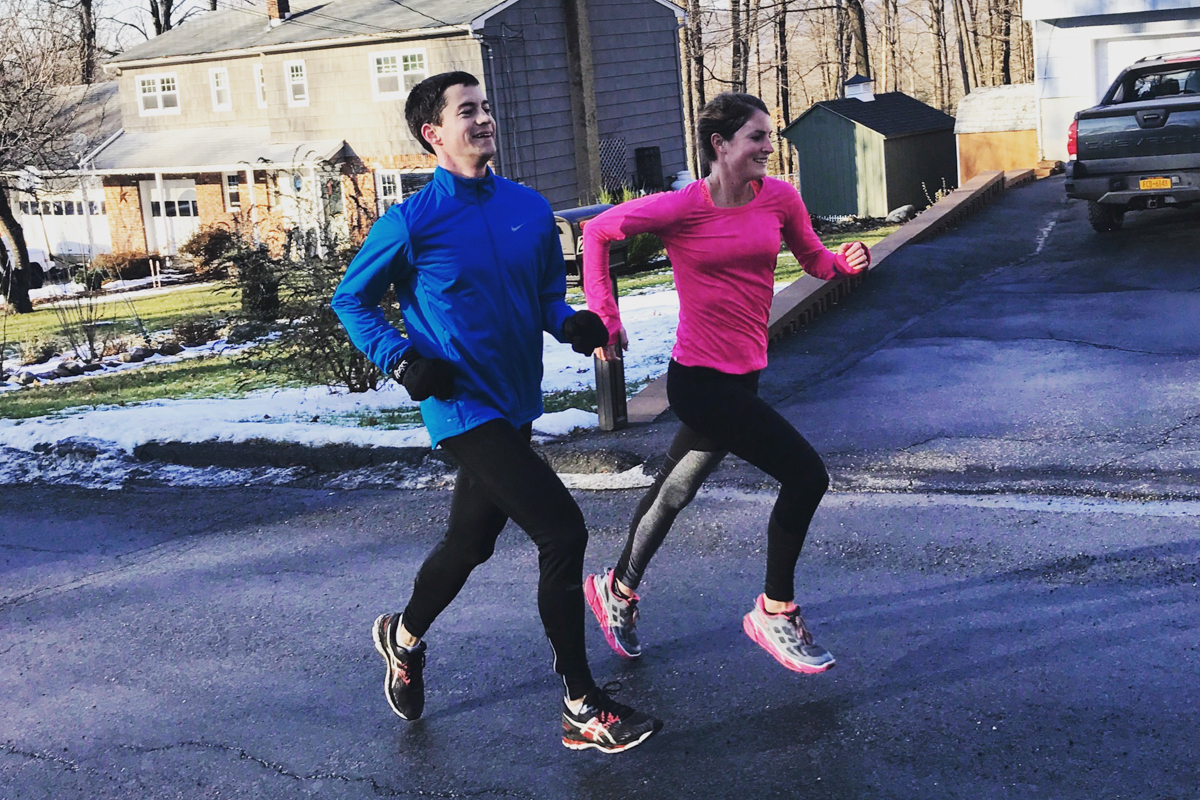
Sabrina Little and her husband David rising to the occasion and embracing the cold. All photos courtesy of Sabrina Little.
The irony is, running is an activity that involves discomfort — not always, but often. This is part of why I like it. The difficulty is transformative. I am refined by committing to arduous goals and seeing them through to completion. When I persist through strain, I learn to self-govern through difficulty. So, maybe I should embrace the added challenge of the cold weather.
Maybe I should, but I will not.
The Pain of Running
There is an essay by American philosopher Mortimer Adler entitled “An Invitation to the Pain of Learning.” I often read it at the beginning of the semester with my students. In an age in which we are tempted to outsource the task of thinking to artificial intelligence (AI), we read this essay as a reminder that difficulty is a feature, not a bug, of education.
To be educated is to be transformed. This transformation primarily happens through strain — productive strain, but strain nonetheless. Adler writes, “Anyone who has done any thinking, even a little bit, knows that it is painful … It is fatiguing, not refreshing. If allowed to follow the path of least resistance, no one would ever think (2).”
Perhaps it is an overstatement to say that humans resist thinking. Maybe we don’t prefer the “frothy and vapid (3)” over carefully assessing or laboring through ideas. But since writing is a big part of my job, I am well-acquainted with its difficulty. And given the number of student essays I read these days that are actually composed by robots, I don’t think Adler’s diagnosis is incorrect.
We live in a culture of convenience and immediacy, where it is relatively easy to avoid meaningful work and productive effort — in education and life more broadly. Given that transformation often occurs through difficulty, I am especially grateful for the opportunities distance running affords for edifying discomfort.
So, following Adler, I would like to craft an invitation to the pain of running. Join us! You are cordially invited. Here are a few things you should know about effort and growth as a runner.

Sabrina Little not taking the path of least resistance.
Virtues Can Develop Through Discomfort
Gratefully, discomfort is not in short supply in running.
A virtue is an acquired excellence. It is a trait that makes you a good instance of your kind, as a human. Examples include patience, perseverance, and resilience.
Virtues are acquired, in large part, by practice. You have to do them, to be them. What is interesting about this process is that what constitutes virtue practice is often uncomfortable.
Take patience. You develop patience by having to wait well. You must “react to slower than desired progress toward a goal with a reasonable level of calmness (4).” No one wants to wait, especially repeatedly. Or consider resilience. Becoming a resilient person means you have ample practice recovering from setbacks. Dealing with multiple setbacks is tiring and unpleasant.
Finally, consider perseverance. Learning to “persist long in something good (5)” involves negotiating your mental and physical limits to remain in place through strain. You feel this strain in your legs and in your lungs. An easier course would be to quit, rather than to persevere.
Thankfully, running requires that we wait well, overcome setbacks, and persist through strain. It is difficult in ways that lend to the practice of all three of these virtues in the context of something we enjoy — our sport.

Sabrina doing virtue practice along a frozen river.
Formation is Internal, Not External
You don’t become a runner by wearing running clothes. You become a runner by running.
Adler distinguishes between two views of education. On one view, education is something externally added to a person (6). It is cloaking, or window-dressing. On the second view, education is “an interior transformation of a person’s mind and character (7).” It sees the person as a living thing whose transformation “can be effected only through his own action (8).”
There are two things to note here, where running is concerned. First, transformation is only effected through our own actions. That is, even with an excellent support system, we run every step ourselves. This is ideal, where change is concerned. I can’t outsource my running to technology or AI. If I want to improve as a runner, I have to run.
Second, we don’t become runners in an additive way — by cloaking ourselves in running gear, no matter how fancy that gear is. It is easy to become dazzled by the latest carbon-plated shoes or moisture-wicking gear, or to become preoccupied with appearances. But the thing that transforms and educates is the running itself. That should be our central concern.
Not All Pain Is Productive
No pain, no gain? Absolutely not.
A better slogan is this: Some instances of pain can be edifying if we respond to them suitably, but the pain in question should not be the product of our own imprudence. Also, communities can help us to endure discomfort well.
Unfortunately, this slogan does not fit as well on a t-shirt.
Difficulties can refine us. They can make us better athletes and humans if we respond in excellent ways to these difficulties. But there are many different forms of difficulty and strain, and not all forms are productive.
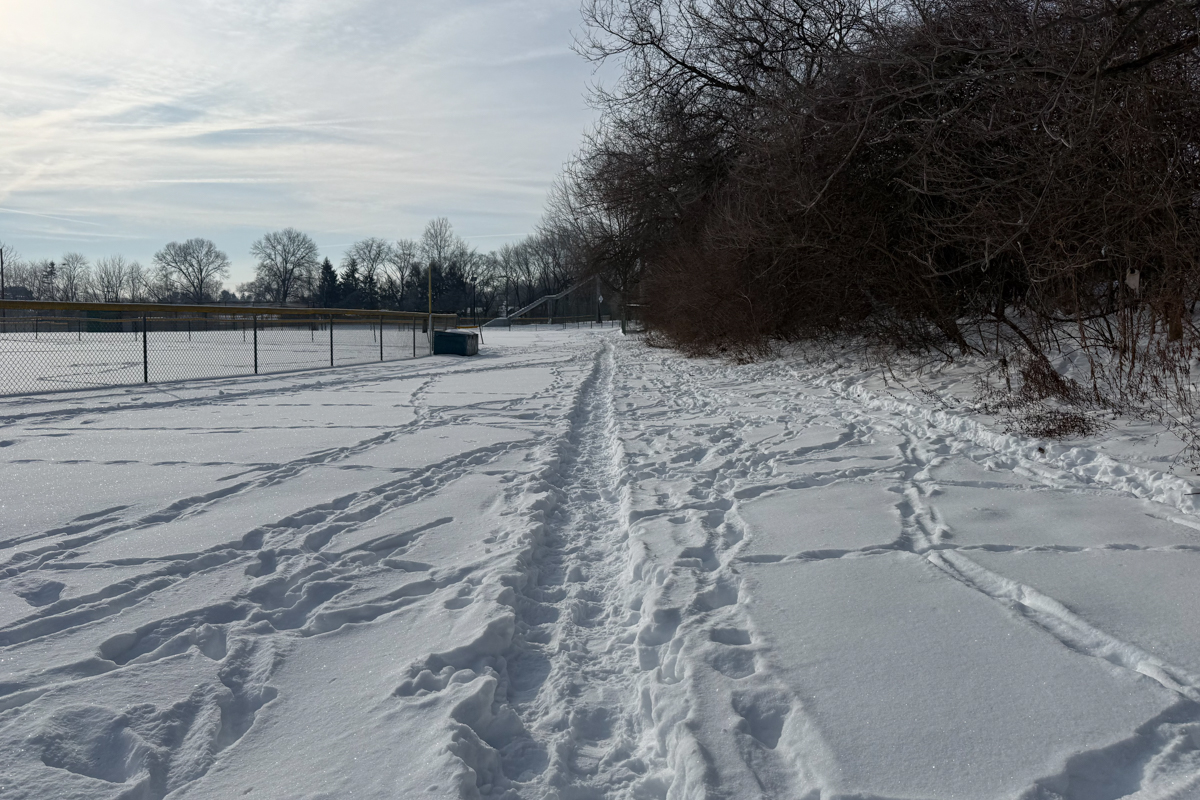
Narnia’s Hundred-Year Winter? Cocytus in Dante’s Inferno?
Some discomforts — like running far — are chosen. Other discomforts — like loss, illness, or adverse conditions — just happen to us, and we may have minimal agency in the midst of them. Some instances of suffering constitute injuries. It is not productive to train through those. Other pains are edifying. We endure them and become better at doing so. Learning how to train well involves figuring out when to exert effort, in what ways, and for how long. It also involves learning when to retreat from strain. Exerting maximal effort at all times is not an effective training strategy. It is just poor stewardship of our bodies.
The point is, not all efforts or pains are the same. While running involves pains of various sorts, the goal is not to uncritically embrace all pain for its own sake. The goal is not simply no pain, no gain.
Final Thoughts
Adler writes that “pain and work are the irremovable and irreducible accompaniments of genuine learning (9).” I think the same is true for running.
In a culture of convenience and immediacy, running can be challenging in ways that are edifying. It has tremendous potential to form us for good. But we have to respond in excellent ways to this discomfort in order to grow in virtue, and we should tread carefully concerning the forms of discomfort undertaken. We only get one body, and not all pains are to its benefit.
Call for Comments
- When was the last time you worked hard to learn something?
- How does embracing the discomfort and work of running help you strive toward excellence?
Notes/References
- If I sound soft, that is only because I am soft.
- M. Adler. 1941. An invitation to the pain of learning. The Journal of Educational Sociology 14(6): 358-363.
- M. Adler. 1941. An invitation to the pain of learning.
- C.B. Miller. 2025. Patience: A New Account of a Neglected Virtue. Journal of the APA 97-117.
- Aquinas. Summa Theologiae II.2.137.1
- There is a famous image called the Nuremberg Funnel that captures this kind of learning. The student sits passively while a teacher deposits information into his head. This is not genuine education, or the kind of education that changes a person. It is just an information exchange.
- M. Adler. 1941. An invitation to the pain of learning.
- M. Adler. 1941. An invitation to the pain of learning.
- M. Adler. 1941. An invitation to the pain of learning.