[Editor’s Note: This article was written by Dr. Gerard Anton, a sports dentist and postgraduate in Sports Dentistry, specializing in performance-focused oral care for athletes. He serves as team dentist for the Red Bull–BORA–hansgrohe professional cycling team and focuses on how oral health impacts endurance, recovery, and injury risk.]
Twenty years ago, I was a member of Spain’s national biathlon team. Two days before a Spanish National Cup race, a dental abscess forced me onto antibiotics, and racing felt like driving with the handbrake on: heavy legs, odd fatigue, no extra gear. That was my first lesson that oral health can affect athletic performance.

The 2025 UTMB runners headed out for 100 miles of sugar consumption. Photo: iRunFar/Eszter Horanyi
In the modern sports era, we track TrainingPeaks charts, chase perfect HRV, count carbs per hour, buy $300 super shoes, and book medical check-ups. Yet most athletes still overlook the one system that can quietly drain speed, stamina, and sleep recovery: the oral system. Over the last 15 years, studies have linked oral problems to endurance outcomes through multiple pathways: low-grade inflammation that blunts recovery and has been associated with small drops in VO2max, pain that derails fueling, bruxism that shreds deep sleep and overnight HRV, and bite mechanics that ripple into posture and load distribution. Even tiny issues scale over long efforts.
At the 2012 Olympic Games in England, a clinical evaluation of 278 athletes found dental caries — the disease that causes tooth decay and ultimately cavities — in 55% of study participants, dental erosion in 45%, gingivitis in 76%, and periodontitis in 15%. Among the athletes studied, 28% reported that oral health had impacted their quality of life, and 18% noted detrimental effects on their training and performance (1). If that’s the picture in Olympians, weekend warriors shouldn’t assume they’re immune.
Think of Courtney Dauwalter brushing her teeth during her ultras. It’s a small habit with a big impact. My own experience with oral health issues and racing sent me into sports dentistry, and here’s the simple takeaway: If you care about splits, watts, and how you feel at hour 10 in an ultramarathon, then you should care about your gums and teeth.
This article shows why oral health matters for trail runners and ultrarunners, and how to get it right.
Silent Cavities: When Race-Day Sugar Bites Back
Caries, the disease that causes tooth decay and cavities, are rarely evident until they’re inconvenient. In training and racing, we rely on frequent gels, chews, and sports drinks. That steady flow of sugar and acid fuels exactly the bacteria that drive tooth decay. An undiagnosed cavity can smolder for months and then flare just before or during a key race when sugar intake is highest. Once bacteria reach the tooth nerve, pain spikes, infection risk rises, and your day can change fast.
Consider the exposure in long events: Runners can consume more than 100 grams of carbs per hour in a mixture of maltodextrin and fructose. Dry mouth increases caries risk, and ultrarunners may spend many hours mouth-breathing. When that sugar intake is combined with dry mouth, you can imagine the cavity risk if prevention isn’t dialed in.

Rinsing the mouth after eating a sugary snack can help clean off the teeth. Photo: iRunFar/Eszter Horanyi
What To Do: Book a yearly dental check-up, ideally well before your race season starts, and deal with the usual culprits — erupting wisdom teeth, deep fissures — early. During events, a quick water rinse after sticky carbs helps remove sugar from the teeth. You can stash a small neutralizing rinse in drop bags. Between races, keep a consistent fluoride routine twice a day, and be deliberate with carb timing outside of sessions to minimize the time your teeth are exposed to a sugary and acidic environment.
Gum Inflammation: The Recovery Thief
If your gums bleed when you brush, that’s gingivitis — low-degree local inflammation with systemic consequences. Endurance athletes live and die by recovery, and oral inflammation adds load to the same immune system you ask to rebuild muscle and adapt to training. Athlete cohorts suggest that poor gum health is associated with slower recovery and small but meaningful reductions in aerobic markers. A study of young German elite athletes revealed that those with gingivitis had approximately a 5% lower VO2max compared to those without the condition (2). You’d never ignore a 5% loss from other sources; don’t ignore it in your mouth.

Brady Burgess with a gel during the 2023 Tahoe 200 Mile. Photo: Jack Hsueh
What To Do: If your gums are bleeding, see your dentist. Use a medium-bristle toothbrush and touch two to three millimeters of your gums when you brush. Don’t worry if you see a little blood; that’s a sign of inflamed gums, not necessarily damage. The fix is gentle: consistent brushing along the gumline to remove plaque, allowing the tissue to heal. As inflammation drops, the bleeding stops. Add inter-tooth cleaning with floss or brushes, and periodize hygiene — like you would a training schedule — to get a professional cleaning before heavy blocks of training and racing, not after them.
Bite Mechanics, Posture, and the Injury Domino
Your bite is part of a larger system that involves jaw position, head posture, and neuromuscular tone. While it may seem like a small thing, malocclusion, which is an imbalanced bite, can nudge head and jaw alignment off-center. In a repetitive sport like ultrarunning, tiny asymmetries add up with the miles, and may add to low-back tightness, hamstring niggles, hip irritation, or stride asymmetries that never quite resolve. The science here is nuanced: The effects are usually small and individual, but a study on well-trained soccer players showed that simulated malocclusion can reduce muscle output (3), and restoring balance may help with other issues.
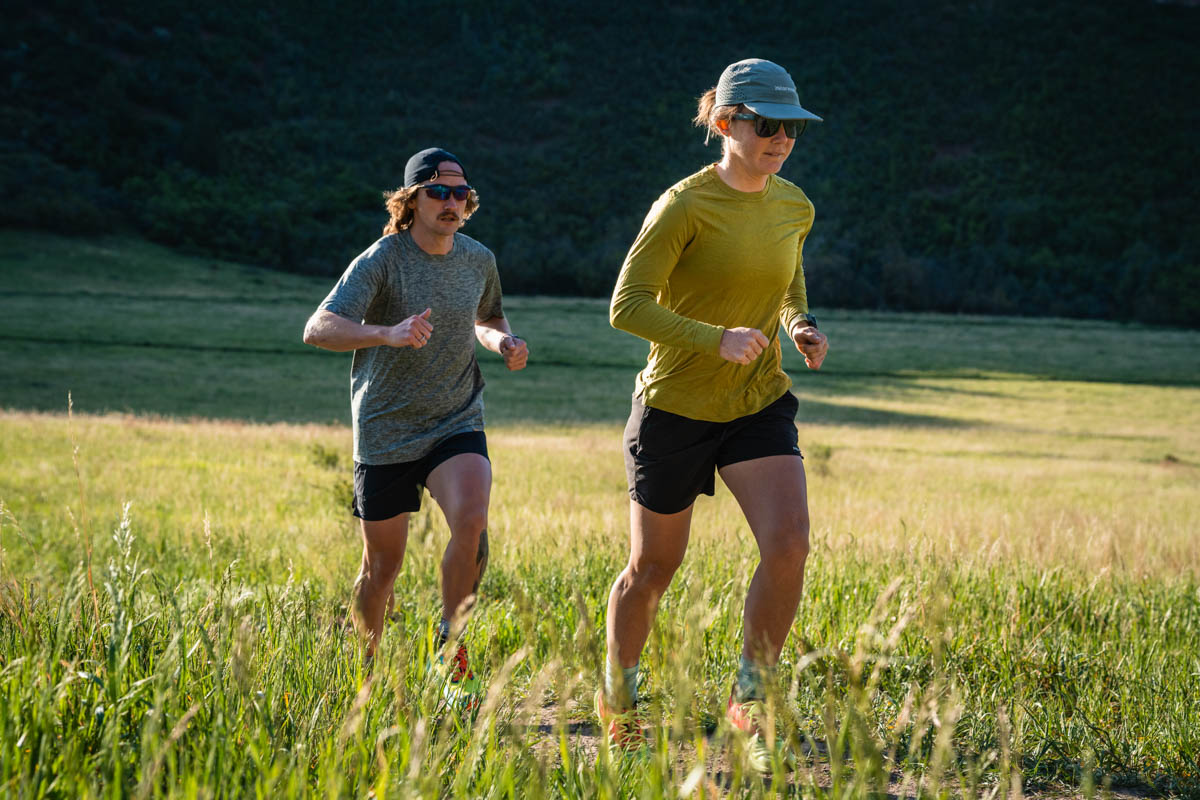
Slight imbalances in the jaw can affect running alignment as the miles add up. Photo: iRunFar/Eszter Horanyi
What To Do: If you suspect a bite issue, see an orthodontist. A proper orthodontic assessment, along with an orthodontic treatment plan when indicated, can correct malocclusion at its source rather than merely patching symptoms. Over time, restoring a balanced bite is a better bet for posture, load distribution, and staying injury-free than quick fixes.
Bruxism: When Stress Shows Up in Your Teeth
Everyone, whether a professional or recreational runner, experiences stress. Regardless of its cause, stress can manifest itself at night as bruxism — the clenching or grinding of the teeth that overworks the masseter and temporalis muscles in the jaw and quietly sands down enamel on the teeth. The fallout is practical. Worn, sensitive teeth make late-race gels sting and lead to long-term issues, including a higher risk of cavities. Jaw tension can creep into the neck and upper back, changing head position and breathing rhythm. Micro-arousals from clenching can fragment deep sleep, which is why athletes often see steadier overnight HRV once bruxism is under control.

Oral health is just another piece of the puzzle for optimum performance. Photo: iRunFar/Eszter Horanyi
What To Do: If you suspect you are grinding your teeth at night, start with a custom night guard from your dentist to protect enamel and unload the jaw. Next, a couple of focused sessions from a physiotherapist or osteopath can release jaw and neck trigger points. Give your nervous system a short runway before bed by dimming the lights, parking the phone, and breathing through your nose for a few quiet minutes. If you can, keep hard intervals and heavy weight sessions earlier in the day, and be mindful of late caffeine. It’s a small, durable routine that returns what runners value most: painless fueling, a relaxed head-neck line, and deeper sleep that shows up in how you feel and train the next morning.
Nose for Recovery: Why Nasal Breathing Helps
How you breathe shapes how you recover. When air passes through your nasal cavities, it picks up nitric oxide, which has antimicrobial, vasodilating, and bronchodilating properties that support airway defense. Nasal breathing at night can result in smoother breathing and steadies the autonomic nervous system. Many athletes see the payoff as higher, more stable overnight HRV. If congestion blocks nasal airflow, try to address the underlying causes first. If you are still breathing through your mouth at night, there are several ways to reinforce lip seal and tongue-to-palate posture while you sleep, but these should be done under the care of your doctor.
In addition to disrupting sleep, chronic mouth breathing can also increase the risk of cavities. Breathing through the mouth dries the oral cavity and reduces the amount of saliva available to neutralize acids in the mouth. This can result in a lower pH in the mouth, which can soften tooth enamel and make it easier for cariogenic bacteria to gain ground (4). When a dry mouth is paired with sugar, it can increase the risk of cavities.
While training at higher intensities requires breathing through the mouth, prioritize nasal breathing whenever you can, and treat nose obstructions early to protect both recovery and teeth.

While mouth breathing is necessary during hard efforts, it’s best to breathe through the nose whenever possible. Photo: iRunFar/Eszter Horanyi
What To Do: Breathe through your nose whenever possible. When sleeping, use mouth tape only if airflow is good; nasal strips can also aid in comfort. If there’s any obstruction to nose breathing, address that first. Shifting from mouth to nasal breathing rarely happens naturally. A speech therapist or experienced breathing coach can retrain tongue posture, lip seal, and diaphragmatic control with simple, progressive drills. It takes months, but the payoff can be better sleep, less dry mouth, and better overall oral health.
Takeaway Tips
Keeping the basics tight and boring is the best way to improve oral health:
- Brush and floss every day, and use interdental brushes where you tend to skip.
- During long runs, swish your mouth with water after consuming sugar.
- Use fluoride toothpaste and consider a higher-fluoride option if you’re prone to cavities.
- See your dentist once a year, ideally before the racing season. Time cleanings ahead of heavy training blocks.
- If nagging injuries pair with jaw symptoms, get your bite assessed. A short, measured splint trial with your care team can clarify whether occlusion is part of the problem.
- Favor nasal breathing at easy running intensities and during sleep to support recovery.

Bryon Powell sharing some miles and smiles with Darla Askew at the 2023 Hardrock 100. Photo: iRunFar/Bryon Powell
Call for Comments
- Have you ever had tooth or mouth problems derail an event?
- What steps do you take to keep your mouth healthy before and during races?
References
- Needleman, I., Ashley, P., Petrie, A., Fortune, F., Turner, W., Jones, J., Niggli, J., Engebretsen, L., Budgett, R., Donos, N., Clough, T., & Porter, S. (2013). Oral health and impact on performance of athletes participating in the London 2012 Olympic Games: A cross-sectional study. British Journal of Sports Medicine, 47(16), 1054. https://doi.org/10.1136/bjsports-2013-092891
- Merle, C. L., Richter, L., Challakh, N., Haak, R., Schmalz, G., Needleman, I., Rüdrich, P., Wolfarth, B., Ziebolz, D., & Wüstenfeld, J. (2022). Associations of Blood and Performance Parameters with Signs of Periodontal Inflammation in Young Elite Athletes—An Explorative Study. Journal of Clinical Medicine, 11(17), 5161. https://doi.org/10.3390/jcm11175161
- Hecht, S., Choi, Y. J., Stroux, A., Beuer, F., & Bechtold, T. E. (2025). The influence of dental occlusion on hamstring muscle isokinetic parameters in active competitive soccer athletes: A randomized controlled trial. Frontiers in Sports and Active Living, 7, 1589934. https://doi.org/10.3389/fspor.2025.1589934
- Tamkin, J. (2020). Impact of airway dysfunction on dental health. Bioinformation, 16(1), 26. https://doi.org/10.6026/97320630016026