[Editor’s Note: This month’s Community Voices article was written by Patrick Yalon who is a deputy probation officer, longtime high school basketball coach, and ultrarunner based in San Francisco, California. After surviving a life-threatening spinal injury while surfing, he returned to endurance running and completed the Moab 240 Mile as part of his recovery journey. He is currently writing a book about resilience, recovery, and redefining limits through ultrarunning.]
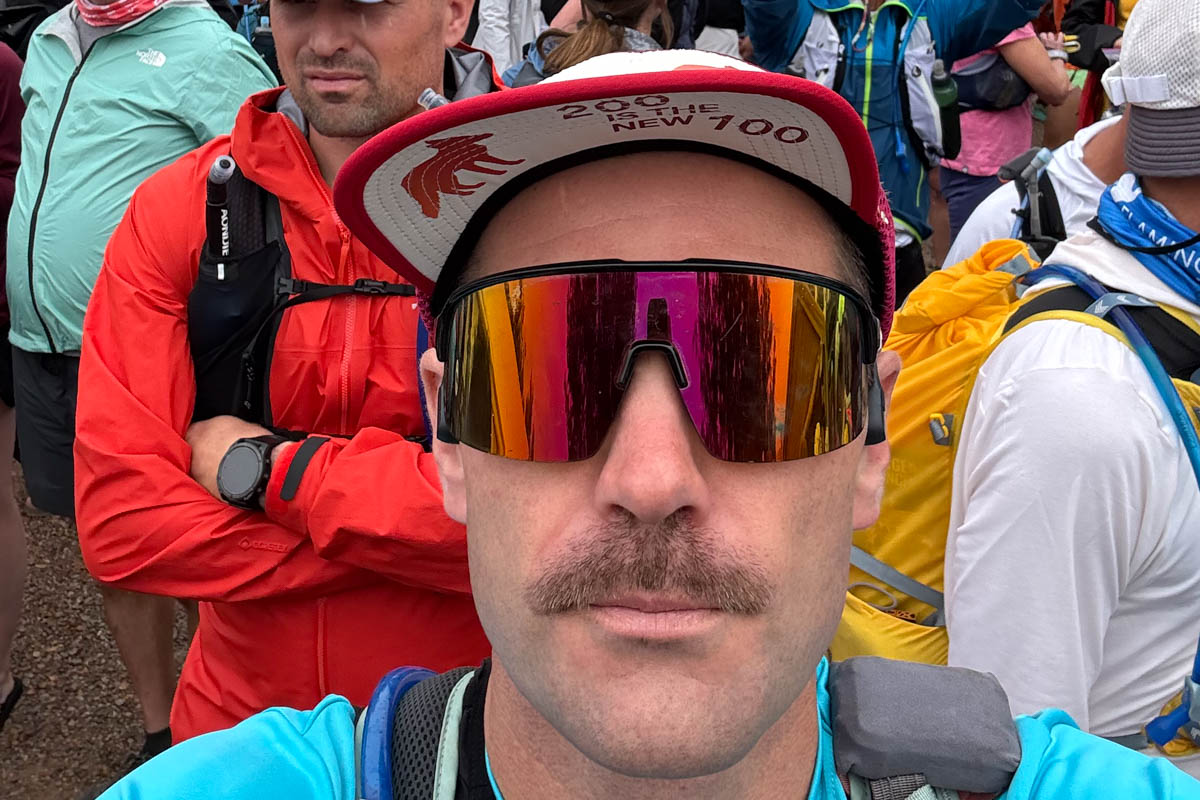
Patrick Yalon at the start of 2025 Moab 240 Mile. All photos courtesy of Patrick Yalon.
I was shin-deep in mud in the La Sal Mountains outside of Moab, Utah, halfway up a climb that felt like it might never end. For the second time in 15 months, I was wondering if I was going to die.
Lightning ripped across the sky. The trail had turned into a brown river. My feet slid with every step. My back felt like someone had wrapped barbed wire around my spine and pulled. Somewhere around mile 180 of the 2025 Moab 240 Mile, soaked and shivering, I thought: You shouldn’t even be here. You already died once.
The Wave That Almost Killed Me
Fifteen months earlier, in 2024, I paddled out for an evening surf at Ocean Beach in San Francisco, California, with my friend John. Ocean Beach isn’t a gentle place. It’s cold, heavy, and moody. It gives you the best days of your life and the worst beatings you’ve ever taken, sometimes in the same set of waves. That evening looked ordinary: thick fog, jagged sandbars, birds working offshore. There was nothing that said, “This is the day everything changes.”
Until it did.
I paddled into a wave I’d ridden versions of a thousand times. I stood up, started to drive down the line, and then my board just stopped. I didn’t. I went straight over the front and down. My head hit a sandbar with a crack like someone swung a bat at the back of my skull. The world went silent. No up, no down, just blackness and a high, distant ringing. When awareness came back, I was floating face down. I told my arms to move. Nothing. I tried to kick. Nothing. There’s a kind of brutal math that happens in those moments: If I can’t move, I can’t breathe. If I can’t breathe, I’m going to drown.
When I realized I really might be dying, there was a split second when it felt almost like relief. What almost nobody knew then was that I’d been struggling long before that wave. My long-term relationship had ended. I was drinking too much, working too much, training too much. I’ve been working in probation in San Francisco for 16 years, most of that time with justice-involved and foster youth. The work matters, but it’s heavy. You see more funerals than graduations. You absorb a lot of other people’s pain. On the outside, I was the solid guy. The runner. The surfer. The basketball coach. Inside, I was struggling to stay afloat.
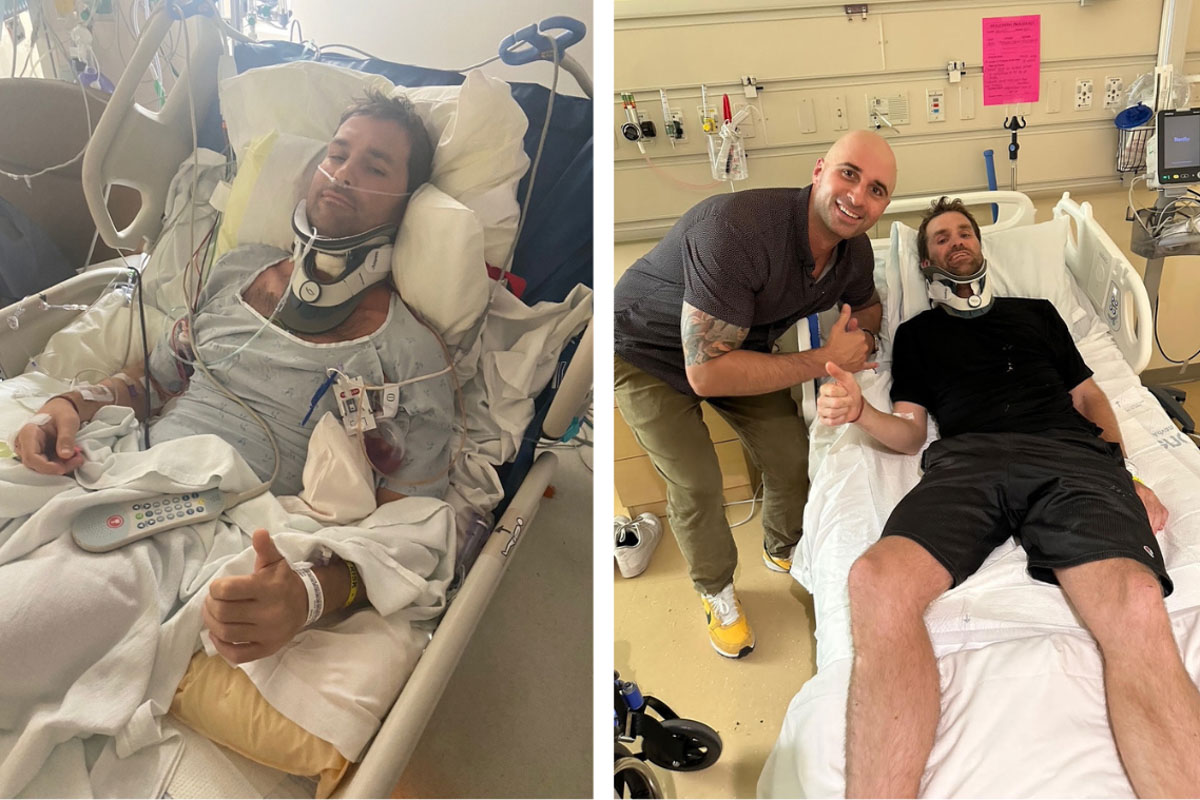
Patrick in the hospital with a broken neck after his surfing accident in 2024.
Maybe this was it. Maybe I was done. And then, from somewhere stubborn and childish and completely alive, another voice came in: Not like this. Not yet. Everything got very still. I felt myself separating from my body. There was light — brighter than anything I’ve seen since. There was peace. For a moment, I wasn’t drowning. I was just gone. The next thing I remember, I was on the sand, staring at the sky. Someone was cutting my wetsuit off me. I couldn’t move. People I didn’t know hovered over me. John was there, pale and shaking.
Later, I learned he saw my board tombstoning — nose straight up, body pinned underneath. He swam over, found me purple and motionless, dragged me in, and started CPR. He breathed air into lungs that had given up and hammered on a heart that had already stopped trying.
On one of those rounds, I came back. At the hospital, they told me that I’d broken my neck. I needed an emergency spinal fusion of my C3 to C5 vertebrae. Walking again was a maybe, not a promise. They went in through the front and back of my neck, moved things aside, bolted my spine together with a titanium plate, and hoped my body would cooperate.
I woke up in the intensive care unit of a hospital wearing a body I didn’t recognize. My right hand was a claw I couldn’t open. My legs were there but distant, like they belonged to someone else. I couldn’t sit up on my own. I watched coverage of the 2024 San Francisco Marathon from a hospital bed I couldn’t get out of, knowing I had been registered to run it.
A few days later, a nurse told me to stare at my foot and try to move my toe. Nothing.
“Again,” she said. Nothing.
“Again.” A tiny flicker.
You wouldn’t think a couple of millimeters could change a life, but that toe moving lit something up in me. Because if a toe could move, a foot could move. And if a foot could move, I could stand. And if I could stand, I could run.
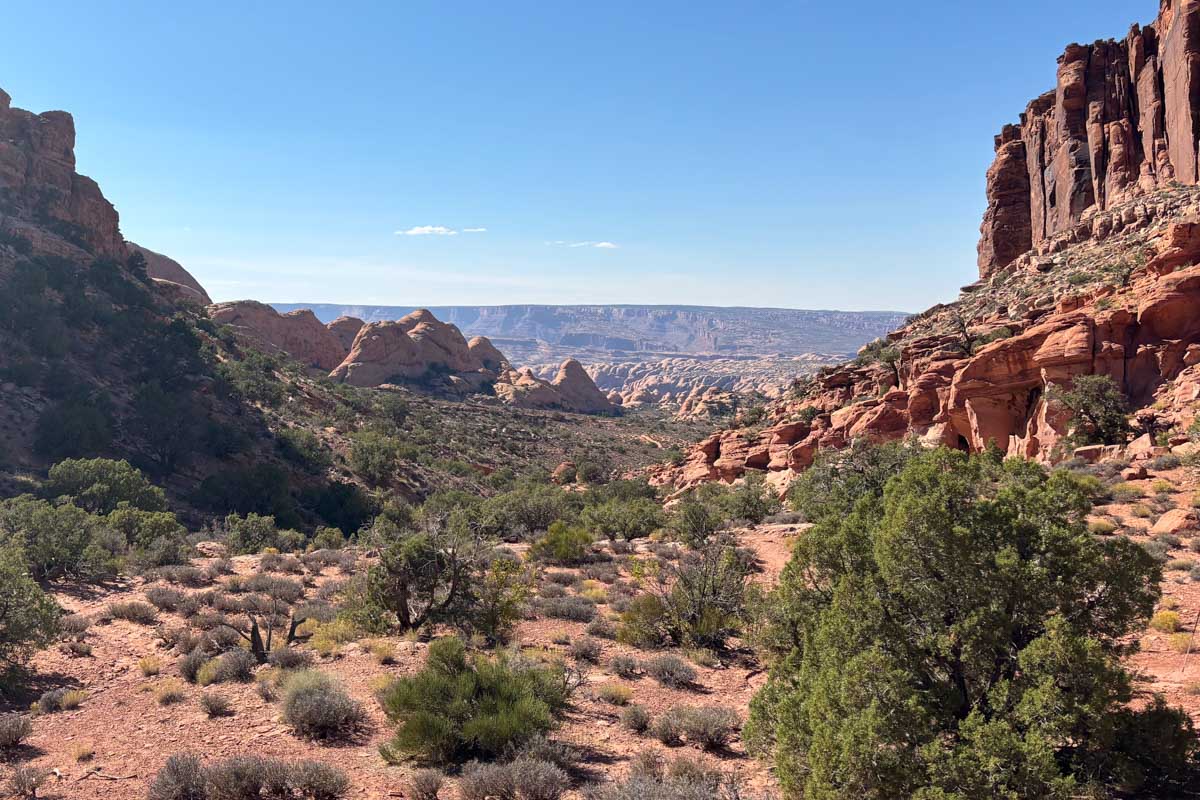
The desert can both break you and put you back together.
Three months before the accident, I’d finally registered for a race I’d stalked online for years: the Moab 240. Two hundred and forty miles through the Utah backcountry — canyons, mesas, mountains, almost no sleep. Now I was in a rehabilitation hospital wearing a neck brace, learning how to get from a bed into a wheelchair without passing out, and telling my physical therapist I still planned to make that start line. She looked at me like I’d told her I was going to run to the moon. “Let’s focus on walking down the hallway first,” she said.
Fair.
But in my head, the hallway was just the first aid station.
Moab: Round One
Somehow — through stubbornness, great medical care, my parents, my friends, and more pain than I can articulate in this article — I got from the hallway to the trails again.
I shuffled. I jogged. I relearned how to trust my body. Every root and rock felt like a test. Every run ended with nerve pain humming down my right side like a live wire. But the miles started to add up.
Three months after being told I might not walk again, I was standing on the starting line of the 2024 Moab 240. Just getting there felt like winning. I was lighter than my pre-accident self. My right side still lagged. My back ached constantly. My crew situation was loose. But there I was — one of a couple hundred runners about to run into the desert for a very long time.
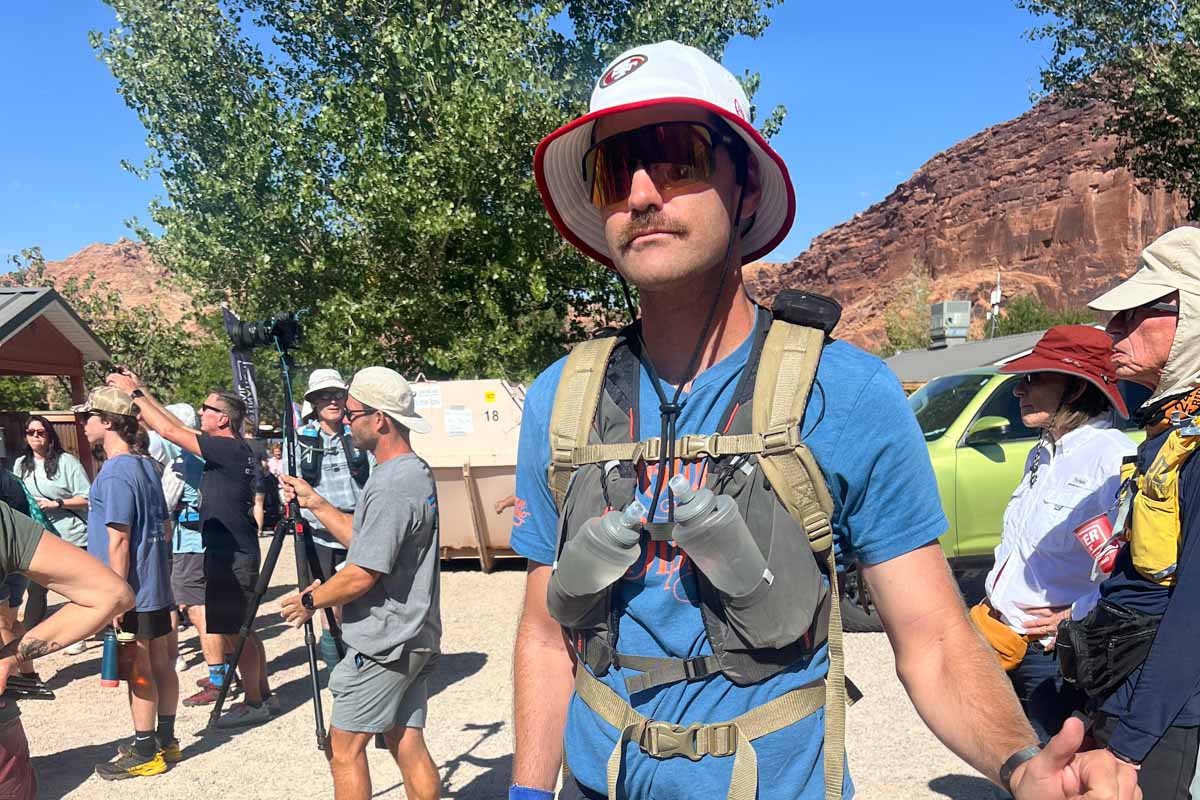
Patrick at the start of the 2024 Moab 240, just three months after his accident.
The race humbled me fast. At the first crew-accessible aid station, my crew missed me. I’d planned to swap my road shoes for trail shoes and grab my poles. Instead, I left in slick soles with no traction and no poles, heading into miles of rocky, technical trail. I slipped. I crashed. At one point, I fell straight onto my fused spine and lay there staring at the sky, wondering if this was the dumbest thing I’d ever done.
The desert at night does strange things to your mind. I saw things that weren’t there. I went hours without seeing another headlamp and started to feel like the last person on earth. And through all of it, my back and nerve pain kept getting louder. After 144 miles, my body finally called in the debt. Sleep deprivation made me barely coherent. My feet were raw. My spine felt like it was being hit with a hammer every step. I sat in a folding chair and sobbed while my friend and crew member Abe knelt beside me. “You’ve got nothing left to prove,” he said. “You already did the impossible.” They unclipped my tracker. I crawled into his van and passed out.
For months afterward, that moment haunted me. I knew, logically, that 144 miles on a barely healed spine wasn’t failure. But it felt like I’d left something in that desert. The DNF stuck under my skin. The race had beaten up my body. It had also woken something up in me.
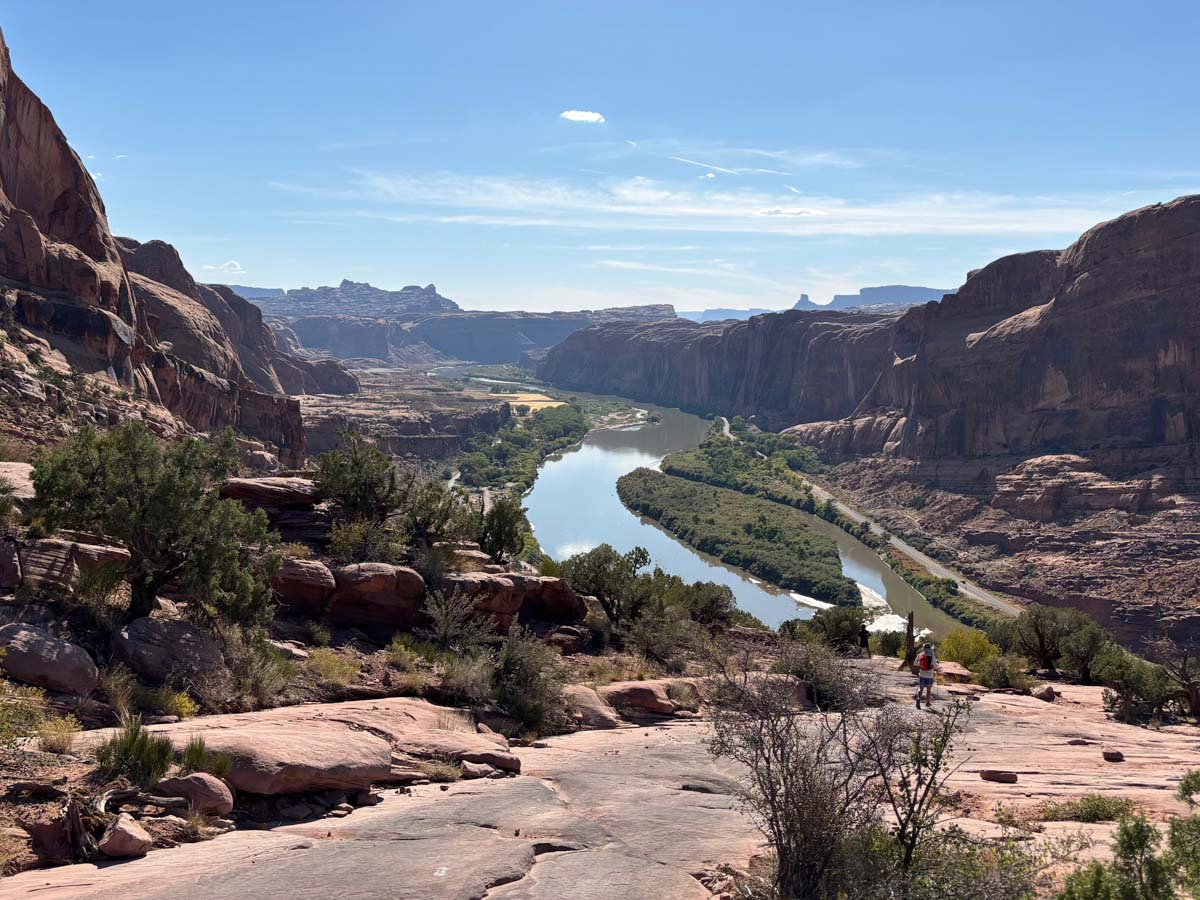
Looking down on the Colorado River during the early miles of the Moab 240 Mile.
After Moab, I needed to get away from everything for a while — San Francisco, the job, the questions. Everywhere I went, people wanted to hear The Story. What did it feel like to die? What did you see? How’s the neck? How far did you make it at Moab?
I understood, but reliving it on repeat was its own kind of trauma.
A Realization About Purpose
So I flew to Thailand. A few days after landing, I found myself on the starting line of the 2024 Bangkok Marathon. The race started at 12:30 a.m. The air felt like hot soup. Before the accident, I’d chased sub-three-hour marathons. That night, I didn’t care about the clock. I just wanted to move. Around mile 18, my leg started to go numb. Nerve pain shot down from my spine. I kept going anyway and crossed the line in 3:53 — my slowest marathon in years and one of the proudest finishes of my life.
Thailand became rehab of a different kind. I trained in Muay Thai. I rode motorbikes through the mountains. I sat in temples and tried to make sense of a life I almost didn’t get back.
When I came home, another kind of storm hit. My mom was diagnosed with multiple myeloma. My dad — who’d already had more spinal surgeries than I can count on one hand — was diagnosed with both prostate and bladder cancer. They went from standing by my hospital bed to fighting for their own lives. Suddenly, my pain wasn’t the main character anymore. I watched my mom drag herself through chemotherapy, and my dad relearn how to live after another surgery. I understood where my own stubbornness came from.
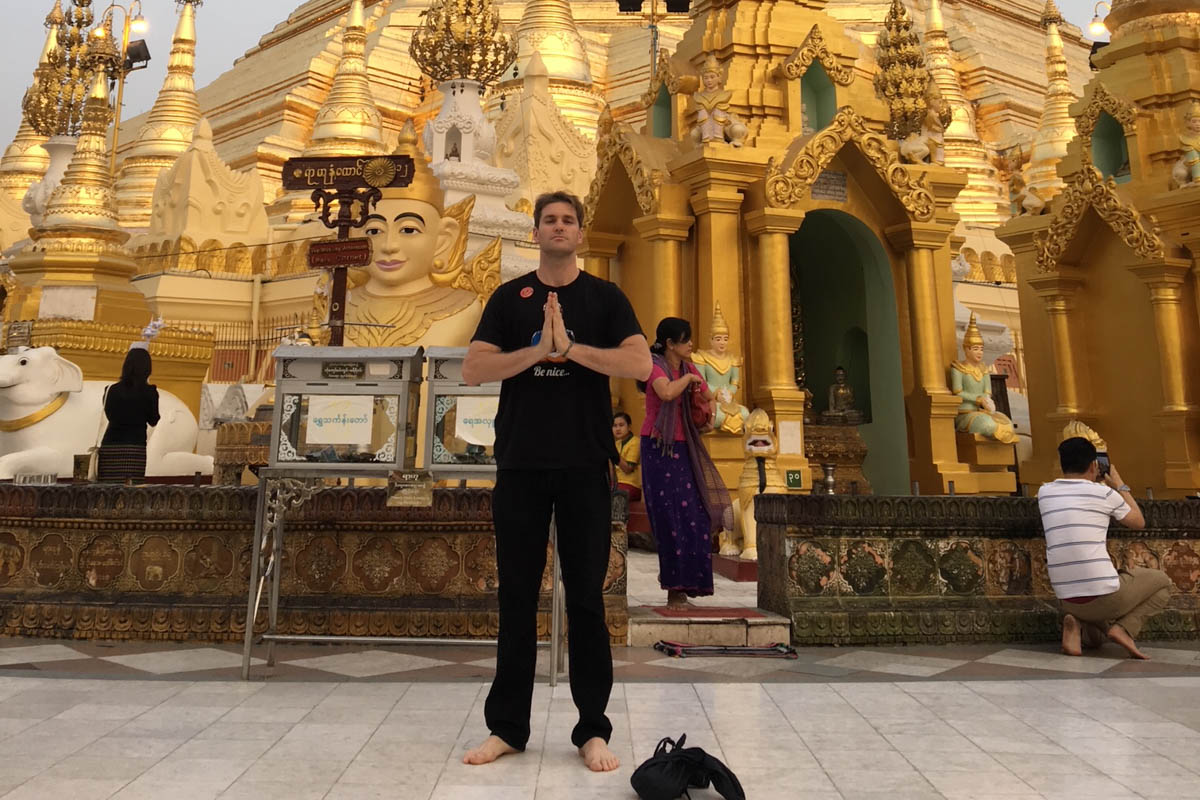
Patrick in Thailand working to make sense of the events of his life.
Around that time, I read about a firefighter named José who’d been paralyzed during the Escape from Alcatraz triathlon when another athlete landed on him in the water. His story sent a shock through me. It was too close. I wrote him a letter and sent a magazine piece someone had done on my accident and recovery. A week later, he called me from rehab. We talked for 40 minutes. Eventually, I flew out to see him. We sat together and talked about pain, anger, faith, and what it means to start your life over from zero. Before I left, I made him promise that one day he’d walk out of that place and then turn around and help the next person behind him.
On the plane home, I kept thinking the same thing: You didn’t come back from the ocean just to survive. You came back to do something with it.
Returning to Moab
When the email came saying I’d been accepted into the 2025 Moab 240, I was out on a walk. I stopped on the trail and laughed. Of course.
This time, I wasn’t going alone. My friend Jean Marc took over crew captain logistics. Joey flew in to help early. Joe agreed to pace me from miles 171 to 200. And John — who had pulled me out of the Pacific and did CPR on the beach — said he’d take me from mile 200 to the finish.
The night before the race, the director warned us about a big storm lining up over the La Sal Mountains. “If you get caught in flash floods,” he said, “get to higher ground and wait it out.” We all laughed nervously. Trail runners are great at pretending we’re not worried.
Up high in the La Sals, during the final quarter of the race, the sky opened. Water poured down in sheets. The trail turned into peanut-butter mud. My shoes felt like they weighed 10 pounds each. Joe and I waded through knee-deep water that hadn’t existed the day before. Our headlamps caught other runners curled in emergency blankets under trees, or standing stock-still in the middle of the trail, trying to decide whether to keep going.
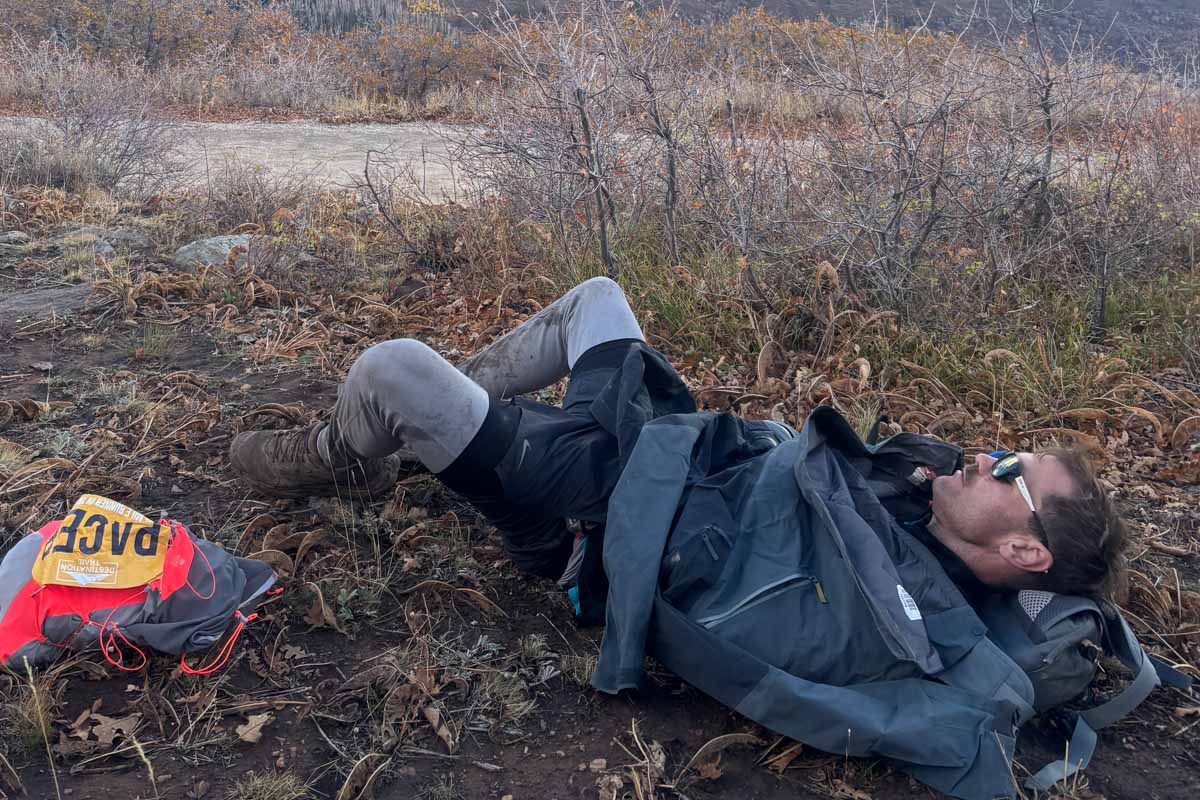
Patrick takes a dirt nap in the middle of the 2025 Moab 240 Mile.
At a mid-mountain aid station, people were packed around two small fires, teeth chattering, ponchos steaming. A volunteer told us conditions were getting bad. Hypothermia. Lost runners. Rescue teams were heading out. Joe and I ate hot food, looked at each other, and stepped back into the dark. At one point, it took us over an hour to go a mile. The mud grabbed our shoes. Wind howled through the trees. Lightning lit up the ridge and showed us exactly how far we still had to climb. Charity, another runner, joined us. The three of us moved together — three beams of light in a storm that didn’t care if we were out there or not.
When we finally crested the ridge, dawn was bleeding into the sky. The rain eased. Clouds tore open over a valley full of steam. I stopped, threw my head back, and screamed, “I’m still here!”
A few hours later, a medic told us they’d pulled 10 runners off that mountain during the night.
The Final 40
When I stumbled into the aid station at mile 200, I was barely walking. My feet looked like someone had taken sandpaper and a cheese grater to them. A medic re-wrapped everything and asked, “Are you sure you want to keep going?”
I thought about the ocean. I thought about the hospital. I thought about my parents, about José, about the kids I worked with in probation, about everyone who’d told me they were following the tracker back home. “Yeah,” I said. “I’m sure.” John clipped on his vest, gave me that calm, serious look he has, and said, “Let’s bring it home.”
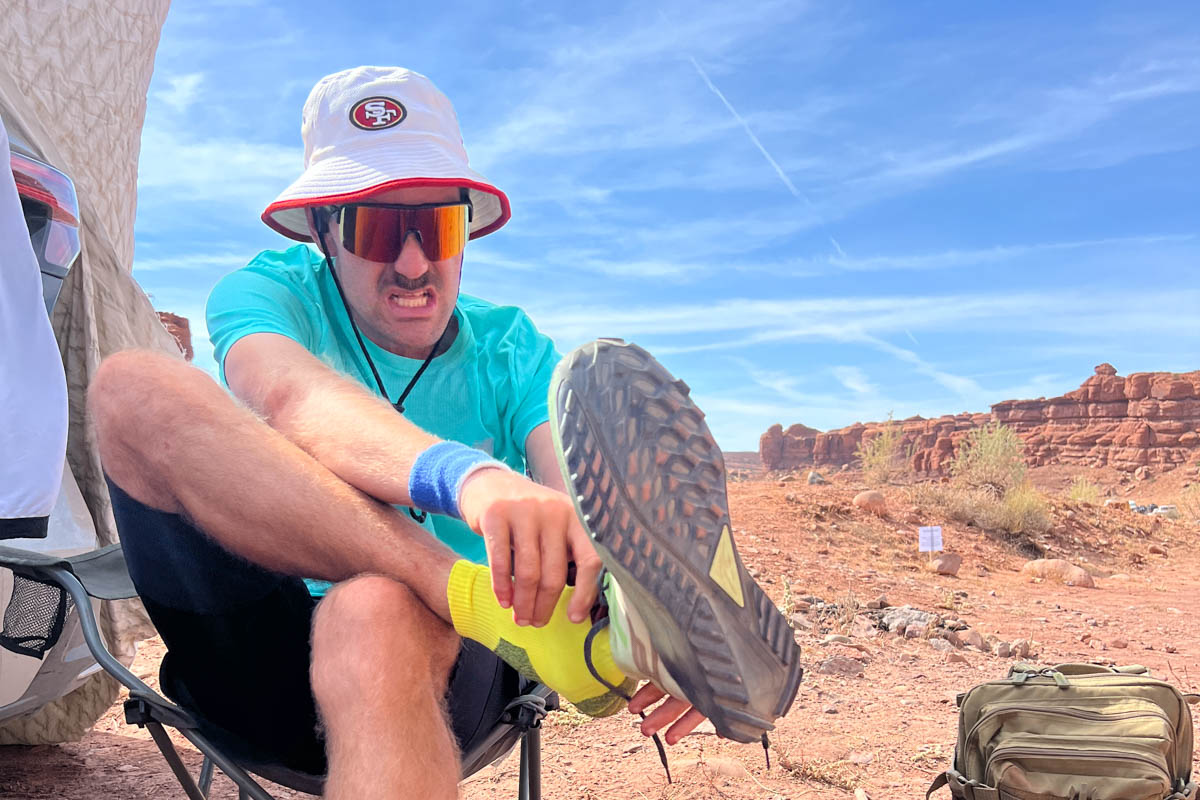
Changing shoes during the 2024 Moab 240 Mile.
The last 40 miles weren’t fast or pretty. We shuffled. We powerhiked. When I started falling asleep on my feet, we stopped for 30-second trail naps — me folded over my poles, John keeping watch. When the hallucinations crept in, we laughed at them. When the pain spiked, we breathed and kept moving.
We also talked. We talked about that day in the water. About what he saw when he thought I was gone. About what I saw when I left my body. We talked about the kids I work with — kids who have been told since they were small that they won’t make it past age 18. We talked about what it means to be given another chance and actually use it.
At one point, John told me his phone hadn’t stopped buzzing with messages from people in San Francisco and beyond. They were refreshing the live tracker, praying, and cheering. I pictured all of them in my head, crowded onto that dirt road with us.
The finish line appeared slowly: a few flags, the timing arch, a small group of people clapping in the early light. “Run it in,” John said.
So we did. It wasn’t a sprint. It was more like a determined, lopsided jog. But we crossed together.
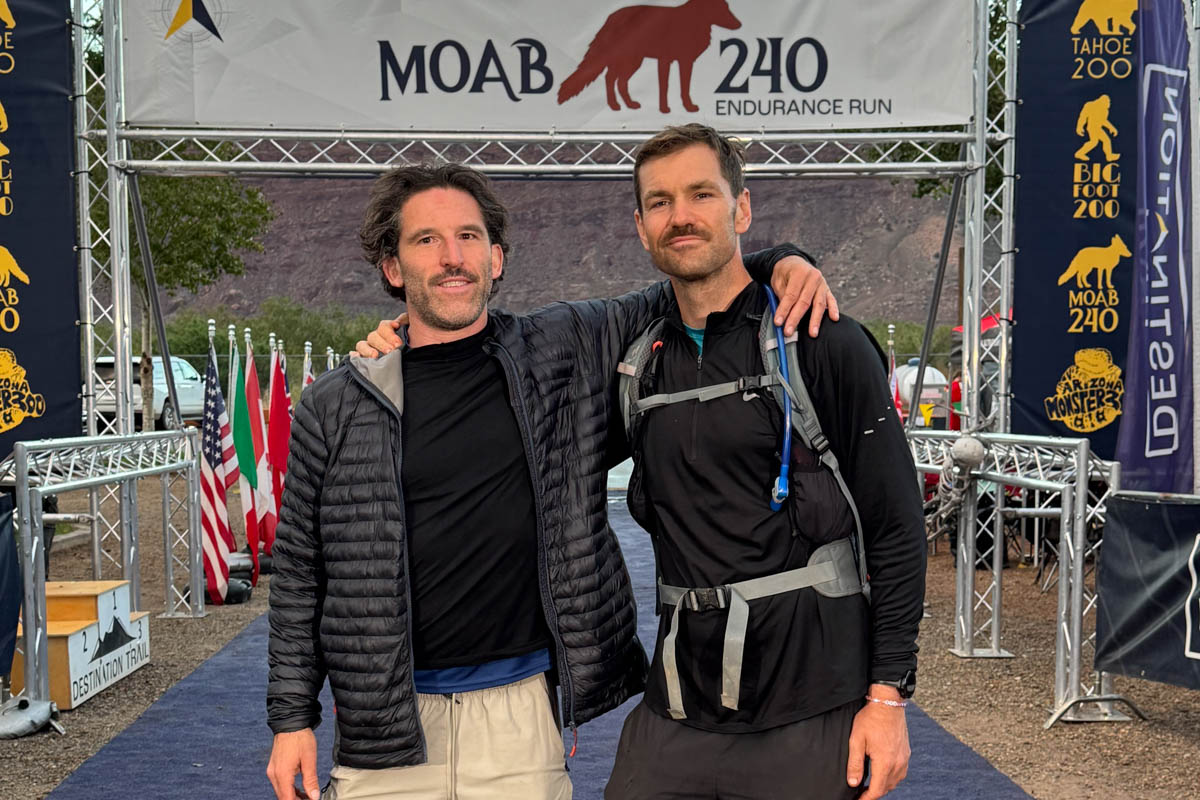
Patrick (right) and John (left), who pulled him from the ocean 15 months prior, at the finish of the 2025 Moab 240 Mile.
The announcer called my name. For a second, everything went quiet, like the volume got turned down on the world. Then it all rushed back — clapping, laughter, the ache in my legs, the weight of the last 15 months.
“How does it feel?” somebody asked. I bent over, hands on my knees, and let a sob and a laugh come out at the same time. “It feels like I’m still here,” I said.
Why I’m Telling You This
People ask why I keep talking about this. Why I’m trying to write a book about my experience. The simple answer is: because I know there’s someone reading this who feels done. Maybe it’s because of an injury. Maybe it’s illness, grief, addiction, or depression. Maybe you’re the “strong one” in your family or your friend group, and you’re exhausted from pretending. I don’t think everyone needs to run 240 miles to heal. Honestly, I’m not even sure I needed to.
But I do believe this:
If you can’t stand, you can ask for help up. If you can stand, you can start moving. And if you keep moving — one mile, one aid station, one hard conversation at a time — your life can turn into something you can’t imagine from where you are right now.
The ocean broke my neck. The desert broke me open and stripped away the story I’d been telling myself about who I had to be. Both of them gave me my life back.
I’m still here. You are, too. Let’s keep going.
Call for Comments
- Have you used running to motivate yourself to come back from an injury or traumatic event?
- What else do you use to get through the hard times in life?