 With the arrival of summer in the Northern Hemisphere, many trail runners and ultrarunners are gearing up for big races. Among them are some of the historically hottest races in North America, such as the Western States 100, Badwater 135 Mile, Angeles Crest 100 Mile, and Wasatch Front 100 Mile.
Each year, runners scramble to find the best ways to prepare and plan for the heat they will encounter on race day. And, as with so many things in the sport these days, there is more information available than ever before about heat acclimation and cooling strategies.
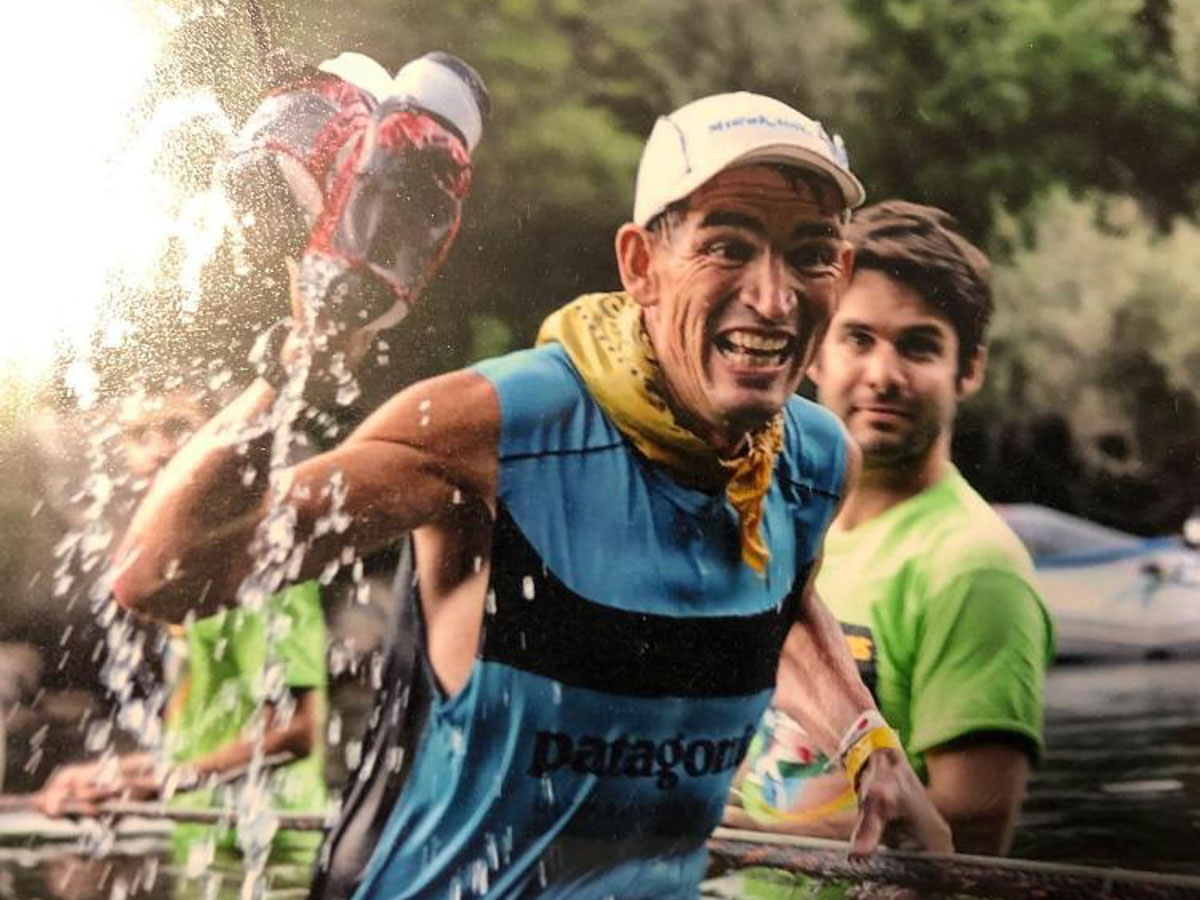
AJW cools down during the 2010 Western States 100 while crossing the American River at Rucky Chucky. Photo: Luis Escobar
Much of the information is grounded in science and research, such as hot water immersion, sauna protocols, and training in heat chambers, while others — such as running in three puffy jackets and sweatpants — seem to come from influencers hunting for clicks with little scientific basis. That being said, wherever you get your information, there is certainly a lot more of it these days than there was when I first came of age in the sport about 30 years ago.
Dr. Lind, Western States 100, and Heat Training
Back then, most of the reliable information about training and racing in hot conditions came from one place: the Western States 100 and its long-time medical director, Dr. Bob Lind. From the first official Western States 100 in 1977 until his passing in 2016, Dr. Lind maintained meticulous records of the runners and conducted countless medical studies at the event. From those studies, he developed what was, at the time, the pre-eminent heat-acclimation strategy for running in hot climates.
While seemingly never formally documented, Dr. Lind called it the “90-90-9” plan. Put simply, beginning about two weeks before race day, you were to run for 90 minutes at 90-degree-Fahrenheit (32 Celsius) heat for nine consecutive days. According to Dr. Lind’s theory, this was the minimum you should do to be prepared for the Western States heat.

Crew stops at the Western States 100 are generally focused on cooling. Rod Farvard cools off during the 2025 Western States 100. Photo: iRunFar/Eszter Horanyi
But Dr. Lind did not stop there! He also realized that the Western States course features plenty of water along the way. Creeks to dunk in, springs coming out of the mountains, and even the occasional snow patch to aid in cooling. Dr. Lind implored runners to get wet in all of them. Of course, these days, race-day cooling methods have become an art form with runners, pacers, and crews working with Formula 1-style efficiency to apply ice all over the body. Heck, it’s even spawned an entire sub-industry of ice bandanas, ice vests, ice hats, and ice arm sleeves — things Dr. Lind couldn’t have seen coming 50 years ago.
Mental Heat Training
I believe there is one last area of heat management that remains less researched: the mental side. It seems to me that, regardless of how well our bodies are prepared and how well we can cool ourselves during the event, the mind is a powerful thing that can shut us down unless we are mentally prepared for the challenges of running in a hot environment.
Think about how demoralizing it can be to be stuck in a hot car in traffic on the freeway, or how helpless you feel when your air conditioning breaks down on a hot summer day. Years of mental programming have taught us that being hot is unpleasant and makes us tired, lethargic, and angry. We need to prepare ourselves for when that happens on race day, so that in the midst of that misery, we can summon the mental fortitude to not break down but rather accept our fate and know that this too shall pass. I am sure that that is what Dr. Lind would tell us to do!
Bottoms up!
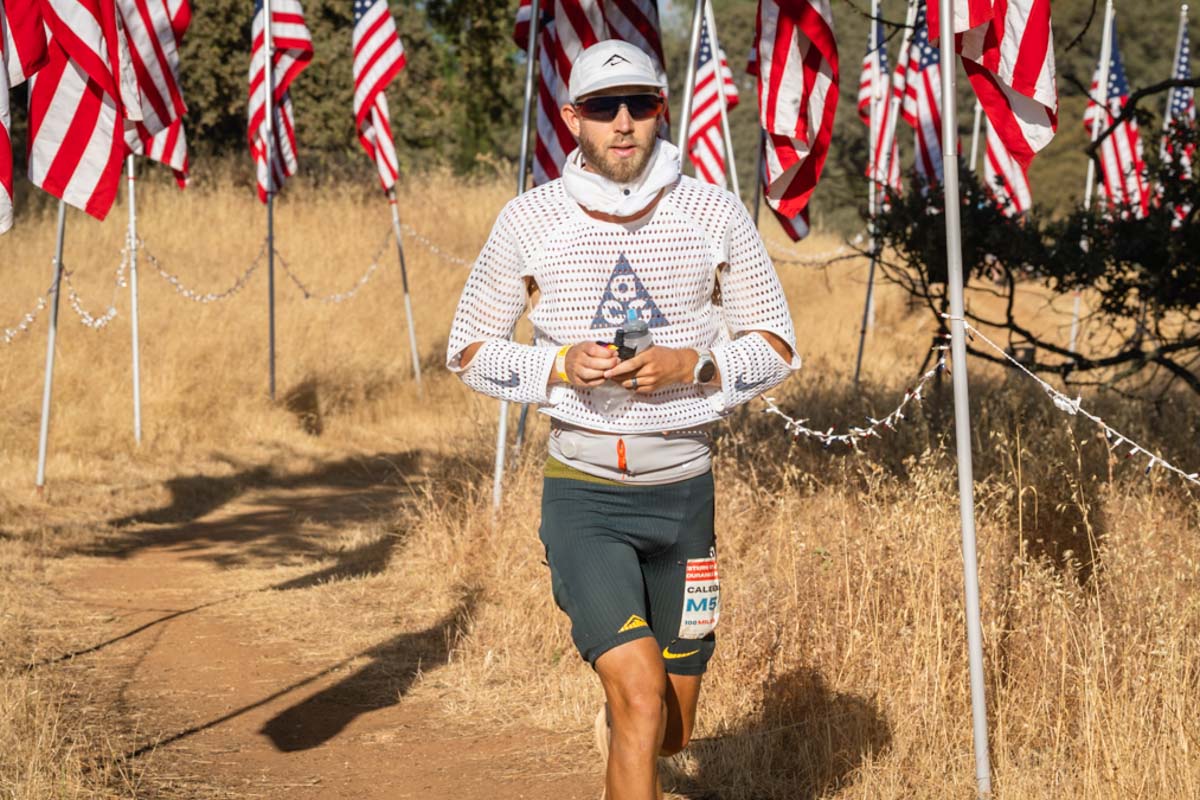
Fancy shirts can help keep you cool, but the mental game of running in the heat is arguably just as important. Here, Caleb Olson is on his way to winning the 2025 Western States 100. Photo: iRunFar/Eszter Horanyi
AJW’s Beer of the Week
 This week’s Beer of the Week is from Pittsburgh Brewing Company in Creighton, Pennsylvania. Old German Premium Lager is a classic American Adjunct Lager brewed in a German style.
It’s the kind of beer that’s great to sip on after a hot day working in the yard or a long grinding run across the Pennsylvania countryside. Smooth drinking and wonderfully thirst-quenching, Old German is a fantastic, inexpensive choice.
Call for Comments
- Have you had success with Dr. Lind’s heat training protocols?
- How do you prepare for hot races?

