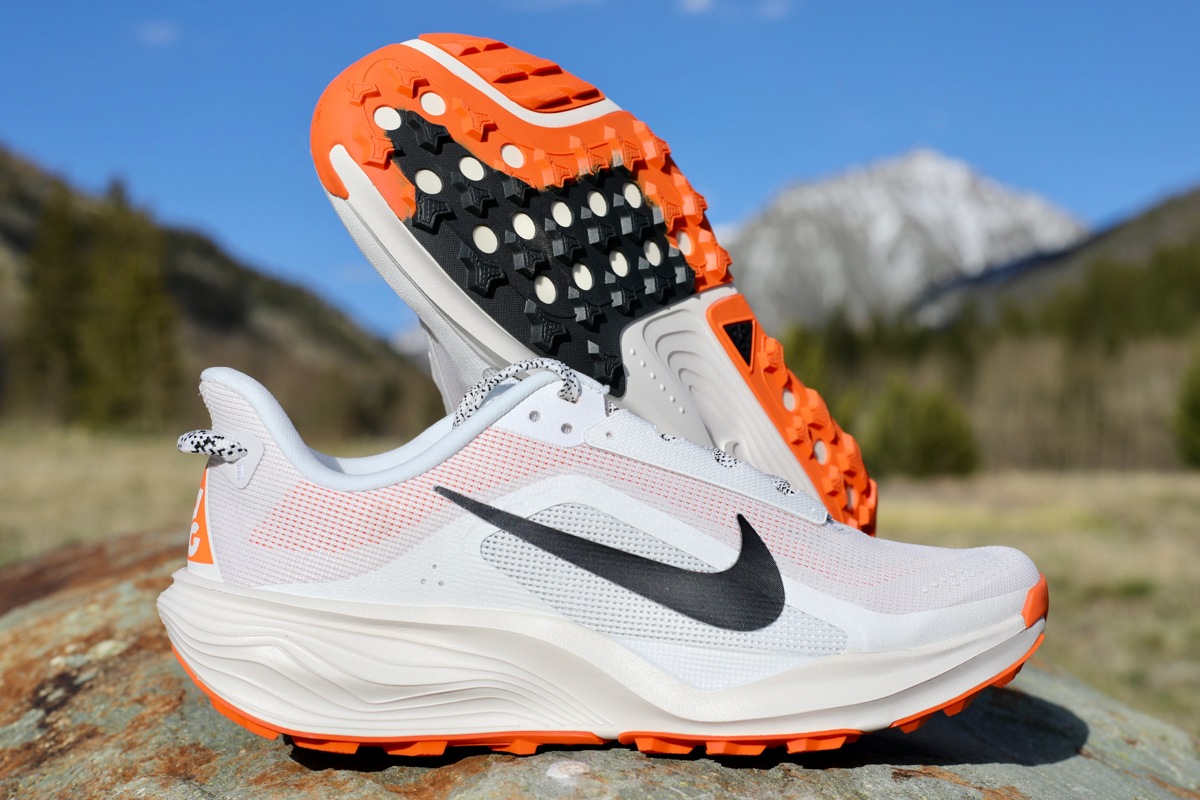
The Nike ACG Pegasus Trail. All photos: iRunFar/Bryon Powell
The Nike ACG Pegasus Trail ($155) is the newest offering in the line of Pegasus trail running shoes, and over the thousands of miles I’ve logged in the past several iterations, the design and performance of this shoe just keeps getting better. If its predecessor, the Nike Pegasus Trail 5 (review), was a shoe that could handle many types of moderate terrain, the updates to this version make it even more comfortable and functional. Small changes in the upper have improved the fit over longer and slightly more technical miles, and the additional ReactX foam underfoot has bumped up the protection and energy return at any pace. The newest version of the outsole has an updated rubber and redesigned lug pattern, offering enhanced traction over both wet and dry terrain. The shoe also has a slightly wider footprint, so if I do find myself venturing outside of the shoe’s door-to-trail category on one of my runs, it can perform even over moderately technical terrain.
The ACG Pegasus Trail has a slightly higher stack than the Pegasus Trail 5 and a slightly lower 8-millimeter drop. The 39-millimeter stack height under the heel and 31 millimeters under the forefoot is slightly more than the 37-millimeter and 27.5-millimeter heights on the previous shoe. The change in drop — from 9.5 to 8 millimeters — is not something I would have noticed had I not seen the spec sheet, and my hamstrings and calves are none the wiser. The weight is still in the perfectly durable yet lightweight category for me, and the shoe has an actual weight of 10.4 ounces (295 grams) for a U.S. men’s size 9. It makes for a reliable daily trainer with the ability to push the pace as desired, whether for speedwork or in a local trail half marathon.
The sizing is true to my usual Nike size and true to the overall sizing of most running shoe brands.
Shop the Women's Nike ACG Pegasus TrailShop the Men's Nike ACG Pegasus Trail
Nike ACG Pegasus Trail Upper
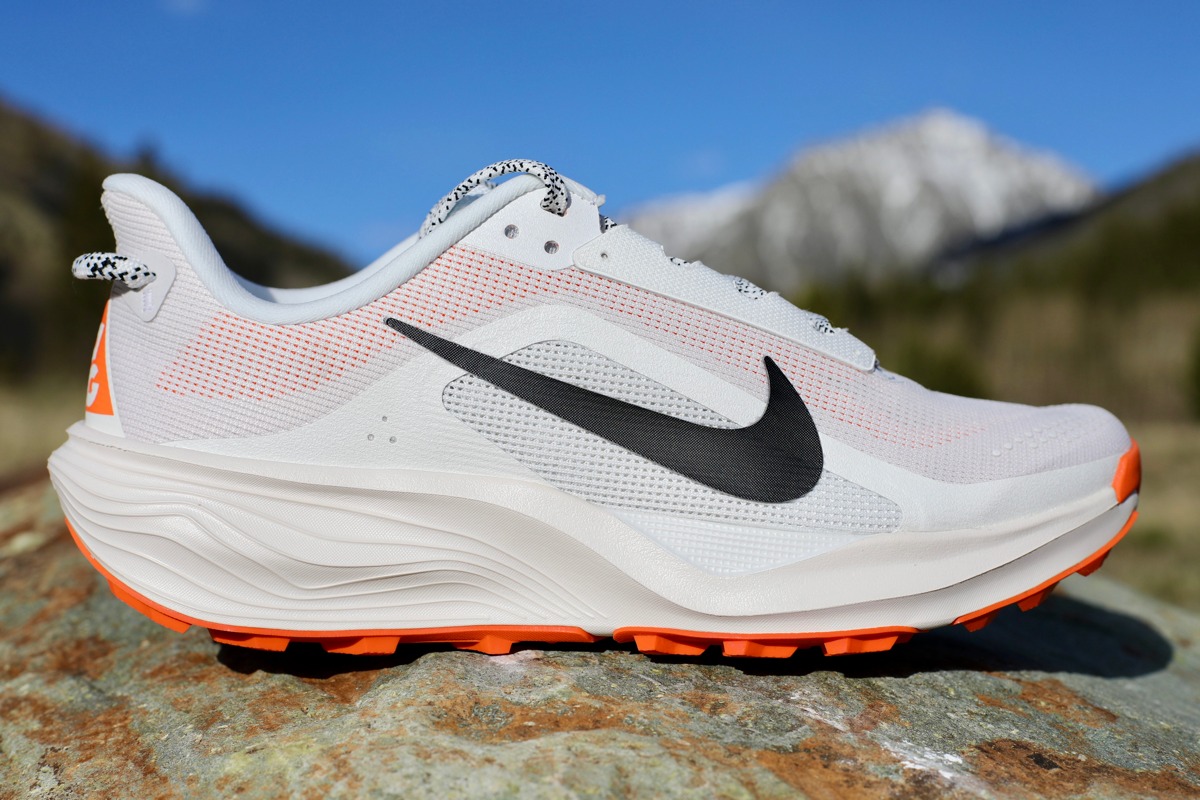
A lateral view of the Nike ACG Pegasus Trail.
The Nike ACG Pegasus Trail upper looks very similar to the Pegasus Trail 5, but its lightweight engineered mesh is more uniform with a smaller pore size which made me curious about breathability and heat dispersion. In runs from 30 degrees to 83 degrees Fahrenheit (-1 to 27 degrees Celsius), my feet have been very comfortable with excellent moisture management regardless of wind. There is improved breathability and water drainage potential along the medial and lateral midfoot as an overlay film has been removed. Higher density striping through the midfoot area provides some appreciated structure.
The rubber toe bumper and wrap that extends to the midfoot offers a little more protection against cacti, thorns, rocks, and other debris than prior versions, and it also improves the stability of the foot on top of the platform when the occasional significantly cambered trail segments are encountered — think wonky rock slabs or a quick scramble. These shoes are not my first choice for a run with lots of off-trail angles and rock navigation, but they really excel on smoother terrain. Rain and snow have been very limited this winter, but I did get the perfect misty, rainy day recently, and I was pleased with how the shoes dried on the fly. I don’t mind wet feet, but in combination of my trusted socks, the mesh moved moisture away from the skin really well, and my feet stayed happy.
Nike has added a bit of toebox volume and lessened the curve on the lateral aspect of the forefoot so the smaller toes have more room to splay, which allows the foot to better adapt to moderate terrain. Nike shoes have a history of having a narrower fit, but I’ve been consistently surprised and pleased with how Pegasus trail shoes have fit my wider forefoot while still providing the snug support through my midfoot for confident running.
The well-structured heel cup keeps my heel secure and blister-free, and the ankle collar — though slightly taller than prior Pegasus Trail versions — has just enough padding to be comfortable without intruding on my ankle bones. Like with the Pegasus Trail 5, the Achilles notch is perfect and moves slightly away from the Achilles, so I never had any sore spots, even during hillier runs.
The tongue is still perfectly padded by my standards and keeps the extended internal wrap, which is perfect for keeping the tongue in place. The curved shape also integrates flawlessly with the ankle collar, providing just enough protection from laces that ankle tendons and musculature stays happy. The lacing eyelets have been redesigned with full coverage rather than the previous Flywire loops, which certainly improves durability in this area. I didn’t have any issues with the prior design, but the added structure here improves the overall secure feeling of the shoe, especially as I run longer and navigate more trail obstacles.
Nike ACG Pegasus Trail Midsole
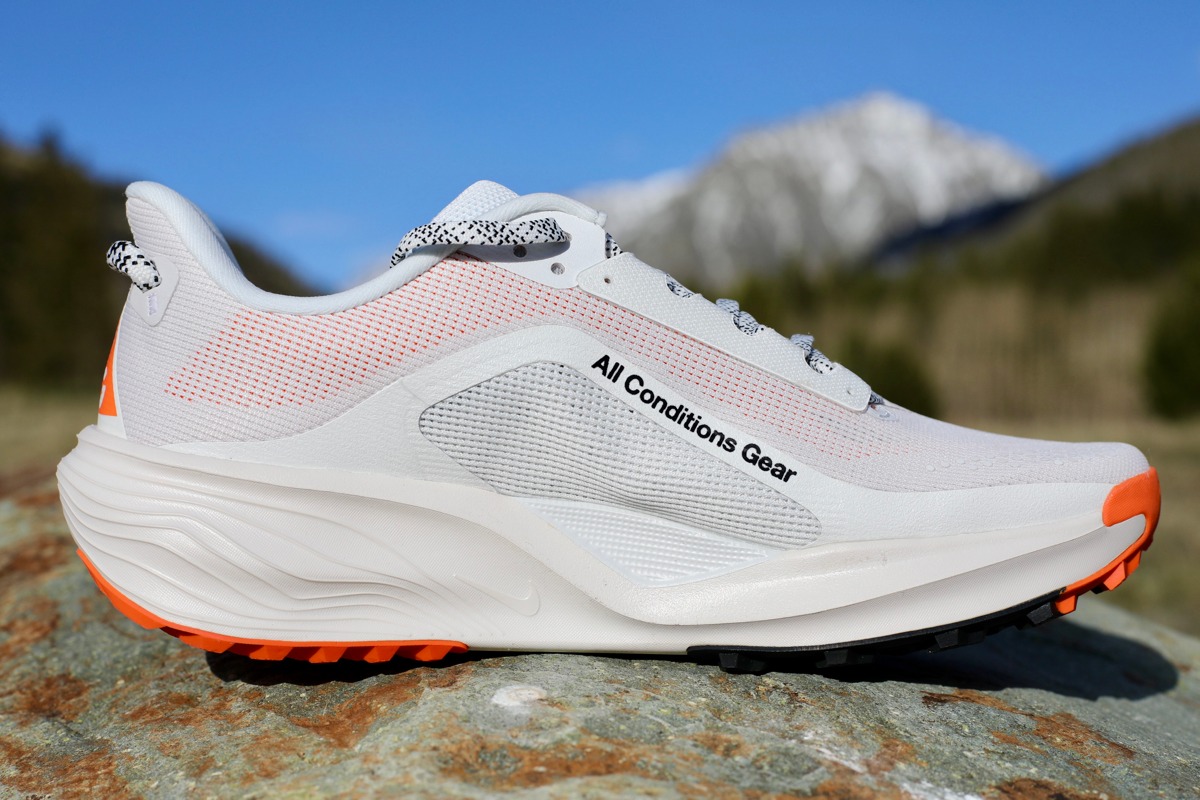
A medial view of the Nike ACG Pegasus Trail.
For the Nike ACG Pegasus Trail, the brand retained the durable ReactX foam midsole from the Pegasus Trail 5 but increased the stack height by about 4 millimeters in the forefoot and 2 millimeters in the heel. To the less discerning, this might not seem like much, but I’m finding it to add about 10 miles of comfort to my running distance. I used to feel that 13 to 15 miles was the sweet spot for my Pegasus Trail 5, with up to 20 miles still doable as I began fantasizing about more cushioning. But the ACG Pegasus Trail, with its 39 millimeters of stack height under the heel and 8-millimeter drop, is easily a 50k shoe on the right terrain. I am still wishing for a thin rock plate, but with the added foam, random pokey rocks have less impact than they did in prior versions.
The ReactX foam provides that perfect combination of firm yet responsive cushioning with an energy return that makes me feel more propulsion on push off. As I work my way up in my new age group, this is a fabulous feeling indeed. I’m able to find that slight forward lean a little easier and tick off the miles a bit faster, which has been a hallmark of Pegasus trail shoes for me. The additional cushioning makes the quicker running a little easier on my body, even when a fair amount of downhill is involved. The best part is that it doesn’t hinder agility when the rockier sections arise.
I continue to find the insoles to be very comfortable and a bit thicker than other brands, and they stay in place without ever bunching up under the foot. There is adequate arch support, even for my higher arched feet, and the foot sits down into the shoe rather than just sitting on top of the midsole. These little details enhance the overall comfort, ride, and distance I can wear the shoe, even compared to prior versions, which I also thought were comfortable.
Nike ACG Pegasus Trail Outsole
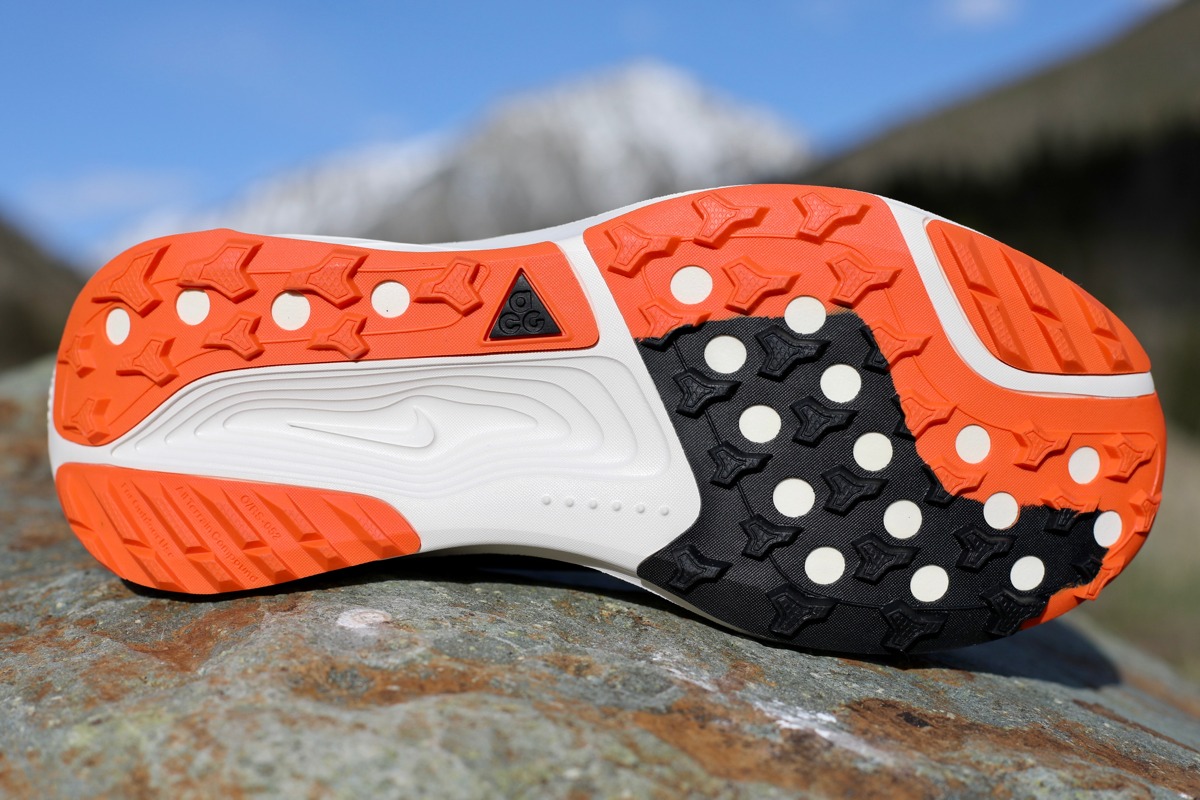
The outsole of the Nike ACG Pegasus Trail.
The Nike ACG Pegasus Trail features the new generation of their proprietary All Terrain Compound (ATC) rubber. The new ATC 2.0 claims to have better traction on wet terrain. I’m finding that to be true, with a comparable improvement running on dry singletrack and hilly dirt roads as well. Additionally, the shoe has a slightly wider footprint over prior versions, which adds a nice bit of stability through the gait cycle.
The lug shapes have changed and are 3.5-millimeters tall. I’ve noticed better grab on rubbly hardpack — especially on inclines, declines, and curves — and less sliding off wet rocks and slabs, which boosts my confidence in the traction provided over prior versions. With the occasional encounter of brief snowy conditions, there was also improved control, as long as minimal ice was involved. The lugs aren’t aggressive enough to tackle the fells of England or the shoe-sucking mud of the Pacific Northwest, but they’re low-profile enough that they don’t stack up inches of clay that covers some of our trails here. Most of the potentially stackable mud flings off with your normal gait cycle, which is a huge bonus. Even with the slightly more aggressive outsole, the well-placed cutouts foster the flexibility needed for the shoes to still perform well on the occasional mile of pavement and retain that smooth road-shoe style vibe. The traction is subtle enough that I’m not catching the lugs on sidewalk cracks and upheaves.
Nike ACG Pegasus Trail Overall Impressions
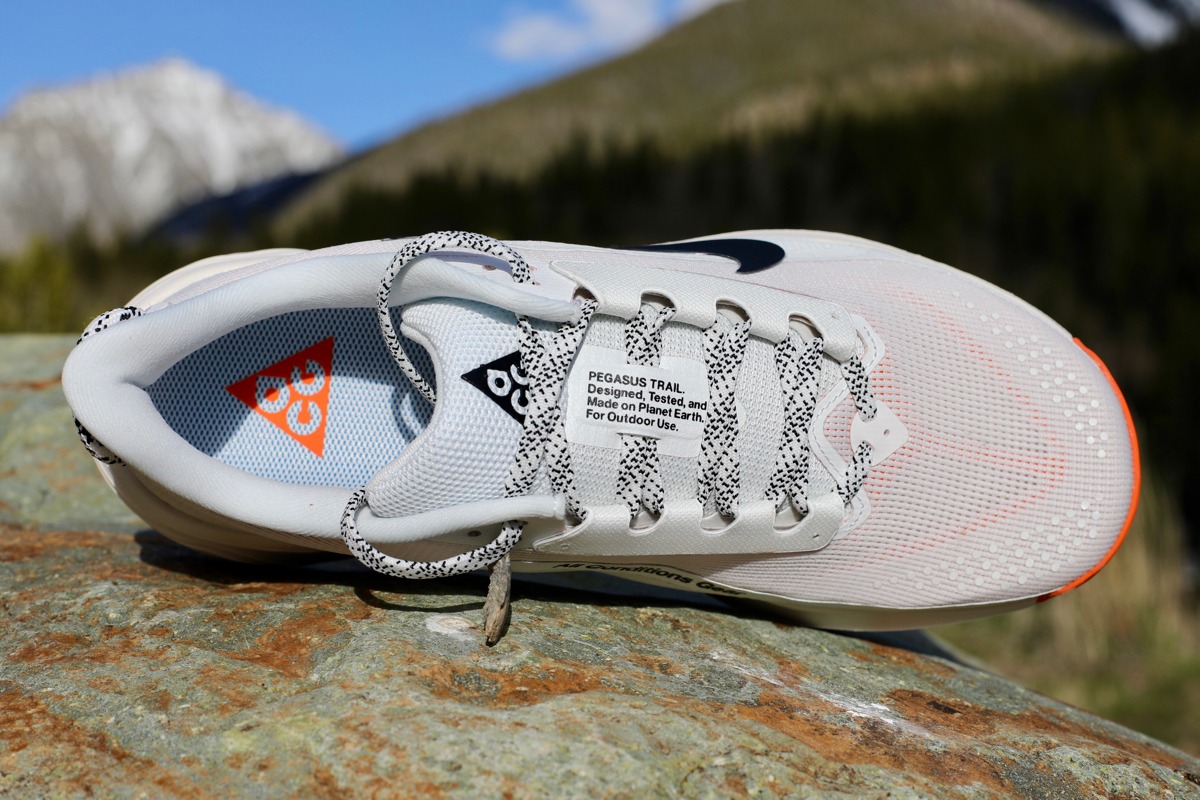
A top view of the Nike ACG Pegasus Trail.
While the Nike ACG Pegasus Trail is still a hybrid door-to-trail shoe designed for moderate terrain, the overall improvements to the toebox, midsole cushioning, and outsole push the needle a bit more towards a proper trail shoe than prior iterations. The durability of the shoe is proving strong. At about 150 miles, there is minimal sign of stretch through the upper, and the outsole looks like it just came out of the box — minus the dirt. It’s still not burly enough to be an all-mountain shoe for me, but for those who are nimble and lighter on the feet, this shoe can go further into the technical hills than prior versions.
It continues to be one of my all-time favorite lightweight daily trail running shoes with that smooth heel-to-toe roll through and the sensible trail features. It handles about any tempo well but makes me want to push the pace a little more than other shoes with its firm responsiveness and efficient energy return that propels me forward. It’s in my top-two favorites for running on smooth to moderately technical singletrack, dirt roads, and mixed surfaces common to my lower-country running as I wait patiently for the high country to open up after the winter season.
If I run a local trail half marathon or 50k in the near future, this is the shoe I will reach for hoping for the speed enhancement the shoe invites. The Nike ACG Pegasus Trail has taken over the top spot for my favorite shoe in the winged-horse line, and I hope any changes to future versions are subtle at most.
Shop the Women's Nike ACG Pegasus TrailShop the Men's Nike ACG Pegasus Trail
Call for Comments
- Have you tried the Nike ACG Pegasus Trail? What did you think?
- What other road-to-trail shoes do you like?
Our Favorite Trail Running Shoes
Check out our Best Trail Running Shoes article to learn about our current favorite trail running shoes!