[Editor’s Note: Author Kristen Schindler is a mental performance consultant, elite trail runner, new mom, and founder of Integrated Stride Coaching. A former collegiate athlete and UESCA-certified coach in running, sport psychology, and coaching pregnant and postpartum athletes, she helps runners rewrite their stories of potential through science-based, human-first coaching.]
Trail runners have always known the truth: heat changes everything. It doesn’t matter whether you’re laboring through the furnace-like canyons of the Western States 100 in California, ripping down the deceptively fast trail during the Black Canyon 100k in Arizona, or trying to hold it together during a steamy summer 50k on the U.S. East Coast. The blend of effort and rising temperatures exposes limits of human endurance that mileage alone can never prepare you for.
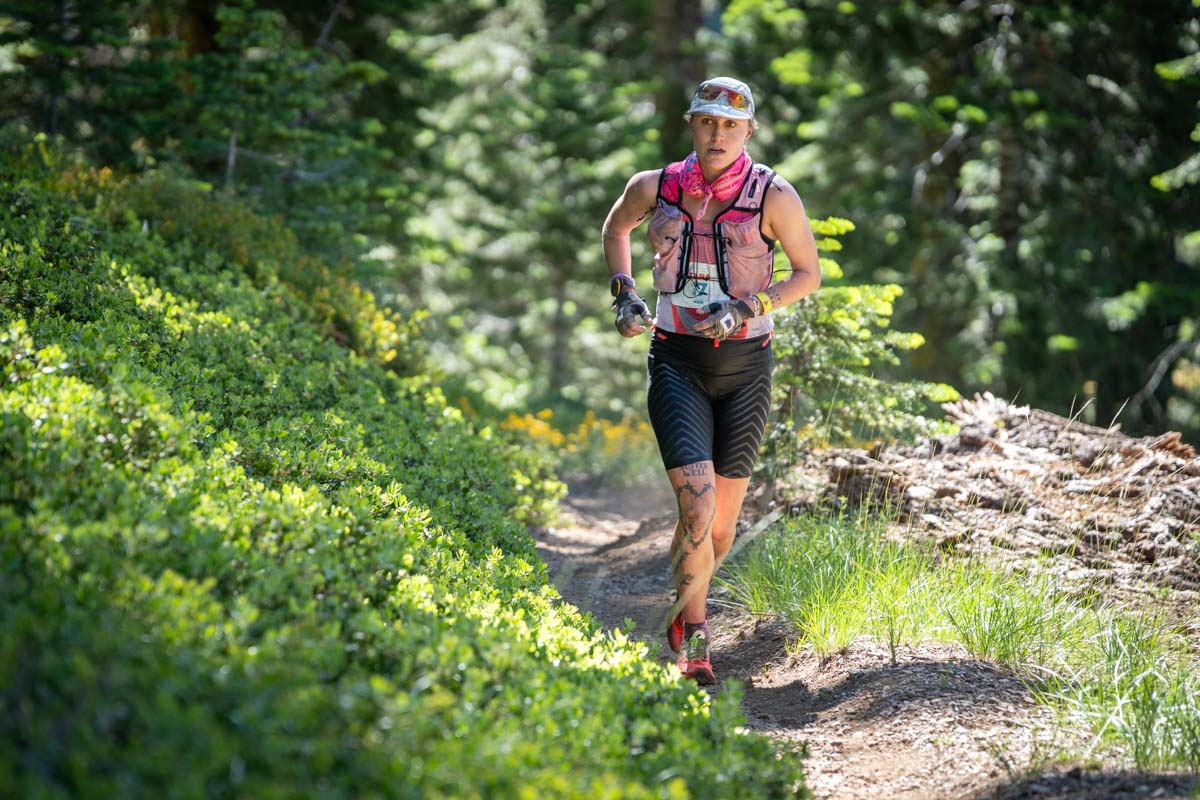
Tara Dower used heat adaptation training to place sixth at the 2026 Western States 100. Photo: iRunFar/Eszter Horanyi
Rising global temperatures and denser racing calendars have made heat management a year-round consideration, and the science behind it has advanced. Athletes are excelling in the heat like never before.
For a long time, runners simply ran in the heat, hoping it would toughen them up and create physiological adaptations. That approach wasn’t wrong, but it was blunt, reactive, and largely left to chance. Now, for many athletes, nothing is left to chance with heat training. There are specific protocols both for active and passive heat training, and adaptations and stresses are closely monitored. While individual adaptations to heat training will always vary, advances in the science behind it have taken much of the mystery out of how to prepare the body to sustain high levels of effort in high temperatures.
While heat training can go a long way to improving performance, it’s always important to treat it with respect and keep the basics of running safely in the heat in mind.
Origins of the Science Behind Heat Training
In 1977, Dr. Bob Lind, the Western States 100 medical director from 1977 until 2006, began collecting data on runners and conducting medical studies at the notoriously hot event, many of them focused on heat. His “90-90-9” plan — which called for running 90 minutes at 90 degrees Fahrenheit (32 Celsius) for at least nine consecutive days, starting about two weeks before race day — became the de facto heat-acclimation protocol for runners.
As the science behind heat acclimation improved, so have the training protocols. Advances in biometric data collection from devices such as core body temperature sensors and sweat tests have further increased the understanding of heat acclimation in the last few years. What was once vague suffering has become deliberate, measurable, and deeply effective. Heat training is no longer just about toughness. It’s a tool for building efficiency, resilience, and stability. Protocols for saunas, hot-water immersion, and treadmill work in heat suits are now regular parts of many athletes’ training regimens.

Ida Nilsson uses water to cool off during the 2025 Western States 100, the event where many early heat training protocols were developed. Photo: iRunFar/Eszter Horanyi
CTS Pro Coach Cliff Pittman explains that heat acclimation works best when viewed as “a specificity tool, not a fitness tool.” In other words, the goal isn’t to replace quality training with exhaustion-inducing heat sessions. It’s to prepare the body for the specific demands of a hot race while protecting the fitness that’s already been built.
Physiological Adaptation to Heat
At its core, heat training rests on a simple but powerful truth: The human body is designed to adapt. When repeatedly exposed to heat stress, it doesn’t merely cope; it upgrades its systems.
One of the biggest adaptations athletes see when heat training is blood plasma volume expansion. Blood plasma — the liquid part of blood made up of more than 90% water — can increase between 4% and 15% within the first week or two of heat training. This extra blood volume increases nutrient and hormone transport and also helps carry red blood cells. Higher blood plasma volume increases blood flow to the skin, helping shunt heat outward for dissipation while still delivering oxygen to working muscles. Sweating also starts earlier, and sweat becomes more dilute, and as a result, cooling starts earlier, and less salt is lost, helping maintain the body’s electrolyte balance for longer (1).
The end result of these adaptations is that core temperature rises more slowly during exercise. A run or race that once resulted in overheating now feels more manageable. The discomfort is still there, but it builds more gradually and doesn’t overwhelm as quickly.

The Western States 100 and similar hot races have led to detailed heat training protocols. Here, Canyon Woodward climbs to Michigan Bluff during the 2026 Western States 100. Photo: iRunFar/Eszter Horanyi
As Dr. Lind hypothesized in the early days of heat adaptation science with his nine-day heat-exposure regimen, current studies show adaptations generally take seven to 14 days of consistent heat exposure — roughly 60 to 90 minutes per session of elevated core temperature — to kick in (2). Fitter athletes often adapt a bit faster, but the process still rewards patience and consistency more than brute force or high intensity. While these gains are impressive, it’s important to note that they’re also temporary. A meta-analysis of heat acclimation decay showed that adaptations start to disappear within a couple of days (3). Fortunately, just one or two thoughtful sessions per week are usually enough to hold onto most of the benefits.
For anyone lining up for hot races, adding heat training to your regimen can mean lower physiological strain, clearer decision-making in the late miles, and fewer full-blown heat meltdowns. But the real gift of heat training is how broadly useful its adaptations are, even in cooler conditions. The expanded plasma volume and improved cardiovascular efficiency often translate into better running economy, smoother pacing, and practical resilience, regardless of the conditions. The key is finding the minimum effective dose that fits your life and your body. Some weeks that might mean a hot bath after an easy run. Other weeks, it could mean specifically taking advantage of hot outdoor temperatures for your runs.
Precision Tools and Passive Techniques
Runners have always found ways to train in the heat, whether through midday runs or wearing extra layers when the forecast doesn’t deliver the desired temperatures. We hope it helps, but we rarely know exactly how much heat stress we’re actually applying.
That uncertainty is what has changed. Athletes now have tools, like wearable core temperature sensors, that allow them to target an effective adaptation range around 101.3 degrees Fahrenheit (38.5 degrees Celsius) (4). More importantly, this shift has clarified a key coaching principle. “The workout comes first,” says Pittman. “The heat exposure is the addition.” His point is not subtle: Heat should support training, not replace it. He argues that deliberately degrading workouts with heat suits or midday sufferfests often compromises the very training stimulus athletes need.
Ultrarunning coach and Certified Mental Performance Coach (CMPC), Neal Palles, echoes this: “I’d rather have an athlete do a steady-state run on the treadmill where it’s 60 degrees Fahrenheit in the basement than 90 degrees Fahrenheit outside, because they’re not going to get a lot out of that steady-state run in 90-degree temperature. They can get more out of that steady-state run and recover better if they do the work first.”

Ruth Croft (left) and Emily Hawgood run in the heat of the 2022 Western States 100. Photo: iRunFar/Bryon Powell
Research backs this approach. Studies on post-exercise hot-water immersion have shown meaningful heat adaptations without adding running volume or sacrificing workout quality (5). Most modern protocols now rely on passive exposure in dry saunas or hot baths once the key training is complete. As Pittman puts it, heat training should be “always layered, always post-exercise, and never instead of training.”
This philosophy is reflected in how many top athletes train. Tara Dower, who set a course record at the 2025 Javelina 100 Mile and placed sixth at the 2026 Western States 100, has long favored passive heat training methods. “I do a lot of passive heat training, a lot of saunas,” she says. “I started getting more deliberate with heat training when I moved to Durango, Colorado, and had consistent access to a sauna.” Lauren Puretz, who has finished the Western States 100 twice and was eighth at the 2025 UTMB, has built a routine over time. “It’s definitely become more intentional over the last couple of years,” she explains. “When I first learned about heat training, I would just turn the heater up and sit in my car after long runs.” Emily Hawgood, an exercise physiologist and professional trail runner who grew up running in Zimbabwe who has finished in the top 10 at Western States five times, blends both approaches depending on the day. “Any heat stimulus is helpful,” she notes. “It depends on what’s already been going on for the day.”

Lauren Puretz climbs her way to eighth place during the 2025 UTMB. Photo: iRunFar/Eszter Horanyi
Palles explains that heat training doesn’t have to be mysterious or complicated. “The most surprising thing is that it’s just so much simpler than what we’re led to believe. You could do passive heat training with a hot tub or a bath, and you don’t have to get dressed up in a lot of clothing and run in the heat.”
Today, athletes preparing for hot ultras blend passive methods with smart environmental exposure while carefully managing recovery. Heat stress is still stress, after all. This balanced approach has made heat acclimation more accessible and sustainable for a wider range of runners.
Heat Training for All Athletes
You don’t need a perfect protocol, specialized equipment, or a race like the Western States 100 on the calendar to benefit from heat training. Modern heat training rewards timing, consistency, and restraint more than volume. Most athletes see meaningful adaptation from a short, focused exposure block: typically two to three weeks leading into a hot race, or lighter, maintained dosages during summer training.
Practically, that often looks simpler than people expect. Five to 10 total post-exercise sessions are enough for many athletes to move the needle: An easy run followed by a hot bath. A post-workout sauna. A few carefully chosen days when the weather itself provides the stimulus. The key is not stacking stress on top of already hard sessions, but layering it after the work is done.
Coaches are increasingly treating heat acclimation as a tightly bound stimulus rather than an open-ended one. “The ceiling is real,” Pittman explains, “and most athletes blow past it chasing more.”
As Pittman puts it, the key is to “protect training quality at all costs.” Optimization is more important than maximization. The principle shows up not just in programming decisions, but in how coaches interpret the role of discomfort itself. “We’re wired to think that suffering equals adaptation,” says Pittman, “but in this case, it genuinely doesn’t.”

Four-time winner of the Western States 100, Jim Walmsley, copes with the heat at mile 94 of the 2024 Western States 100, on his way to winning the race. Photo: iRunFar/Eszter Horanyi
Research suggests that roughly six to ten sessions are often enough to drive meaningful adaptation, while additional exposure may simply accumulate fatigue without adding further benefit.
That constraint matters. The goal is not more exposure; it’s enough exposure, applied cleanly and without interfering with the training that actually drives fitness.
And in practice, that often means doing less than athletes expect, not more. The important part is consistency and listening to the body.
Heat training only succeeds when matched to the individual. “Heat training is very specific,” Palles explains, and not everyone responds to the accepted protocols. When that happens, Palles says, “You have to think about why they’re not responding. Is it because they’re not recovering? What else is going on in their life? What’s their stress load like?” Beyond life stresses, individual physiology can meaningfully influence how a runner responds to heat during training protocols.
For athletes with injury concerns or high life stress, Palles adjusts or shortens the heat stimulus, monitoring heart rate variability, heart rate drift, and how the athlete feels rather than having them conform to a rigid schedule.
Considerations for Athletes with Thyroid Conditions
Individual physiology, including thyroid function, can meaningfully influence both heat tolerance and heat adaptation.
Thyroid hormones play a direct role in metabolism, temperature regulation, and cardiovascular strain. Athletes with hyperthyroidism often have an already elevated baseline metabolic rate, which can increase heat production and raise the risk of overheating. In these cases, shorter exposures, careful monitoring, and medical oversight are essential for heat training.
Hypothyroidism can also result in thermal disregulation, potentially reducing heat dissipation efficiency and increasing recovery variability. Hormonal fluctuations in either direction can complicate the consistency of an athlete’s response to a given heat stimulus.
Because thyroid hormones influence how the body handles heat stress, those with a diagnosed or suspected thyroid issue should work closely with their physician and begin with gentler heat protocols while carefully tracking symptoms. This is not a scenario in which standard protocols scale linearly, because the physiological context itself alters the stress response.
Ultimately, these nuances underscore a broader theme in heat training: Adaptation only works when the stress is matched to the individual. Effective application of heat stress is never a one-size-fits-all approach but is always shaped by context, recovery, and individual response.
The Mental Side of Heat
While there are important physical adaptations that occur during heat training, the mental benefits cannot be ignored. Being hot is rarely comfortable, and learning to sit with that discomfort can strengthen mental resilience. That familiarity with being uncomfortable becomes a powerful asset on race day.
But the real changes run much deeper than simply getting used to feeling hot. According to the central governor theory, first popularized by Tim Noakes and explored in depth by Alex Hutchinson in his book “Endure,” the brain acts as a protective regulator. It constantly monitors potential threats, including rising core temperature, and subconsciously reduces effort or induces fatigue long before the body is in true physiological danger. In hot conditions specifically, this governor can become overly conservative, shutting down performance early to protect you from what it perceives as a life-threatening situation.
Heat training helps recalibrate this system. Repeated exposure to controlled heat stress provides the brain with evidence that elevated core temperatures are survivable. Over time, the governor becomes less reactive and doesn’t hit the panic button quite so soon. When athletes describe heat training as building a deeper kind of confidence, this is likely what they’re experiencing. Heat training is not just physical adaptation; it’s neurological recalibration.

Tara Dower after setting a new course record at the 2025 Javelina 100 Mile. Photo: Howie Stern
Athletes who’ve regularly incorporated heat training into their schedules echo many of the same themes when talking about how it helps them mentally on race day. Puretz highlights both the physical and mental payoff of heat training: “Why wouldn’t you train yourself so you don’t have to tough it out? It becomes something that you’re not suffering through. Instead, you’re adapting to it.” Dower shares a similar perspective, noting the mental edge that comes with consistent preparation: “I definitely feel a lot more confidence going into a hot race than most people would, and that’s because of how much I heat train.” Hawgood emphasizes the value of understanding your own physiology, explaining that “once you’re adapted to [heat], knowing exactly how your body responds to it is probably the best performance advantage for any athlete.”
Palles, who works on both the physical and mental sides of heat training, sees the two as inseparable. “There’s a psychological component. You have to take action to build that evidence. You can’t be afraid to go out in it.” He encourages strategic, moderate runs in the heat paired with acceptance. He explains, “You can say to yourself, ‘This is really uncomfortable. I’m running a lot slower than I want to be, and that’s ok.’ You’re accepting this discomfort in the service of your values.”
His guiding mantra for both training and racing is refreshingly direct: “Do what matters. Keep moving forward. Take the gels. Drink the water. Tune into your effort.”
Smarter, Not Harder
Trail runners have always trained in the heat. What’s changed is not the willingness to suffer, but the precision with which that suffering is applied. And maybe not looking at it as suffering at all.
As performance levels in trail running continue to rise and hot races become more common, heat management has become an increasingly important part of year-round preparation rather than a seasonal afterthought. The key is that athletes who adapt best won’t necessarily be the ones who suffer the most. Increasingly, they’re the ones who understand how to balance stress and recovery without compromising the training that actually builds fitness. In short, training remains the primary driver, and heat is subordinate to it.
That distinction matters most in how and when heat training is introduced to a training regimen. Pittman places it deliberately late in the preparation cycle: “It gets programmed somewhere in the final six to eight weeks before a hot race. Close enough to be relevant, but far enough out that we’re not compressing it all into the taper and sacrificing training quality to get it done.”
The good news is that the human body is remarkably capable of adaptation when given the right stimulus, thoughtful exposure, and adequate recovery. Yet adaptation has clear limits. As Palles puts it, “Keep it simple … more is not better.”
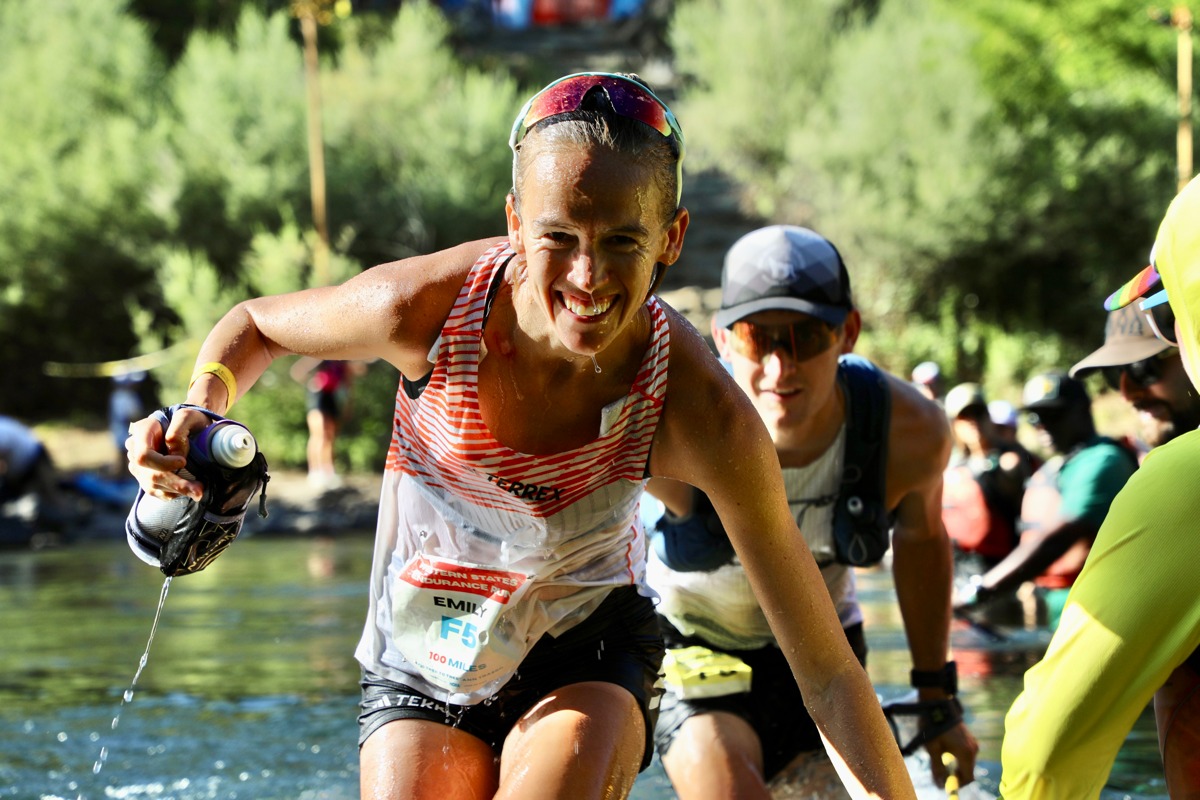
Emily Hawgood enjoying crossing the American River during the 2024 Western States 100. Photo: iRunFar/Bryon Powell
That constraint reframes the entire process. Pittman explains, “Heat training stops being something to accumulate and becomes something to dose. The goal shifts from maximizing stress tolerance to identifying the minimum effective stimulus that produces adaptation without eroding the quality of the work around it.”
He is equally direct about what heat training is not meant to do: “The mindset that more is always better shows up everywhere in ultrarunning, and it’s particularly damaging with heat training because the cost is training quality, which is your primary performance lever.”
This smarter approach is clearly visible in how elite athletes put it into practice. Puretz saw a dramatic payoff at the 2024 Javelina 100 Mile — contested in incredibly hot conditions — after becoming more intentional with heat training. She dropped over an hour from her previous year’s finishing time. Hawgood, who lives near the Western States course and trains regularly in the hot canyons, stresses the importance of respect: “Don’t be scared to go in the middle of the day, but expect that your heart rate’s going to be higher.” Dower keeps her heat training sustainable and body-aware, saying that “heat training should be comfortably challenging … We don’t want to be the hero in the sauna.” She also emphasizes proper hydration: “Bring in water with electrolytes. You want to be replenishing yourself, not depleting yourself.” Dower also notes that her coach, Megan Roche, has reinforced the idea that if the sauna starts feeling too uncomfortable, it’s time to get out.
It’s Not About Toughness
Perhaps the deepest shift in heat training is that it no longer demands that we prove how tough we are. Instead, it asks us to prove how well we’ve prepared and how thoughtfully we’ve calibrated our bodies and minds to meet the conditions rather than simply endure them. In that recalibration, from reaction to readiness, from suffering to strategy, lies the real evolution of modern trail running.
Heat doesn’t reward toughness. It rewards preparation. And the runners who understand that difference aren’t just surviving rising temperatures, they’re the ones pushing the limits of what’s possible with them.
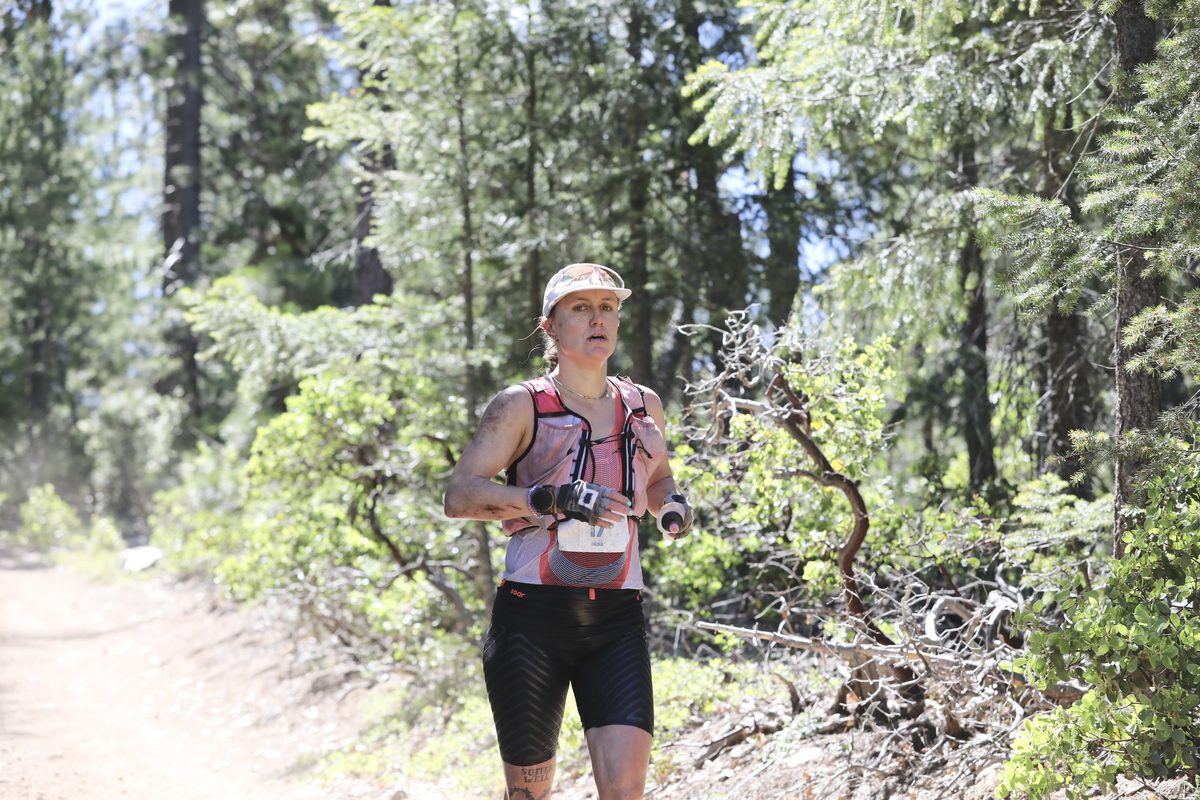
Tara Dower running in eighth at Dusty Corners during the 2026 Western States 100. Photo: iRunFar/Meghan Hicks
Call for Comments
- Have you used a heat-training protocol before a hot race? Did you notice a difference?
Notes/References
- Pryor JL, Johnson EC, Roberts WO, Pryor RR. Application of evidence-based recommendations for heat acclimation: Individual and team sport perspectives. Temperature (Austin). 2018 Oct 13;6(1):37-49. doi: 10.1080/23328940.2018.1516537. PMID: 30906810; PMCID: PMC6422510.
- Daanen, H.A.M., Racinais, S. & Périard, J.D. Heat Acclimation Decay and Re-Induction: A Systematic Review and Meta-Analysis. Sports Med 48, 409–430 (2018). https://doi.org/10.1007/s40279-017-0808-x
- Pryor JL, Johnson EC, Roberts WO, Pryor RR. Application of evidence-based recommendations for heat acclimation: Individual and team sport perspectives. Temperature (Austin). 2018 Oct 13;6(1):37-49. doi: 10.1080/23328940.2018.1516537. PMID: 30906810; PMCID: PMC6422510.
- McIntyre, R. D., Zurawlew, M. J., Oliver, S. J., Cox, A. T., Mee, J. A., & Walsh, N. P. (2021). A comparison of heat acclimation by post-exercise hot water immersion and exercise in the heat. Journal of Science and Medicine in Sport, 24(8), 729–734.