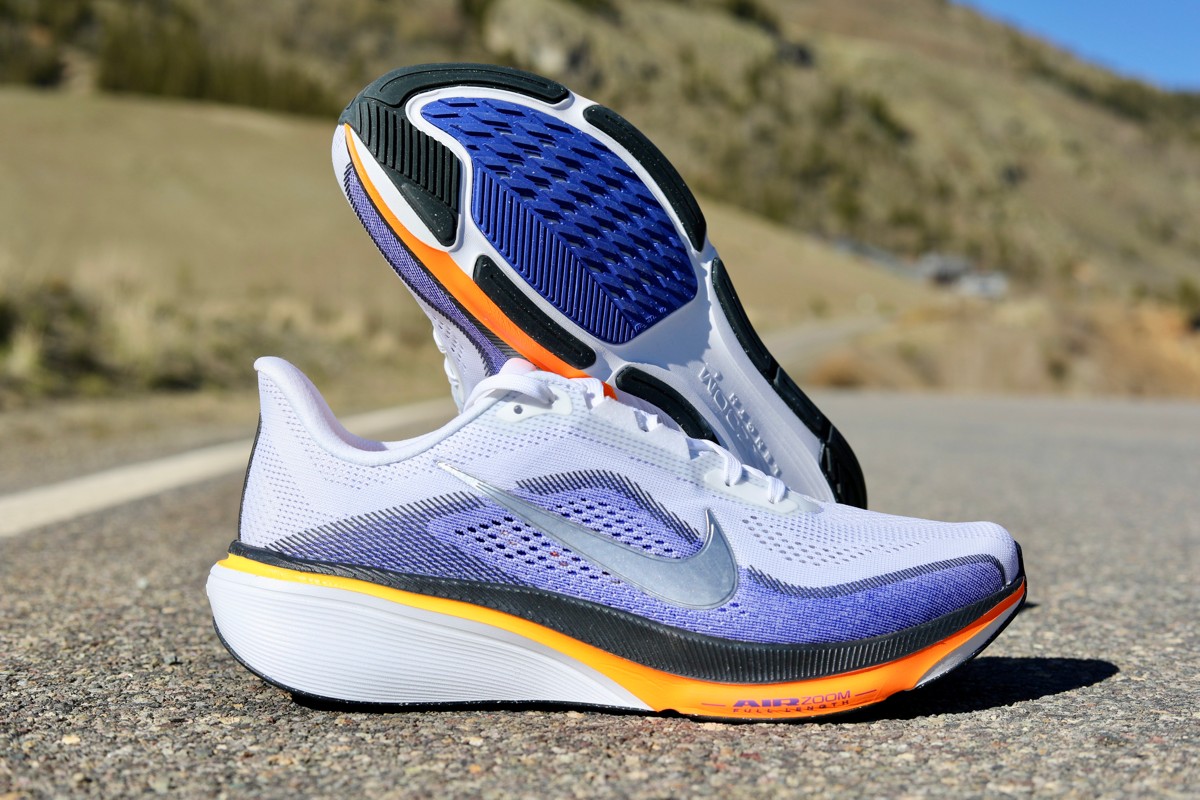
The Nike Pegasus 42. All photos: iRunFar/Bryon Powell
When I received the Nike Pegasus 42 ($145), I admittedly had not run in a Pegasus since I was a teenager. Having debuted in the early 1980s, the model has undergone more updates than I’ve had birthdays — a fact I find both amusing and impressive. It has been a pleasure to reacquaint myself with Pegasus in its 42nd iteration, and it is still a versatile, workhorse of a daily trainer.
Nike began developing its now-iconic waffle outsole in the early 1970s, around the time my dad lived in the same apartment complex as Phil Knight, the co-founder of Nike. Knight sold shoes out of the back of his car, and they ran together on occasion. I can’t help but wonder how much more personally invested I’d be in the many iterations of the Nike Pegasus had Dad kept in contact with his friends.
Fast forward several decades, and the waffle-inspired rubber lives on in the outsole of the Pegasus 42, providing more grip and confidence than exists in your typical road shoe. The 37-millimeter stack height at the heel and 27-millimeters at the forefoot, resulting in a 10-millimeter drop, make it especially appealing for heel strikers. At 10.0 ounces (284 grams) for a U.S. men’s 9, the shoe lands squarely in the middle of the pack among comparable daily trainers.
The shoe’s durability and versatility led iRunFar’s Bryon Powell to use the Peg 41 throughout his course-record-setting win at the Ultra Gobi 400k in October 2024.
There are many reasons the Pegasus has helped shape more than four decades of running shoe development. Let’s dive into the specifics.
Shop the Women's Nike Pegasus 42Shop the Men's Nike Pegasus 42
Nike Pegasus 42 Upper
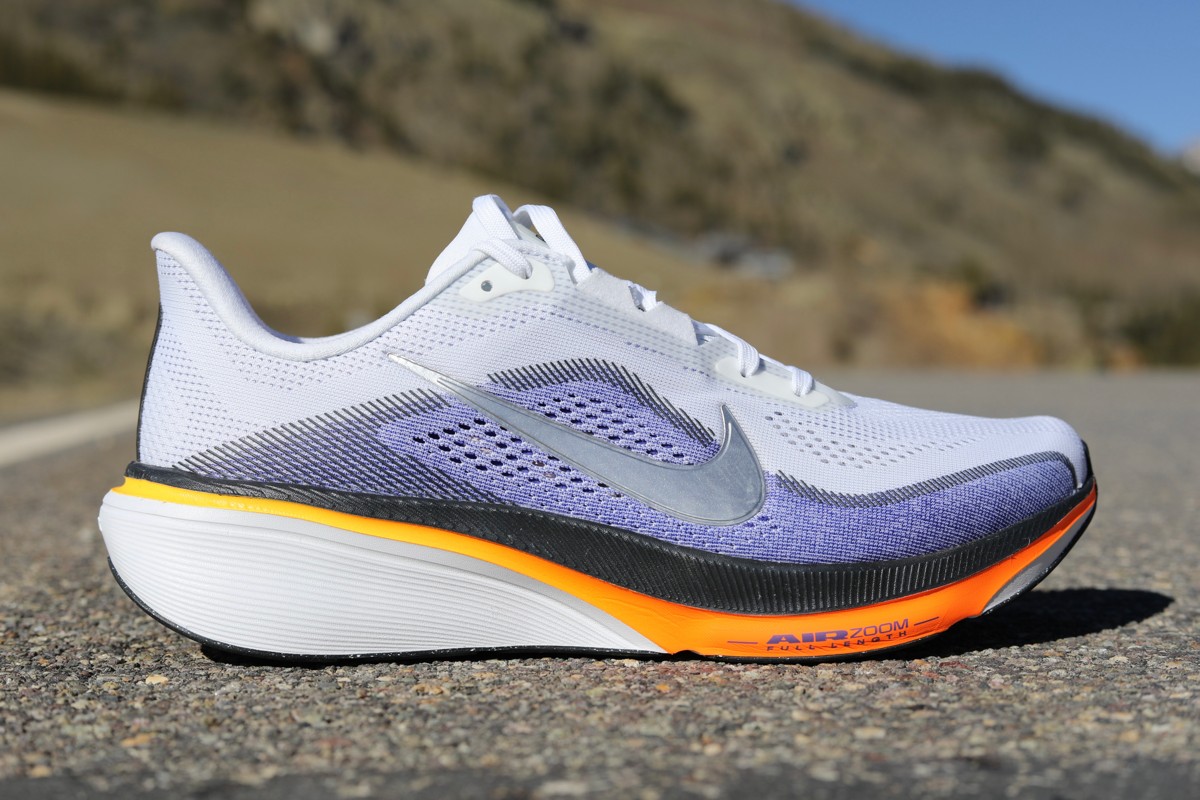
The Nike Pegasus 42 upper can be customized with your unique colorway.
Nike has long succeeded in creating shoes that function as both performance gear and a fashion statement, and the Nike Pegasus 42 is no exception. Runners can customize nearly every aspect of their shoe, from the upper colorway to adding personalized text and goal times on the heel. Nike’s surprisingly immersive design tool is a fun pastime for anyone opinionated about shoe aesthetics.
Style aside, Nike has continued refining the Pegasus upper in other meaningful ways. iRunFar’s testing team has noted noticeable improvements in breathability compared to the Pegasus 40 and earlier versions. The toebox has also continued to evolve. While Nike shoes have historically been known for their narrow fit, increased volume in the forefoot was introduced in the Pegasus 41 (review) and carries through here, with the Pegasus 42 offering even more room through the front of the foot.
As someone with bunions and little tolerance for narrow-fitting shoes that pressure the forefoot, I found the Pegasus 42 fairly accommodating. However, after consecutive double-digit mileage days, I began to feel the effects of a toebox that remains a bit too narrow for my foot anatomy. Nike states that updates to the engineered mesh were intended to improve breathability while also creating a softer, more flexible upper, and those changes likely contribute to the more forgiving feel through the forefoot and toebox. I found the forefoot at least as accommodating if not more so than the Saucony Endorphin Speed 5 (review), though not as unrestricted as the roomier fit of the adidas Adizero Boston 13.
The upper construction itself is more complex than it appears at first. If you look down the sides of the tongue in the Pegasus 42, beneath the outer engineered mesh, the top two lacing eyelets connect to an internal perforated midfoot wrap that extends toward the midsole, creating a secure hold through the arch. An additional innermost mesh layer spans most of the tongue’s length, creating an almost sock-like interior.
Nike Pegasus 42 Midsole
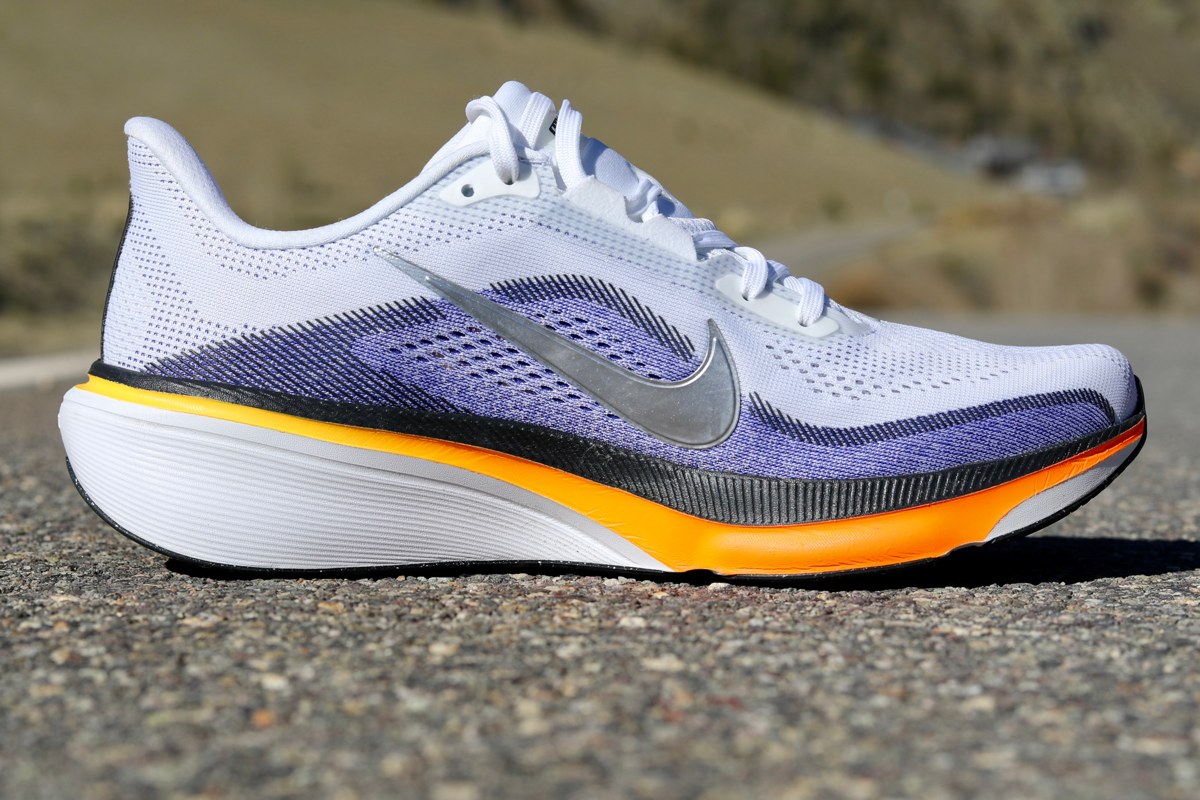
The Nike Pegasus 42 midsole is made of ReactX foam and has a full-length Air Zoom unit.
Key performance features of the Nike Pegasus 42 are housed in the midsole. Nike’s ReactX foam, one of the brand’s premium midsole compounds, debuted in the Pegasus 41 and returns here, offering an energetic ride while reportedly reducing the foam’s carbon footprint compared to previous iterations. That foam is paired with a curved, full-length Air Zoom unit intended to add a sense of propulsion to the shoe’s otherwise well-cushioned ride.
That propulsive feel is noticeably more restrained than what runners may experience in carbon-plated trainers like the Saucony Endorphin Speed 5, with cushioning taking center stage instead. While I think of myself primarily as a trail runner, my Strava account tells a different story with many weekday miles occurring during ungodly early-morning hours on the road. Lately, those miles have included an excessive amount of hill repeats, and the Pegasus 42 has felt particularly well-suited to that workload. The shoe provides enough cushioning to soften the impact of accumulated vert while offering just enough responsiveness to encourage efficient turnover without aggressively forcing the pace.
The 37-millimeter stack height at the heel would welcome the Pegasus 42 to the cushioned daily trainer category, though it doesn’t feel overly bulky or sluggish underfoot. Although its 10-millimeter drop is significantly higher than most shoes in my rotation, I’d be lying if I said it didn’t provide welcome relief when my Achilles occasionally protests long days in lower-drop trail shoes.
Nike Pegasus 42 Outsole
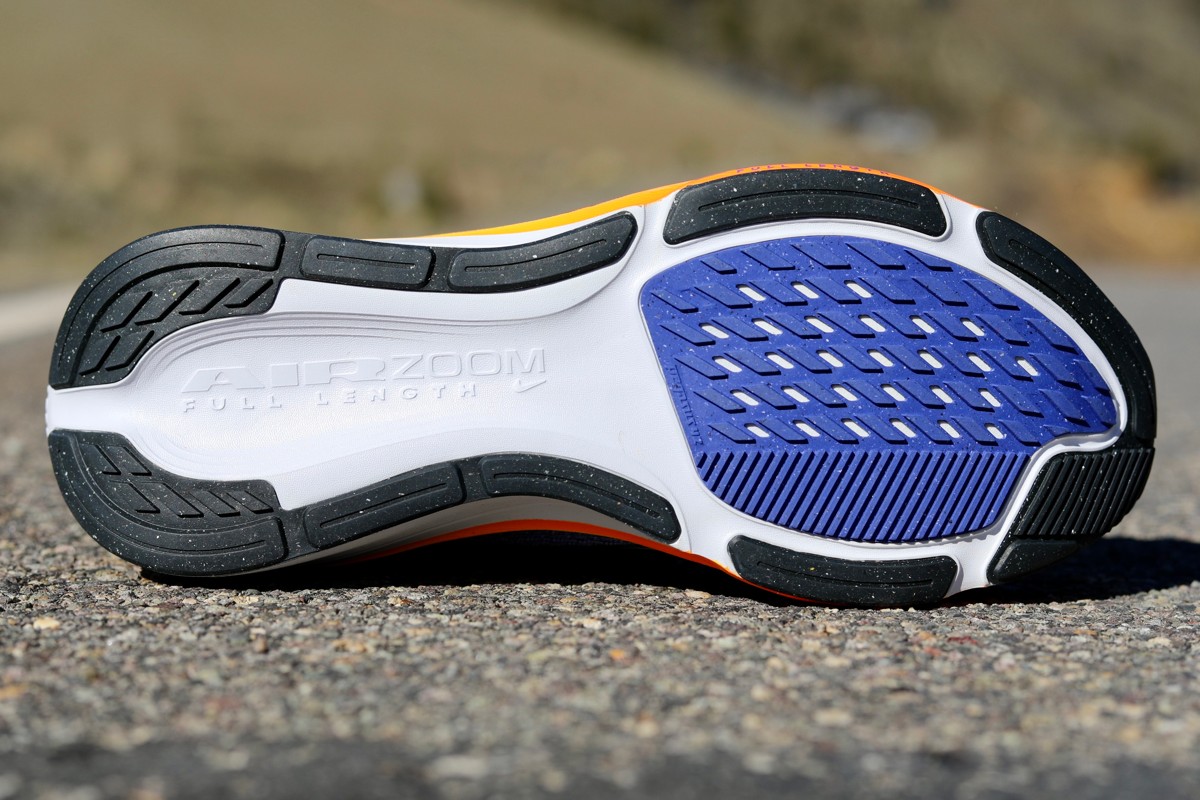
The Nike Pegasus 42’s waffle-inspired outsole.
The Nike Pegasus 42 sports the company’s waffle-inspired outsole under the central forefoot, with high-abrasion rubber along the perimeter to enhance durability and grip. Flex grooves help maintain a natural level of flexibility through the stride. Several iRunFar team members have tested this shoe, and in our opinion, the outsole has been what sets the Pegasus apart from other top road trainers like the Hoka Clifton 10 (review), Brooks Ghost, and various New Balance Fresh Foam models. I regularly run a few miles of pavement en route to dirt roads, where decomposed granite can make for a slippery surface in typical road shoes. The Pegasus 42 handles this mix well from both a traction and resilience standpoint. Once the trail transitions from relatively smooth, dry dirt to more technical or muddy terrain, it starts to feel a bit out of its element. It’s worth noting that the waffle outsole can’t compete with the deeper lugs of a dedicated trail shoe once the trail gets wet. Overall, however, this shoe shines as a jack-of-all-trades option, especially when my routes cross various surfaces, or I’m trying to travel with a single pair of running shoes.
Nike Pegasus 42 Overall Impressions
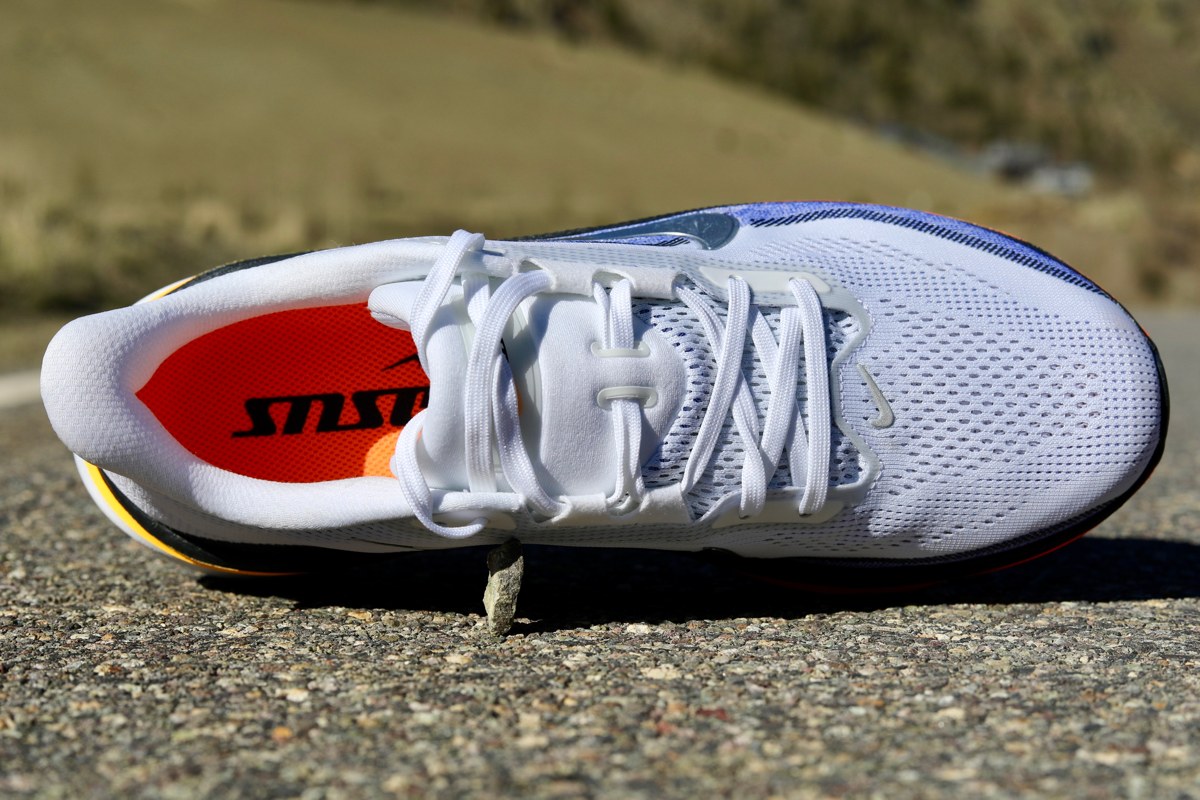
A top view of the Nike Pegasus 42.
Unlike some newer or less familiar shoes I’ve tested in recent years, the Nike Pegasus 42 doesn’t require much introduction. Nike has long proven it knows how to build a capable, well-rounded trainer. Between its performance pedigree, cultural footprint (perhaps especially for us Oregonians), and consistent design evolution, the Pegasus remains a benchmark in the workhorse daily trainer category.
At a competitive price, the Pegasus 42 delivers a refined blend of Nike’s premium materials and technologies, balancing cushioning, versatility, durability, and a lively ride. While runners with especially prominent bunions or naturally wide feet will appreciate the increased forefoot volume, they may still find the fit narrower than some competitors.
The Pegasus 42 is offered in a range of attractive colorways. For those with a bit of extra time and roughly $20 to spare, Nike’s custom design tool is worth exploring, allowing for a fully personalized build. I hope my own descent down that rabbit hole yields a nostalgic Father’s Day gift capable of transporting my dad straight back to 1970s Portland and the Dunaway Track — just with better shoes.
Shop the Women's Nike Pegasus 42Shop the Men's Nike Pegasus 42
Call for Comments
- Have you run in the Nike Pegasus 42? What did you think?
- Do you have a history with the Pegasus line? Why do you love it?
Our Favorite Nike Running Shoes
Learn more about our current favorite Nike shoes in our Best Nike Running Shoes guide.