For most of us, running is our favorite activity. We cross-train with cycling, swimming, elliptical training, or aqua jogging when necessary, but they’re often our distant second options.
When a running injury strikes — such as sharp knee pain, an inflamed Achilles, or hobbling plantar foot soreness — cross-training becomes our way to maintain fitness while resting and healing. Intent on preserving fitness, many of us cross-train with heroic diligence, all with the promise of soon returning to our true love of two-footed adventures over hill and dale.

Cross-training can rarely compare to our true love: running. Photo: iRunFar/Eszter Horanyi
But what if, despite doing all the right things, including stretching, strengthening, icing, heating, resting, and cross-training, the ache, stiffness, and pain linger longer than any internet article suggests they should? What if the cross-training is actually the thing slowing your recovery and keeping you from returning to running?
In this article, we’ll explore the potential pitfalls of cross-training during injury recovery, the key signs that the cross-training itself might be prolonging your pain, and practical strategies to keep cross-training from sabotaging your return to running.
Hidden Stressors
Few runners cross-train through pain. If they feel increased discomfort in the injured area during a spin bike, elliptical, or pool session, most will promptly stop, either switching activities or resting completely. Yet it’s entirely possible to overwork sensitive tissue while cross-training without feeling any symptoms during the session, only to experience pain later when trying to run.
This perfectly illustrates one of my favorite clinical sayings: When you feel pain isn’t always what causes it.

Hidden stressors can delay a return to running. Photo: iRunFar/Eszter Horanyi
For many injured runners, the prolonged and unique loading of cross-training is low enough to avoid generating symptoms during the activity, yet high enough to perpetuate tissue sensitivity. This is particularly true for injured connective tissue, which heals slowly and requires a delicate balance of remodeling stress and rest.
Cross-training options — like cycling, swimming, elliptical training, or pool running — are non-impact and almost always lower in intensity than running. As a result, you can often complete your sessions symptom-free. However, the activity can still be stressful enough to maintain a low to moderate level of tissue irritation, quietly feeding the problem you’re trying to resolve.
Then, when you attempt to run, an activity with significantly higher loading forces, those forces exceed the pain threshold for the sensitive tissue. We then blame the running, when really, the injured area has been sneakily overloaded by cross-training.
How does this happen?
Types of Subtle Tissue Overload
Cross-training may feel safe because it’s low-impact, but it can still overload injured tissues in subtle but significant ways. Here are the three primary categories of overload that often fly under the radar.
Focal Mechanical Overload
Mechanical overload occurs when specific cross-training modalities apply stress to tissues in ways that running does not. Certain cross-training activities, even at low intensities, place disproportionately high forces on specific joints and tissues:
- Cycling can drive higher relative forces through the knees and hip flexors.
- The elliptical often loads the lower legs and calves more intensely and relentlessly than running.
- Swimming and pool running can strain the hips, hamstrings, and lumbar spine.
Unnatural Movement Overload
Running and walking are reciprocal activities: one leg bears weight while the other swings; one hip, knee, and ankle flexes while the other extends. This reciprocal, on-off rhythm gives tissues brief moments of rest and recovery with every stride.
Many cross-training modalities remove this reciprocal unloading and provide no break to certain tissues:
- The hip flexors stay constantly compressed and active during cycling.
- The lower legs and feet remain in sustained plantarflexion on the elliptical, never getting a true off-loading phase.

Running has reciprocal loading and unloading that many cross-training activities lack. Photo: iRunFar/Eszter Horanyi
Chemical Overload
Even when mechanical stress is relatively low, many injured runners push the intensity during cross-training, believing it’s safe because it’s non-impact. Excessively high-intensity workouts on the bike, elliptical, or pool can create significant metabolic and hormonal stress in tissues, prolonging tissue strain and preventing recovery.
Keys to Cross-Training
At this point, you might be ready to swear off cross-training forever. But it’s not all bad. The truth is that certain cross-training activities tend to aggravate specific areas of the body more than others.
Next, we examine the most common cross-training options and highlight which body areas are most prone to sensitization with each. Then we’ll share practical recommendations on how to use cross-training effectively so you can stay fit while giving your injured tissues the real break they need.

iRunFar’s Eszter Horanyi demonstrating that not all cross-training is bad. Photo: iRunFar/Scott Morris
Cross-Training Modalities
Each of the four most common cross-training modalities used by runners can potentially overload and strain unique areas of the body.
Elliptical Machine
- Foot, Ankle, and Lower Leg: Most elliptical trainers cause constant plantarflexion, with the toes and feet pushing into the pedals the entire time. Unlike running, there is no off-loading phase for the calves and feet. It’s like holding a standing heel raise for the entire session. This sustained tension commonly irritates the plantar fascia, Achilles tendons, and calves, and is a major culprit in delaying recovery in runners with lower leg pain.
Cycling
- Knees: Upright stationary or outdoor road cycling is inherently more quad-dominant than running, placing more load into the knee joint and through the quad-patella complex. This is often made worse by higher-intensity cycling, which runners often do to match the heart rate of running. High volumes of cycling can overload and sensitize the anterior knee and patellar tendon.
- Hip Flexors: Both the sustained flexed position and upward pulling motion of a clipped-in or caged cycling set-up can irritate the hip flexors.
Swimming and Aqua Jogging
- Low Back: Freestyle swimming and deep-water jogging can place the spine in extension for prolonged periods, which can aggravate the lumbar spine in those with low back pain.
- Hip Flexors: Fast or resisted deep-water jogging demands repeated, powerful hip flexion under buoyancy resistance, which can overwork and sensitize the hip flexors.
Stair Climber and Incline Treadmill
- Knees: The tall steps of a stair climber machine or a steep incline on a treadmill can potentially overload the anterior knee, especially if one lacks a hip-hinged position. Like cycling, this creates significant stress through the kneecap and patellar tendon.
- Achilles and Ankle: High steps or steep inclines force the ankle into excessive dorsiflexion with the toes pulled up on every stride, potentially overloading the Achilles tendon and calf complex.
If your injured area falls under any of these modalities, it is best to choose another option! Or, simply rest.
Four Signs That Cross-Training Is Prolonging Your Injury
There are four key signs that your usually pain-free cross-training may be the hidden culprit preventing your return to running. The good news is that once you adjust, you’re likely to make real progress.
Lack of Improvement After Acute Injury
After an acute injury, you rest from running, but immediately jump into cross-training. Injury symptoms may feel manageable or even absent during cross-training sessions, but you find you’re consistently sore afterward — either the same day or the next morning — and you see no meaningful improvement in pain, stiffness, or function from day to day or week to week.
Unable to Return to Running in Chronic Phase
You’ve been resting from running for several weeks or months and have minimal symptoms during daily life and only mild discomfort during cross-training, yet every attempt to run results in pain during the run, increased pain afterward, or you’re simply unable to progress past very small volumes. In short, you can handle everything except running, and running never seems to get better.

If you’re doing all the stretching and mobility and not getting over an injury, cross-training may be the culprit. Photo: iRunFar/Meghan Hicks
You’re Doing Everything Else Right
You’re covering all the important recovery bases with a good mobility plan, a robust strength program, and efficient movement patterns, and you’re not overdoing volume or intensity on any activity. Despite all of this, you’re still stuck in pain or stalled in your return to running.
Big Volumes With Minimal Diversification
You’re trying to maintain fitness by doing high volumes of cross-training, over an hour a day or more, or you are training the same modality — bike, elliptical, pool, or treadmill — day after day.
Best Practices for Cross Training
Even if your recovery is progressing more slowly than expected, you don’t have to give up cross-training entirely. Here are three key recommendations for using cross-training to more strategically support your recovery.
Less is More
Especially during the acute phase of injury, reducing your overall cross-training volume and intensity can give tissues the real rest they need. Many runners actually recover faster by doing significantly less aerobic cross-training than they expect.
Diversify
Instead of repeating the same cross-training activity day after day, rotate between modalities. This spreads the mechanical load across different tissues and movement patterns, lowering the risk of sensitizing any single area.
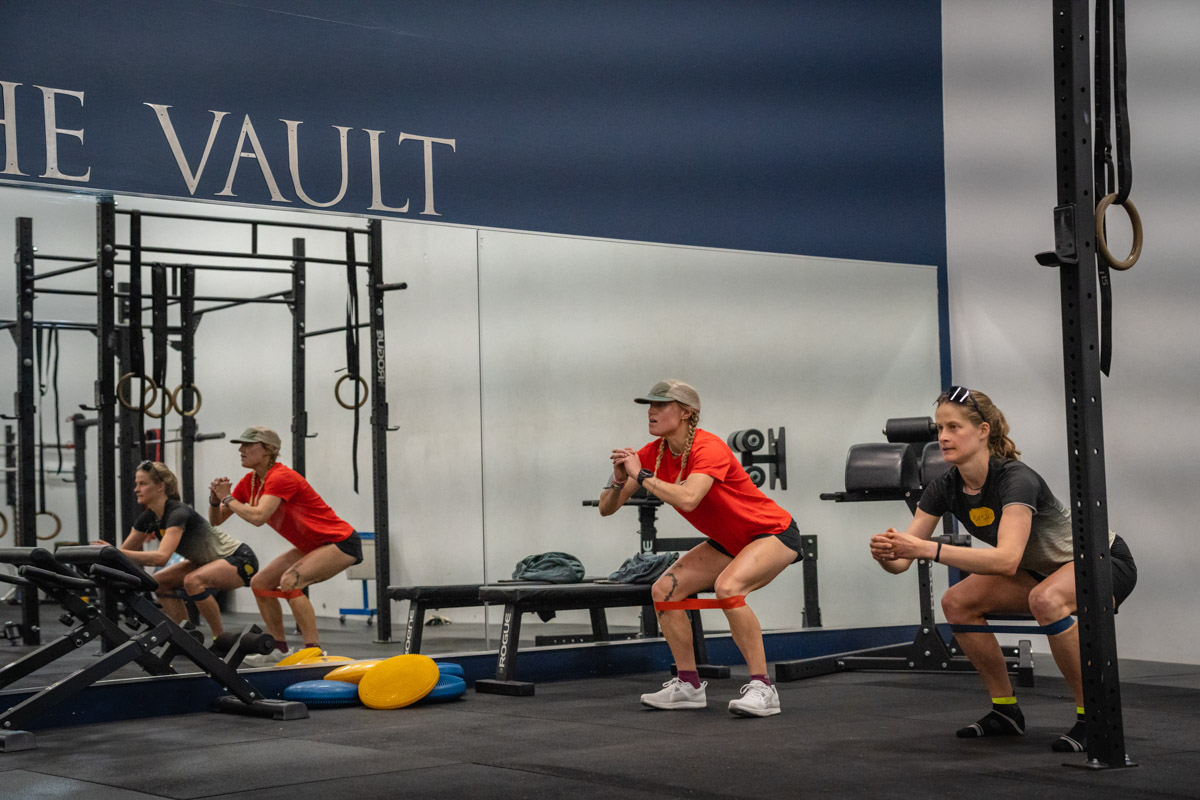
Switching to strength and mobility work instead of aerobic cross-training can help speed a return to running. Photo: iRunFar/Eszter Horanyi
When in Doubt, Stop
If you’re unsure whether your cross-training is helping or hurting, cut back by 50% to 100% and shift your focus to non-aerobic, non-repetitive activities such as mobility work and strength training. This often provides the reset your body needs, allowing inflammation to settle and healing to progress.
Final Thoughts
Cross-training can be a valuable tool for staying fit during an injury, but when used too aggressively or repetitively, it can become the hidden factor that prolongs pain and delays your return to running.
You can avoid this cruel irony by recognizing the subtle overloads cross-training can create, watching for the key signs of trouble, and applying smarter strategies. Then you can break free from the injury cycle, leave the other activities behind, and return to running!

In the end, we all just want to return to running as soon as possible! Photo: iRunFar/Eszter Horanyi
Call for Comments
- Have you ever found that cross-training prolonged a running injury?
- What other modes of cross-training do you use when recovering from a running injury?