If you are reading this hot off the press, it’s the eve of the 2026 Western States 100, a 100-mile footrace from Olympic Valley, California, to Auburn, California. I’m writing this roughly one week out, so assuming there weren’t any catastrophes in the final week of taper, I’ll be lacing up my shoes tomorrow morning and hopping on the start line. I’ve run a lot of races in my life, but never this one, and I’d be lying if I said it didn’t feel special.

Zach Miller finishing second at the 2026 Canyons 100k to secure his spot for at the Western States 100. Photo: Nick Presniakov
If you ask me what’s been on my mind ahead of the race, I could rattle off a list. I think about my training and how I’m feeling. I think about trying to stay calm. I think about food, mainly that I eat enough of it. I think about my wife, Jess, and my desire to be a good partner to her amidst all of the race stuff. I think about the long drive to get to the race. I think about training and trying to maintain heat acclimatization without overcooking myself. I think about my race day fueling and hydration strategy. And of course, I think about whether to race with a belt, a vest, or a mix of the two.
But, in addition to all of these things, I think about boxes.
The Box Principle
Growing up in Pennsylvania, we weren’t allowed to wear watches for track and cross-country races. Maybe it was seen as jewelry, which I think was banned, or maybe it was thought to give students who owned them an unfair advantage. At the time, the rule felt normal because it was all that I knew. Then I went to college in New York State, and I learned that the rules of running weren’t universal. I particularly remember one of my college teammates from Washington expressing how stupid he thought the Pennsylvania watch rule was. His comment likely made me pause and think about why that rule existed in the first place.
The watch rule is something I would now categorize as a box principle: something that boxes you in, defining what is allowed and what isn’t. It’s very black and white. Sometimes it creates what feels like a definition of morality: This is good; that is bad. In a way, the straightforward nature of it feels good.
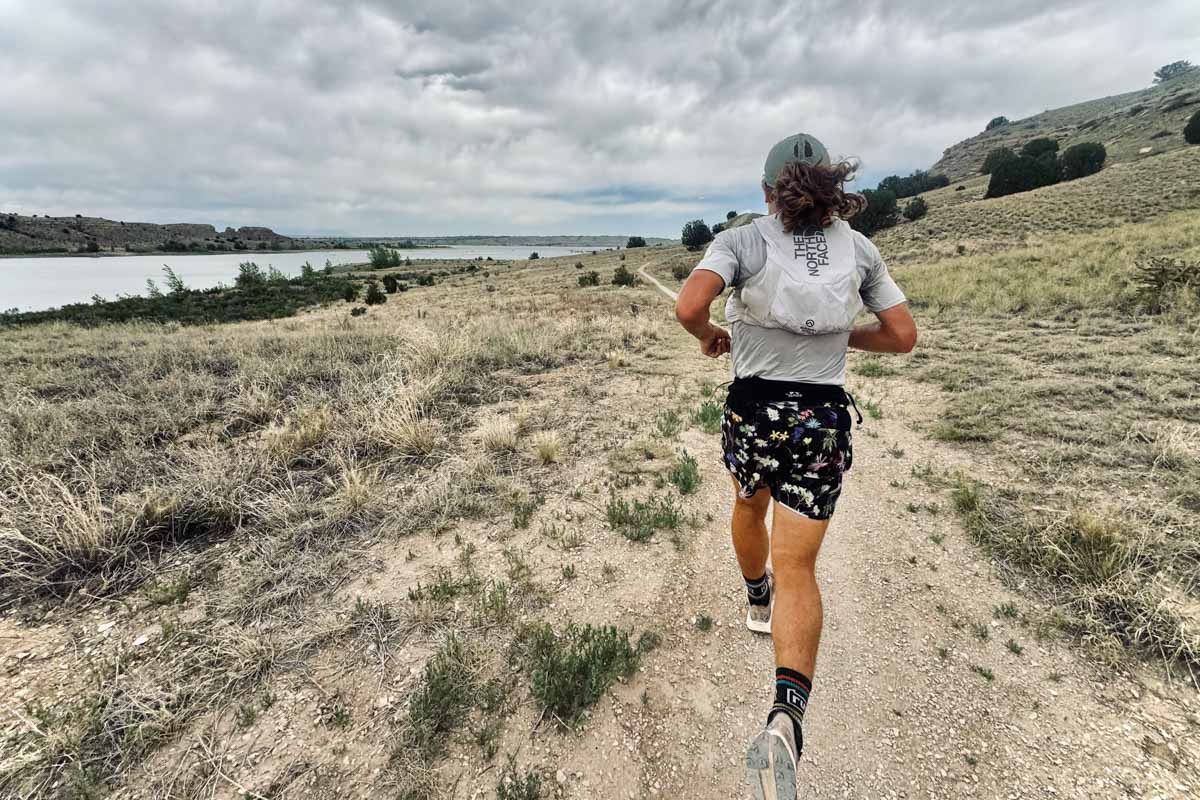
Zach Miller putting the final touches on his 2026 Western States 100 training. Photo: Peter Maksimow
I’m 37 now, and when I look back at my adolescent years, I see a lot of boxes. This is logical, as young children aren’t exactly known for their ability to think rationally and make responsible decisions. They can use strong guidelines.
As we get older and our decision-making skills improve, some of the boxes start to disappear, but we still adhere to societal guidelines. If we are careful about the boxes we keep around, I think they can be productive, but keeping too many can be crippling.
Life doesn’t fit in a rigid, cut-and-dry box. While they try to make complex things simple, they fail because the world isn’t that black-and-white. It’s complex.
One day, we become adults and realize that all those boxes we grew up with don’t always work very well out here in the real world. Life calls for us to think critically and to act with thoughtfulness and care. Not everything will be spelled out for us, and we won’t always have some box telling us what to do. A lot of the time, we’ll have to figure it out on our own.
The Boxes of the Western States 100
Races rely quite heavily on box principles, otherwise known as rules. They have extensive documents detailing what you can and cannot do. Some races have many rules, others have fewer.
Races that have less, like Western States, result in a race day with a bit of wiggle room, which can lead to interesting tactics. On the one hand, the loose nature of the race makes it more dynamic, fun, and rewarding of creativity — a really fun aspect of Western States. On the other hand, it can pose a challenge to maintaining a fair and level playing field.
Everyone is still playing the game under the same set of rules, but the bigger the box, the more room there is for outside variables to come into play. And the more room there is for that, the greater chance there is for things other than the abilities and skills of the athletes to influence the outcome of the race.

Zach Miller testing an kid-pool ice bath ahead of the 2026 Western States 100. Photo: Peter Maksimow`
Now, of course, the race organization isn’t going to control every single variable. That would be ridiculous. Just imagine a race so strict that they dictate the specific types of nutrition you can use, maybe even the amounts. Or maybe they police the model of shoe you can wear, not just the stack height. I don’t think this is what we want. To me, such regulations would be a step too far.
But are there other aspects to a race that can create an unfair situation that are worth regulating a bit more closely?
Crews of Western States
Take crew size as an example. While UTMB allows one crew member inside each aid station, Western States only limits it to one crew vehicle per crew station — except at Foresthill, where any number of vehicles are allowed. On one hand, unlimited crew numbers are fun. It turns the race into a party and lets more people join in on the fun. On the other hand, it makes it hard to maintain a level playing field.
While in theory, everyone is allowed to bring a massive, Formula 1-style pit crew, not everyone has the resources to put one together. Should a runner be disadvantaged because they don’t have the means to be catered to by so many? And yes, it is possible for a smaller crew to be equally, or even more, effective, but having some rules to govern things helps rein in potential disparities.
More elaborate crews with greater resources can offer a unique form of crewing unavailable to those with fewer resources. In recent years, we have seen crews adopt baby pools filled with ice so a runner can dunk themselves in cold water during the hot race. In a way, it’s awesome that people are getting creative and finding new ways to give their runners an edge.
The problem-solver in me is on board, but what about the runner who does not have access to such things? Are we ok with having a large crew and the resources that they bring, playing such a potentially pivotal role in a race? Do we want a race that embraces both the athlete’s ability and the crew’s power, or do we wish to box it in to make it mostly a test of an athlete’s fitness and skills, not their resources? There will always be some of each, but how far do we wish to tip the scales, and in which direction?
Examining My Personal Western States Boxes
As I head into Western States, I keep thinking about this dynamic. All I have to do to run a clean, legal race is to adhere to the rules. But as a human being, if I feel that the rules leave room for a less-than-even playing field, do I make the effort to get an edge on my competition, or do I hold myself to a different standard and opt not to take advantage?
In a sense, it’s a bit like high-school cross country. If the reason for the watch rule was that it gave runners who could afford them an unfair advantage, would I use a watch if I could, or would I abstain to keep things fair?

Zach Miller pondering his approach to the 2026 Western States 100. Photo: Geoff Burns
I suppose this sort of dynamic is what occurs when we live outside of the box. Box life makes things easy, safe, and predictable. We don’t have to think as much. We just follow the rules. Life outside of the box, or in a less confining box, can be harder. It requires us to think and ask big questions. It begs us to consider what is just and fair. It doesn’t tell us what to do. It leaves it up to us. But just because it is harder doesn’t mean it is worse. In fact, I would argue that it is a fuller, more mature way to live.
As I write this, I’m still not sure how I will approach Western States. Will I take advantage of every little thing I can do to get an edge, or will I choose to leave my figurative watch at home, opting instead for a strategy that creates a more level playing field for all?
To be honest, I am pulled by both sides. I don’t think that I need to have this all sorted out in my head come race day, but I think this dynamic is something we should think about as we go forward in this developing sport. Is it up to the race to make a fair box, or the athlete to make a fair choice?
Call for Comments
- Do you think it’s up to the race to set rigid rules to level the playing field?
- Are there other ways to make for a more level playing field?