In late August 2025, Lotti Brinks posted a video on Instagram of her mountain biking off a giant jump — a road gap at one of the Portes du Soleil mountain bike parks in France, to be specific. A week later, she placed sixth at the 100-kilometer CCC, part of the globally competitive UTMB Mont Blanc festival, also in France. Neither act is something most people could ever dream of doing.
Nor is lining up for the 2026 Western States 100 with the goal of running at the front of the field. Through all this, she holds down a full-time marketing job at a software company. At first glance, it seems unlikely that the same person is doing all of these things at once.
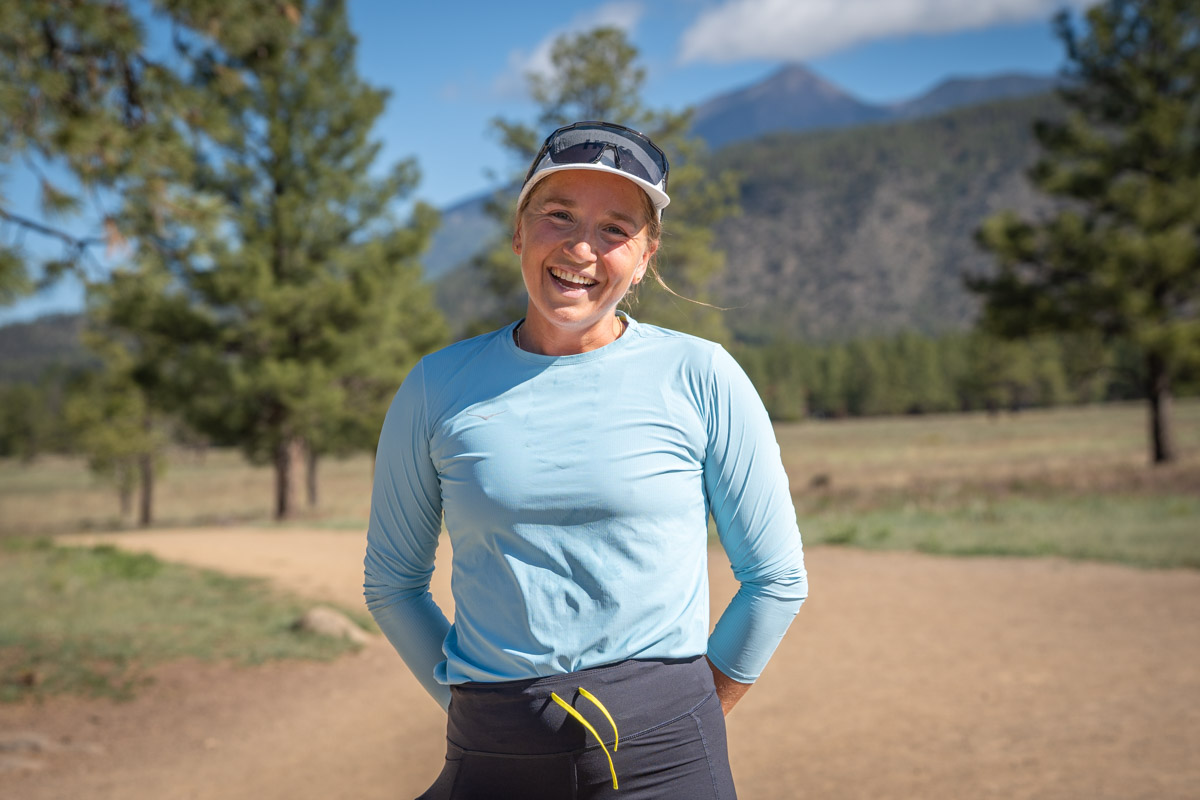
Lotti Brinks preparing for the 2026 Western States 100 on the outskirts of Flagstaff, Arizona. All photos iRunFar/Eszter Horanyi unless otherwise noted.
Many of Brinks’s running friends don’t know much about her mountain biking. Many of her mountain bike friends don’t know much about running. It’s probably fair to assume that her work colleagues aren’t aware of either. But Brinks lives comfortably across all these worlds, riding the give-and-take of multiple passions with an efficiency hinting of her German background. While most runners shy away from other sports that could derail their season with a major injury, Brinks has a more holistic view of life. “At the end of the day, I want to live a life worth living — that’s fun and fulfills me. And that involves multiple things, not just running.” It also requires a lot of efficiency to get things done.
Brinks, who joined HOKA at the start of 2025, deftly balances professionalism and passion, a combination that has allowed her to find success in running not through monk-like dedication to the sport, but through finding joy in all aspects of her life. “There is a big difference between caring and taking things too seriously,” she says. “I care very much about my running. But I don’t think we need to take it too seriously.”
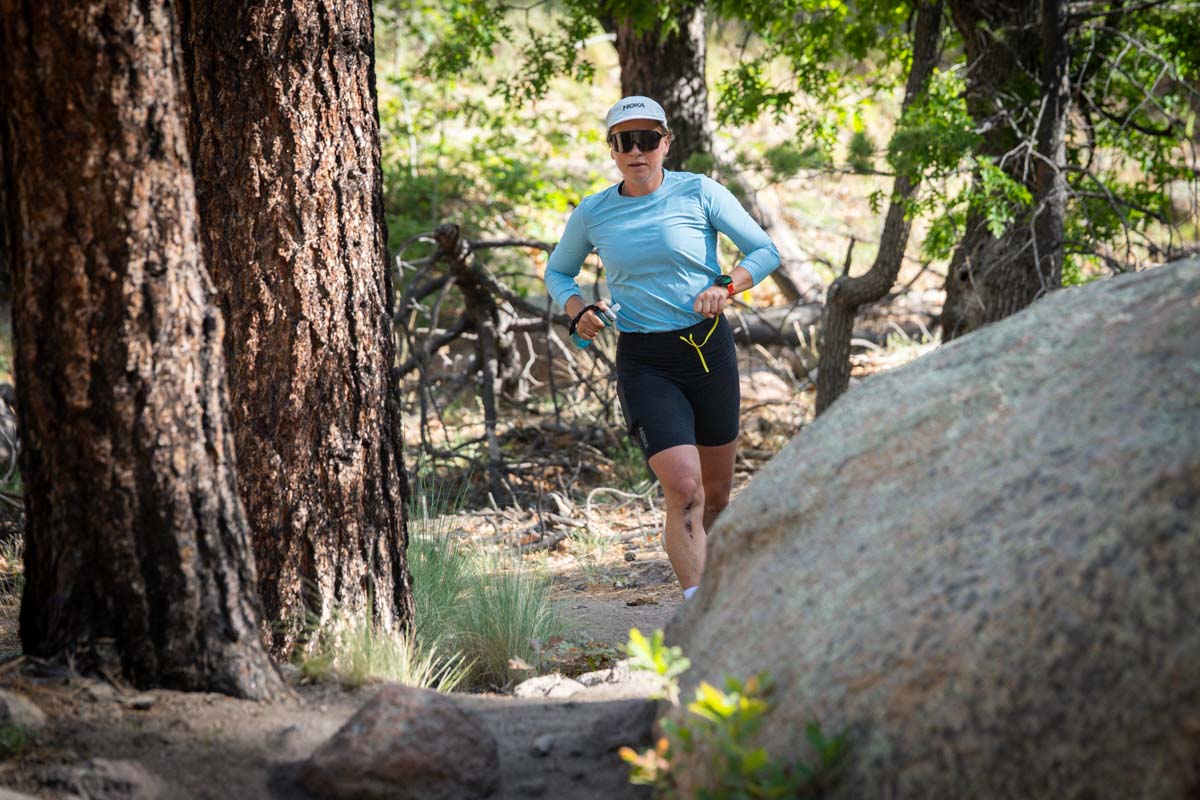
Brinks runs on the trails outside of Flagstaff in preparation for the 2026 Western States 100.
When Brinks lines up for the Western States 100 shortly, an entry she only secured in March via a Golden Ticket — which rolled down from her teammate, Sylvia Nordskar, who placed second at the 2025 CCC — she wants to win it. It’s with full seriousness that she says, “Every professional runner wants to win Western States. That’s not a secret. I don’t think it’s a crazy thing to want to win States.” She pauses, and with a bit of levity, adds, “If that’s realistic, that’s a whole other question.”
But she’s going to try.
HOKA Western States 100 Training Camp
A few weeks out from the start of Western States, Brinks is in Flagstaff, Arizona, for a HOKA training camp. She’s sharing a house on the outskirts of town with Martyna Młynarczyk of Poland, who is also training for Western. Her husband, Aaron Brinks, and their dog, Atlas, are also there for the three-week training stint. The relatively unstructured camp allows Brinks to take advantage of Flagstaff’s 7,000-foot elevation, which is higher than her home in Boise, Idaho, and to spend time with her HOKA teammates. Adam Peterman, Hayden Hawks, Jim Walmsley, and Hans Troyer are also in town and are all training for Western States.
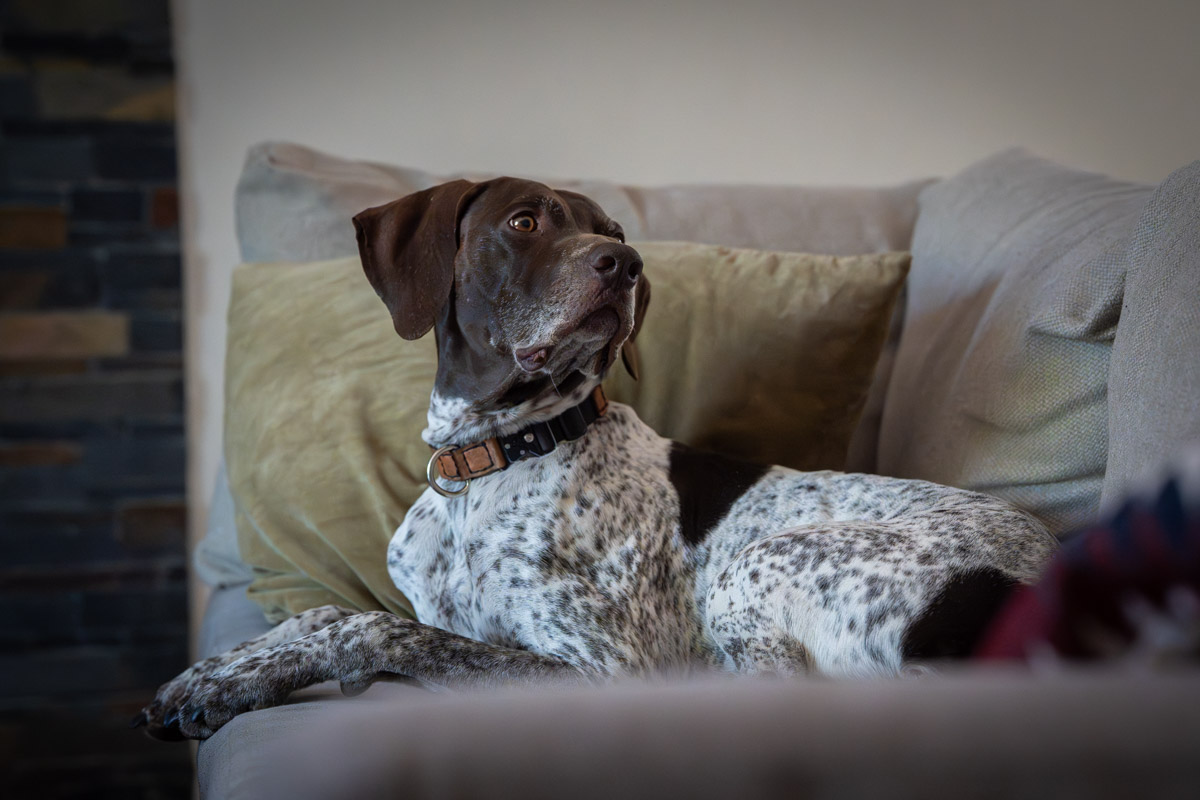
Atlas supervises the HOKA training camp from the couch.
Atlas, a German short-haired pointer, is the official greeting committee at the HOKA house at 6:30 on a Thursday morning. Brinks makes herself a coffee and puts a chocolate croissant in the toaster oven as she prepares for her run. Młynarczyk is on a call with her coach at the kitchen table. Atlas quickly loses interest in the goings-on and takes up his official position on the couch. It feels business-as-usual in the house; they are there to do a job: training.
With coffee made, Brinks attends to the croissant, which has now started releasing curls of smoke from the toaster oven. “I always do this,” she admits, seemingly half resigned and half amused, taking the slightly charred pastry and coffee over to the couch to go over today’s running route. Efficiency and intention have their limits, and sometimes things go up in smoke.
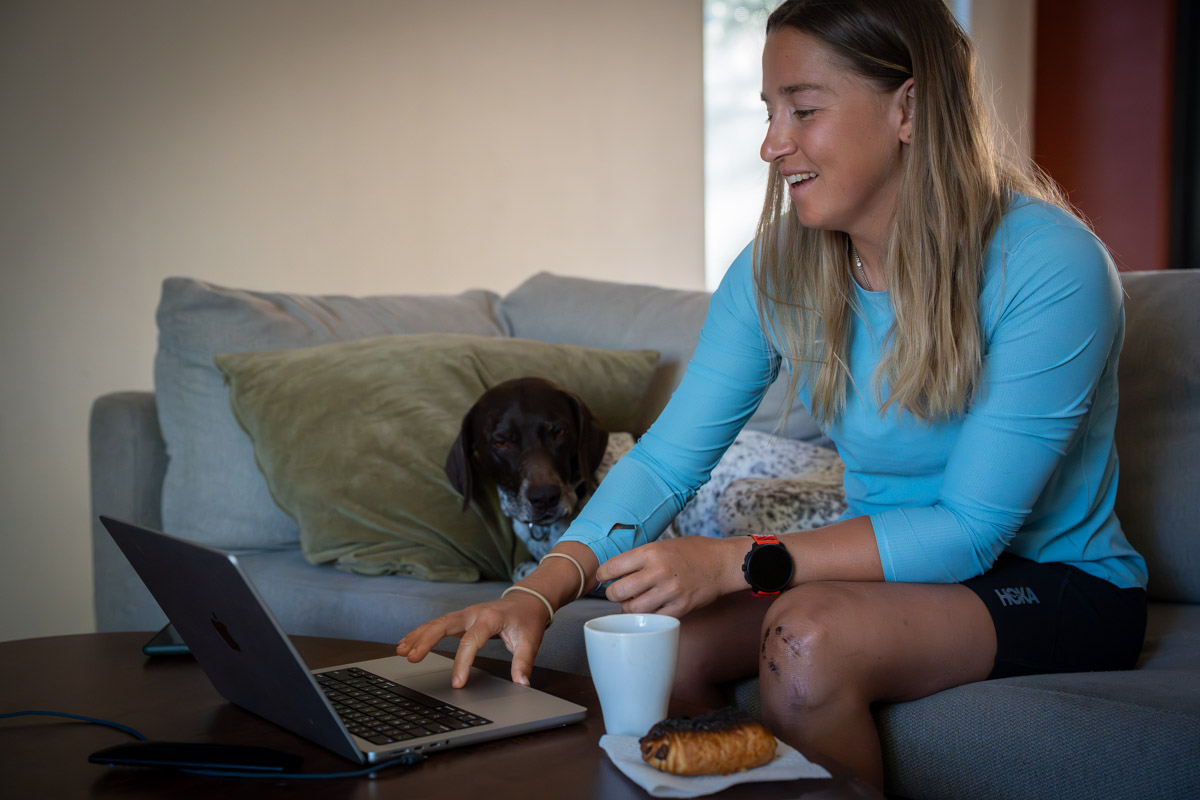
Brinks plans her run over a breakfast of coffee and a croissant.
When Brinks first raced Western States in 2024, she finished 15th alongside her sister-in-law and fellow professional runner Careth Arnold after the pair shuffled the final 20 miles. Things had gone sideways due to all the usual Western States factors. “It was hot. I fell back on my fueling. I threw myself a pity party,” she says with a bit of an eye-roll over succumbing to the race’s common pitfalls. A similar eye-roll accompanied the burnt croissant a few minutes ago.
But Brinks isn’t fazed by falling short of her expectations two years ago. “It’s normal with people’s first Western States. There are few people who nail it on the first try,” she says. “But I had a really nice time,” she adds, mentioning the fans and the volunteers. “I want every trail runner to have that experience.” And now, after two more years of racing ultras, nearly double what she had during her first attempt, Brinks wants to challenge at the front.
Routine and Balance
Even while at training camp, Brinks’s schedule makes time for the various aspects of her life: Mornings are for running. Middays are for work. Afternoons are for mountain biking. She says, “Sometimes I plan running around work, and sometimes I plan work around running. It is a balance, but there are always times when one comes more into the foreground, and one goes back.” She adds wryly, “If only I had twice as much time as I have, that’d be great.”
Right now, with Western States on the horizon, the focus is mostly on running — though she mentions a trip to ride mountain bikes in Sedona, Arizona, south of Flagstaff, after training camp. It’s all about balance.
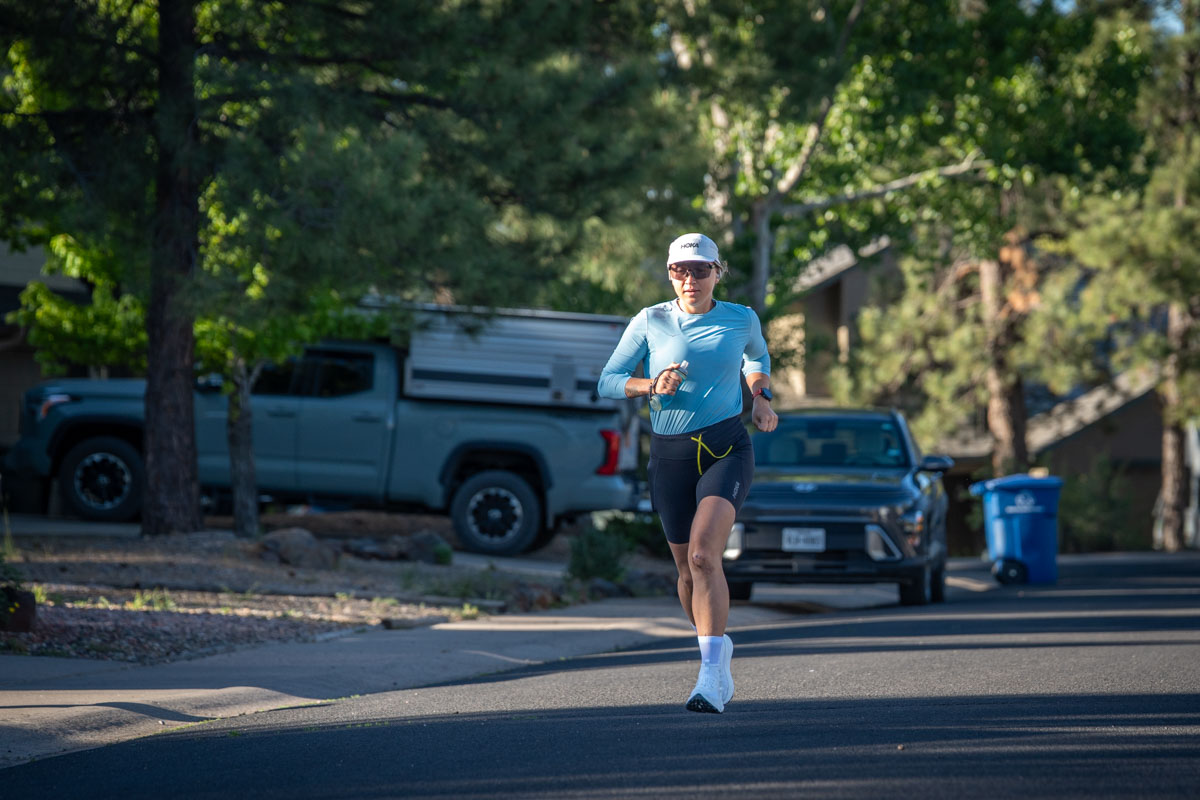
With still-white shoes, Brinks heads out promptly at 7 a.m. for her morning training.
Breakfast consumed, Brinks laces up a brand new pair of HOKA shoes. They are bright white, and Brinks comments that they, along with her white socks, will be brown within a matter of minutes on the dusty Flagstaff trails. “But there’s something about white,” she muses.
She heads out the door promptly at 7 a.m. and jogs down the street, the house conveniently located within minutes of Flagstaff’s extensive trail network. Her 10-mile run will take her along the slopes of Mount Elden to the HOKA Northern Arizona Elite Performance Center, where she’ll finish up the morning workout with some uphill treadmill work in a weighted vest. The Performance Center is home to the HOKA Northern Arizona Elite (NAZ Elite) team and houses all the workout equipment a runner could possibly need. Brinks says that having access to the center — including all of its support staff — makes training in Flagstaff logistically easy. Today, she’s on a tight schedule, as she has work meetings after her workout, and needs to do everything as efficiently as possible. She promises Atlas, who accompanies her on most of her runs, that she’ll take him for a ride in the afternoon.
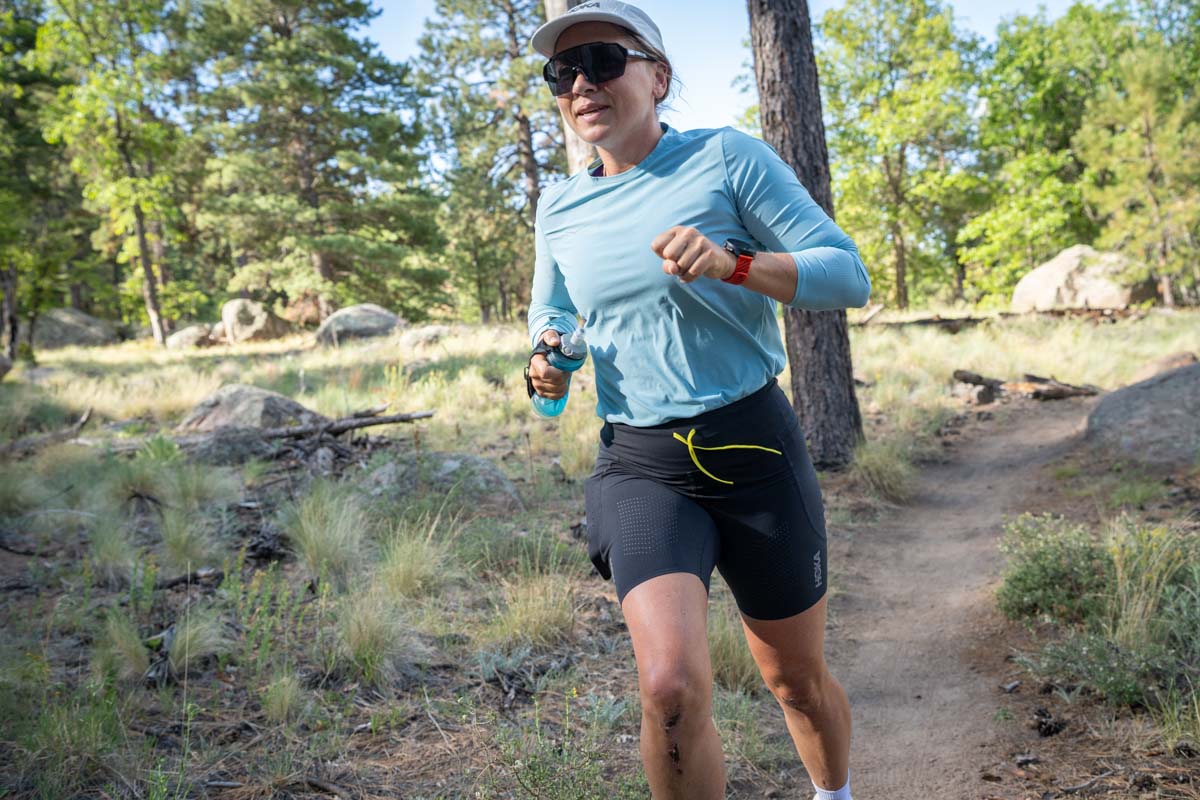
Brinks moving efficiently through her run.
The Road to the Western States 100
Brinks came to the U.S. on a bit of a boondoggle trip in 2014. Not really knowing what she wanted to do after high school, she found herself recruited by U.S. college running scouts and enrolling at the Savannah College of Art and Design in Georgia. It was like a gap year, except paid for. Her plan was to stay a semester, have an experience, and then “go home and study something real.” Instead, Brinks liked the school so much that she stayed for the full four years. She ran for 2.5 of them, and after a series of stress fractures hampered her running, she joined the cycling team.
She only returned to running during the COVID-19 pandemic when she moved to Austin, Texas, with her husband and started exploring the area trails with Arnold, who also lived there.
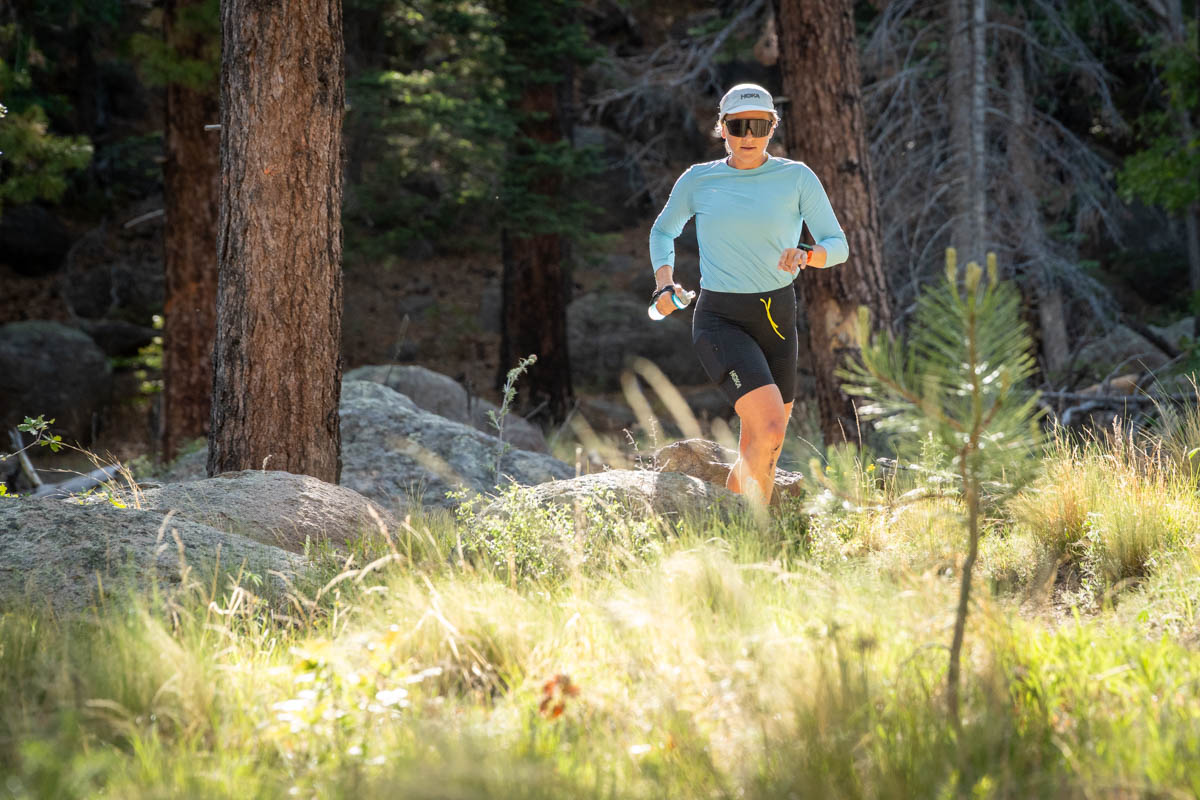
Brinks taking advantage of Flagstaff’s elevation and plentiful trails to train for the Western States 100.
In 2021, Brinks tried ultrarunning and immediately won the Bandera 50k and Rocky Raccoon 100k in the first two months of the year before placing fourth at the Javelina 100 Mile in October. It was a rapid build. Simultaneously, Patrick Reagan, her coach at the time and a multi-time finisher of Western States, introduced her to the event’s lore. “He told stories about how you start in the snow and then run through canyons that are 100 degrees Fahrenheit. I couldn’t imagine it.” Her eyes get wide with the memory. Brinks admits, “I didn’t have a real perception of what 100 miles was. I was thinking it must go from the mountains of Washington to the heat of San Diego.”
The stories took hold in her imagination, and she became determined to run it someday. “In my mind, it was this big, crazy race, and I wanted to experience it.” In 2023, she earned her first Golden Ticket by winning the 2023 Grindstone 100k.
Western States 100 Training
Brinks’s run for the day takes advantage of the massive forested trail network around Schultz Pass north of Flagstaff. She expects the 10-mile run, with about 1,200 feet of elevation gain, to take about 90 minutes. Flagstaff’s elevation closely mimics that of Western States, as do the relatively smooth, dusty trails. Later in the week, she’ll head to the nearby Grand Canyon to mimic the canyons and heat of the middle part of the Western States course.
Out on her run, Brinks is instantly recognizable from a distance with her white shoes and socks, arriving back in town exactly when expected. Once at the HOKA NAZ Elite Performance Center, she doesn’t waste any time. She immediately accepts the offer of a spare backpack when she can’t find a weight vest for her uphill treadmill workout, noting that the lack of a weight vest points to NAZ Elite being a road team with different training protocols than trail runners. It seems the training that resulted in two top-10 finishes at the 2026 Boston Marathon, including Mercy Chelangat’s fourth-place finish in the women’s race, didn’t involve treadmill uphill hiking while carrying extra weight. Instead, the highly successful elite road team takes advantage of the exceptional roads and running community in Flagstaff. Brinks acknowledges just how different road marathons are from much of trail running, but is quick to note that it’s all just running.
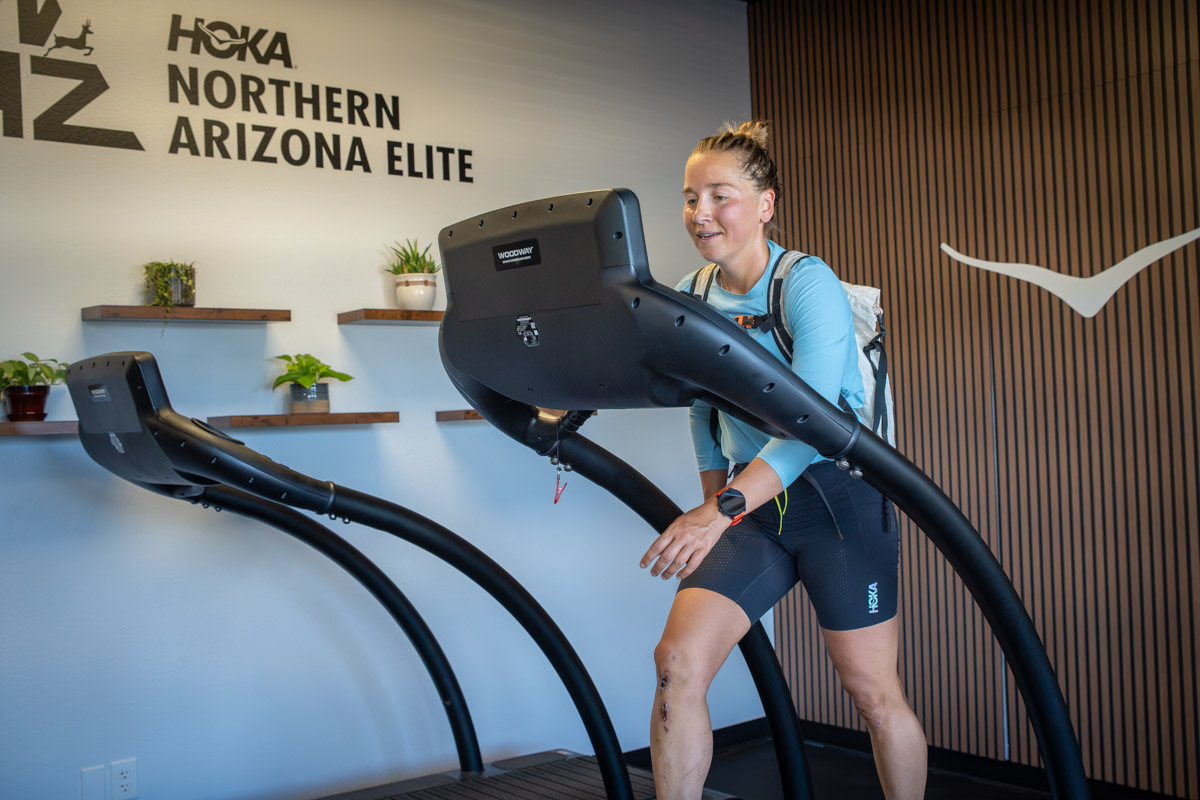
Brinks doing a weighted uphill workout on the treadmill at the HOKA Northern Arizona Elite Performance Center.
With 30 pounds of dumbbells on her back, she sets the treadmill to its maximum 15% grade setting — lamenting that it doesn’t go steeper — and starts walking. The workout, eight minutes of uphill hiking followed by a bit of flat recovery, repeated three times, is designed for muscle engagement, not for any specific pace-based fitness gains. Brinks sets the speed to three miles per hour and gets to work.
An Unexpected Opportunity
In many ways, Brinks’s build-up to this year’s Western States looks remarkably similar to that of 2024. Both years, she won an early spring race. In 2024, it was the Big Alta 50k; this year, it was the Way Too Cool 50k. Then, in both builds, she won the Gorge Waterfalls 100k, this year in course-record time. She’s worked with Tyler Green as her coach both years, also a multi-time top 10 Western States finisher. But that’s perhaps where the similarities end.
In 2024, she came into the year with her entry to Western States secured. In 2026, without a Golden Ticket, she focused on returning to CCC after finishing sixth there in 2025. A series of unexpected incidents — including a broken wrist from a mountain bike crash in December and a postponed winter race — led to some major changes in her spring race schedule, which resulted in setting a new fastest known time (FKT) on the 37-mile Zion National Park Traverse and lining up for Way Too Cool and Gorge Waterfalls.
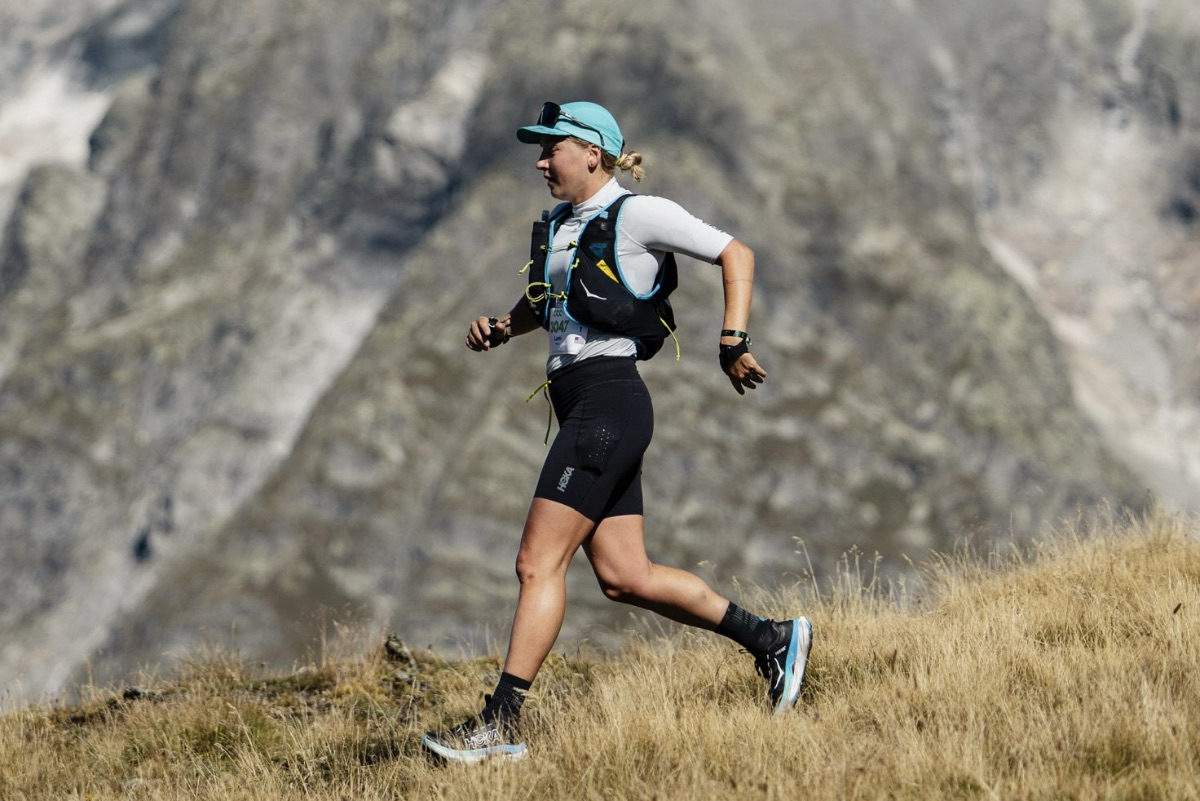
Brinks during the 2025 CCC, where she placed sixth. Photo: HOKA
Then, in the middle of March, she received an email from Western States race director Craig Thornley that Nordskar, her HOKA teammate and friend, had taken a pregnancy deferral for her Golden Ticket, so it rolled down to her. Thinking it was a hoax, she called Nordskar, who confirmed the news. “What better way to get a ticket? Getting it from a friend, and because she’s becoming a mother. And not only am I getting her ticket, but she will also come out and crew!” Brinks adds, “Once Sylvia cashes in the pregnancy deferral, she’s going to be up there. I can’t wait to watch her crush States. I’m going to hopefully be there to crew for her.”
With an unexpected entry to Western States, Brinks’s season took yet another major turn, and she smiles when she talks about the changes: “There’s been a lot of movement on my race calendar. But it’s all for the best. I really enjoyed the FKT. I loved Way Too Cool. Gorge Waterfalls is my favorite race in the world. And I’m really excited to do States again. It couldn’t be better.”
Trusting in the Training
While on the treadmill, Brinks’s husband arrives. He’s nursing a sore wrist from a mountain bike crash and halfheartedly gets on the stationary bike. Fellow HOKA athlete Jess Brazeau arrives for a strength routine and stops to chat, and the two plan a future mountain bike ride. Soon Carrie Highman, working on a documentary film about HOKA’s elite women, arrives. “Any distraction on the treadmill is good!” Brinks insists every time someone mentions they’ll stop distracting her and let her do her workout.
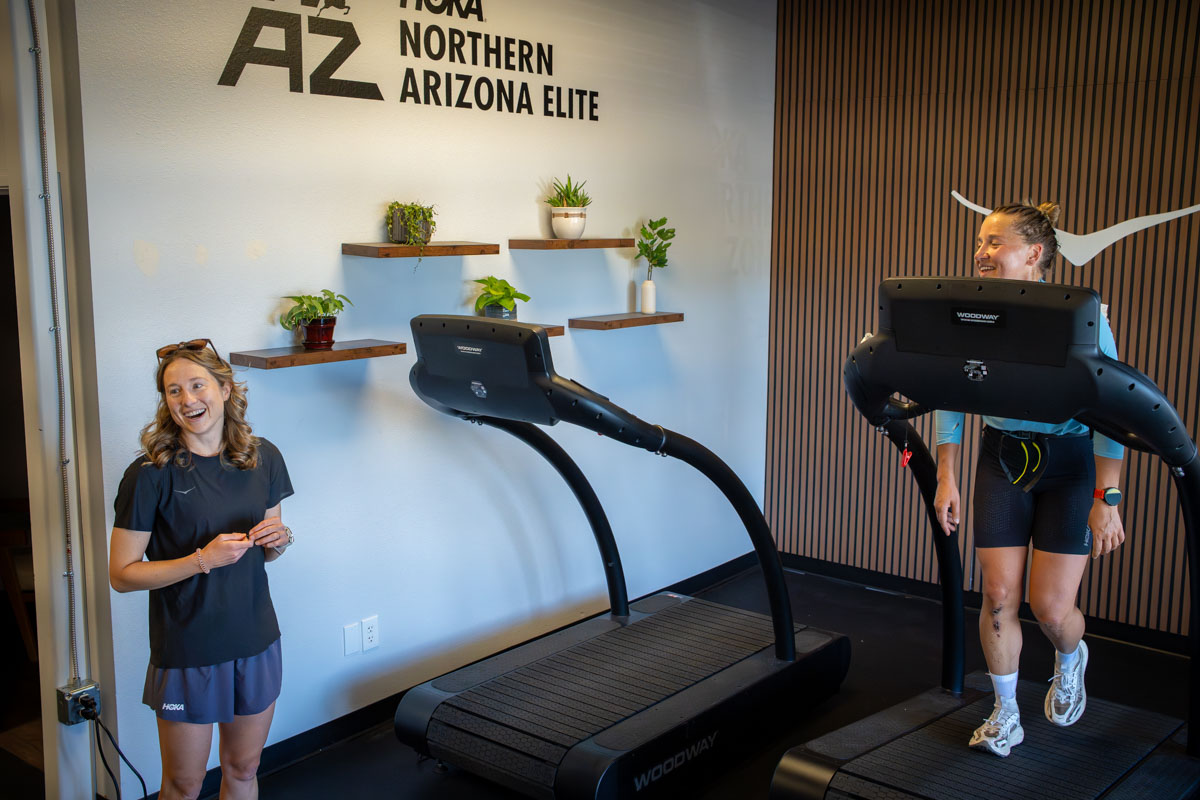
Jess Brazeau offers up a much-needed distraction during the treadmill workout.
Brinks trusts in her training, noting that in 2024, she’d just started working with Green as a coach. “There were definitely a lot of new things — getting used to a new way of training.” Two years later, with plenty of results to validate the effectiveness of the work she’s doing, she says, “I trust my coach fully, and I execute on the training that he gives me. I feel very confident in my training and see it paying off day after day.” The confidence is a change from 2024 when she was much newer to the sport, and she says, “That’s the main difference. My training doesn’t take as much mental capacity as it used to. Now my body’s like, ‘Ok, let’s knock it out.’”
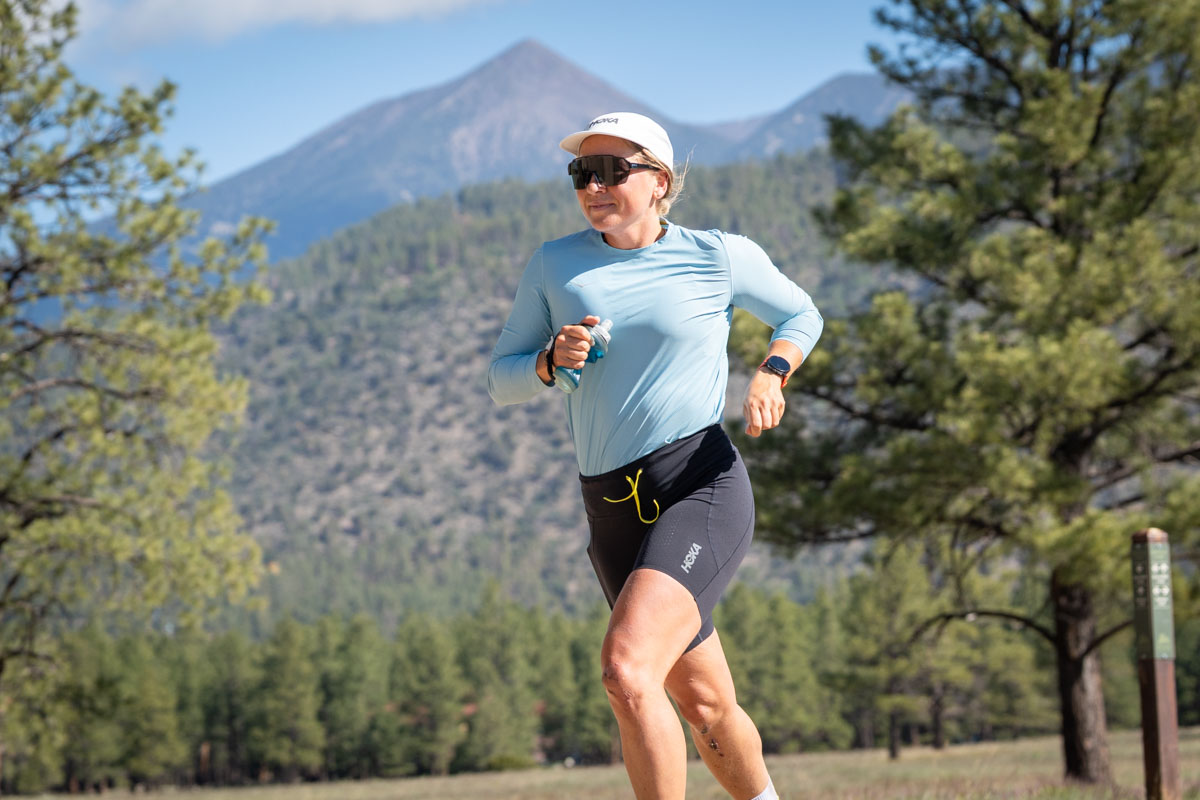
With more experience, training for Brinks requires much less mental bandwidth than before.
There’s always a lot of talk about Western States-specific training ahead of the race, with some athletes taking heat and hill training to extremes. While Brinks is doing some course-specific workouts — including big downhill efforts to season her quadriceps — she says, “Western States is an important and historic race, but at the end of the day, it’s just another race. I don’t want to completely change my training.” She’s clearly not thinking too hard about it, either, saying, “I’m in my volume block right now, and then I’ll add more intensity probably starting next week. We’ll see what Tyler puts in my training after that.”
Methodical Race-Day Execution
Brinks is right to have confidence in her training. In addition to the new course record at the Gorge Waterfalls 100k earlier this year, where she ran 48 minutes faster than in 2024, she also cut 82 minutes off her CCC time between 2024 and 2025. She acknowledges that these are significant improvements and hopes to replicate them at Western States. “Western States will also be a big jump, because in 2024, I ran 18:50-something, but I hiked it in for 20 miles. That’s two hours right there. And then the sky’s the limit.” Still, Brinks realizes that racing is racing, “It’s hard to predict times. You just have to run the race and see what happens.”
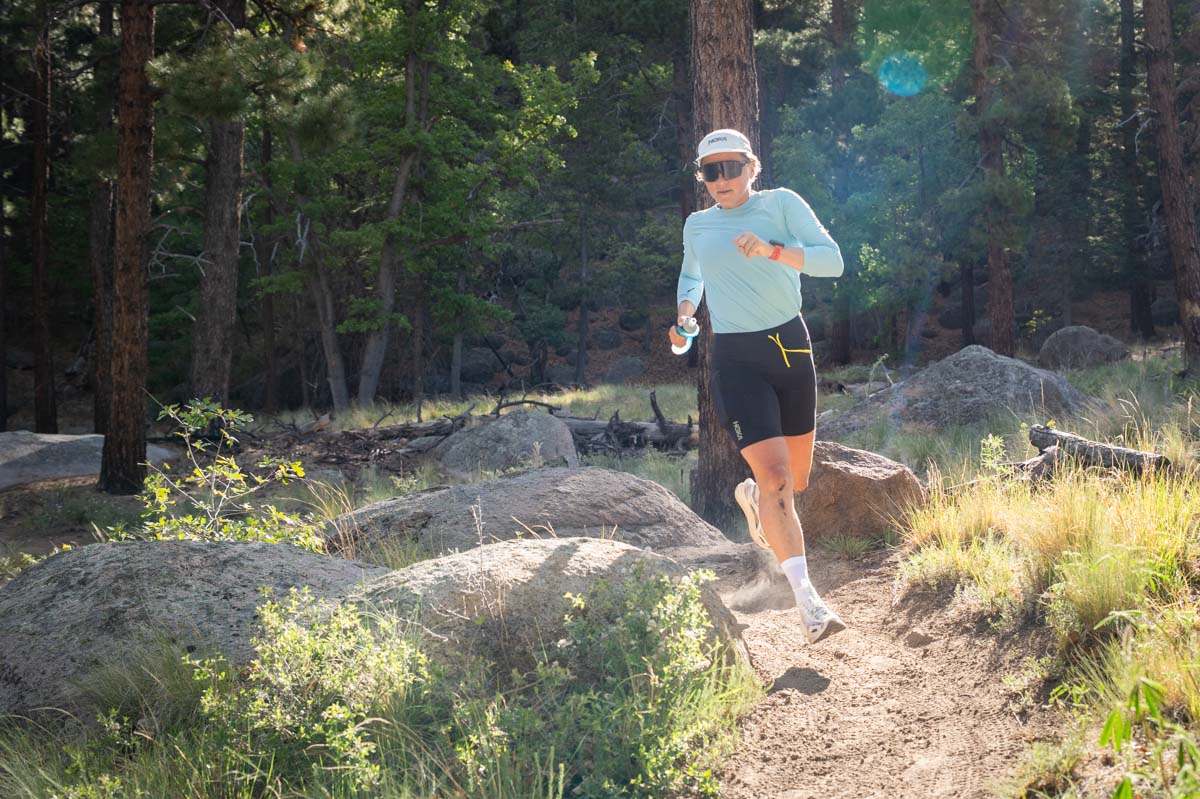
With a successful spring racing season, Brinks is bringing confidence to the Western States 100 start line.
Brinks knows she is not only physically stronger now, but also that her mental game is more solid. While she mentions leg turnover and climbing as her two physical strengths, she thinks it’s her mental game that will lead to success. “I’m good at methodical execution. I have a plan, and I’m going to check boxes. If my plan is, ‘I eat two gels here,’ I will eat two gels.” It’s a skill she’s learned over the past year as she’s become more comfortable at the bigger races and less prone to getting stuck in her own head. “I take the high and low emotions out of it and stay even keel, having fun. This has been a big unlock.”
Having HOKA around has also made a big difference. “I feel supported, and that’s the big difference. It’s important to know I have people in my corner who are here for my success. They have my best interests in mind.”
Searching for the Best Day
It’s rare in ultras to hear someone say that they think they can win a race, but Brinks doesn’t shy away from it. “I have such huge respect for everyone who’s lining up at States. Especially every single woman. They’re all incredible. But on my best day, I could beat every single one of them.” Brinks is quick to acknowledge the many variables that go into race day and the fact that anything can happen, “June 27 might not be my best day, but it might be. We don’t know.”
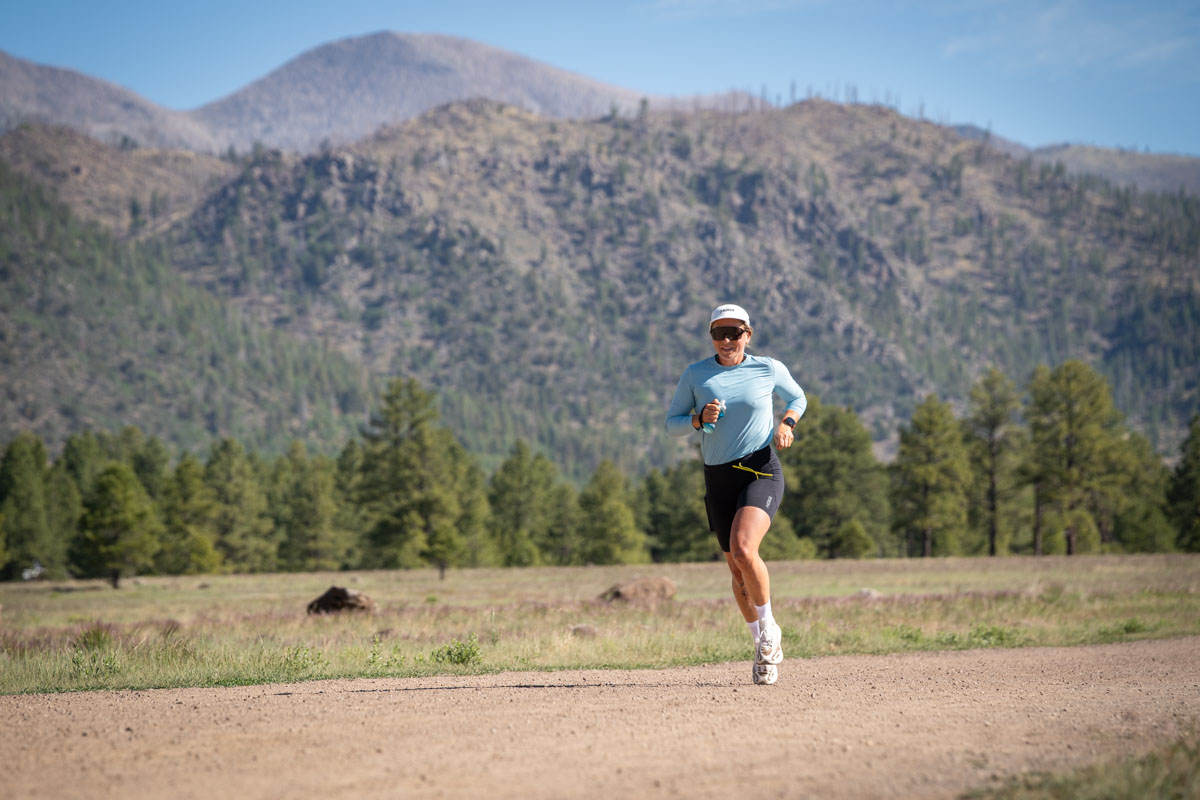
Brinks putting in the work to have her best day possible at the 2026 Western States 100.
Brinks is giving herself the best chance possible to stand atop the podium. “If I have my day, I can be at the very top. I’ll do everything in my power in training so I can line up at the start feeling brave and ready to put myself in the mix.”
And after Western States is over, regardless of how the day plays out, Brinks will return to the many other facets of her life: running with Atlas, riding bikes with friends, and finding the balance that brings her meaning and joy. She hasn’t ruled out a run at CCC or its shorter-distance sister race, OCC, in late August, perhaps motivated by the fact that she can spectate the UCI Mountain Bike World Cup downhill race in Les Gets, France, the weekend before the UTMB Mont Blanc festival. “We’ll try to see that race and get a little riding in before UTMB week,” Brinks says with a smile.
Because in the end, as Brinks herself says, one can both care deeply about running and not take it too seriously.
[Editor’s Note: This article is sponsored by HOKA. Thank you to the brand for its sponsorship of iRunFar, which helps to make iRunFar happen and free for all to enjoy. Learn more about our sponsored articles.]