In this monthly article series, ultrarunner, race director, and coach Gabe Joyes answers reader questions about anything and everything running. Learn more about this ask-the-athlete column, and be sure to fill out the form below to submit your questions for a future article!
In this article, Gabe answers questions about structuring weekly mileage, “vertcovery,” pre-race checklists, and negotiating changing running relationships.
Gabe’s Tip of the Month
Has anyone ever excitedly asked you, “Are you ready for your big race?!” but they ask you days, or even weeks, before the actual race? For some of us, that question can be unhelpful and rather anxiety-provoking, because deep down inside, we don’t feel ready yet. In these circumstances, “not yet” is a perfectly good answer.
The truth is, you probably do not feel race-ready days or weeks before your race because you are likely still knee-deep in training. The only time you really need to feel race-ready is when you step up to that starting line — and feeling that way the day before helps too. So shake off the feeling that you should be race-ready long before you really need to be.
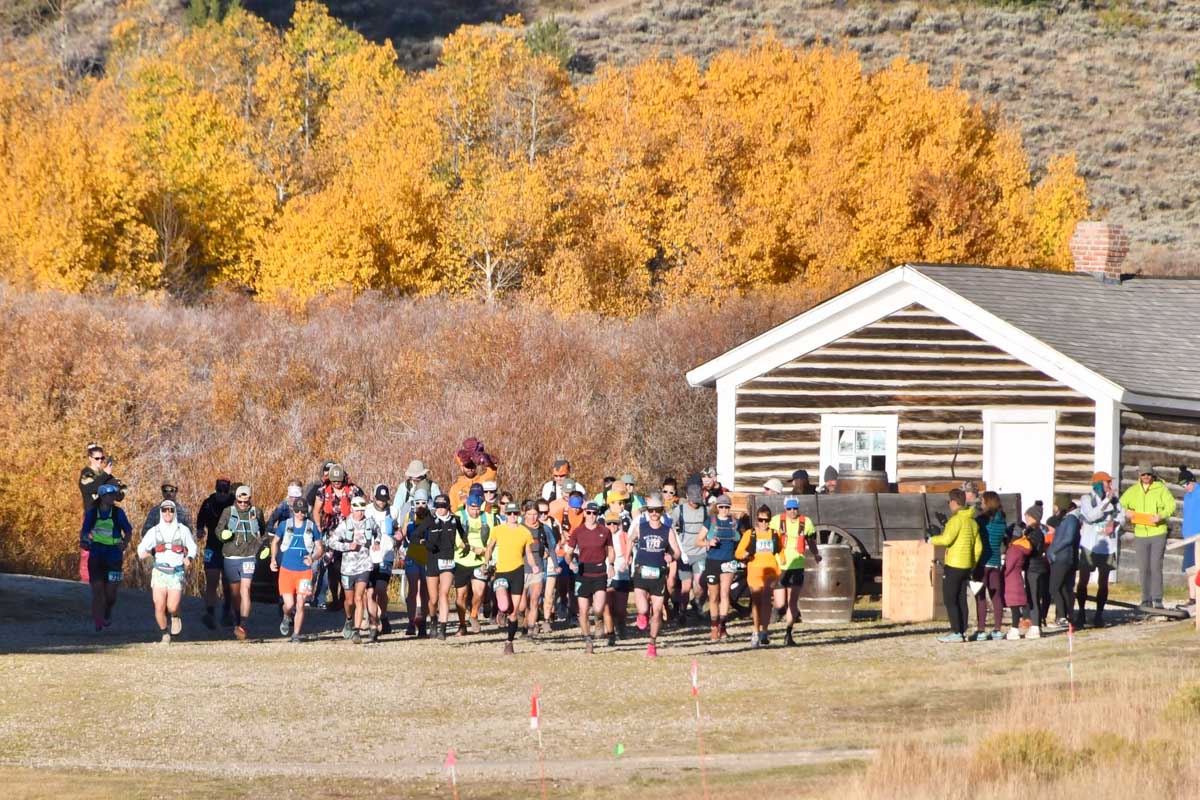
Runners ready to go at the starting line of 2025 Run the Red Desert in South Pass City, Wyoming. Photo courtesy of Gabe Joyes.
Weekly Mileage
What does my weekly mileage need to be to run a 100-mile race? -Jenar
My favorite part of being a coach is the creative side of the job. Each runner has their own unique athletic background, training history, work schedule, life obligations, and more. I find it fascinating how many different ways there are for two different people to be trained and prepared for the same event! Is there a set number of miles you need to be able to run in a given week to complete a 100-mile race? Definitely not.
Rather than thinking about mileage in terms of weekly totals, I find it helpful to consider it in terms of training effect. For example, compare two different 60-mile-per-week training plans. In the first, someone runs 10 miles a day for six days in a row, and then takes a day off. The second looks like this:
- Monday: Rest
- Tuesday: 8 miles with intervals
- Wednesday: 6 miles recovery
- Thursday: 9 miles at medium effort
- Friday: Active recovery
- Saturday: 25-mile long run
- Sunday: 12-mile long run
Clearly, both weekly plans get you to 60 miles, but the training effect and fitness outcome are completely different. I’ve seen various versions of the second option work time and time again for successful 100-mile races, but I wouldn’t feel comfortable sending someone to the starting line of a big race based on training from the first option. Many folks have found success in stacking three to four bigger training days in a row, followed by rest and some sort of active recovery or cross training, and have been rocking and ready for a 100-mile race.

There is even more flexibility and nuance with mileage per week when you start adding in other cross-training activities, like cycling, hiking, skiing, or other aerobic pursuits. Athletes can run mega distances on just long runs and high-intensity work, with the rest of their “mileage” coming from various forms of cross training.
I like to compare training plans to cooking dinner — you can bake, sauté, grill, or even slow-cook it, as long as it is cooked at the end. The same is true for training. There are many ways to prepare for a big goal race, and the path to get there might be as unique as you are! The weekly mileage viewpoint is just one way to measure training, and it certainly doesn’t tell the whole story of race preparation.
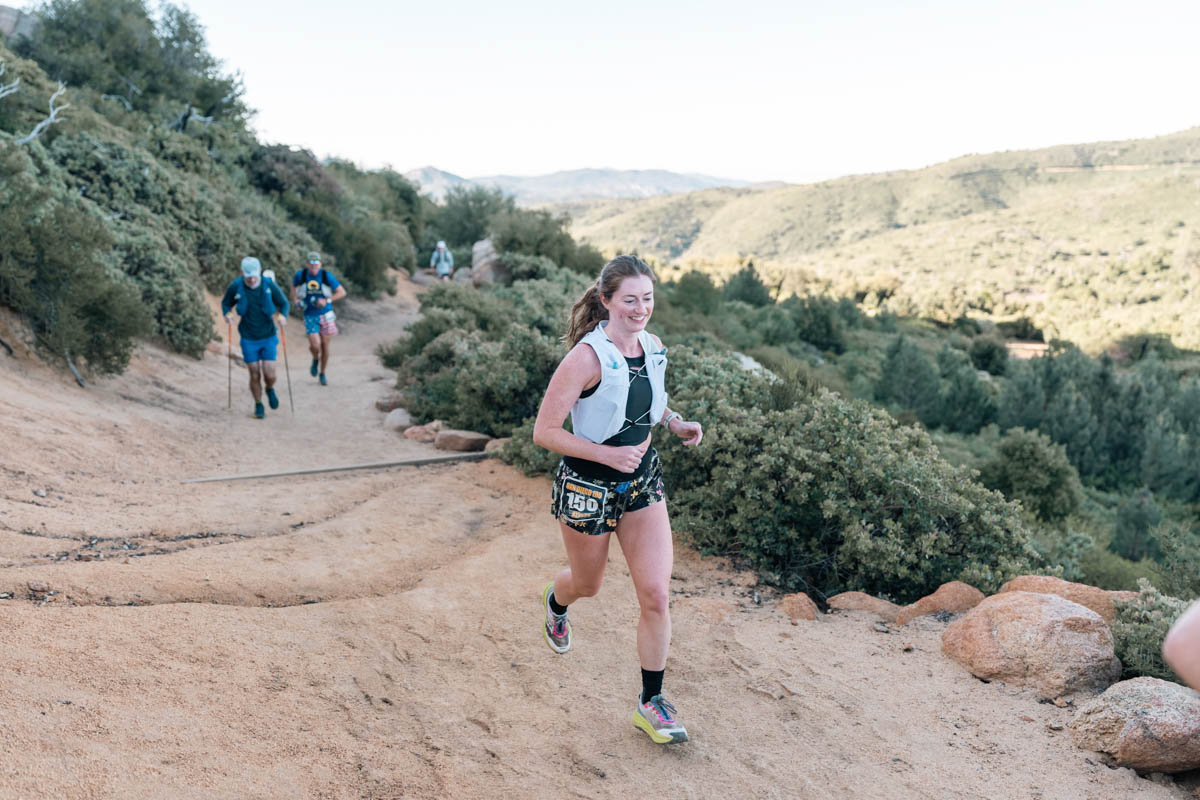
Alyssa Malley putting her dedicated training to use by cruising to a third-place finish at San Diego 100 Mile. Photo: Howie Stern
Vertcovery
Tell us more about your “vertcovery” runs! What are they, and how do they translate into your training? -Steph
Oh yes, Steph, the “vertcovery” question keeps coming up! The vertcovery workout is a mega-steep, low-intensity uphill hike, followed by an easy-effort, slow shuffle back down that steep hill. And by steep, I mean something like 15% to 35% grade. The timing of vertcovery in your training structure and the intensity of the workout are key here. This workout only provides an active recovery stimulus if it is very different from your training in the days before — like long bouts of running at higher intensity on flatter terrain. The stimulus you get from vertcovery is so markedly different from the fast, flat runs that it essentially serves as cross training. If you are unable to keep the intensity and your heart rate low for the steep uphill hike, unfortunately, this workout might not work for you. For context, when I do this workout, I might climb and descend close to 2,000 feet in an hour, but will only cover about 3.5 miles for the day. If that kind of terrain is not readily available to you, doing 30 to 45 minutes of steep uphill hiking on a treadmill can be a great substitute as well.
The key, though, is that you must truly be able to settle into hiking uphill at a very casual effort; then it is a great way to stay on your feet, training and recovering with tired legs.
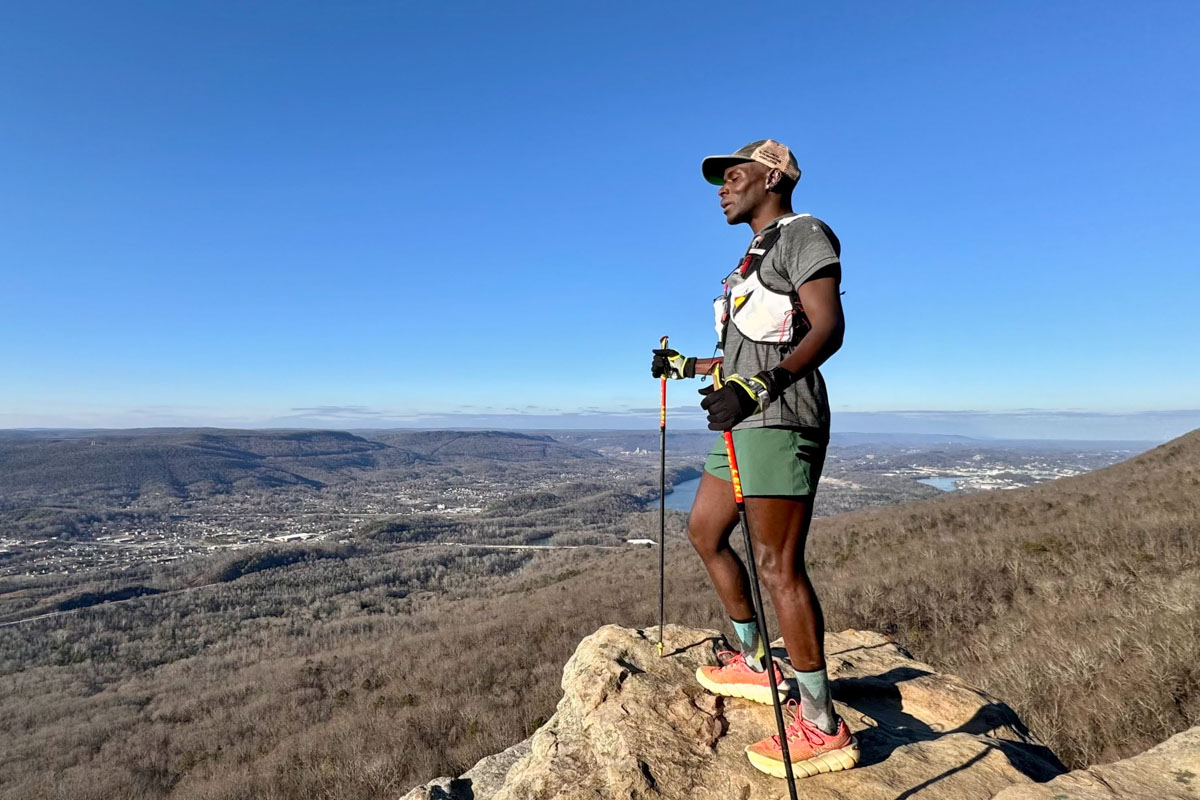
Coree Woltering wrapping up a proper vertcovery session. Photo courtesy of Coree Woltering.
Pre-Race Checklists
What are the details that I should have dialed in before my 100-mile race? I want to be as prepared as I possibly can be, but I always feel like I’m forgetting something. -Morgan
I know that feeling all too well, Morgan! I think this is a really important question because so often when runners don’t quite meet their race-day goals, it isn’t because they lacked fitness, but because they lacked the execution of the details. Here is a checklist to help create the race day experience you are looking for:
- Know your range of sweat rates in terms of liters per hour, and have the right hydration setup to drink what you actually need on race day.
- Know your sweat sodium concentration in terms of milligrams per liter, and the sodium-centric products ready to meet these goals.
- Dial in your fueling plan for taking in a steady and substantial amount of carbohydrates for the duration of the race. These are probably your very expensive sports nutrition products.
- Have a Fueling Plan B (this is probably just potato chips and peanut M&M’s).
- Have a Fueling Plan C (this is probably just the Coca-Cola-only fueling plan).
- Have shoes that are comfortable, fit well, have appropriate foam and tread for conditions, and have room for your feet to swell.
- Have a second pair of shoes that feel too big on a regular day but will be super comfortable when your feet swell to the size of Shaquille O’Neal’s U.S. size 22.
- Use socks that dry fast, grip inside your shoes, and stretch with your swollen feet.
- Choose clothes that minimize chafing so your post-race shower is more pleasant than painful. Bonus points if they look fast and make you feel cool.
- Lights? Poles? Other gear? Make sure you know how to use your equipment, how you will carry it, and that it won’t be a burden or headache on race day.
- Have a good understanding of what the race course is like, in terms of where the climbs and descents are, distances between aid stations, and where you’ll find your drop bags, crew, and pacers. It can be helpful to carry a tiny cheat sheet, either laminated or on your phone, because the numbers and locations will undoubtedly blend together after a while.
- Get race-day support that gives you energy and good vibes.
- Pre-problem-solve a list of all the things that could go wrong during the race, and come up with a plan ahead of time for how you will overcome those challenges.
- Have a vision for the race-day experience you are looking for, and understand what it will take from you and your support crew to make this vision a reality. Make it happen!
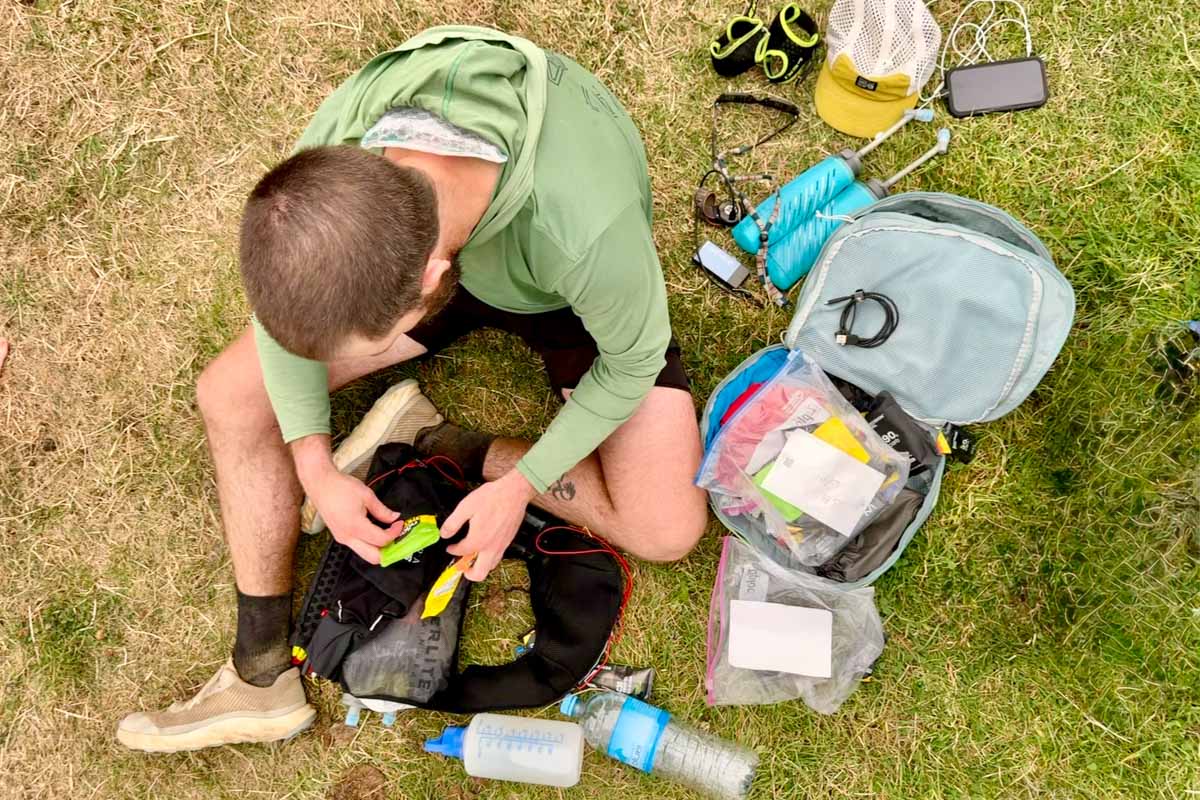
A very organized Josh Fuller putting it all together at the North Burn 100 Mile in New Zealand. Photo: iRunFar/Bryon Powell
Evolving Running Relationships
I have been running with my best running friend for years, and we have always been about the same pace, but now that I have been dedicated to training for a 100-mile race, I am much faster than she is. I don’t want to stop running with my friend — or hurt her feelings in any way — but I would like to keep improving my speed and get fitter, too. Help! -Naomi
The fact that you care so much about how your friend feels already shows that you are a great running partner! You can definitely still make this work, Naomi, with some good communication on your part and some intentional training strategies. I definitely get the challenge, though, as a couple of my favorite running partners in the world are typically a step or two slower than I am, but I still run with them whenever I get the chance because it is just so fun.
The first elephant in the room to acknowledge is that sometimes the difference in pace could make your friend feel uncomfortable or self-conscious, which is understandable. I always make it abundantly clear that if I agree to run with someone, it is because I want to run with them, and not race them, ditch them, drag them along, or anything like that. Make clear the shared goals of the day: We are going to stick together. Also, be sensitive that you and your running partner might be getting different training stimulus from the workout — they might be breathing hard going uphill, and you might be feeling pretty relaxed. Play that down, don’t make it a thing, and remember the goal is to enjoy being out there together — pace be damned!

Your author trying to keep up with Jenny Joyes on a spring training run.
As far as fitting these slower-paced runs into a thoughtful training plan, it is helpful to get in a harder effort — like intervals or a long run — in the day or two before running with your friend. That way, you get the training your body needs, and a dialed-back effort with your friend will also be just what your body needs.
But really, even if you do a couple of runs that are all-around just slower than you would prefer, keep in mind those slower paces are just part of endurance running as well. If you look at your paces from the back half of your last ultra, you’ll probably find that they are even slower than the pace you are running with your friend. Practicing that back-half pace every now and then is a good reality check and a good way to prepare for a race, too.
Lastly, I am certain that the best memories created from this sport are not PRs and top race finishes, but the time we spend out there trotting around and creating memories with the people we care about the most.

Your author trying to keep up with Luke Nelson on an adventure run in the Gros Ventre Mountains in Wyoming. Photo: Steven Gnam
Submit Your Questions
Send us your questions! Use the form below or send us a message on Instagram, and we’ll consider your questions for future articles.
Call for Comments
- What are your thoughts on Gabe’s answers this month?
- What pressing running questions have you always wanted answers to?

