In this monthly article series, ultrarunner, race director, and coach Gabe Joyes answers reader questions about anything and everything running. Learn more about this ask-the-athlete column, and be sure to fill out the form below to submit your questions for a future article!
In this article, Gabe answers questions about white trail shoes, increasing race distances, fueling with carbohydrates and fats, and getting ready for a 24-hour race.
Gabe’s Tip of the Month
Do you struggle with falling into a negative headspace on long runs? I use a “smile and eat” alarm on my watch to remind me to enjoy my run and stay fueled. Activating all of those smile muscles — even a fake or forced smile — triggers the brain to release endorphins, dopamine, and serotonin, which reduce stress hormones and increase feelings of happiness. Furthermore, when the body is in a state of low blood sugar, or hypoglycemia, intense mood changes that include irritability, anxiety, anger, and sadness are common. That’s right, your low point during a run often is you just feeling “hangry.” Setting a regular alarm to remind you to smile and eat is a tried-and-true way to keep the good vibes flowing!
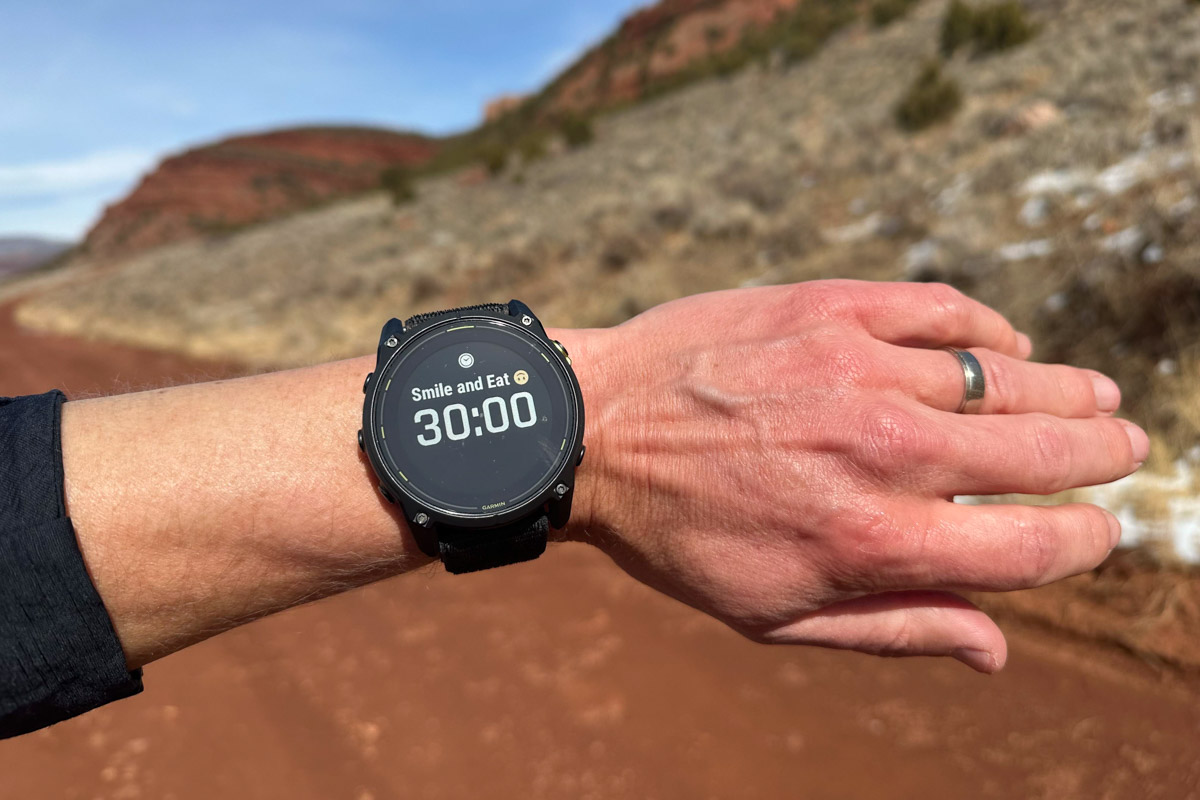
The 30-minute “smile and eat alarm” on my watch from an early spring long run. Photo courtesy of Gabe Joyes.
White Trail Shoes
What is with every brand making white shoes? Don’t they realize that they all just become dirt-colored? -Raheem
I have noticed this trend too, Raheem, and was admittedly a bit surprised at first as well. But there might be real reasons for this, as color psychology in sport is a real thing, and a much-researched topic. Studies suggest that color may affect mood, energy levels, and behavior. Many athletes believe, and sports psychologists have attempted to confirm, that certain colors can trigger psychological responses that influence performance. Do some colors make us think of speed and energy? Are high-contrast colors in a race environment mentally stimulating? Does white do this for us?
The less exciting explanation is the fact that seasonal fashion trends exist, and brands certainly like to copy each other. I mean, fresh white running shoes just pop on the store shelves and look sharp, right?! That future-thinking part of our brains — often repressed when emotions are strong — might be quieted when, as customers, we see an eye-catching product that we just really want, even if deep down we know those lovely bright super shoes are going to be some earth-colored hue in no time at all.
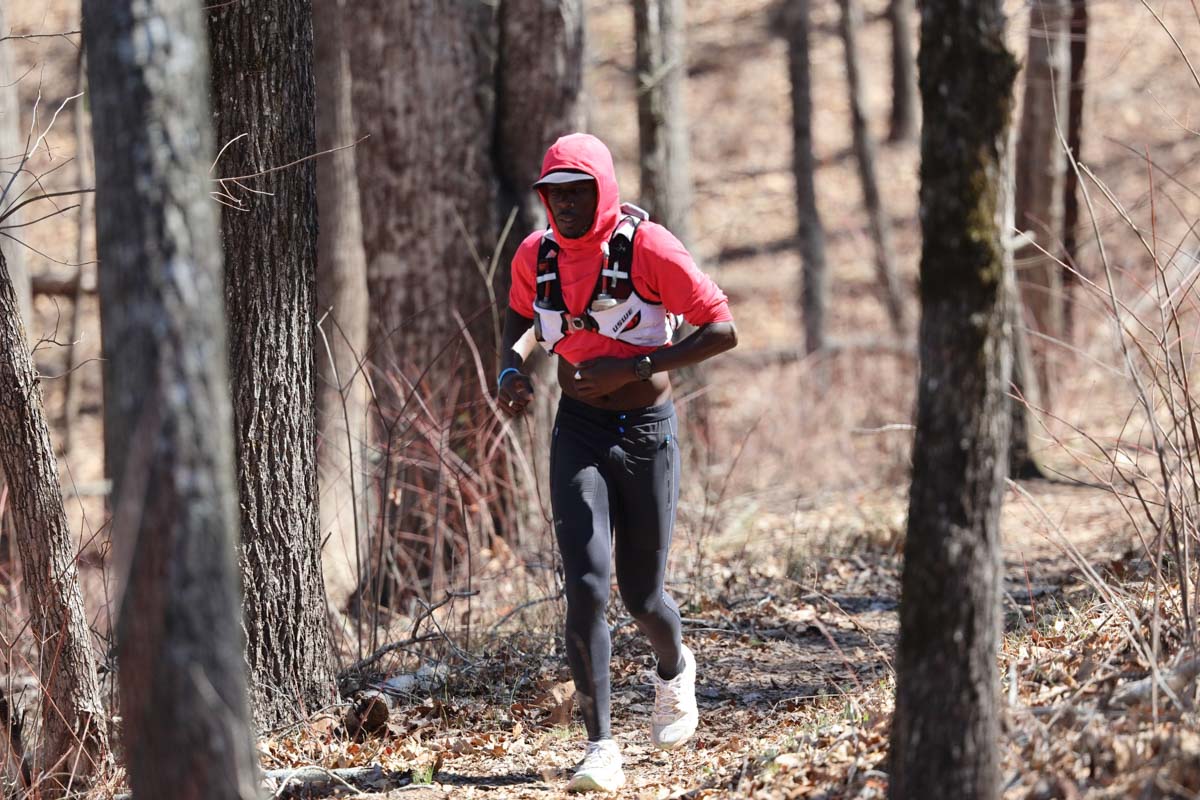
Coree Woltering wearing some very fresh-looking shoes. Photo: Pete Schreiner
Training for Increased Distances
What do you think are the most important changes to a training plan when you decide to go from a 100k to a 100-mile race? Asking for the first-time 100 miler who is not a professional athlete, but has a lot of experience in ultras. -Heather
The good news here, Heather, is that the training does not need to look all that different! A 100k is already a really long run, and if your aerobic engine is well-developed enough to successfully reach the finish line for a race that is 12-plus hours, you likely already possess many of the tools to reach the finish line of a 100-mile race. To transition to more 100-mile-specific racing, you will likely benefit from long runs that are just a little bit longer, both in terms of time and distance. For example, if your long runs were three to four hours for 100k training, runs in the five- to six-hour range will be excellent for 100-mile training.
You may also want to lean more into back-to-back long runs, perhaps something like five hours on Saturday and three hours on Sunday. If running long on both weekend days is not ideal for your schedule, some folks can scheme a mid-week long run that is two to three hours on a weekday evening. Or you could get a bit creative. Running an hour in the morning before work and then another 1.5 hours in the evening after work can get you that I’ve-been-on-my-feet-all-dang-day-long feeling.
This increase in long-run training time is as much to condition your muscles and tendons to tolerate the longer moving time as it is to develop all-around fitness. It is often the weakest link in your physical chain that is the barrier to 100-mile success — the Achilles, iliotibial band, lower back, etc. — and a little extra training volume can help prepare the body for the demands of such an absurdly long race! Also, as a friendly reminder, 100-mile pace is definitely slower than 100k pace, so it is okay to tone down the intensity of these long runs, and it is imperative to tone down the 100-mile race day intensity as well.

Your author putting in the miles on an XXL training day. Photo courtesy of Gabe Joyes.
Fueling With Fat
Because the pace is lower on trails than on roads, I want my body to run on both fat and carbohydrates. What are the best things to eat to achieve this? -Ultrarunner
You are correct, my fellow ultrarunner, we do indeed burn a higher percentage of fat during low-intensity running than at higher intensities, but that doesn’t mean carbohydrates are no longer part of the equation. Even in low-intensity, zone 1 or 2 running, 40% to 50% of your energy still comes from carbohydrates, with the rest coming from fat.
Careful here not to get confused, as most of the fat energy you are burning is from fat already stored in your body, and much less so from dietary fat. Dietary fat is a fantastic energy source, but it takes significantly more time and energy to be digested and converted to fuel that your body can actually use while running. It is highly unlikely that you will use up all of your body’s fat stores in a run, but there is a solid chance you will burn through all of your body’s carbohydrate stores in a single long run or race, so still leaning into dietary carbohydrates as your primary energy source — even at low intensity — is going to be your best option.
To use myself as an example, while running at a higher intensity, I will consume almost all my calories through gels (100% carbohydrates) and worry about fat and protein after the run. But while training or racing at lower intensities, I will still eat two or three gels in a row, but then mix in a handful of peanut M&Ms (46% carbohydrates, 46% fat, and 8% protein) or potato chips (55% fat, 40% carbohydrates, and 5% protein) to balance my energy needs.
One other consideration is protein. Eating small amounts of protein during runs longer than three hours can help reduce muscle breakdown, which can speed up recovery and prevent muscle soreness. Registered dietitian for Uphill Athlete, Alyssa Leib, shared that: “This can also be a great way to give your palate a break from the sweetness, as protein foods tend to be more savory. But protein is also digested slowly, so you don’t want to overdo it. About five to 10 grams per hour is enough to preserve muscle and prevent flavor fatigue while still allowing your body access to the sweet, sweet carbs it needs to fuel, even lower intensity running.”
But really, don’t overthink this too much and avoid getting to the point where fueling for running becomes something you need an advanced mathematics degree for. Enjoy snacks that are easy to digest and are palatable mile after mile after mile.

Luke Nelson enjoying some wild raspberries in the Gros Ventre Mountains of Wyoming. Photo: Steven Gnam
24-Hour Race Training Cycles
How long of a training cycle is enough to prepare for a 24-hour race? And please say four months are enough, because I have just signed up! -Sami
Yeah, Sami! I admire your courage and sense of adventure to just go for it — best of luck at the 24-hour race. Timed events are a great option if you are unsure of your fitness, because you really can make what you want of the experience and listen to your body. Is four months enough time to be ready for a 24-hour race? This completely depends on your personal training history and race experience, but you can gain a ton of fitness in that time period. Gradually build up your training volume over the course of 2.5 to three months, and aim to have your peak training load about four to six weeks prior to the big run. If your 24-hour race is on a track or another flat, even surface, be sure to have plenty of longer runs at a similar pace and form to what you will have on race day. If your 24-hour race is something like a Running Up For Air event, doing laps up and down a steep mountain, be sure to include that terrain specificity in your training as well. Lastly, don’t be afraid to go rogue in your training now and then and just do some running that feels good and mixes things up.

It takes time to get ready for a timed event like the Running Up For Air series race on Malan’s Peak. Photo courtesy of Gabe Joyes.
Submit Your Questions
Send us your questions! Use the form below or send us a message on Instagram, and we’ll consider your questions for future articles.
Call for Comments
- What are your thoughts on Gabe’s answers this month?
- What pressing running questions have you always wanted answers to?

