Trail running and ultrarunning — we all love these sports! We pile on the miles, explore beautiful trails, and charge up and down mountains — and have a blast doing it. To keep the good times rolling, one of the smartest things we can do is take excellent care of where our bodies meet the trail: our feet.
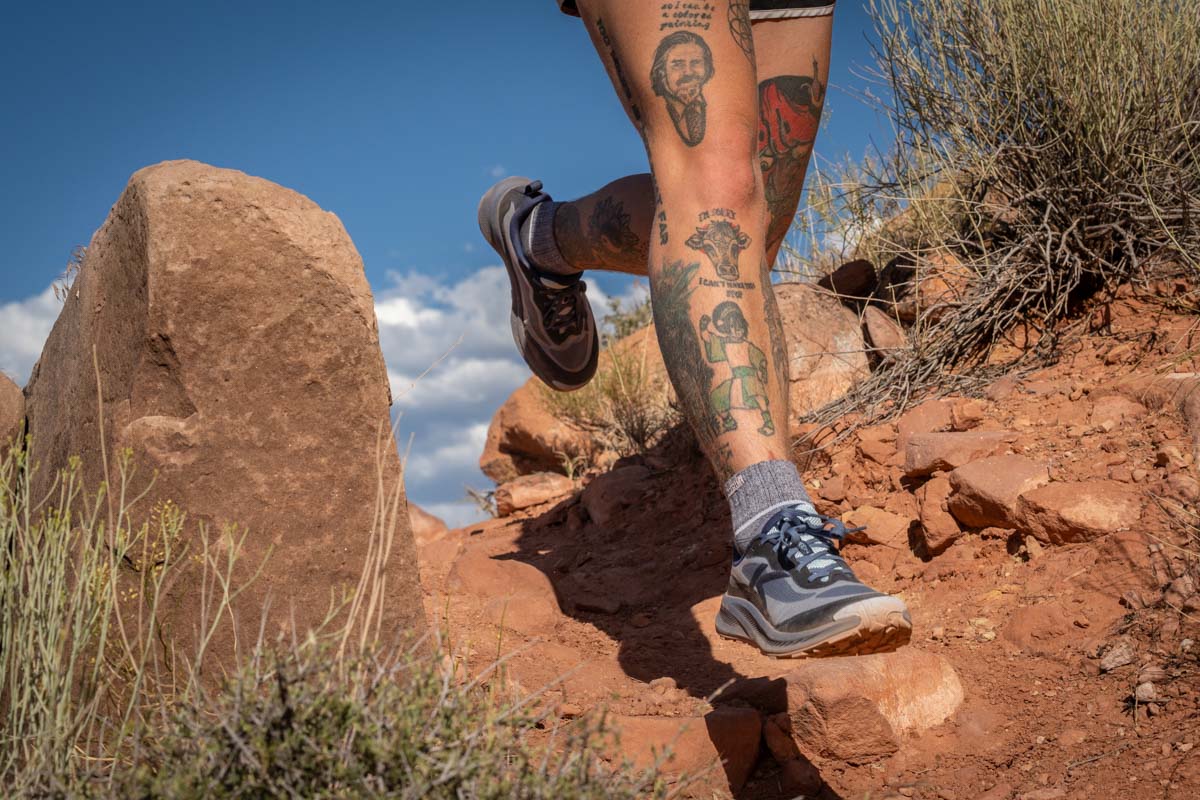
Taking care of ankles and feet is critical for healthy and fast running. Photo: iRunFar/Eszter Horanyi
Even when our overall running form is efficient, mountain trails deliver a relentless beating to the feet and ankles. Rugged terrain, constant elevation changes, and swings in temperature and moisture can all take their toll. The good news is that a short, consistent mobility routine can keep your feet and ankles supple, balanced, and ready for everything the trails throw at you.
Here’s a robust, multi-dimensional maintenance plan that will help you feel good and run your best all year long.
Dimensions of Foot Efficiency
Effective foot and ankle maintenance goes beyond simple muscle stretching. Our lower leg, ankle, and foot system is made up of multiple tissue dimensions, all of which must move fully and smoothly for efficient, pain-free running.
Those dimensions include:
- Myofascial Structures: Muscles, tendons, and connective tissues of the foot, ankle, and lower leg. Most conventional stretching and soft-tissue work targets these tissues. They’re important, but they’re only one layer in the system
- Joint Structures: The relationships between bones. Some joints — like the ankle — have large ranges of motion, while others in the midfoot have small but critical glides that enable balance, agility, shock absorption, and injury prevention.
- Superficial Fascia: The thin but powerful outer fascial layer just beneath the skin. The massive loads of mileage and vertical apply huge forces and repetitive stretching to the fascia. This tissue is subject to dehydration, making it even more susceptible to tightness, stiffness, and pain. Tight superficial fascia can act like a shrink-wrap over muscles and bones, tightening everything underneath, no matter how much you stretch the deeper tissues.
It’s important to mobilize all three layers for comprehensive and sustainable mobility.
The following eight strategies, done in order, will help achieve and maintain full mobility and efficiency of the foot, ankle, and lower leg in order to keep you healthy and strong on the trails:
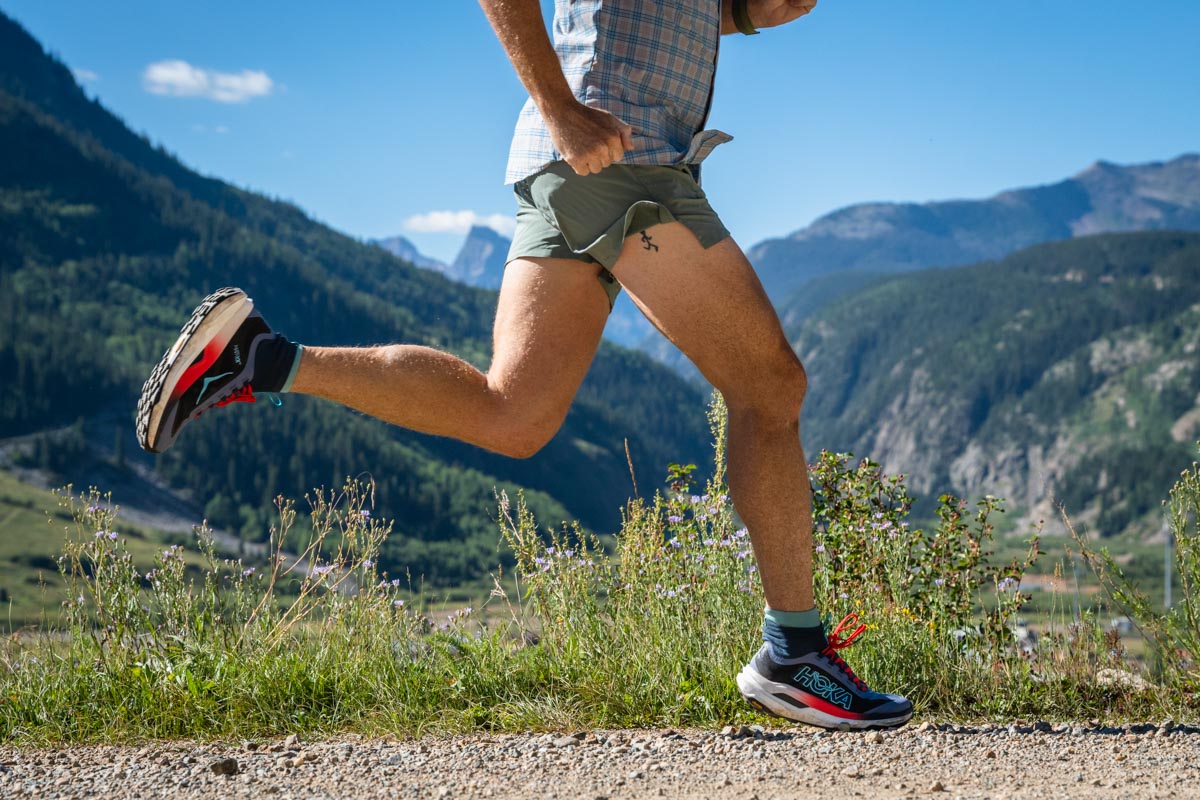
An ankle and foot mobility routine can lead to many happy miles on trails. Photo: iRunFar/Eszter Horanyi
Foot and Lower Leg Superficial Fascia
Start with the often-overlooked outer fascia layer using two simple techniques we’ve discussed before: toe spreaders and the sock pull. These exercises dramatically improve superficial fascia mobility on the plantar surface of the foot as well as the anterior and posterior lower leg. Freeing this shrink-wrap is the essential first step that allows sustainable gains in the deeper structures.
[Editor’s Note: If you are unable to see the video above, click here to watch it.]
Plantar Foot Tissue and Joint Mobilization
To address both the soft tissues and the joints of the plantar foot, begin with horizontal rolling using a ball. You can use either a dense ball (golf or lacrosse) or a softer one (tennis or racquet). Spend a few minutes working on any dense tissue areas like you would with classic plantar fascia rolling.
Next, take the softer ball and step onto it with your full weight. Allowing a ball to fully sink into parts of the plantar foot facilitates efficient joint mobility in all of the 26-plus bones of the foot.
Pay special attention to the lateral border of the foot, from the fifth toe to the heel. Mountain runners and ultrarunners often get stuck in supination with a high medial arch and weight shifted laterally. Gentle, full-body-weight pressure on the ball restores lateral-foot bone glide and helps the foot achieve a neutral stance. This then allows for an efficient amount of pronation (inward movement of the foot). Functional pronation in running involves an outer-to-inner roll of the foot and ankle that enables the loading and engagement of the medial arch, ball of the foot, and big toe during the stance phase and push-off portion of the stride. This “elite feet” concept is crucial for maximal glute engagement and push-off power.
[Editor’s Note: If you are unable to see the video above, click here to watch it.]
The Midfoot Stomp
This is another neutral-foot mobilization specifically for the medial midfoot arch. Again, moderate pronation is vitally important for efficient running, and an excessively rigid, high medial arch may prevent it.
To perform, place the meat of the opposite heel on top of the foot in line with the medial arch and apply firm, oscillating pressure toward the floor. Push on and off for 30 to 60 seconds until a slight wiggle can be felt, and both feet are equally mobile.
This subtle mobilization restores the small but vital glide needed for a dynamic, athletic foot and ankle. It should feel like a mild stretch or wiggle, not sharp pain.
[Editor’s Note: If you are unable to see the video above, click here to watch it.]
Belt Ankle Stretch
Ankle dorsiflexion — bringing the foot up toward the front of the shin — is arguably the most important motion in the foot–ankle–lower leg complex. It drives stride length, full hip extension, glute activation, and even deep core recruitment. Most runners stretch their calves, but true dorsiflexion improvement begins with joint mobility.
The belt ankle stretch applies a strong posterior glide force to the tibia, fibula, and talus, restoring the clean joint mechanics that calf stretching alone cannot always achieve. Perform for 45 to 90 seconds, several times per side, until both ankles are equally mobile.
[Editor’s Note: If you are unable to see the video above, click here to watch it.]
Kneeling Plantarflexion Mobilization
Plantarflexion — the pointing of the foot — is the forgotten partner to dorsiflexion. It balances the ankle, powers push-off, and can actually help restore stubborn dorsiflexion loss, not dissimilar to backing a stuck car out before going forward. These two floor plantarflexion techniques are an excellent and easy way to restore this key motion.
Kneel on your shins. Bring the heels together if they’ve splayed outward and sit back, using body weight to stretch the front of the shins and ankles. This will promote the posterior-to-anterior glide of the tibia and fibula.
If your anterior ankles and shins are very stiff, first try this without shoes. Adding shoes will increase the stretch intensity.
For tighter ankles, use the same position without shoes and apply direct hand pressure to the heel bone and lateral malleolus, the bony bump on the outside of your ankle. Hold or gently pulse for one to two minutes per side with the goal of getting the top of the foot flat on the ground.
[Editor’s Note: If you are unable to see the video above, click here to watch it.]
The Shin Smash
Now that the foot and ankle motion is restored through both the joint and fascia, it is time to work the lower leg. A 360-degree myofascial approach that includes both the posterior-medial (back/ inner) and anterior-lateral (front/outer) portions of the lower leg is essential. It’s important to pay attention to the gastrocnemius, soleus, tibialis posterior muscles on the back of the lower leg, and the tibialis anterior and peroneals on the front.
Using a foam roller, first compress the posterior and medial shin by placing the calf and inner shin on the roller.
But if this is very stiff and tender, first try to mobilize the opposite area by kneeling on the front and outer shin and rolling. Stop on extra dense areas, then pump or circle the ankle. Repeat until the front-outer shin is no longer dense.
Then return to the posterior shin. The calf and medial shin often become tight and sensitive from excessive myofascial tension on the outside. If this is the case, you may find significant improvement in the posterior shin after you’ve rolled the outside of the shin.
Repeat the rolling, using the pumping technique on any dense areas.
Shin myofascial work releases overworked tissues, reduces tendon strain, and prepares the lower leg for deeper stretching.
[Editor’s Note: If you are unable to see the video above, click here to watch it.]
Foot-on-Wall Calf Stretch
This is the primary myofascial stretch for the entire posterior chain of the foot, ankle, and calf.
Place the bottom of the foot at an angle against a wall, door, or stair riser and lean forward. You should feel the stretch from the toes through the plantar fascia, Achilles, calf, and even behind the knee. Enhance the release with:
- Oscillating knee and ankle bends
- Light in-and-out knee rotations
- Weight shifts at the hip (with a straight knee)
Spend 2 to 10 total minutes per side in bouts of 45 to 90 seconds, alternating legs.
[Editor’s Note: If you are unable to see the video above, click here to watch it.]
Standing Anterior/Lateral Shin Stretch
Finish with the often-neglected anterior and lateral compartments of the shin. While standing, plantar-flex the foot with the top of the toes pinned to the ground, and lunge forward so the foot and shin stretch behind you. Add oscillation by lunging forward and back, plus hip-driven leg rotation for greater effect.
[Editor’s Note: If you are unable to see the video above, click here to watch it.]
Frequency and Duration
The beauty of this plan is its efficiency. Even during high-volume ultra and mountain training, performing the full routine just once or twice a week — or splitting it across two shorter sessions — delivers excellent results with a total time investment of 10 to 15 minutes.
That’s all it takes to keep your feet and ankles mobile, resilient, and ready for adventure.
Final Thoughts
If you’re dealing with foot or ankle pain, recurrent sprains, or simply want to enjoy your best, most adventurous round of training yet, integrate this eight-point multidimensional plan into your routine. Your feet will thank you — and so will the rest of your stride. Happy trails!
Call for Comments
- Have you found that a lower leg, ankle, and foot mobility routine has helped your running?