 Last week, I joined a group of fellow athletes and journalists on a backcountry adventure hosted by the shoe brand Mount to Coast. They were launching their new technical trail shoe, the Mount to Coast M1, and invited our group to test and provide feedback after running in it on the rocky, technical trails of the White Mountains in New Hampshire.
The Whites, as they are locally known, have a reputation for relentless terrain and harsh weather, and the Presidential Traverse, which crosses them, is one of the most challenging and unforgiving stretches of trail in the continental United States. As noted on the Fastest Known Time website: “The Presidential Traverse is one of the most rugged sub-20-mile routes in existence. Over half the route is above treeline, and it directly summits seven of the New Hampshire 4,000-footers, including the five tallest mountains in New Hampshire.” For all of us involved, it turned out to be a day to remember!
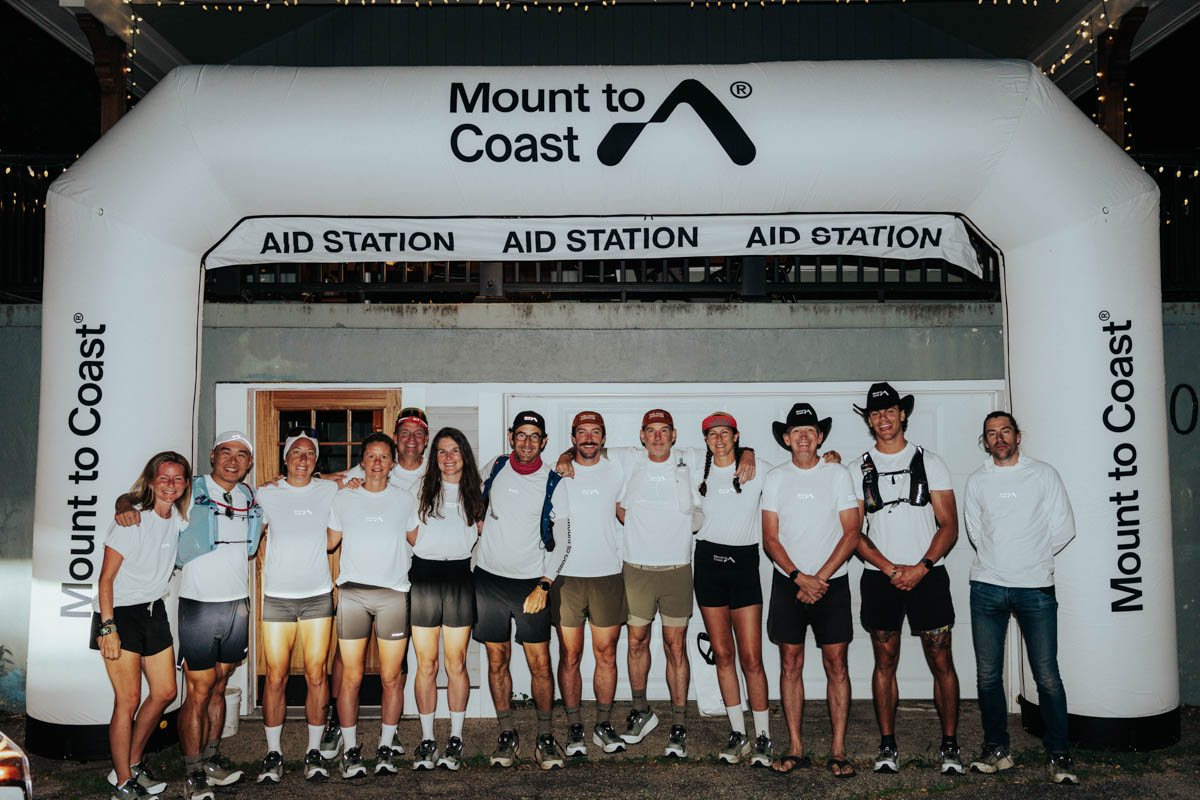
The group before setting out on the Presidential Traverse. Photo: Ethan Schalekamp Photography
Our guide for the adventure was Britta Clark, who ran a then-fastest known time (FKT) on the Presidential Traverse in 2020, covering the route in 4:37. She also holds the current FKT on the Pemigewasset Loop in the White Mountains in a time of 6:31, as well as strong finishes at such noteworthy races as UTMB, Canyons 100k, and Lavaredo Ultra Trail. We knew we were in good hands with Britta.
The day started innocently enough with a 4:45 a.m. departure from the traditional starting point for the traverse, the Appalachia Trailhead outside the small village of Randolph, New Hampshire, on the northern end of the route. The route begins with a steady, gradual climb of 1,500 feet over the first two miles, then ramps up significantly as it approaches Madison Spring Hut at mile 3.8.
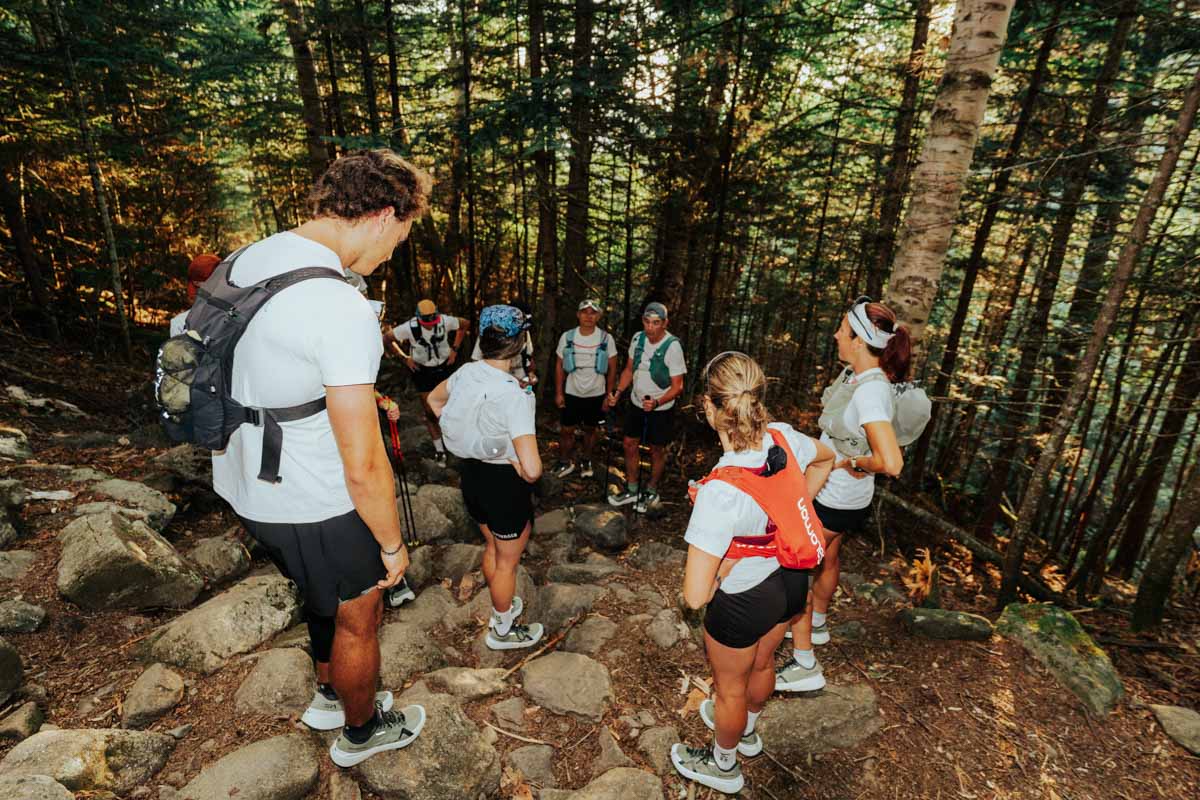
The group gathers to get instructions before summiting the first peak. Photo: Ethan Schalekamp Photography
By the time we reached the Madison Spring Hut, we had climbed 3,500 feet and were ready to take on the first of the day’s presidential summits, Mount Madison. Before beginning the ascent, Britta gathered us together and said, in her classic New England understated style, “We have about a mile out and back to the summit, and it gets a little rock hoppy, so be sure to stay alert.” And then she took off into the quickly gathering fog and ever-increasing wind. I thought to myself, Rock hoppy. Yeah, right. This guy was doing no hopping!
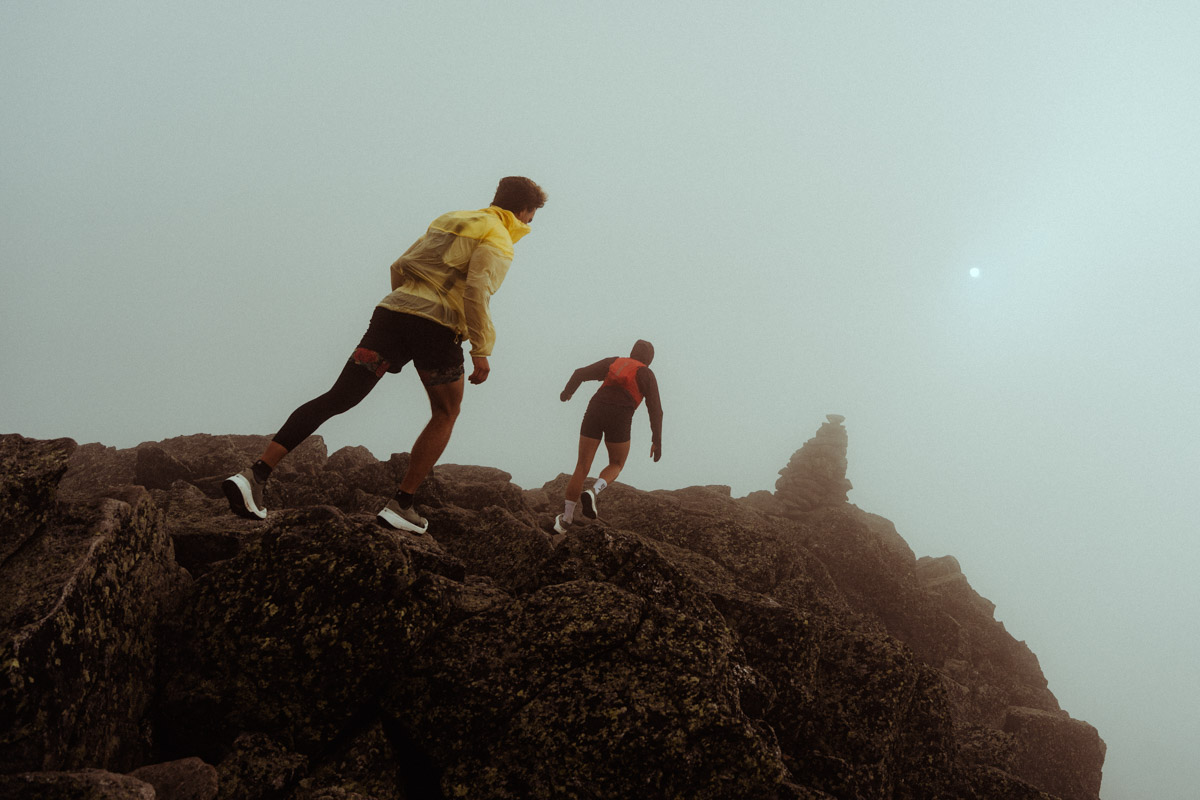
Rock hopping in the fog. Photo: Ethan Schalekamp Photography
About halfway up the climb, it began to rain. And this was not a little drizzle; it was a sideways blast of ice-cold rain digging right into our cheeks. After about 25 minutes, we crested the summit and quickly retreated back to the hut to prepare for our next climb, Mount Adams. Once again, Britta gathered us together, took stock of our condition, and prepared us for the next peak, saying, “It’s not quite as technical as what we just did, but it’s a bit longer, and more exposed.” And off she went into the weather.
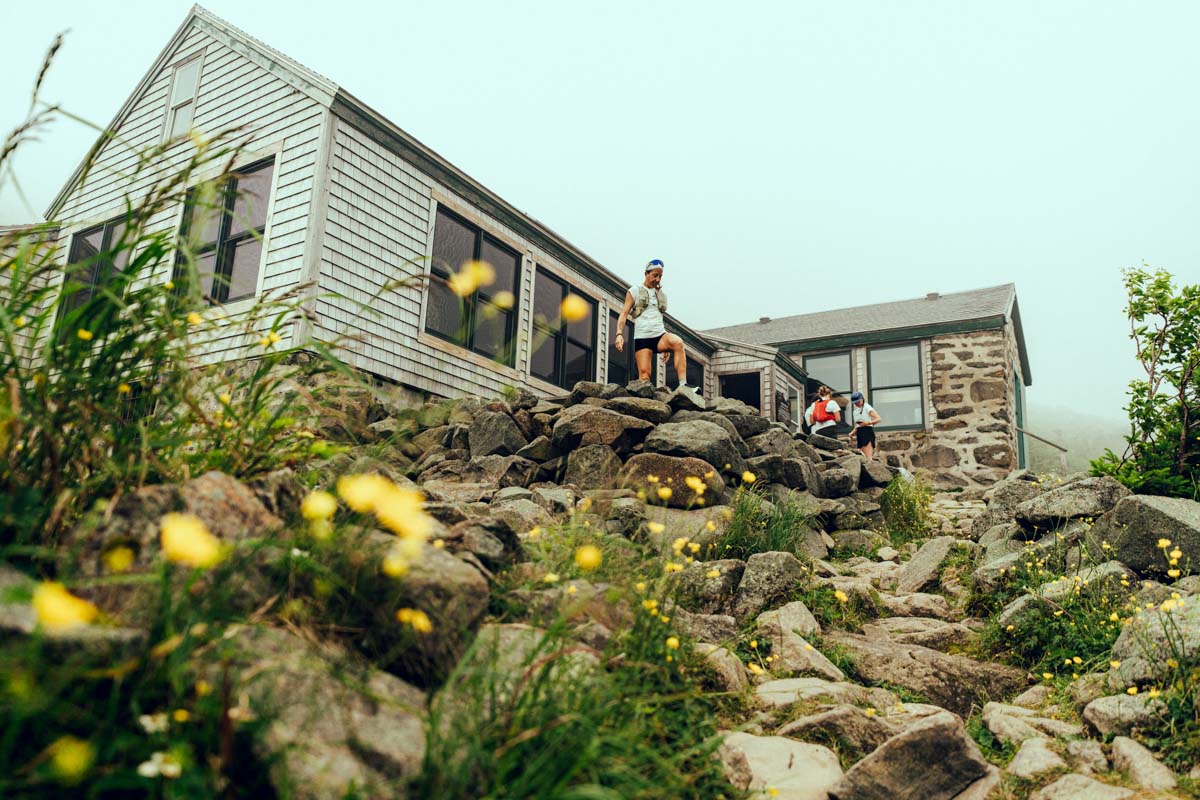
A pause at Madison Spring Hut. Photo: Ethan Schalekamp Photography
As we ascended into what was becoming a whiteout, I could just feel the pace of the group slowing. All of us came into this adventure with some degree of mountain experience, but it became clear pretty quickly, as the wind and rain continued to intensify, that this was likely over some of our heads, and since it was only about 11 a.m., Britta knew that the weather would only be getting worse.
And so it was that after about five hours on the trail and over 5,000 feet of ascending over rain-soaked rocks and wind-swept hillsides, Britta mercifully aborted our mission and told us all to descend back to the hut. Nobody questioned the decision, and within an hour, we were back into the comfort of the Madison Spring Hut, licking our wounds and letting the reality of what we had just been through sink in. We learned later that an inch of rain was falling per hour during our time on Mount Adams, and the sustained winds were 52 miles per hour with a peak wind gust of 83 shortly before Britta decided to turn us around.
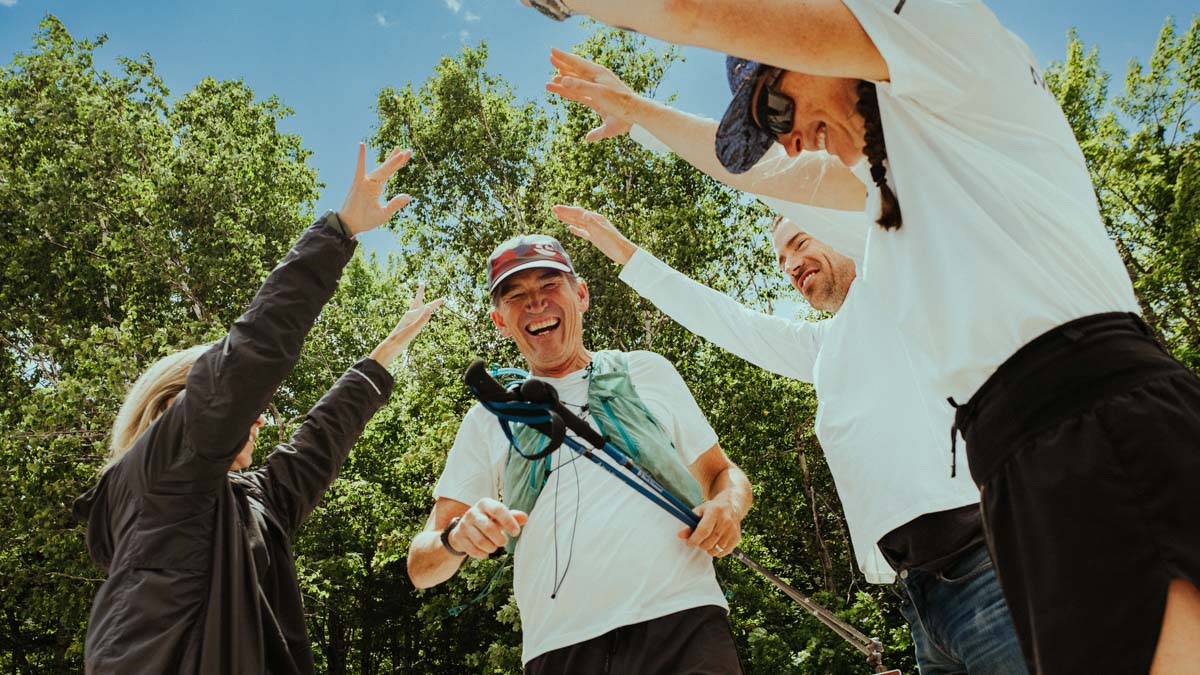
Photo: Ethan Schalekamp Photography
We returned to the trailhead in groups of two or three. As we descended, the weather improved, and by the time we got back to the cars, we were all in t-shirts and shorts. But the reality of what we experienced “up there” persisted, and as we drove away down to the brewery where creature comforts awaited, I was reminded of what my dad used to always tell me when the weather got the best of us, using a baseball analogy I have always loved: “Andy, Mother Nature always bats last.”
Bottoms up!
AJW’s Beer of the Week
 This week’s Beer of the Week comes from Ledge Brewing Company in Intervale, New Hampshire. Their flagship beer, As You Wish, is a classic hazy New England-style IPA with a huge hoppy aroma and a nice fruity finish, a characteristic of the best New England IPAs. A perfect beer after a long day hopping rocks in the White Mountains.
Call for Comments
- Have you had a memorable experience on the Presidential Traverse?
- Do you have a story where Mother Nature got to bat last?

