I was recently walking around my neighborhood with my husband, admiring lawns. I didn’t use to do that. It’s the sort of thing that creeps up on you in your 30s. One day, you are cool. The next day, you wake up and start admiring lawns.

Admiring Nature’s lawn. Photo: iRunFar/Bryon Powell
What I have learned is that good lawns don’t happen by accident. They require foresight and diligence. They require active cultivation. Otherwise, weeds overtake them. The same is true for ultrarunning. What we cultivate grows.
A Growing Sport
Ultrarunning is a growing sport. It used to be a small group of oddballs who, for whatever reason, wanted to run far. Now it is a large group of oddballs who, for whatever reason, want to run far.
With the growth of ultrarunning has come significant changes. Training methods are more sophisticated. Media attention has increased, and there is more money in the sport. Events are bigger, except for the ones that remain the same size but now have lengthy waitlists. The variety of event distances, surfaces, and topography has increased, and there are more race opportunities than in the past. There are also more factions — dissenting groups with competing visions about what the sport is or might become.
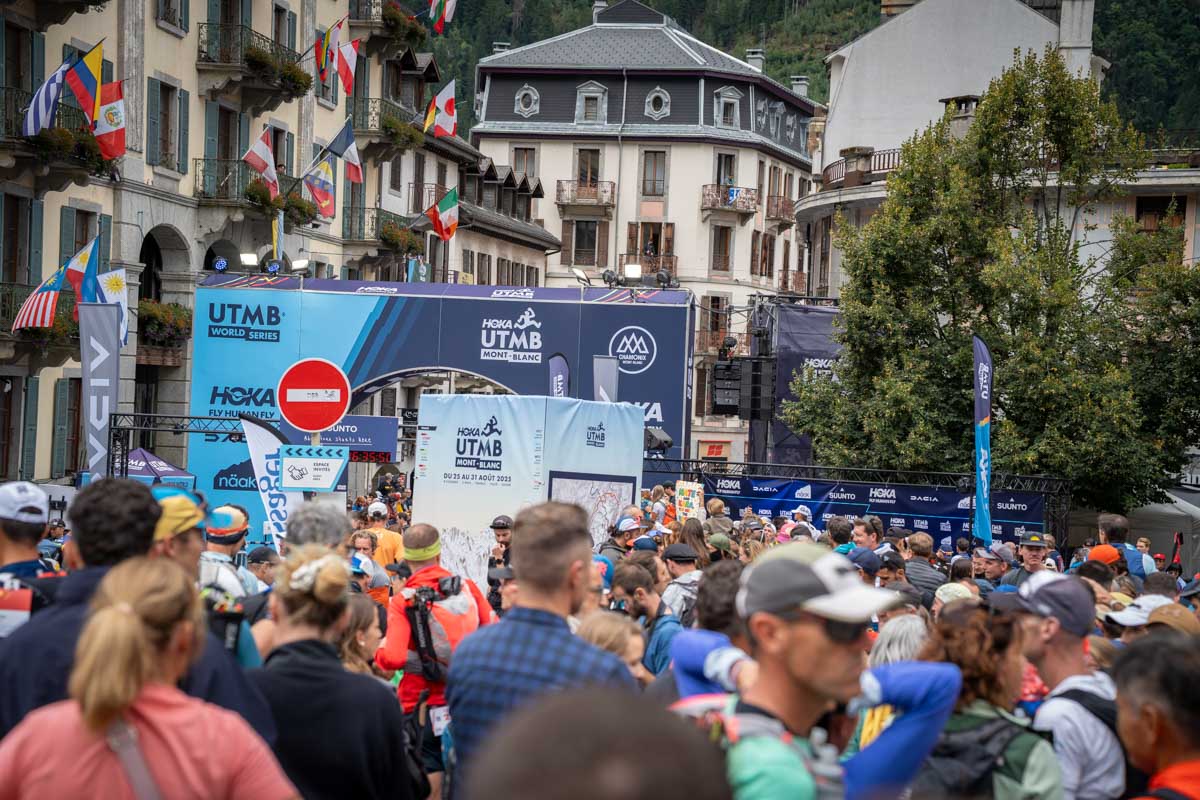
Ultrarunning is in a space of incredible growth. Photo: iRunFar/Eszter Horanyi
With the influx of money in the sport, have come brands vying for market share. They bring different aesthetics, branding, and competing messages about what ultrarunning is about. Sometimes they get into public feuds about it (1).
This competition among brands can be productive, since it means professional ultrarunners are now compensated at levels commensurate with their value (2). However, it also means our attention is directed toward trivial distinctions among clothing and gear, and away from the heart of the activity — the running, the thing we all have in common.
Listen, I am not going to be a “doom and gloom” lady. Ultrarunning is at an exciting moment. Growth is great, and I think the sport is mostly in good hands with its current leadership and media. But a risk of growth and commercialization is that they can distract us from what matters.
Maybe we entered the sport trying to find respite from consumerism and immerse ourselves in nature, only to suddenly find ourselves buying more stuff. Or maybe we wanted peace and stress relief, only to find ourselves reading think pieces about feuds between brands we have never heard of. Maybe we wanted to edify our characters through endurance, and suddenly, we are focused less on substantial change and more on our exteriors, dressing up in fancy running outfits more costly than our cars. We forget why we started ultrarunning in the first place.

We shouldn’t forget why we started ultrarunning in the first place. Photo: iRunFar/Eszter Horanyi
A friend prompted me to tackle the question of culture in ultrarunning’s current moment of growth and change. It is a complex question because there is no neat narrative for the ways in which the sport is changing. Some of the changes are great, and some of the changes threaten to undermine much of what we love about ultrarunning.
The Concept of Culture
“Culture” is a notoriously ambiguous concept. In broad strokes, it captures a group’s conventions and norms, including practices, traditions, and tastes. The etymology of the term is likewise complex, with multiple origins, most notably Latin and French. In some contexts, culture is related to the “cultus,” or reverence and worship (3). It also captures agricultural activities such as forming, training, and tilling the earth (4). To cultivate is to improve and render fertile to yield fruit (5).
In assessing ultrarunning culture, the agricultural image will be helpful for us. We can consider three things:
- We should be clear about what we aim to grow.
- Not all growth is productive; we should learn to identify weeds.
- Cultivation is hard work that requires foresight and diligence.
What Are We Cultivating?
When you ask kids how far they can run, they often think they can run forever. In our sport, we measure, in precise terms, how far we can run. In this way, ultrarunning satisfies a natural curiosity about human limits. We test boundaries and learn how to endure. This is humanizing and awesome.
Because our central task in ultrarunning is endurance, we should focus on that. We should aim to cultivate our capacity to persevere, learning to remain in place in pursuit of arduous goods. This pursuit is worthy of our energy and attention for its own sake, insofar as it is enjoyable. But running far can also refine us in many ways, requiring that we become patient, resilient, and diligent to perform well. It is good in itself and for its consequences.
There are other goods, or fruits, that we can aim to grow. Community has long been a priority among ultrarunners — group runs, shared service, crewing, and mentoring. I have written in the past about how ultrarunning is the hospitality sport. We can continue to cultivate a welcoming reception for new runners.
Another good worth cultivating is sustainability work. We spend a lot of time outside on trails and in the woods. More so than other sports, ultrarunners are often engaged in the work of preservation and care for the forests we run through.
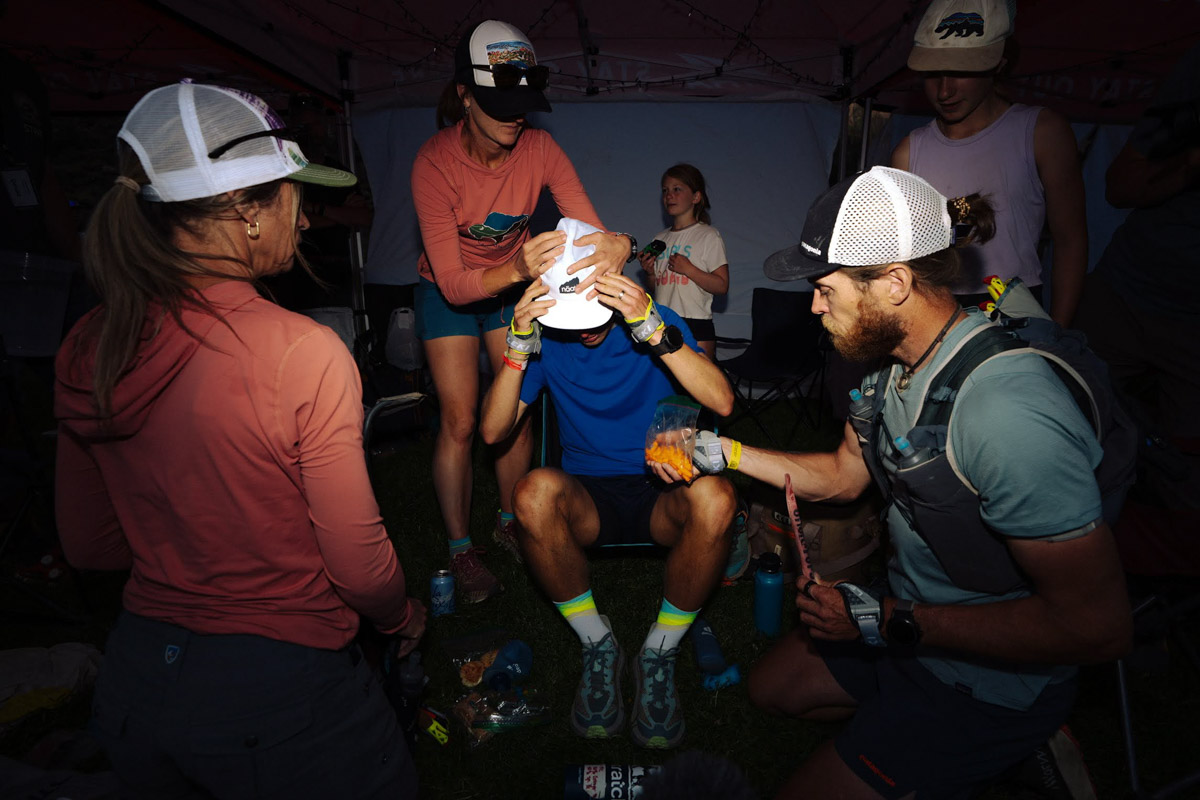
Gabe Joyes’ crew at the 2025 Hardrock 100 proving once again that ultrarunning is a team sport. Photo: Niko Carste
Learn to Identify Weeds
Ultrarunning is a growing sport, but not all growth is our good. We should figure out what is productive in the changing landscape and prune away the things that choke out the good.
What are the proverbial weeds of ultrarunning? Some of them may be structural. For example, maybe we don’t like races being consolidated under major companies. Or maybe we do. Some of them may be personal or dispositional. Gossip (unrestrained speech about one another), vainglory (caring more about the image you put forward than the person you really are), elitism (which undermines hospitality), and materialism (a preoccupation with buying stuff) all come to mind. I also mentioned that there are more factions than before.
To some extent, factions and dissension are inevitable as the sport grows. That is how humans operate. In “Federalist 10,” James Madison wrote that factions are “sown into the nature of man” because of differing opinions, tastes, and interests (6). Hopefully, we can disagree in constructive ways and remember the very large, excellent thing we all have in common: running far. If we can’t, then unproductive discord is another weed that might choke out the good.
Cultivation Is Hard Work
Good lawns don’t happen by accident. A good running culture won’t either. We need to collectively invest in the thing we care about, with the “repetitive, persistent, and loving care of the farmer (7).”
That might mean encouraging others, supporting their races, serving on committees, and doing trail maintenance. If community is an asset, then we have to figuratively get our hands dirty, cultivating friendships.
It is easy to complain about weeds. It is a lot harder to actively thwart them and grow something good in their place.

There are many ways to cultivate community. Photo: Ron Heerkens Jr
Final Thoughts
Ultrarunning is at an exciting moment of expansion, commercialization, and change. Much of this change is productive. But a risk of commercial growth is that it can undermine culture and choke out what is special about the sport. Like a good lawn steward, we should diligently cultivate the good and learn to recognize weeds.
Call for Comments
- What does running culture mean to you?
- What other ways can we cultivate good running culture?
Notes/References
- See K. Frost. 2026. Satisfy, Currently Running, and the Fight Over Running’s Aesthetic. Here & There. Accessed 6 April 2026 Link: https://www.hereandthere.club/p/satisfy-currently-running-and-the-fight-over-running-s-aesthetic
- At least some of them are. Ultrarunners remain the proverbial ‘starving artists’ of sports.
- Pieper, J. 1998. Leisure the Basis of Culture. Transl. by G. Malsbary. St. Augustine Press.
- Oxford University Press. (n.d.). Culture, n., Etymology. In Oxford English Dictionary. Retrieved April 7, 2026, from https://doi.org/10.1093/OED/2200472041
- Oxford University Press. (n.d.). Cultivate, v., 1.a. In Oxford English Dictionary. Retrieved April 7, 2026, from https://doi.org/10.1093/OED/5406101325.
- Madison, J. 1787. The Federalist Papers. No. 10. The Avalon Project. Web <https://avalon.law.yale.edu/18th_century/fed10.asp> Accessed 7 April 2026.
- Malsbary, G. translator note in Pieper, J. 1998. Leisure the Basis of Culture, p. 70.