[Editor’s Note: This Community Voices is written by Justin Neuman, who is a professor of literary studies at Eugene Lang College, The New School, in New York. He is the author of “Fiction Beyond Secularism” and co-author of “Modernism and Its Environments,” and co-editor of the “Cultural Frames, Framing Culture” series at University of Virginia Press. He has completed over 50 trail ultramarathons … and still can’t outrun his inbox.]
“How did you do it?” is a question my wife and I get all the time from runner friends and at the start lines of the races we run with our kids. How did we get our kids, now 16 and 19, into trail running and eventually, into ultramarathons? The assumptions are clear: Running is good for you, but isn’t any fun, and if teenagers are racing trail marathons, it must have involved either some very special carrots or some strong use of the proverbial stick.
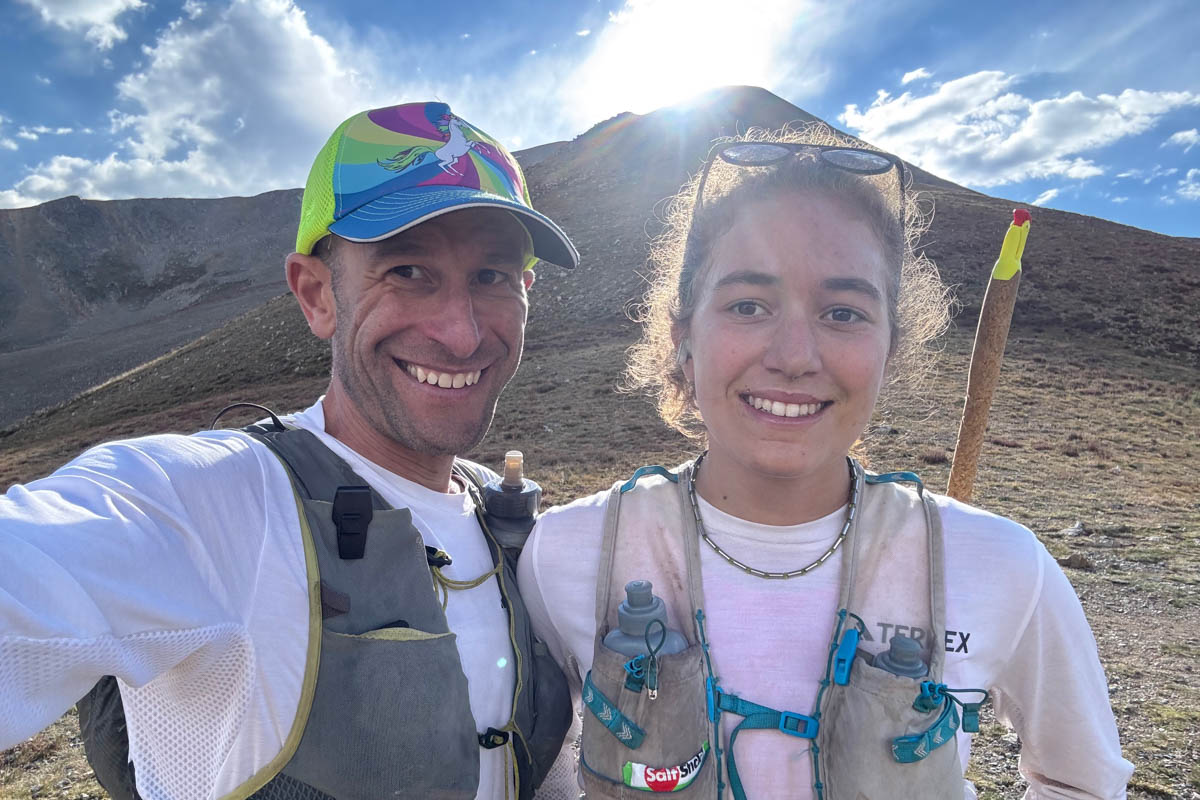
Justin Neuman and his daughter on Hope Pass during the 2025 Leadville 100 Mile. Photo courtesy of Justin Neuman.
Getting this question from adult runners is particularly ironic. They, of all people, should know: Kids love to run. Happy kids run everywhere. It’s the adults who keep telling them to stop.
So while the honest answer is, “We didn’t do it, our kids did,” a decade of running with children and mentoring them toward achieving their athletic dreams has taught me some things worth sharing.
It Starts Before the Running
For our family, it started with the hill on the walk to daycare, just under a mile from our house. Load the kids in the stroller, leash up the dog. Getting out the door was generally an inevitable disaster — someone needs socks, someone else forgot their lunch — but as soon as we stepped foot on the sidewalk, there was clarity, ease, conversation.
When I found out my wife had been making the kids walk up the final hill — an injured back made the stroller too heavy for her to push, so the three-year-old had to walk — I started doing the same. Initially, it was just for fairness, but it stuck.
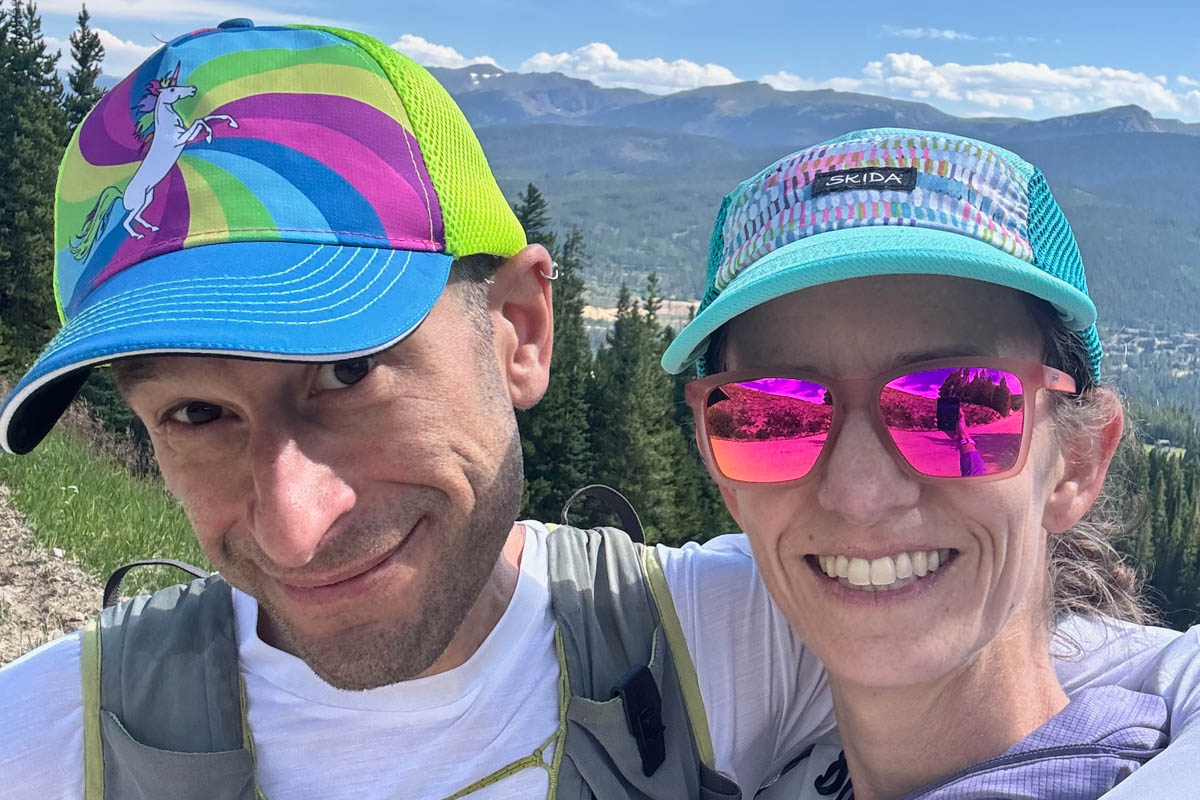
Neuman and his wife aree raising kids who love running. Photo courtesy of Justin Neuman.
I was obsessed with the Tour de France at the time, so I turned the hill into a competition. By sprinting the hill, they could collect imaginary polka-dot jersey points for the King of the Mountains competition at the top. The kids arrived at school flush-faced and grinning, brains activated to meet the day. At the time, I didn’t know the science behind it, I just knew they were sharper and happier on the mornings they sprinted for the summit.
We did this for years. Rain or shine. The preschool, then the elementary school, sat right next to the daycare at the top of the hill, so our kids walked the route twice a day from age three to 13, resulting in 10 years of near-daily hill sprints.
Fun First, Fitness Follows
The polka-dot jersey points were completely imaginary. No actual prizes were ever involved, and it didn’t matter. The game was the thing.
Kids learn to love movement by moving, not by being told it’s good for them. If they associate running with play and adventure and freedom — headlamp runs in the dark, puddle-stomping in a rainstorm, earning polka-dot jersey points on the way to school — then fitness isn’t something they have to pursue later. It’s just what their body knows how to do.
You don’t start with the runs. You start with the walk to school, the playground, or wherever you need to go. If you want to run three miles with your eight-year-old, be active together every day for the five years between three and eight. The foundation comes first. The running comes when they’re ready, and they’ll tell you when that is.
Adventure Play
At first, we called what we were doing “trail speed adventures,” a mile or two of trail running done under the guise of a play session. There was tree-climbing, rock-collecting, and a great deal of walking involved. Nobody called it training. We just went outside and moved through the woods and over the trails as fast as we could for a short, set period of time.
When you start running more formally, the same principle holds. Kids don’t care about their VO2 max. They care about whether the thing you’re asking them to do is fun. Fortunately, for most kids, running simply is fun. Your job as the parent isn’t to train them; it’s to have fun in motion with your kid.
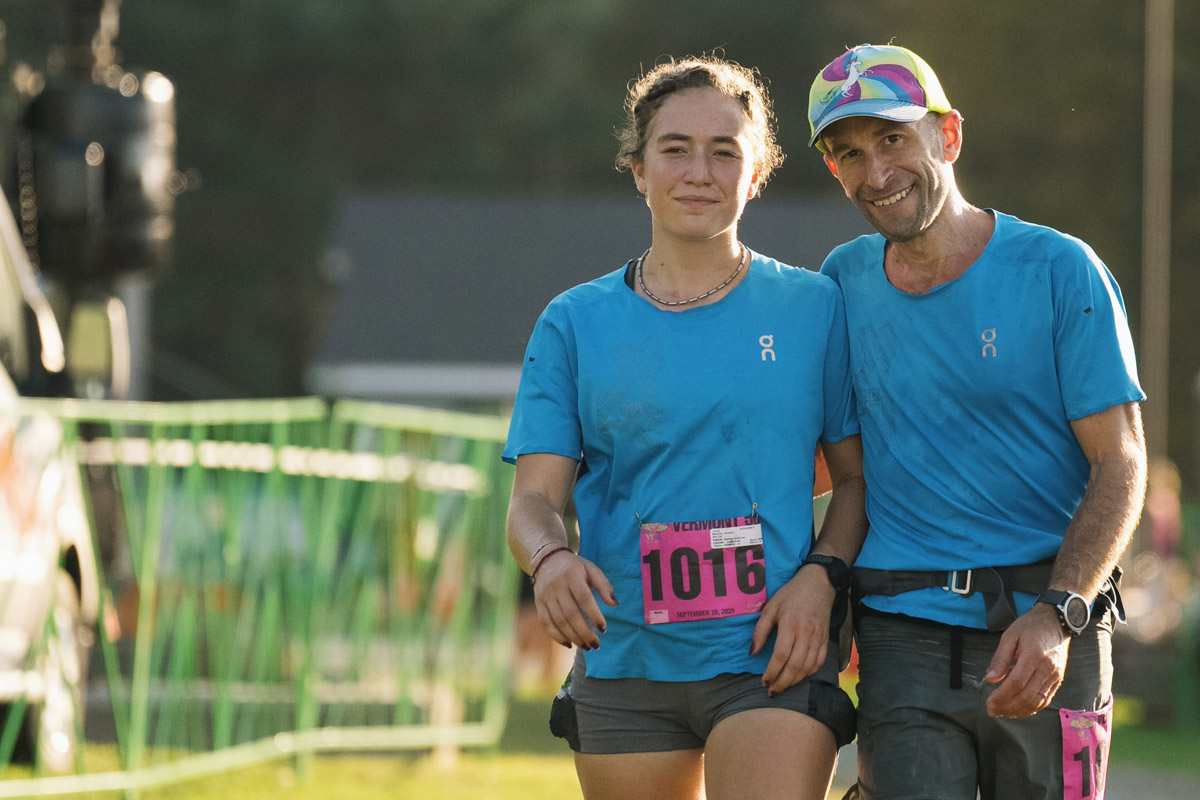
Neuman and his daughter during the 2025 Vermont 50 Mile. Photo: Eli Burakian
Gamify the loop by designating sprint points, walk zones, and turnaround landmarks. On the trails, punctuate the run with fun activities: scramble up a rock face, climb a tree, investigate a weird mushroom, throw stones into a creek, explore that cool cave. A trail speed adventure is not a run interrupted by distractions. The distractions are the point. The running connects the good parts.
Be the Sherpa
The most practical piece of advice I can give to the parent of a young runner is to carry their snacks and their water. You are the pack mule. You are the aid station. This is your new calling.
It’s amazing what a gummy bear can do for a kid whose legs have gone to cement. A little electrolyte drink at the right moment is the difference between a meltdown and another mile.
The snack situation opens a larger conversation about how to be a healthy eater. It’s no secret that kids love processed foods that aren’t necessarily good for them on a regular basis. In our family, we shifted the ultra-processed stuff — the foods designed in laboratories to be irresistible — out of daily consumption and into exercise-only territory. This does two things simultaneously: It makes running more appealing, and it moves a potentially problematic food into a context where your body can actually use the sugar. Oreos at mile five hit different than Oreos on the couch. Kids understand the difference immediately. Rebrand junk food as “adventure fuel.”
Cramps Are Not Emergencies
Kids cramp. They’re growing, their hydration is chaotic, they’ve been sprinting when they should have been jogging, and sometimes they cramp for no reason at all.
The first time our son cramped — two miles into a run on the trails in East Rock Park, Connecticut, when he was eight years old — he looked at me like his body had betrayed him. Which, in fairness, it had. But we walked it off and kept going, and he still had a good time.
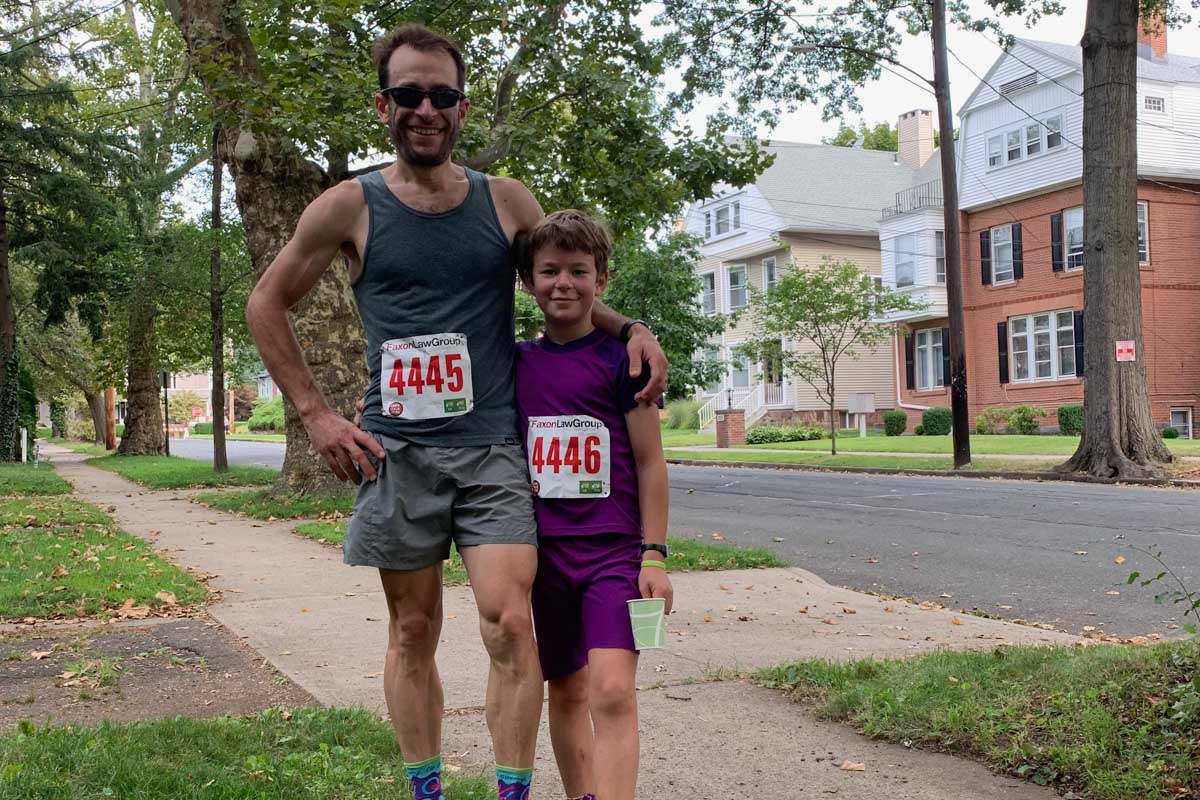
Neuman with his son during his first race. Photo courtesy of Justin Neuman.
This pattern repeats dozens of times over the years. The cramp comes, and with it the grimaces of pain. So, you walk. You talk about something completely unrelated. The cramp subsides. You start running again. Eventually, the kid learns that discomfort is not the same as injury, that the body has resources it hasn’t yet deployed, and that walking is not the same as quitting. They learn that cramp — or any other type of temporary discomfort — is not a run-ending emergency.
Always Say Yes
There will be a moment — I promise you this — when your child asks you to go running at the absolute worst possible time. You just got home from work. Or you’ve just finished a massive effort of your own, and you’re about to collapse into a well-earned nap.
And your kid says: “Daddy, let’s go running.”
Say yes. Always yes.
My kids’ favorite time to propose a run was right after my Saturday long bike ride, when my legs were jelly, and my only aspiration was to take a nap. I’d make a theatrical display of the suffering — groaning, limping, exaggerating every ache — and they loved to see me struggle. In those instances, the power dynamic flipped, and the kid became the strong one.
A child who wants to run with you is a child who has chosen you as their adventure partner. That invitation has an expiration date, so when they ask, you go.
Build the Habit, Then Trust It
Humans are habit-forming creatures — to our peril and our potential. The same neural architecture that hooks us on doom-scrolling can hook a kid on Wednesday morning runs.
Consistency matters more than intensity, and short runs on a regular schedule beat an epic adventure once a month.
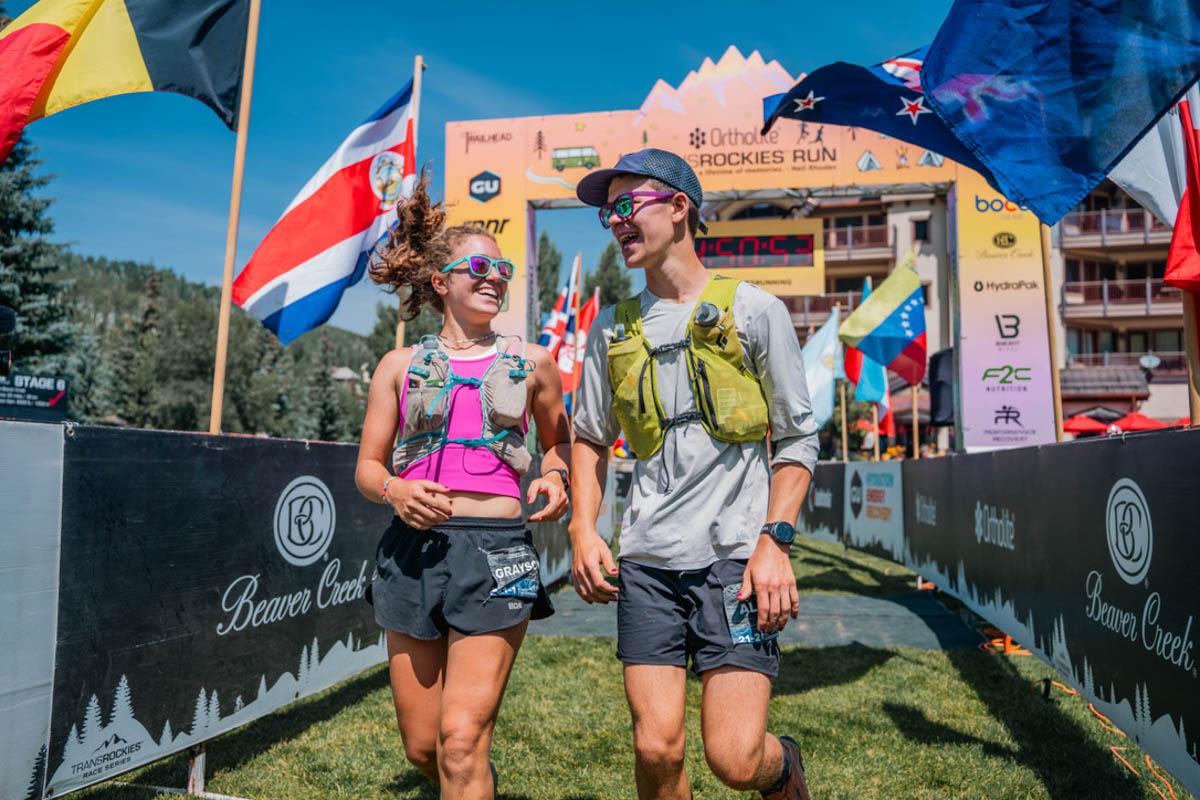
Neuman’s two kids finishing the 6-day TransRockies Run. Photo courtesy of Justin Neuman.
The training philosophy I’ve come to believe in, for kids and adults both, is simple. You build fitness the way you build a brick wall: one block at a time. Every run is a brick. You don’t judge the individual bricks. You stack them. Hard runs are productive — you’re building capacity. Easy runs are productive — you’re building aerobic base. Runs where everything goes wrong are productive — you’re learning something. The only bad runs are the ones that don’t happen.
Run Club: The Peer Pressure You Want
A run club with friends can be a great motivator. Once a week at a scheduled place and time, plan to meet with a few other families. Run the same loop every time so people get a feel for their progress and the routine. No fees, no coaches, no complicated planning. Just bodies in motion together on a recurring schedule for intergenerational play.
What happens next is the magic. Kids will run farther, faster, and more willingly with other kids than with any adult, no matter how fun that adult thinks they are. The eight-year-old who whines through a mile with mom will rip three miles chasing a friend and ask when the next run club meets. Peer pressure gets a bad rap, but when used right, it’s sticky stuff.
Tears Are Just the Body Talking
There will be tears. Count on it. A cramp hits, and your kid dissolves. The weather turns ugly, and the fun evaporates. A bad day at school bleeds into the run, and suddenly everything is terrible, they hate running, and they hate you for making them do it. There will be whining.
Don’t take it personally, and don’t try to fix it. Tears are just the body talking.
A kid at the edge of their physical capacity doesn’t always have the emotional bandwidth to be rational. They’re not deciding to be difficult; their brain has just run out of the chemicals that make things feel ok. It’s normal, and it’s what internal adaptation looks like from the outside.
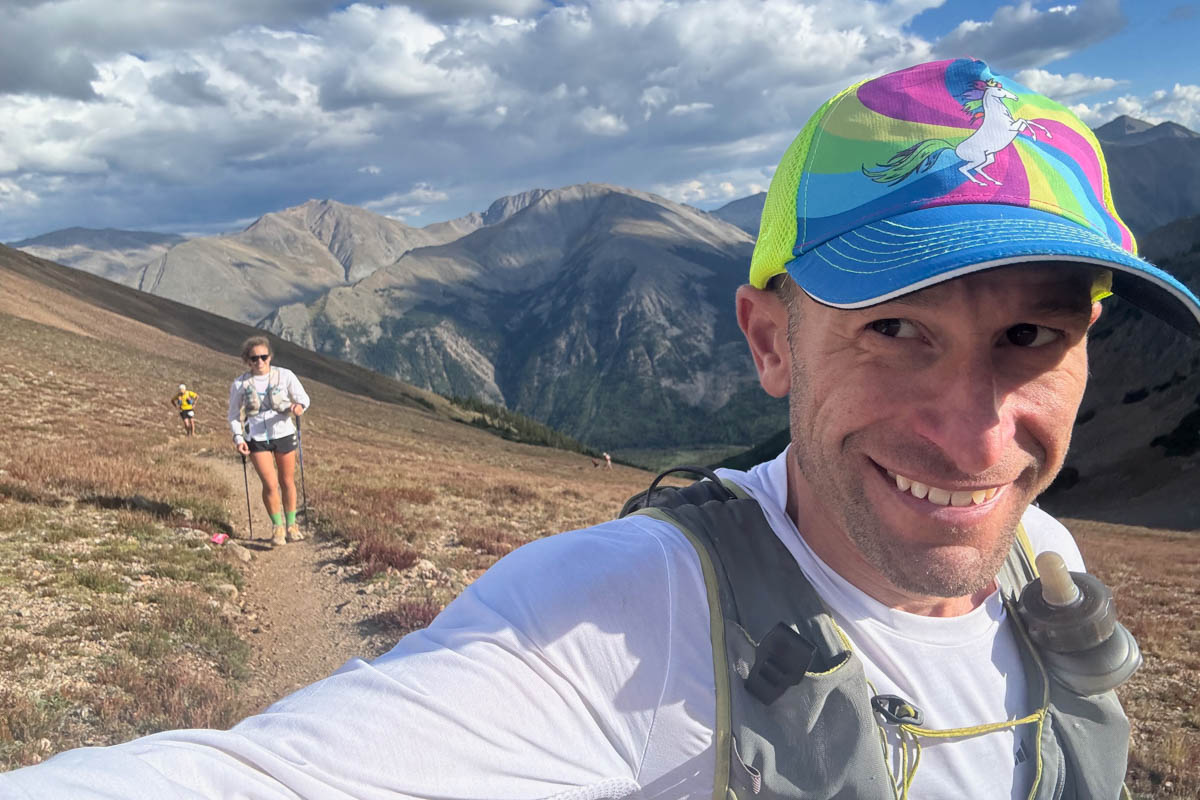
Neuman cresting Hope Pass during the 2025 Leadville 100 Mile with his daughter as his pacer. Photo courtesy of Justin Neuman.
Walk. Talk about something else entirely. Have a snack. Give it time. The storm passes faster than you think, and on the other side, the kid often has a second wind they didn’t know was coming.
The important thing is not to quit. Not in the dramatic sense. Of course, you turn around if a child is injured or truly in distress. But the routine meltdown, the one that happens at mile two because their legs are tired, you walk through that one. You keep going. And afterward, when they’ve finished, and they’re proud of themselves, you’ve taught them something no classroom can: Discomfort is temporary, the body adapts, and they are tougher than they think.
Our daughter says she hated running for the first hundred runs. A hundred runs is a lot of runs to hate something before you learn to love it. That was determination on her part and patience on ours. Now she has dozens of trail marathons under her belt and has introduced many people to the sport. Somewhere along the way, she coined the phrase: A run you’ve done is always fun. Patience was a key part of the process.
Learn to Listen
When our son announced, at eight years old, that he wanted to be a runner, we didn’t sign him up for a training program. We went for a run. And then another one. And then we paid attention.
Listening doesn’t just mean hearing what they say. It means watching how they move. Listening to their breathing. Noticing when the silence on the trail shifts from contentment to struggle. Knowing the difference between “I’m tired,” which means slow down, and “I’m tired,” which means give them a gummy bear and some distraction, and they’ll be fine in two minutes. It also means learning the difference between a healthy desire to run and one that has darker, and potentially problematic, sources.
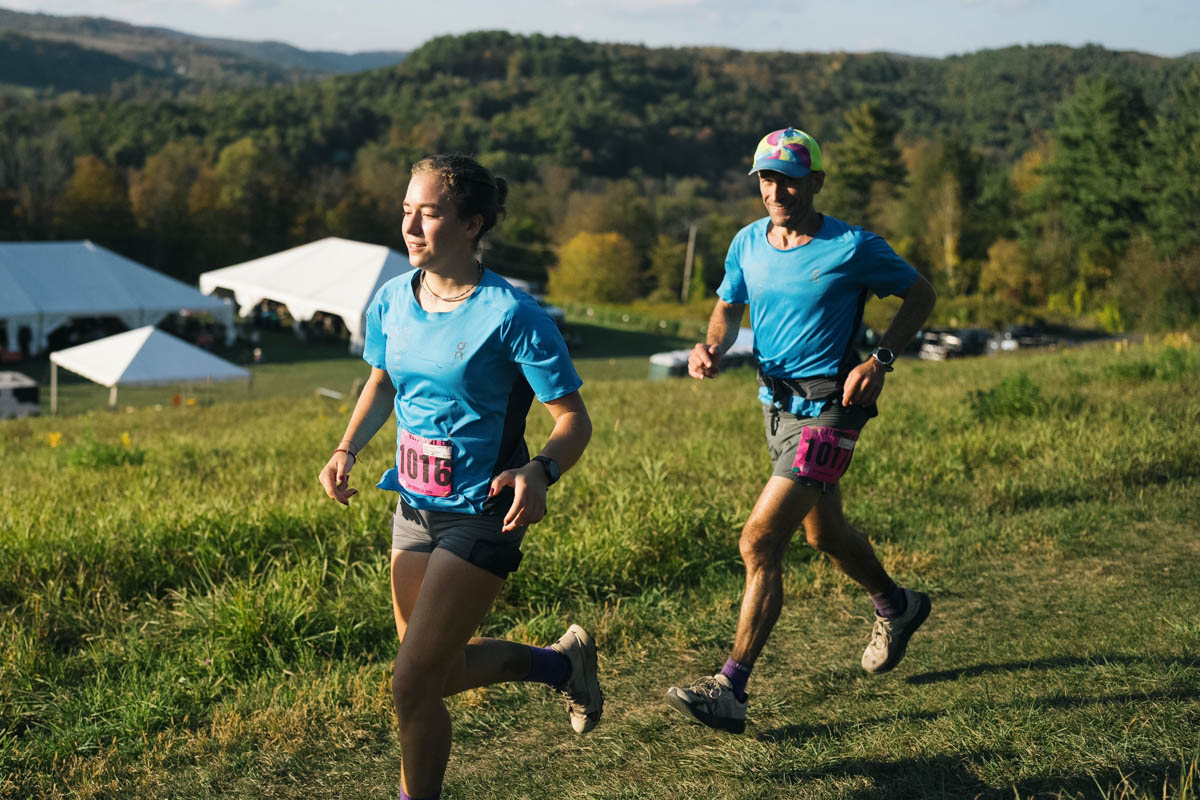
Neuman running with his daughter during the Vermont 50 Mile. Photo: Eli Burakian
Our son’s desire to run wasn’t something we manufactured, but it wasn’t an accident either. It was seeded by years of walking to school and trail speed adventures and polka-dot jersey points, and then nurtured by us following his lead when the spark caught. The trick is recognizing the spark when it comes and not smothering it with structure. An eight-year-old with extra energy does not need a coach and a periodized training plan. They need a parent who says, “Let’s go for a run,” and then pays attention to what happens next.
A kid who’s chattering away on the trail is a kid who’s thriving. A kid who’s gone quiet might be working through something hard, which is good, or might be shutting down, which requires intervention. You learn the difference by logging miles together. There’s no shortcut.
This is the hidden gift of running with your kids. Not the fitness, not the grit — though those are great too — but the time. Side by side or single file on a trail, with nothing to do but move and talk, kids will tell you things they’d never say elsewhere. The conversation doesn’t happen because you asked for it. It happens because the rhythm of the run opens up space, and because looking ahead at the trail instead of at each other makes honesty easier.
The Long Game
I was never a serious runner. I’d jogged a little in college before switching to road and mountain bikes. When I was 40, my son got into running, and I followed him into the sport. A decade later, I finished the Leadville 100 Mile, won an age-group national mountain running title, and watched both my kids become athletes I never imagined possible.
None of it was planned. All of it was built brick by brick.
The knock-on effects go far beyond fitness. Better sleep. Better appetite. Better concentration. Better emotional self-regulation. You can see it in their faces when they walk into school after a morning run versus after a morning on the couch.

Neuman’s two kids loving cross-country running. Photo courtesy of Justin Neuman.
Running with your kids changes everything. When we run together, we run together, step for step, feet in sync. Not by accident, but by biology, and because rhythm follows rhythm. Running with kids stops feeling transactional and starts feeling communal. You’re no longer proving or chasing anything. You’re just there, aligned, present, moving through the landscape together. The trail gives you time to talk about things you’d never get to on the couch. Dreams. Life. The next adventure.
Start with the daily walk. Invent your own games and awards. Carry treats in your pockets. Say yes when they ask, especially when you’re exhausted. Don’t flinch at the tears. Stack the bricks.
Remember: A run you’ve done is always fun, especially when it’s with your kids.
Call for Comments
- Kids and running, we know you have stories! Please share them in the comments.
- What are your kids’ relationships with running?