On June 21, Makena Morley, Tabor Hemming, and Tayler Peavey will all stand on the start line of the competitive and money-rich 2026 Broken Arrow Skyrace 23k. A day prior, Zach Perrin, and possibly Erin Clark, will have raced the Broken Arrow Skyrace 46k. A week later, Adam Peterman will line up for the Western States 100 — an event he won in 2022 — with Perrin as a pacer and Clark as part of his crew. All six are elite trail runners, and all six came out of a magical time at the University of Colorado Boulder (CU) cross-country program in the mid-2010s.
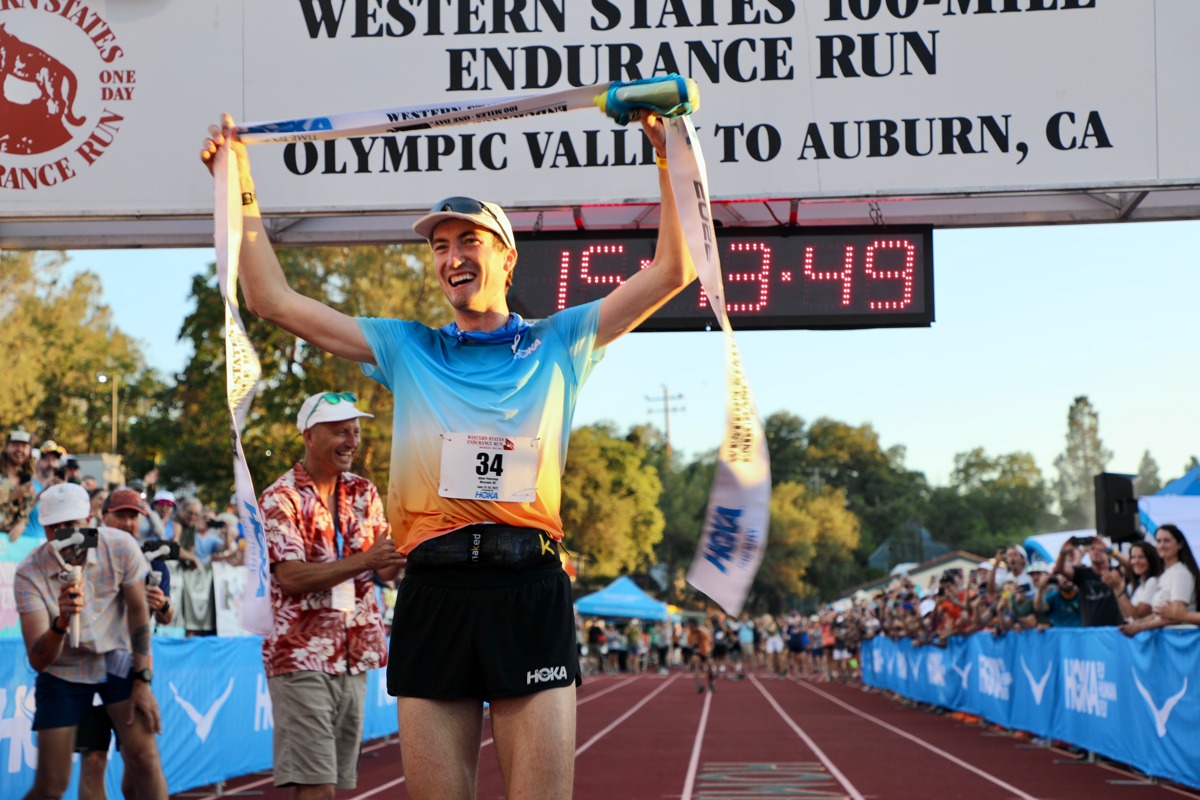
Adam Peterman winning the 2022 Western States 100. Photo: iRunFar/Bryon Powell
Professional trail runners come from all different backgrounds — especially as distances get longer — but this high concentration of elites all emerging from the same CU Buffaloes program during the same years is worthy of note. While the CU running program has long been known for producing successful road and track runners, including Olympians Jenny Simpson, Emma Coburn, Dathan Ritzenhein, Adam Goucher, and others, and other CU runners preceded this group in transitioning to the trails, including Andy Wacker and Allie Avatar (née McLaughlin), this feels like the first big wave of trail specialists to emerge from the program.
So what came first? Did CU make future trail runners, or did the future trail runners all choose CU?
CU Cross Country in the Mid-2010s
Something special happened at the 2018 NCAA Division I Cross Country National Championships. “I saw Dani [Jones] win and then looked, and here comes Makena. I looked again, and there’s Tabor, and Sage [Hurta-Klecker], and then Tayler. Buffalo, Buffalo, Buffalo. Every time I turned around, it was another Buffalo. I was overwhelmed.” Billy Nelson, the CU cross-country assistant coach from 2010 to 2022, beamed in his recollection of the race, held in Madison, Wisconsin. The CU women won the national championships by 38 points. They placed six women inside the top 30 in the six-kilometer race.
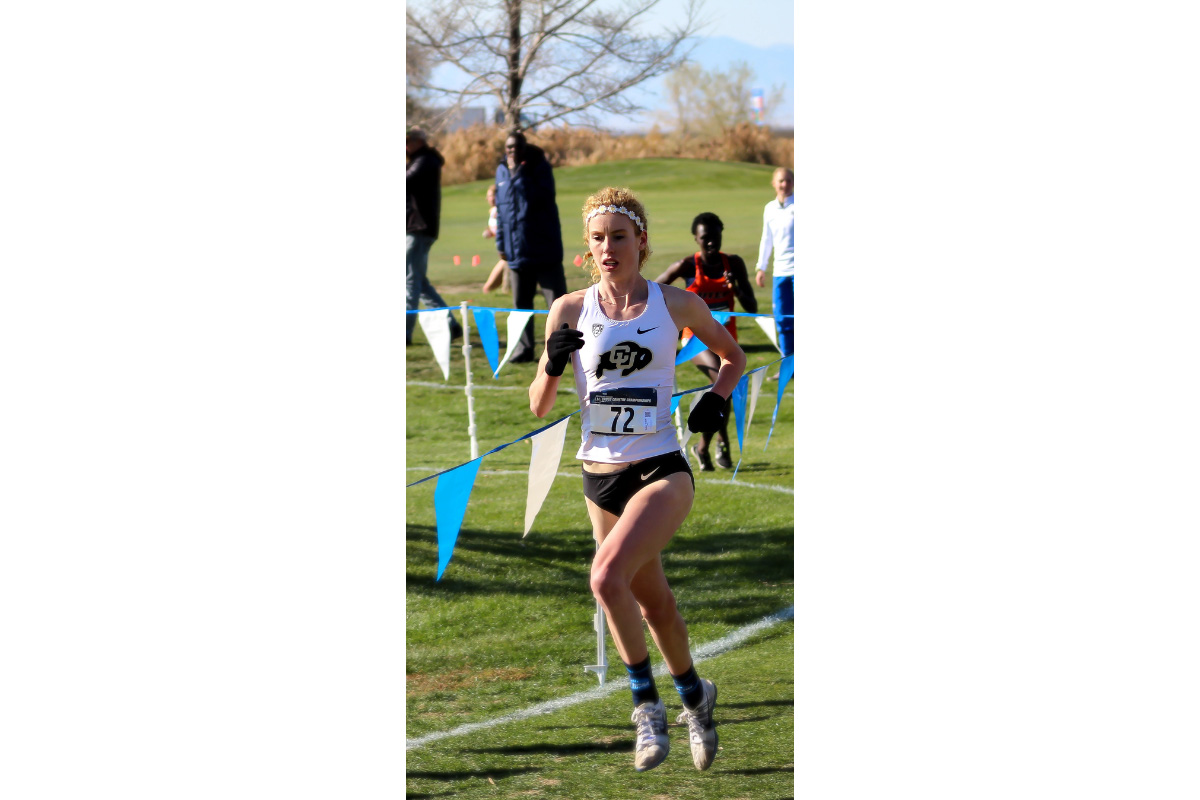
Tabor Hemming running a cross-country race in CU colors. Photo courtesy of Tabor Hemming.
Nelson was a part of multiple national championships at CU, both as an athlete and as a coach, but called the 2018 women’s team the best. “We won the individual title, won the team title, and had six women finish as All-Americans,” Nelson boasted, with a strong emphasis on the six. “I wasn’t shocked, wasn’t surprised. It was a dominant run. They did exactly what they needed to do. They tucked in when they should, showed grit when they needed to, and pulled away in the last 800 [meters].” The CU women were so good that they would’ve won the team title even without individual winner Jones.
And now three of those CU cross-country All-Americans — Morley, Hemming (née Scholl), and Peavey (née Tuttle) — have all found their way onto trails. Morley, who has run a 2:30 marathon, won the 2026 Canyons 50k and the 2025 Kodiak 50k. Hemming was 10th at the 2023 Marathon du Mont-Blanc, has been in the top five at the Broken Arrow Skyrace 23k three times, and was in the top three at the Canyons 50k in 2025 and 2024. Peavey won both the USATF Half Marathon Trail National Championships and the USATF 50k Trail National Championships in 2025.

Tabor Hemming on her way to taking third at the 2024 Broken Arrow Skyrace 23k. Photo: Jonathan Wyatt
It’s not just those three, though. The CU cross-country teams of the late 2010s created several other successful trail runners.
Recent 2026 Canyons 50k third-placer Ryan Forsyth was at the 2018 NCAA Division I Cross Country National Championships for CU too, finishing 11th in the men’s race. In 2017, Forsyth was 57th, and Peterman and Perrin were 89th and 107th. In 2015, Clark was 11th in the women’s race, leading the women to a second-place team finish.
CU Boulder Geography
Boulder, Colorado, doesn’t lack mountains, trails, or access to the outdoors, features that drew many of the group to the school. Most came from backgrounds that involved many outdoor activities, not just running.
Peterman, Perrin, and Morley all grew up in Montana. “I grew up in Missoula, just such a sweet place to grow up if you’re into running, biking, the river. When I was looking at colleges, I didn’t even look at schools in places that I didn’t want to live,” Peterman said. “Growing up in Missoula spoiled me.”
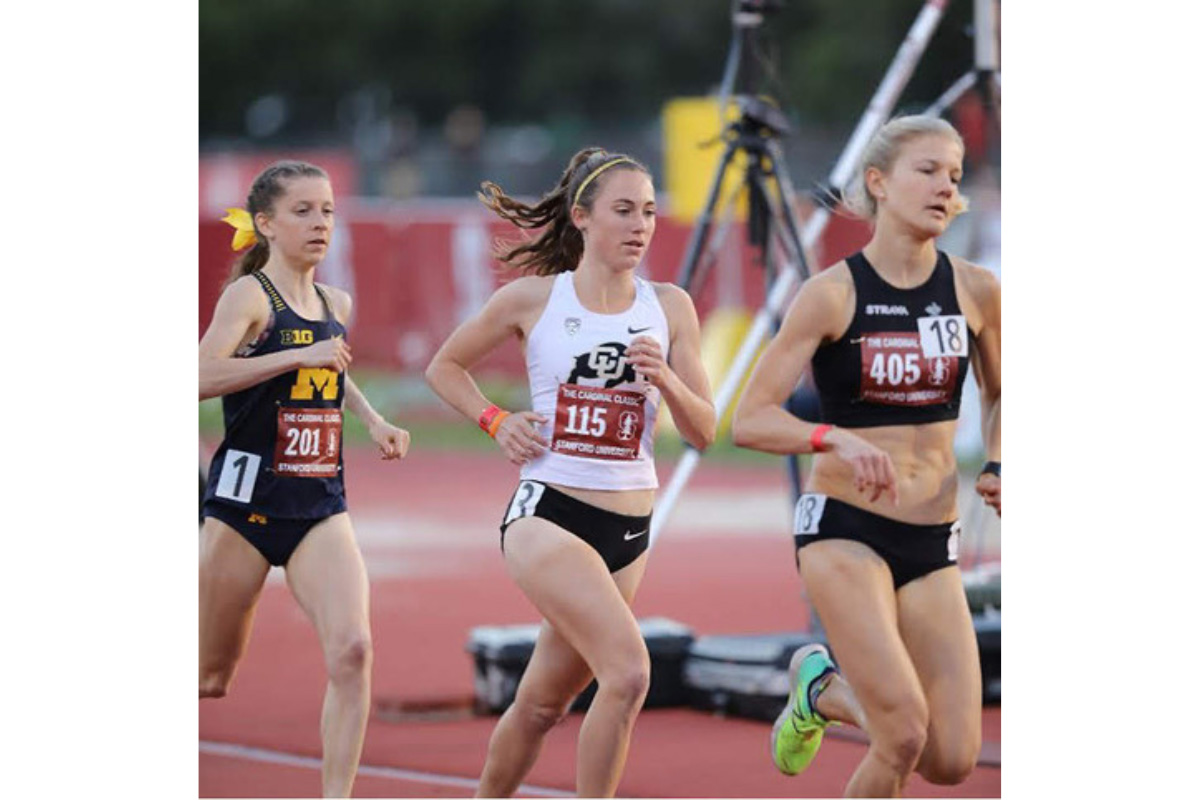
Makena Morley races on the track for CU. Photo courtesy of Makena Morley.
Morley echoed the sentiment. “Anyone who goes to school at Colorado,” she paused, “It’s outside. You’re in the mountains.” Nelson, the former assistant coach, excitedly remembered his runners: “Makena, Adam, they were geared to long distances, and they’ve got that Montana attitude, grit.” He then noted of Hemming: “She grew up on a ranch doing farm chores. She was successful at running. That’s pretty unique. She was very good from a challenging place.” Hemming said matter-of-factly: “You’ve got to look at where everyone was from. I think it’s where we all grew up. We didn’t all just run city streets growing up.”
Clark grew up in Eugene, Oregon, and moving to Boulder for college meant trading TrackTown USA for SingletrackTown USA. Still, her sentiment was the same as the others. “The location of the university makes a difference. Being in Boulder mattered to me. Those are the types of people who are interested in mountain life and tend to live or stay in a place that has good trail access,” Clark shared. “I grew up backpacking, liked skiing, did a lot of that with my family. My high school would always do a cross-country camp each fall near Bend with a lot of trail running. I really liked that and think I gravitated to Boulder because of that.”
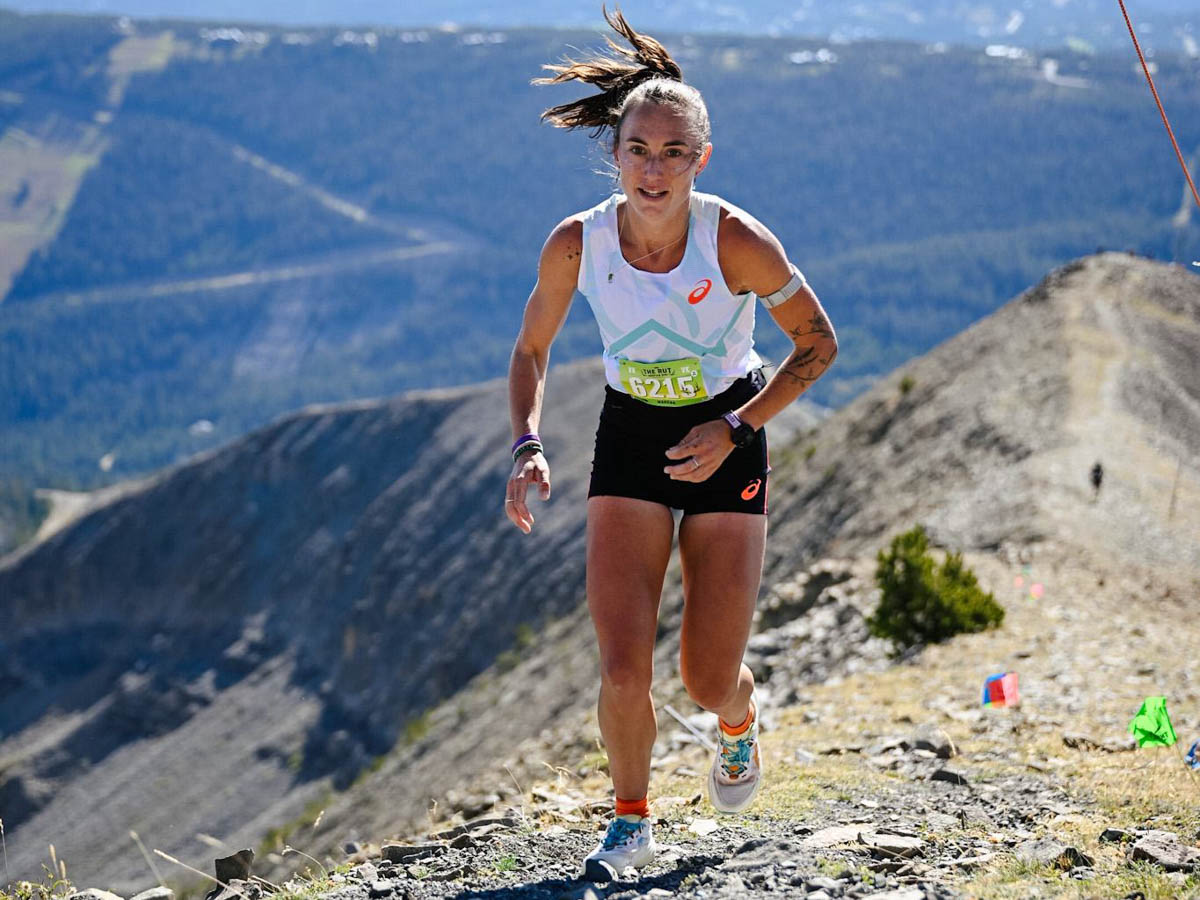
Makena Morley, the 2025 The Rut VK women’s winner. Photo: The Rut/Anastasia Wilde
“All of them,” Nelson answered when asked who he recruited, and then explained what he looked for. “Elevation, fast times at elevation, down-to-earth guys.” He adds that Peterman and Perrin were already good friends. “We wanted talent, but where is the talent, and how does it fit with our culture?” Boulder’s geography attracted certain types of runners, and those runners created the culture that embraced trails and the outdoors.
Trail Running Influences
Each member of the group had a different initial introduction to trail running and ultrarunning. “Doing ultras seemed impossible to me, but one of my assistant coaches in high school was Mike Foote [three-time Hardrock 100 runner-up], so I was exposed to it early. Sometimes I’d do trail runs with him,” Peterman said of his pre-CU years.
Perrin noted the trail influence of living in Boulder: “There were just so many pros in the area, on trails, like Scott Jurek, Sage [Canaday].”
The trail influence came from within the CU program as well, mainly from Wacker, who raced for the team from 2007 to 2011. Nelson recalled, “Andy Wacker first branched out to the trails,” and Hemming remembers Wacker recruiting others to join him. “He contacted a lot of us post-collegiately, saying, ‘Hey, have you ever thought about doing this stuff?'” Hemming underscored that Wacker contacted everyone, trying to get them to consider trail running.
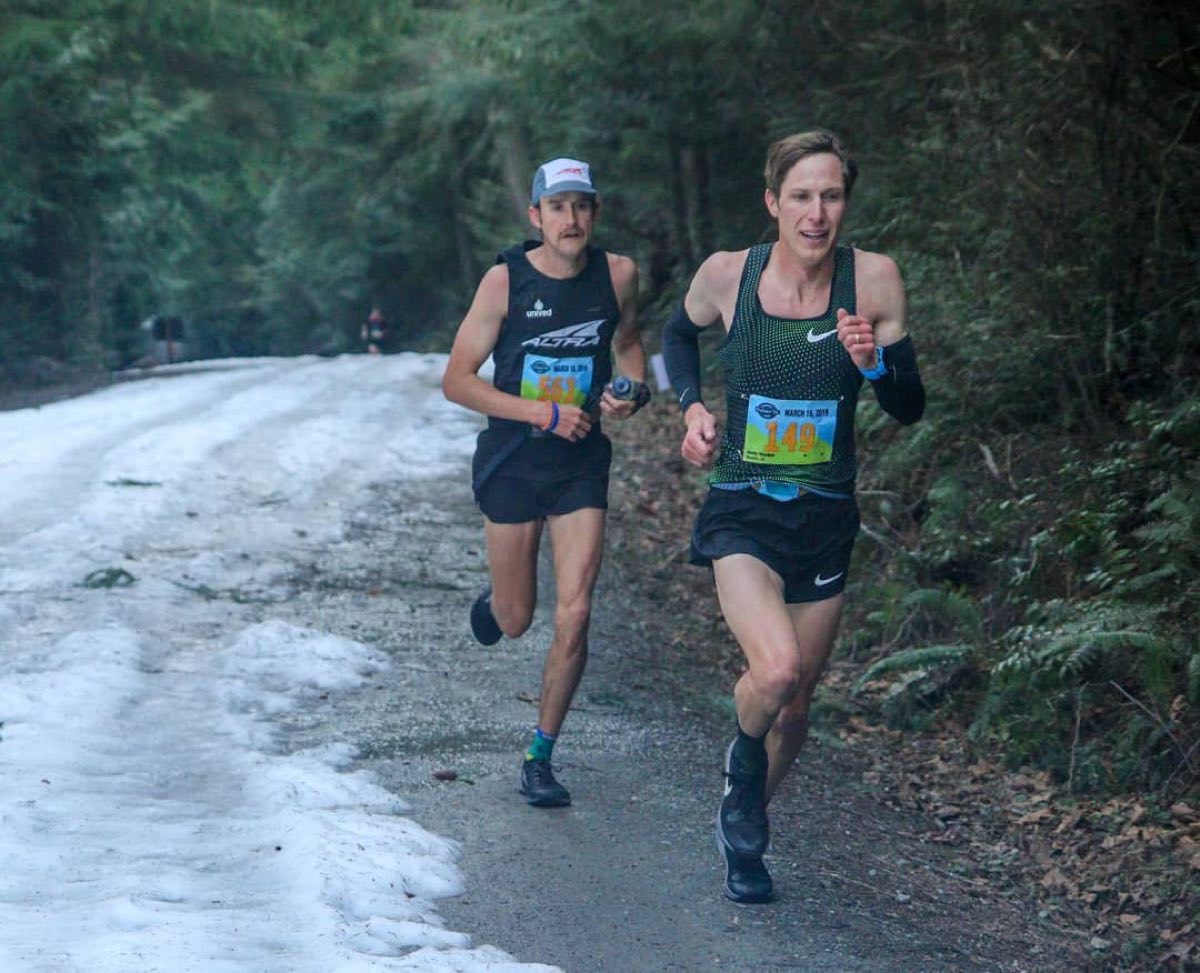
Andy Wacker (right) and Hayden Hawks running the 2019 Chuckanut 50k. Photo: Tad Davis
Hemming was already a two-time member of the USATF U18 Mountain Running Team while in high school. She recalled that the team’s initial reaction to trail running was lukewarm. “I think everyone thought it was a joke, if I’m being honest,” she laughed. “Why would you run trails if you could run fast on the track?”
Nelson also called out Mandy Ortiz as another early team inspiration. Ortiz was on the CU cross-country team between 2013 and 2016, just after she’d won the junior race at the 2013 World Mountain Running Championship in Krynica-Zdrój, Poland. Oritz continues to race on the trail to this day.
And the runners of the mid-2010s weren’t the first CU cross-country graduates to find their way onto the trails. Avatar finished fifth at the 2009 NCAA Division I Cross Country National Championships as a freshman and later won the World Mountain Running Championships Uphill race in 2022. Two-time Pikes Peak Marathon winner Seth Demoor was on that 2009 CU team, too.

Allie Avatar on her way to winning the 2022 World Mountain Running Championships Uphill race. Photo: iRunFar/Meghan Hicks
Local Area Training
Everyone smiled at the memory of the team’s Sunday long runs. The 15 to 20 miles on Sundays were the highlight of the week.
“We were a high-volume aerobic program. We had four or five long run locations above 8,000 feet. That’s rare for a D1 program,” Nelson explained, and then listed out Magnolia Road, Rollinsville, Gold Hill, Switzerland Trail, and Sourdough Trail as their regular run options.
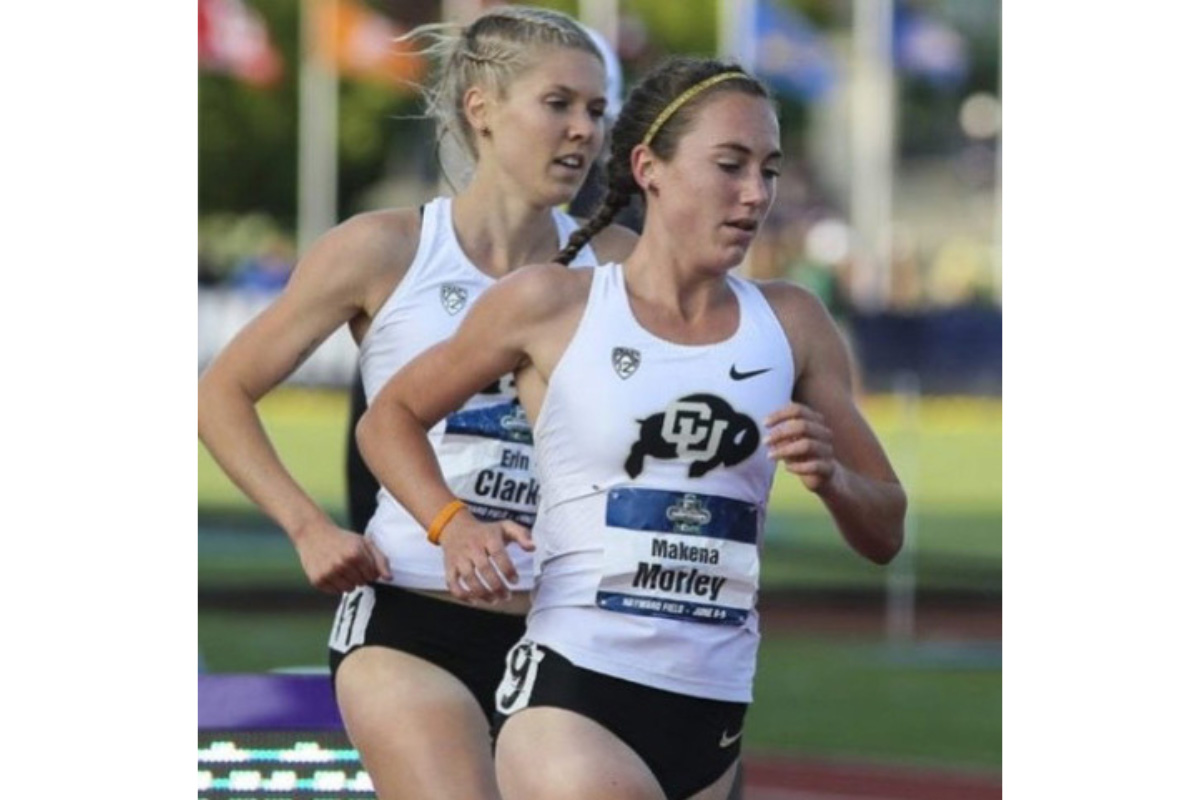
Makena Morley leads Erin Clark while racing on the track for CU. Photo courtesy of Makena Morley.
“Gold Hill, Magnolia, that’s 8,000 feet, and you’d gain a couple thousand feet on a run,” Perrin said of the routes that served as a precursor to his ultrarunning. “It’s not really a trail, but really hilly. I never thought about elevation gain back then, but it was like ‘Wow, this is a hard route.'”
“I think it’s imperative to have speed in trail, speed endurance. I did a lot of threshold training [in college], and I still keep that going and think that’s been super helpful,” Hemming said. “At CU, you learned how to run when you were tired. We did so many hard sessions back-to-back, and I think that lends itself well to trails. When you’re 50 kilometers into something, it’s like, ‘This feels like a week of training.'”
Peterman echoed the same idea. “How you feel in a trail race reminds me of how I felt doing Magnolia Road, that kind of run,” he said of the elevation and effort. “A staple at Colorado was doing long runs and a mid-week medium-distance run, always at six-minute [per mile] pace, or low six-minute pace. It was 12 to 15 [miles] for the men and 12 to 13 for the women. I carried that over to trail and found that to be really, really good. For years, the only workout I’d do was a medium-distance run: 90 minutes at six-minute pace. I’d change the terrain to make it harder, but that was my workout for four years.”
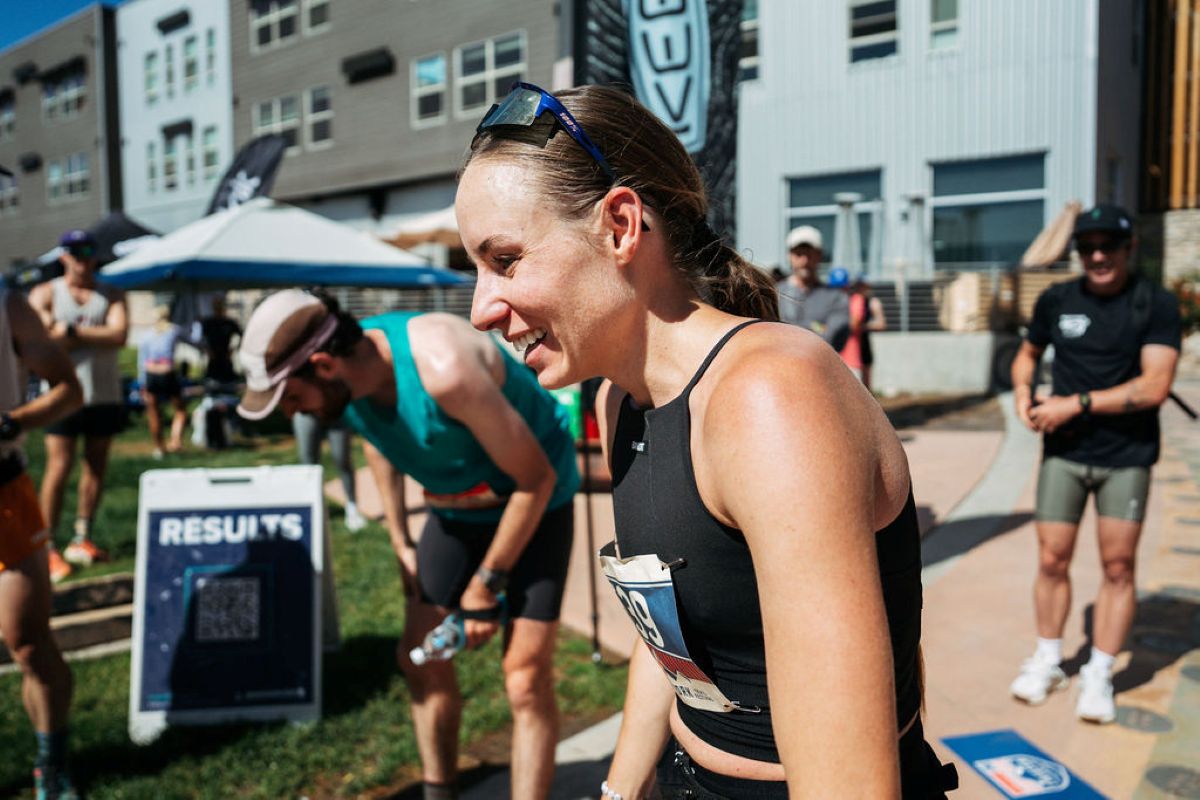
Tayler Peavey, the 2025 Twisted Fork Trail Festival 15k women’s winner. Photo: Emily Cameron
“The concept of that still holds true,” Clark agreed. “The idea was to run at the top of Zone 2. That was the goal, but to be realistic, we were always ending up in Zone 3.” Clark saw the workout transfer easily to trails: “The same idea — whether running at the same pace and staying at the top of Zone 2 or running that type of effort but on trails for 45, 60, or 90 minutes — that’s the type of effort you might end up with for a 50k or 100k race.”
Morley recalls the training plans put forward by head coach Mark Wetmore and associate head coach Heather Burroughs with a smile: “Mark and Heather’s training was a lot of grit and strength, so much strength. Not the most scientific, just really gritty training. I go back to some of that now as a trail runner.”
CU Running Culture
There was more to life in college than just running. “Escape on Friday after lift, camp on Friday night, have Saturday to just hang out in the mountains, be back in Boulder ready to go on Sunday,” Hemming remembered of the team’s collective outdoors mindset.
She grew wistful at a greater memory of the team dynamics. “We made a point as a women’s team, once a week, to all get together and make dinner, talk about other stuff. We were actually friends, which was really special.” Pressed for the dinner details, Hemming answered right away. “Hamburgers, that’s the ranch girl in me. A good homemade sourdough bun, black angus beef from a ranch, maybe some sauteed mushrooms.”

Tabor Hemming en route to winning the 2022 USATF Mountain Running Championships at the Whiteface Skyrace. Photo: Michael Scott
Peterman camped often, too, but recalled a freshman end-of-year misadventure along the 25-mile traverse of the peaks on the outskirts of Boulder as a highlight of his time at CU. “I was just looking at the Boulder Skyline all year, and I had a day off. It must’ve been finals week. I hiked that in sandals with one water bottle.” He admits that it went sideways. “Dude, it was so bad! I had to get picked up.”
Lifelong Relationships
A decade later, the CU runners still talk about the team and each other with fondness. Sometimes, they only see each other when lining up for races. Othertimes, as with the upcoming Western States 100, they crew and pace each other. In the case of Perrin and Morley, they’ve ended up as both partners and teammates, while Clark and Peterman are due to marry later this year. And when the circumstances come together, sometimes a group of them can even train together.

Adam Peterman (right) with Erin Clark after her seventh-place CCC finish in 2022. Photo: Collin Schultz
Clark, who lives in Missoula with Peterman, is happy that the friendships have endured, and appreciates that Perrin and Morley ended up nearby: “Zach and Makena were in Bozeman for a few years, three-and-a-half hours away. In the last month, they’ve moved to Missoula, and we see them at least four times per week. We’ve been training a lot together, and it’s been really, really cool to train together again. It feels full circle.”
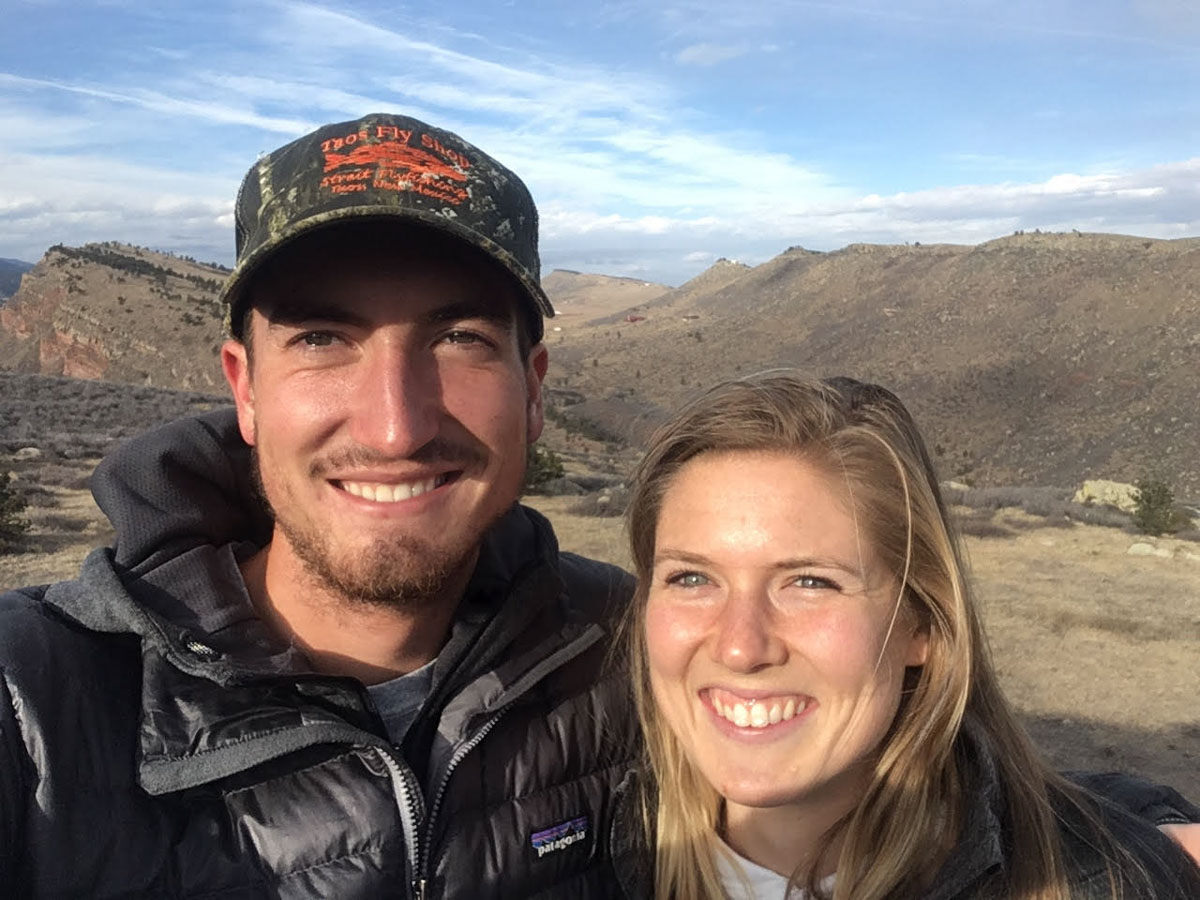
Adam Peterman and Erin Clark together in the mountains. Photo courtesy of Adam Peterman.

