[Editor’s Note: Based out of Duluth, Minnesota, Tryg Solberg is a trail runner and Nordic skier who loves to explore new trails and familiar ones alike. After four years on Michigan Tech’s Nordic Ski Team, he’s hoping to continue training with some more trail running and racing.]
Destination? Sure. Dirt? Absolutely. Located squarely in the U.S. Midwest, it may be obvious that Duluth, Minnesota, doesn’t have mountains, but what it does have is quality trails easily accessible from a larger urban area. Located on the far southwestern tip of Lake Superior and on the border of Minnesota and Wisconsin, what Duluth lacks in alpine terrain, it more than makes up for with accessibility, character, and community. After trail running in plenty of locations across the U.S., Duluth remains near the top of my list as a city with great trail running possibilities.
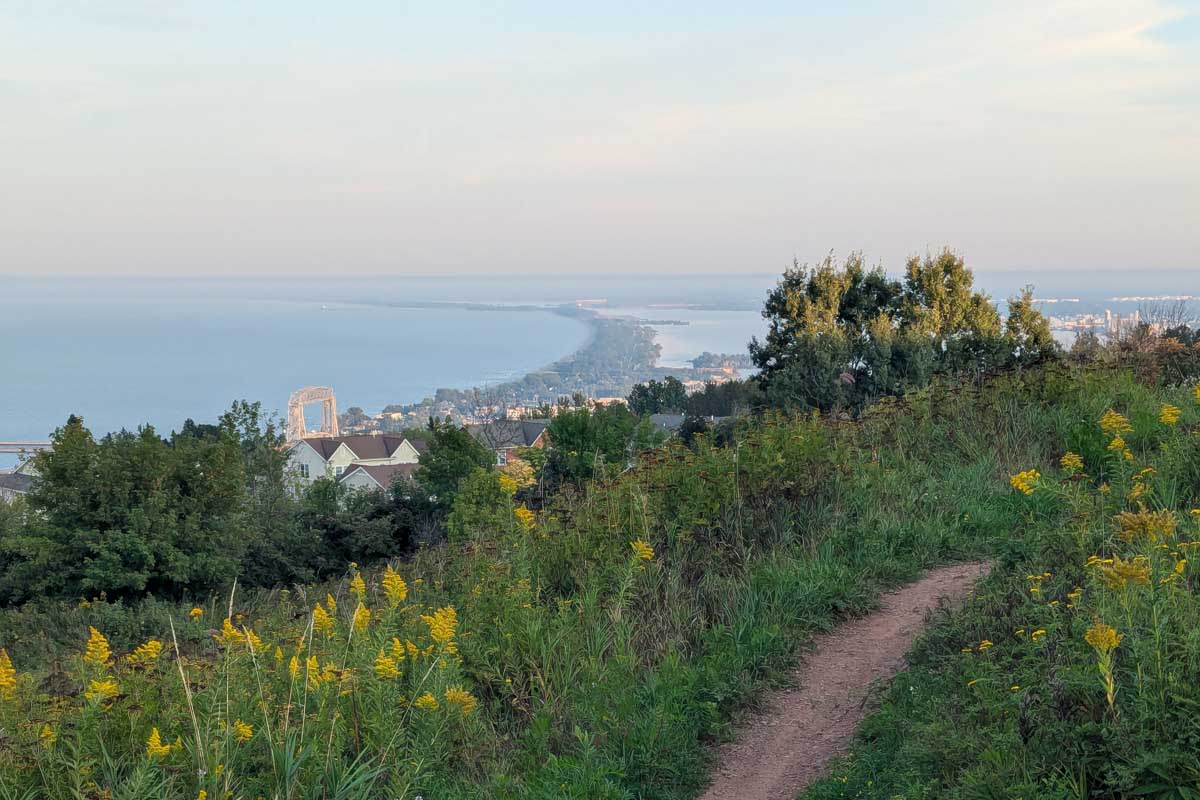
The Duluth Traverse trail overlooking Duluth’s lift bridge into Lake Superior and Park Point. Photo: Tryg Solberg
Duluth — the westernmost port city with shipping access to the Atlantic Ocean and a population of about 86,700 people — has incredibly accessible trails in the heart of the city. More than 150 miles of dirt trails crisscross the urban area, and abundant lakes and streams throughout offer a unique experience in a fairly large population center. Perhaps what makes Duluth unique among other cities is its location on Lake Superior, the world’s largest freshwater lake by surface area. The city largely hugs the southeast to northwest trending shore, and the lake’s blue and grey hues peek out from the vistas that sit atop Duluth’s 1.1-billion-year-old bedrock hillsides.
The city covers 80 square miles and has 12,000 acres of parks distributed amongst the sprawl. These parks take advantage of topography, challenging the stereotype of the Midwest being flat. The hillsides bordering much of the city on the northwest climb 400 to 600 feet above the water. The city and local trail non-profits have prioritized trail accessibility — creating areas with a high density of trails inside local parks, and connecting different parks with paths, as well. Such is the geography of the long and narrow city that nearly every neighborhood in Duluth lies within a half-mile of singletrack.
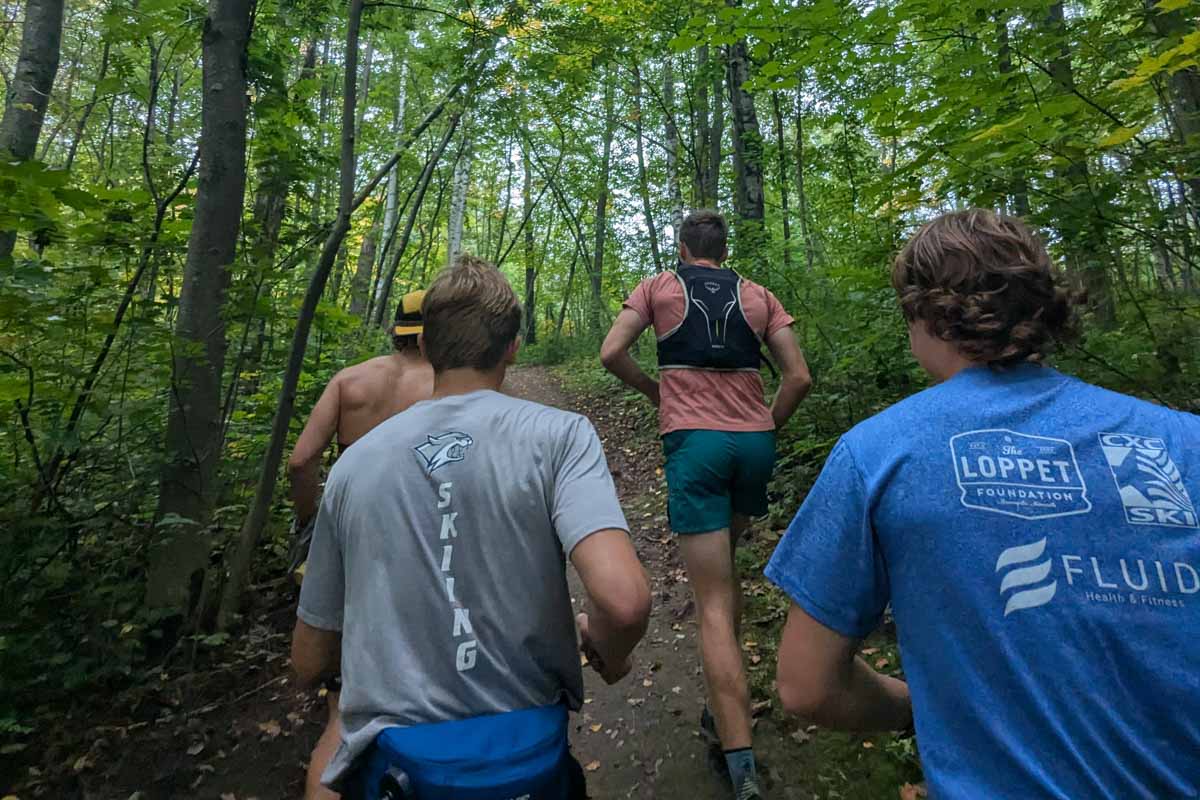
The Duluth Traverse’s “Westchester” section just west of Chester Park. Photo: Tryg Solberg
The area is home to a strong community of trail runners of all abilities who gather at trail races and casual runs alike. A tight-knit weeknight race series brings runners together regularly across the city-operated parks. Organizations such as Duluth Running Company, Northern Minnesota Track Club, and Adventure Running Company host races on the roads and trails in the area.
From the outside, Duluth may not seem like a trail running destination, but its unique geography, hills, and running community ensure that quality trails and paths are easily accessible to runners of all types.
Easy Trail Runs
Hartley Park
Duluth is a perfect spot to get out for a quick run before or after work. The accessibility of the trails really becomes apparent when you only have 30 or 60 minutes door-to-door. The trails in the city parks are an excellent option, and Hartley Park is fairly centrally located in town, with a variety of trails ranging from totally flat to difficult, like Rock Knob. Hartley Park, which was formerly a farm, offers 10 miles of multi-use dirt trails within its 640 acres. There are four main trailheads on the park’s different sides, and the trails create a web of options for exploration. It’s easy to create runs of any length in the network of trails. The area caters to runners, hikers, and mountain bikers during the non-snowy months and provides cross-country skiing opportunities in the winter. The Hartley Nature Center, a non-profit environmental organization, offers educational and recreational programs in the area.
Hartley Park Suggested Route – 3.0 miles (Strava)

A competitor in Northern Minnesota Track Club race series running through golden hour in Hartley Park. Photo: Tryg Solberg
Chester Park
Chester Park, located in the city’s East Hillside area, is another central option that offers some short routes with challenging terrain. The 2.5-mile Chester Park Loop goes up one side of the creek and back down the other, and there are other trails around with a bit of elevation gain. Both the Duluth Traverse and the Superior Hiking Trail discussed below go through this park. In the winter, the park is home to groomed cross-country skiing trails.
Chester Park Suggested Route – 3.9 miles (Strava)
Moderate Trail Runs
Spirit Mountain Recreation Area
The Spirit Mountain Recreation Area on the west side of town is a ski area in the winter and can be a starting point for several one- to two-hour trail runs with some vertical in the summer. While most of the mountain is covered in mountain bike trails, the Superior Hiking Trail’s Spirit Mountain Loop trail is easy to add onto longer runs through the neighboring trail systems.
Spirit Mountain Suggested Route – 7.4 miles (Strava)
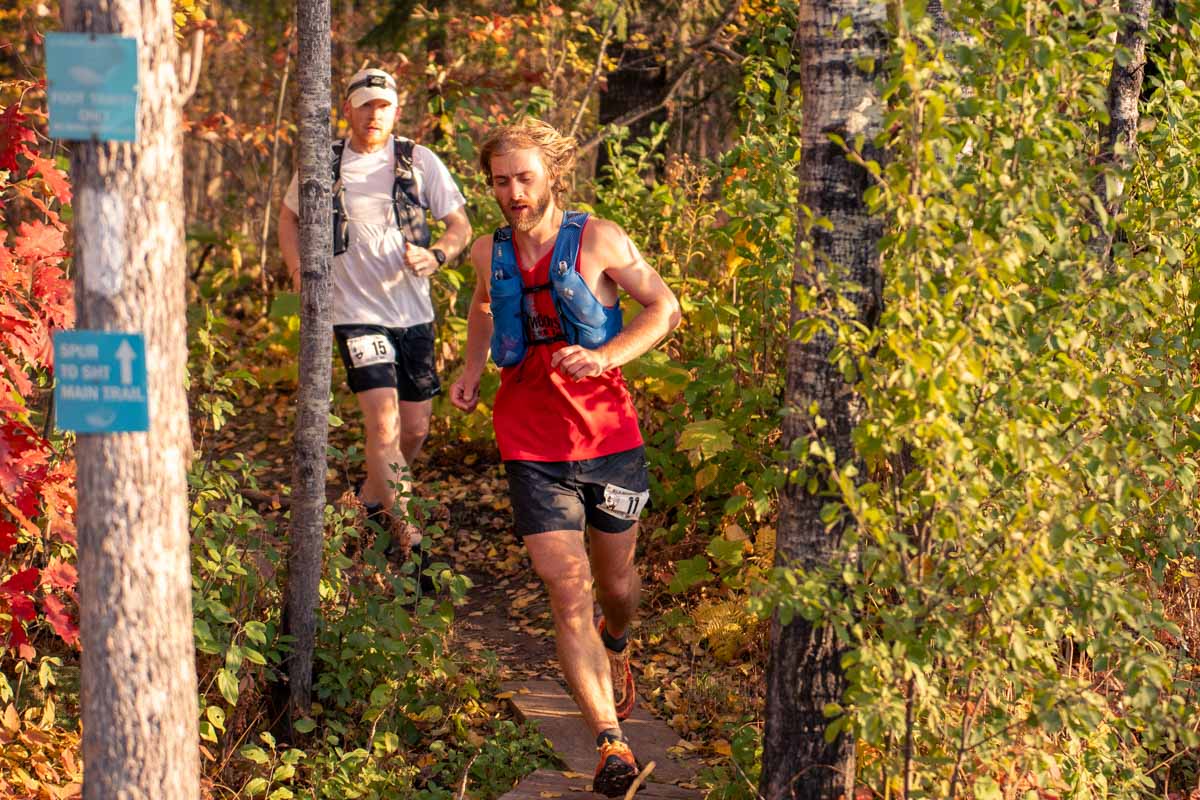
Racers in the Wild Duluth Races coming through Spirit Mountain Recreation Area on the Superior Hiking Trail. Photo: Tryg Solberg
Lester Park
Lester Park, located on the northeast side of town, is ideal if you find yourself with one to two hours to run. There are several trailheads that offer access to trails that can fulfill any of your training needs. There are a variety of gradual trails that parallel two of Duluth’s 16 designated trout streams — Lester River and Amity Creek — and if you’re looking for a little more climbing, head up Hawk Ridge for a panorama of Lake Superior and the Twin Ports region. On the way back, you’ll probably pass by hundreds of bird watchers while looping back into the park.
Lester Park Suggested Route – 9.2 miles (Strava)
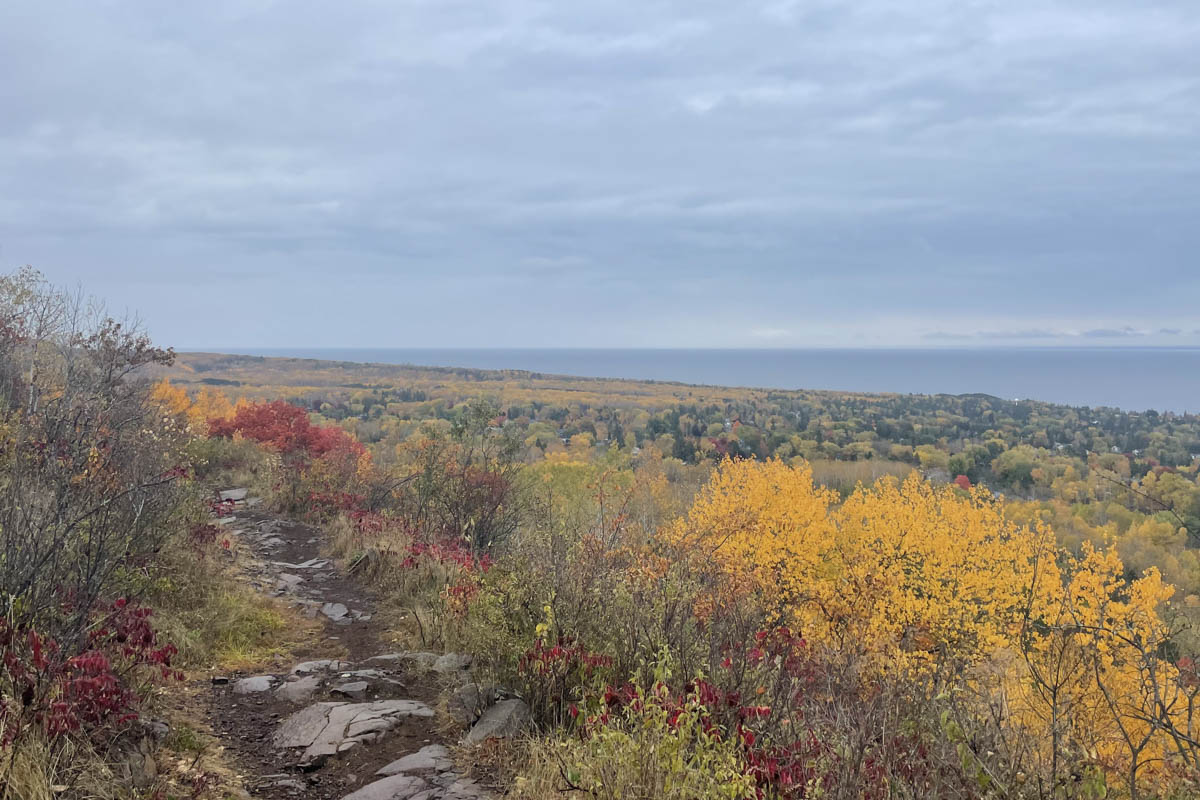
The view of Lake Superior from Hawk Ridge near Lester Park. Photo: Tyler Kobilarcsik
Advanced Trail Runs
Duluth Traverse
The Duluth Traverse is a 40-mile multi-use singletrack trail that connects Lester Park on the northeast side of town to Mission Creek Park on the southwest side. Taking this trail on could be a fun, full-day run. The trail is purpose-built for mountain bikes, which makes it pretty flowy with some rocky, technical sections. It is open to all human-powered users, both in the summer and in the winter. Continued efforts by Cyclists of Gitchee Gumee Shores (COGGS) have expanded this trail to be a nearly continuous strip of singletrack through Duluth, and the hope is to create a 100-mile trail system based around it.
Duluth Traverse Route – 38 miles (Strava)
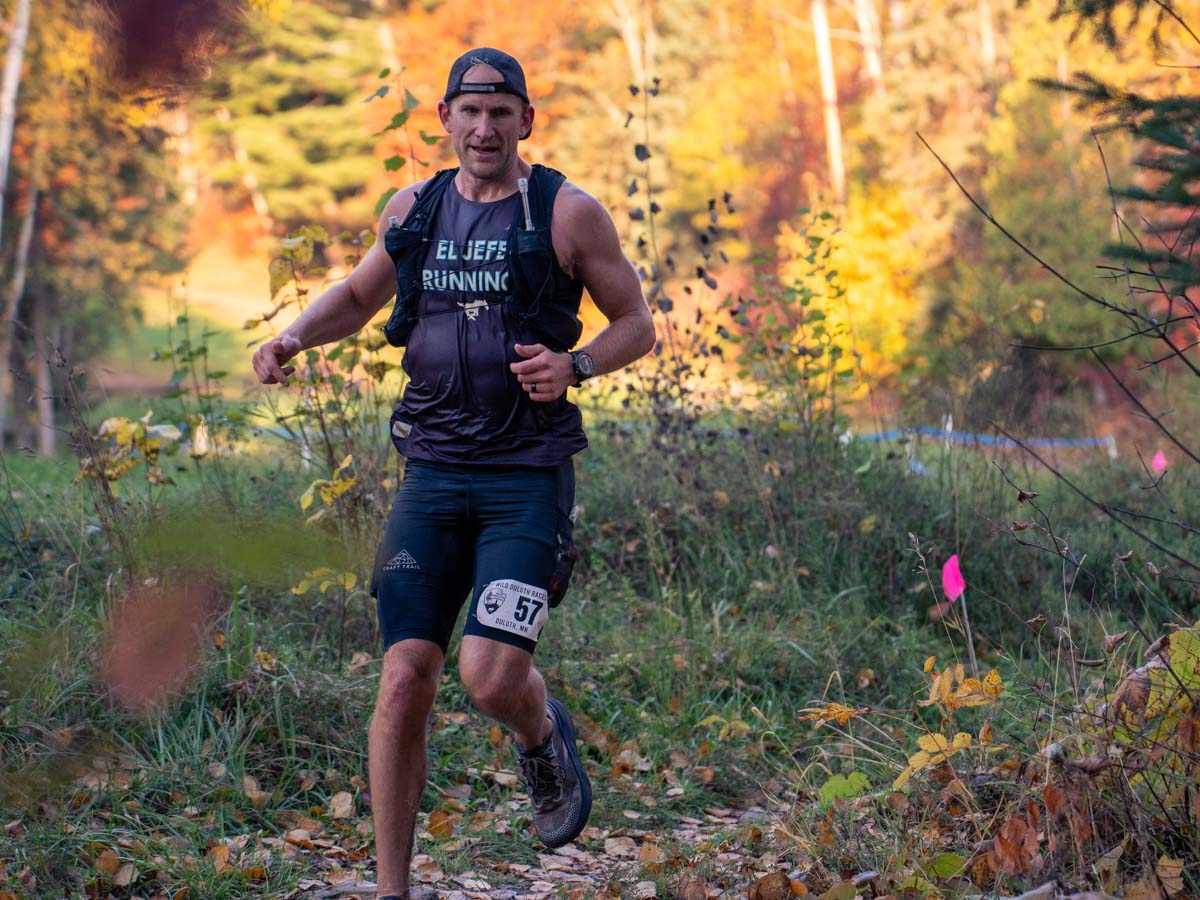
Racing in the Wild Duluth 100k on the Superior Hiking Trail. Photo: Tryg Solberg
Superior Hiking Trail
The Superior Hiking Trail (SHT) takes hikers, runners, and backpackers 300 miles from the Wisconsin border in Duluth, nearly to the Canadian border to the north. The trail largely parallels the lakeshore, and 41 miles of it run through Duluth, connecting many of the city’s parks.
Like the Duluth Traverse’s cross-city route described above — which follows several of the same trails — the SHT takes runners across town with a diverse array of vistas, technical sections, and a portion along Duluth’s paved Lakewalk path.
Once north of the city and in the North Shore area, the SHT offers excellent trail running options. The trail can be reached from many trailheads and offers some gnarly, beautiful sections overlooking the forest and Lake Superior. More information about different sections of the trail can be found on the Superior Hiking Trail Association website.
Racing in Duluth
In addition to the popular Grandma’s Marathon on the road in June, Duluth has a vibrant and consistent trail racing scene.
In July, the Northern Minnesota Track Club puts on both the Eugene Curnow Trail Marathon and the Voyageur 50 Mile race. The club also hosts a spring and fall trail racing series. In August, the Summit North Race offers multiple sub-ultra options. Come October, the Grand Traverse offers multiple 10- to 27-mile trail race options. During peak fall colors in mid-October, the Adventure Running Wild Duluth Races offer 50k, 100k, half-marathon, and 10k trail races. They also host a winter trail running race series.
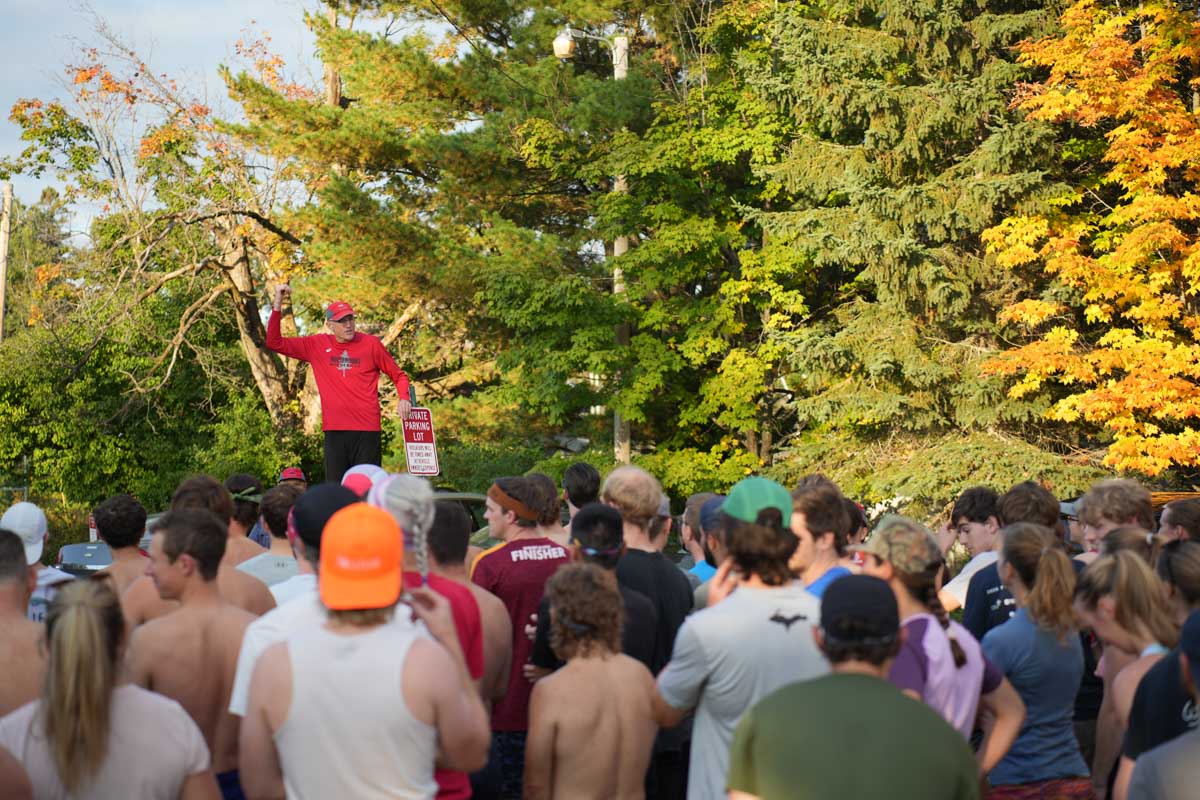
Jarrow Wahman, an organizer of Northern Minnesota Track Club’s Fall Series, starting a weeknight race at Hartley Park in Duluth in October 2025. Photo: Tryg Solberg
The Midwest topography doesn’t offer 60-minute climbs or descents of multiple thousands of feet. Instead, these races primarily use singletrack with punchy climbs that can offer just as much of a challenge.
Duluth Basics
Best Time to Visit Duluth
Early and late summer are the best time for trail running in Duluth. High temperatures in the summer can hover around 80 degrees Fahrenheit (26 degrees Celsius), and the middle of summer can be muggy. Since fog created by Lake Superior can create a claustrophobic blanket around the city in the winter and early summer, August to October offer some of the most consistent good weather.
From November to March, expect snow or cold temperatures. Singletrack trails that experience high use can be well-packed in the winter, creating some of the smoothest and fastest running conditions of the year if you can find grip. Expect a mud-season thaw anytime from March until mid-May.
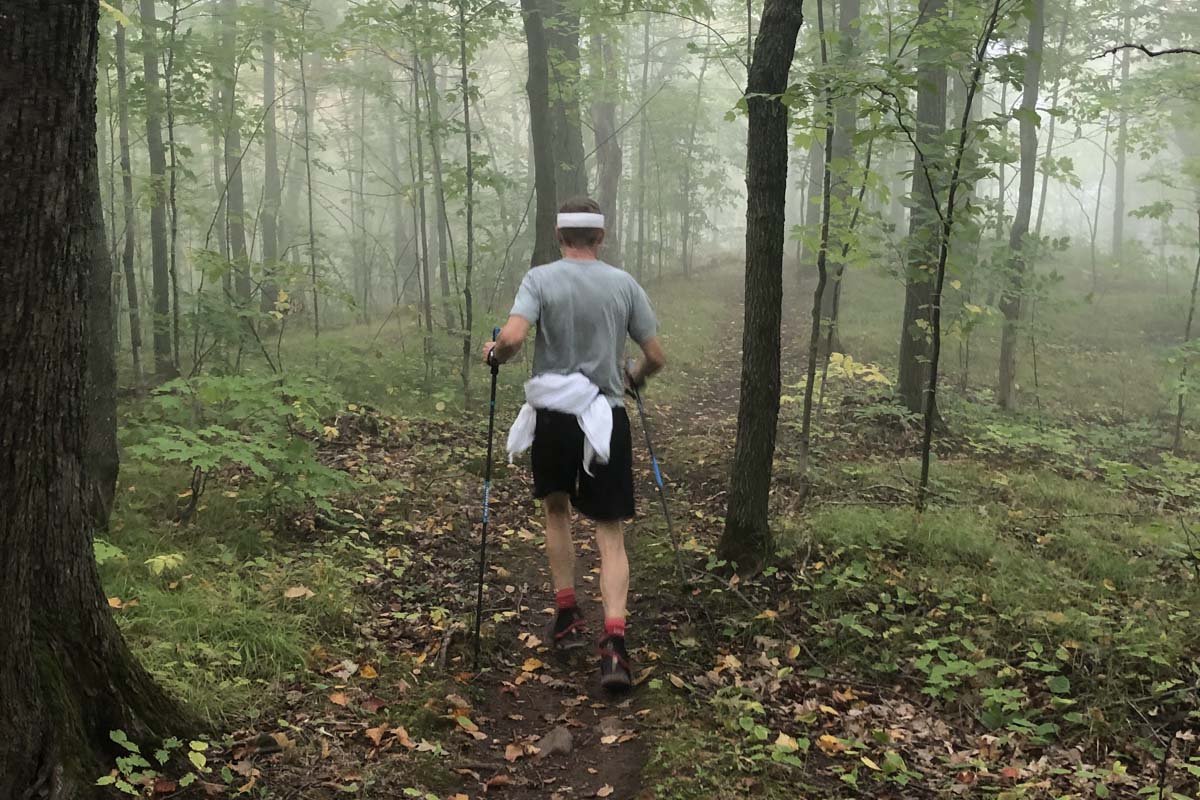
Running on the Superior Hiking Trail near Spirit Mountain Recreation Area on a foggy Duluth day. Photo: Henry Campbell
Getting to Duluth
While Duluth doesn’t have its own major airport, getting there isn’t difficult. The Minneapolis-Saint Paul International Airport is a 2.5-hour drive south of Duluth via I-35N and has many flight options, and Duluth International Airport offers accessible flights to limited locations. Like any city, Duluth has an array of hotels, rental car options, and other amenities that make it easy to navigate.
Call for Comments
- What are your favorite running locations in Duluth?
- Does your city have a great urban trail system?