
Last weekend, due to the potential for an unusually hot day — forecast to be over 80 degrees Fahrenheit (26.5 degrees Celsius) — the 2026 Los Angeles Marathon announced that runners could choose to end their marathon at mile 18 and still receive a finisher’s medal. Big-city marathons like LA work with state and local officials to make decisions in the best interests of runners and the event to keep everyone safe. I am sure that was the case here, but something about the decision to award runners with a medal for completing only 18 miles instead of the full marathon bothered me.
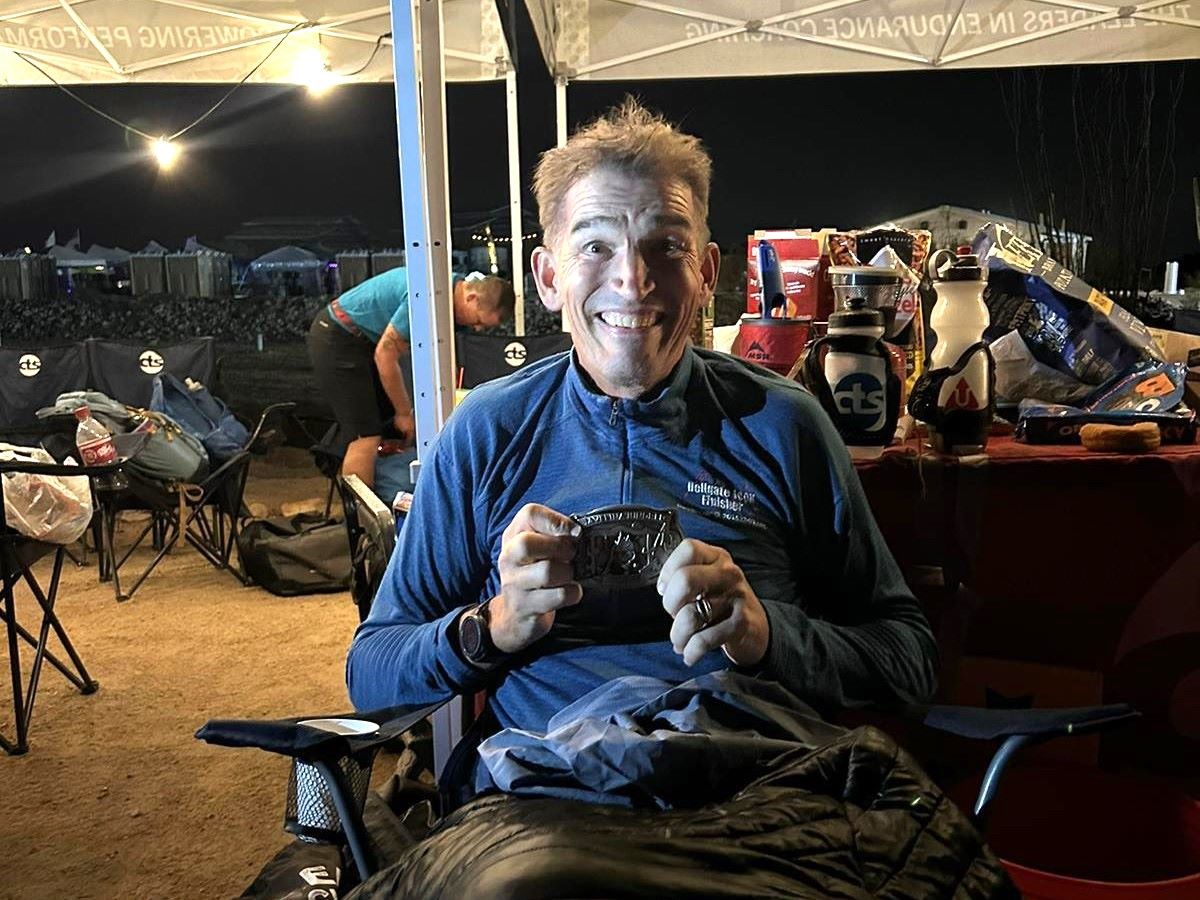
AJW proudly displays his 2024 Javelina 100 belt buckle after completing the full event. Photo courtesy of AJW.
Back in 2015, I wrote an article here on intrinsic rewards. At the time, all three of my sons were active participants in youth athletics, which was in the midst of the participation trophy era. I wrote about two events that my sons, Logan and Tully, participated in that went the opposite direction, awarding trophies only to the top three participants.
For my sons, those experiences proved incredibly valuable. Both of them learned to value their athletic experiences not so much for the awards they won or accolades they received but for what participating in those events did for them on the inside. In comparing their childhood experiences to my long-distance running, I realized that many of my own fondest running memories did not come from the buckles or plaques I received but rather from the internal gratification I enjoyed in completing something really difficult.
Placing Value
There were a few things that didn’t sit well with me about the LA Marathon awarding finisher’s medals to those who stopped at mile 18.
First, the decision was a statement of how important these medals have become to runners. In recent years, it seems that the medal — a physical manifestation of the accomplishment — has become more important than the intrinsic satisfaction of the accomplishment itself. It’s almost as if in the absence of some physical award, the result did not happen.
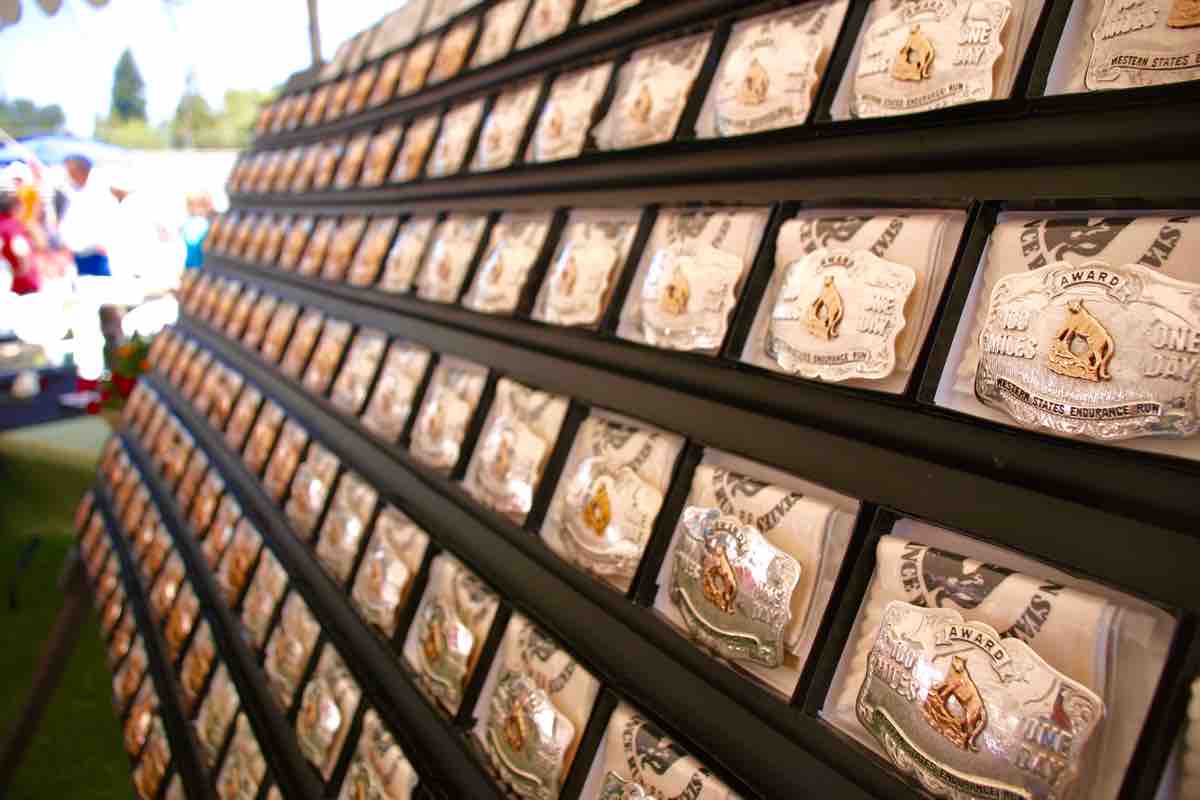
The Western States 100 belt buckles on display. Photo: iRunFar/Bryon Powell
Second, while I understand that the potential for hot weather factored into the organizer’s decision, the 18-mile cutoff gave runners an out, a safety net of sorts. Running long distances is hard, and it is supposed to be hard. There is a fair bit of suffering that is necessary to complete hard things, and for the LA Marathon to say, in a way, “If you’re having a rough day, you can just stop here and still win a prize,” they are diminishing the accomplishments of all the other runners who did the full marathon distance.
Finally, I believe this decision encourages other races to do the same, and has the potential to water down the sport as a whole. From my perspective, offering a reward not only for completing an event, but for not completing it as well, further reinforces extrinsic motivations. The internal satisfaction of doing something hard is the reward itself, and falling short of that goal can ultimately lead to greater accomplishment down the road. While I certainly understand the LA Marathon’s reasoning behind this decision, I am hopeful it does not have unintended consequences in the future.
Bottoms up!
AJW’s Beer of the Week
 This week’s Beer of the Week comes from Ska Brewing in Durango, Colorado. Rue B. Soho is a deliciously complex grapefruit lager brewed in the Helles style. Slightly sweet and tangy, Rue B. Soho is a great beer to enjoy on an early spring day in the mountains.
Call for Comments
- Would you think about not signing up for a race if there wasn’t a belt buckle or medal awarded to finishers?
- What do you think about the LA Marathon’s decision?

