This April, two-time Olympic marathoner Des Linden isn’t going to be racing in the professional women’s field up Heartbreak Hill near mile 20 of the Boston Marathon, as she’s done 12 times before — including in 2018 when she became the first American to win the event in 33 years. Instead, she’ll make her way across the Sahara Desert during the 2026 Marathon des Sables, a week-long stage race in Morocco, perhaps working her way up something that might be called Despair Dune, or maybe through the Desert of Delight, or maybe of Despondence. Regardless, the 155-mile run across the desert will be different from anything she’s done before.
It’s a huge pivot for 43-year-old Linden, who announced her retirement from professional marathoning last year at the 2025 Boston Marathon and turned to trail running and ultrarunning as her next running venture.

Des Linden has traded professional road marathoning for a six-day stage race through the Moroccan Sahara desert. Photo: Andy Cochrane
Leap Into the Unknown
Crossover between trail running and road running isn’t new, but the sheer size of the figurative jump from racing 26.2 miles on the road to 155 miles in seven days across the Sahara Desert — carrying all of her own food and supplies — is notable. This isn’t a marathoner trying her luck at a 100 kilometers on buffed-out trails; this is someone finding the polar opposite of 2.5 hours of threshold running on reasonably flat pavement. But after 18 years of focusing all of her effort on the marathon — with a short side quest to set a women’s 50k world record during the COVID-19 pandemic — it’s easy to see why Linden wants to try something completely different.
The Marathon des Sables, which starts on April 5 this year, is a self-sufficient stage race, meaning competitors have to carry all of their own food and gear for the entire race in a pack with a minimum starting weight of 14.3 pounds, with the organizers providing only water and eight-person shelters each night for camp. The race’s six stages, raced over the sands of the Sahara Desert, range from about 13 to 51 miles long.
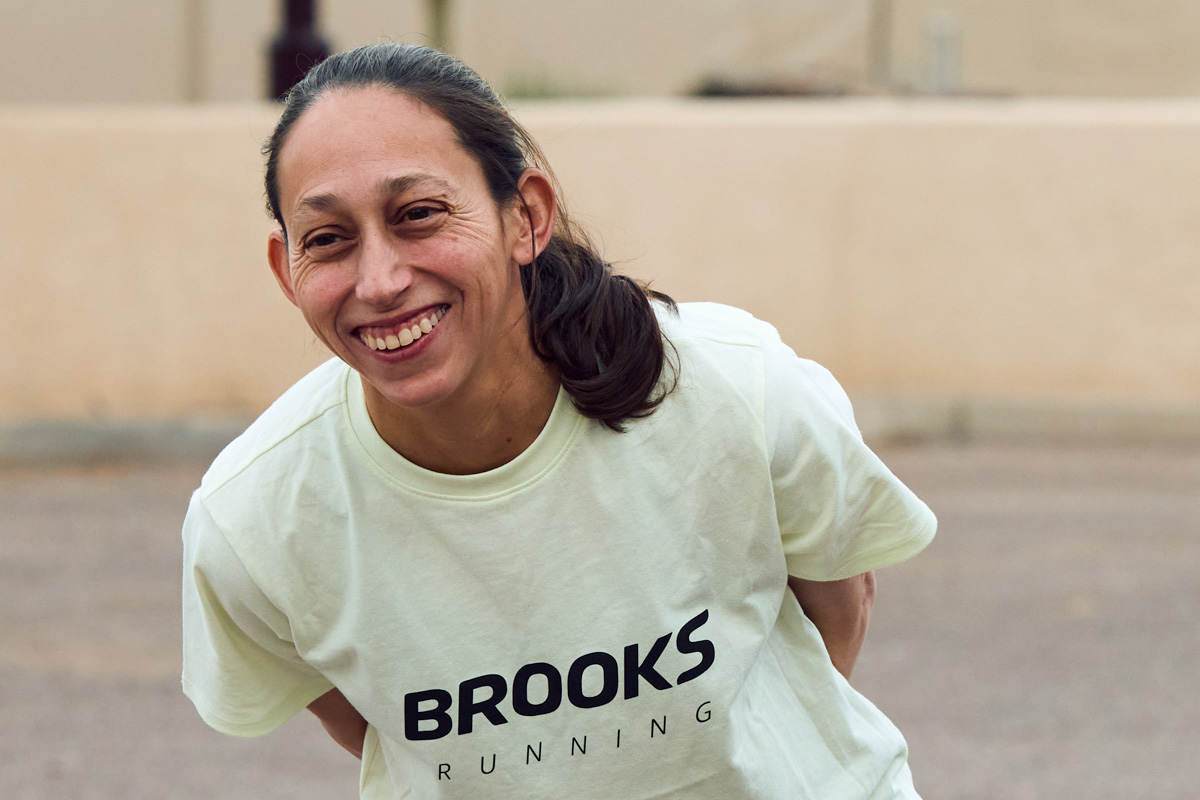
With the Marathon des Sables, Linden has taken as big of a metaphorical leap from road marathoning as possible. Photo: Brooks
Talking not long before the race starts, Linden seems confident in her preparation and realistic about the situation. “I think I would always love to have a little bit more time,” she says of her lead-up, but admits later on, “I think there’s a little bit of an ignorance-is-bliss type thing.” She’s done a couple of 100-mile weeks with 22-mile runs in the mix, practiced running with a 12-pound pack, and done some high-turnover workouts so she can pace her husband at the Boston Marathon three weeks after she gets back.
While the word “retirement” is tossed around by the running media when discussing Linden’s exit from professional marathoning, it’s clear she’s not ready to hang up her shoes yet and has ambitions in the trail world, some even on the buffed-out trails that marathoners-turned-trail-runners tend to prefer. But like when she started running professionally in 2006, Linden is approaching this new era of running less with specific expectations and more with curiosity and desire to see how good she can actually be at this new sport.
Finding Balance
Running — in the form of playing soccer — was part of Linden’s life from a young age. She followed her older sister into the sport around age five, and also played softball, which didn’t suit the young Linden. “It was kind of boring for me,” she says, but in order to keep her busy, her parents insisted on another sport, so she picked up cross country and track in middle school. While she played soccer through high school, she says, “I realized I wasn’t growing and getting bigger, but everyone else was, and I was kind of getting thrown around.” Showing promise as a runner early on — she broke the 5-minute barrier for the mile as a high school freshman, which at the time was rare — she decided, “It’s probably safer to just be a runner.”
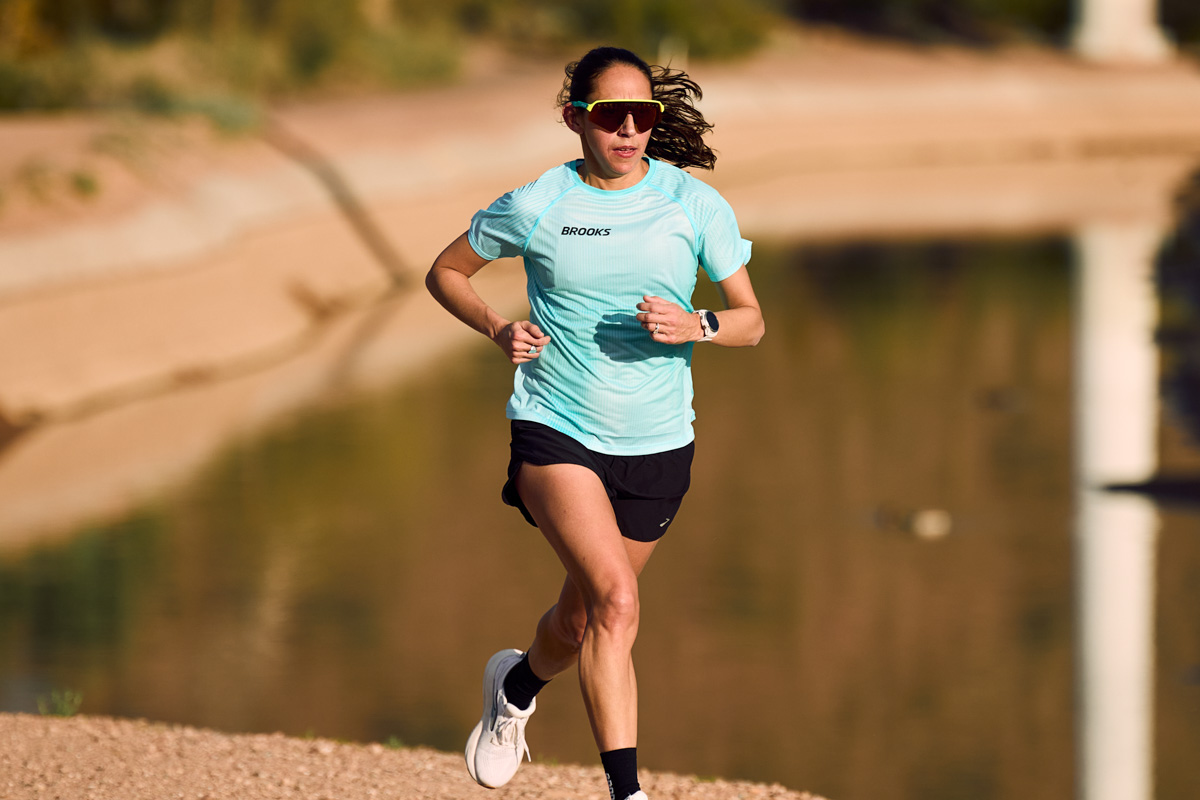
Linden found running early on, but balanced it with academic pursuits throughout college. Photo: Brooks
Linden found collegiate running success at Arizona State University and put a strong emphasis on balancing being a student and an athlete. She says, “I think a lot of people go to school and put the athlete part first and just want to be a runner, and they just become very one-dimensional.” Linden took a more pragmatic and balanced view, “I wasn’t getting paid to [run]. I was there to be a student as well, and that’s really written into student-athlete.” Instead of the monk-like focus that many top athletes adopt, Linden says, “I felt like I did a good job of having a great college experience, doing social stuff, school stuff, but also running well enough.” Well enough meant being a two-time NCAA Division I All-American in track and cross country.
Even as a collegiate runner, Linden seemed to understand that there was a phase of life for everything, and tempering her effort in the present could benefit her down the road if she were able to run professionally. “I probably didn’t have the success I could have in college, but I also knew that if that shift came afterward, it would be when you’re an athlete, then that’s what you focus on.”
Full-Commitment Professionalism
After graduating from college, Linden made the move from Arizona to Michigan to join the Hansons-Brooks Distance Project, saying, “I had seen a number of my teammates go on to run professionally, and I just felt like there was more left in the tank. I had seen little glimmers of, ‘I could be really good at this.’”
After growing up balancing multiple sports and a collegiate career in which the student was valued as much as the athlete, Linden was ready to go all-in on running. “I knew if I switched the mentality to being a full-on athlete, I could give myself a little time to see if I could thrive with that.”
The same way that college was a time to get an education, Linden approached the jump to professional running as “a short window where you get to explore [professional running], and if it’s not for me, that’s ok. I can move on. But at least I answered the question of, ‘If I go all in and spend this time and energy on it, how good can I be?’”
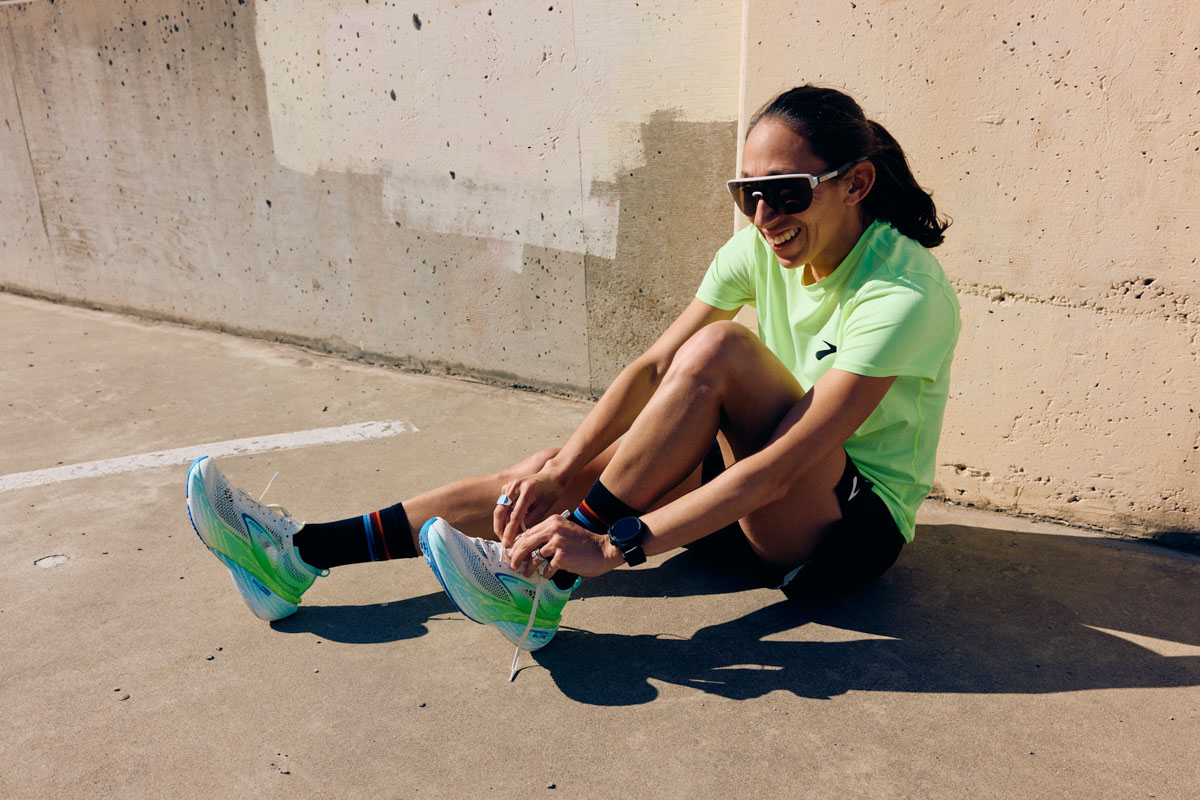
After college, Linden was ready to fully commit to running. Photo: Brooks
After 18 years as a professional marathoner, Linden got her answer. While initially Linden fancied herself a 10k runner and “wasn’t particularly interested in [the marathon] at the beginning of the shift,” the longer distance made a lot of sense both logistically and financially. Plus, she says, “It looked more fun. My teammates were doing it. And I thought that the roads were kind of a better career path for me.”
The start of this dedication to the marathon saw Linden debut at the distance at the 2007 Boston Marathon, which was the women’s USA National Championships that year, and where she placed 19th. She placed 13th at the Olympic Marathon Trials in 2008, as well as fifth at the Chicago Marathon, an event she’d go on to set an American masters marathon record at in 2023 after she turned 40. She qualified for and ran the marathon at the 2012 and 2016 Olympics, withdrawing from the former due to injury and placing seventh at the latter. In 2018, at her sixth running of the race and under rainy conditions, Linden won the Boston Marathon, a long-time goal. She was the first American to do so in 33 years.
When the COVID-19 pandemic paused racing in 2020, Linden refocused on pursuing the women’s 50k world record. In 2021, she set a new standard at the Brooks Running 50k and Marathon, becoming the first woman to break three hours by running 2:59:54.

Linden setting a new 50k world record in Oregon in 2021. Photo: Brooks Running
When marathon racing resumed, so did Linden, and she continued running at the front of elite fields. But she knew that her time in the sport as a professional had to come to an end at some point. She says much of it came down to not being able to run at the same speed as she used to. “It was comparing myself to myself. In the past, I was chasing PRs, running in the front, and trying to win Boston. And then it was fighting to just stay the same — to not lose a step. So it became doing almost 20% more work to stay at 80% capacity.”
Shifting Priorities, Shifting Surfaces, Shifting Distances
In 2025, Linden knew it was time to step away from professional marathoning. She says, “I loved it, and I would keep doing it if I were at the top of my game,” but also wanted to be realistic about the ever-increasing speed of the event and the fact that after she’d achieved her biggest goal in the sport — winning Boston — there was the ever-lingering question of the “why” of continuing. Then, on the morning of the 2025 Boston Marathon, 18 years after she’d first run it, she announced her retirement and went on to run a 2:26:19, placing 17th in her final professional marathon.
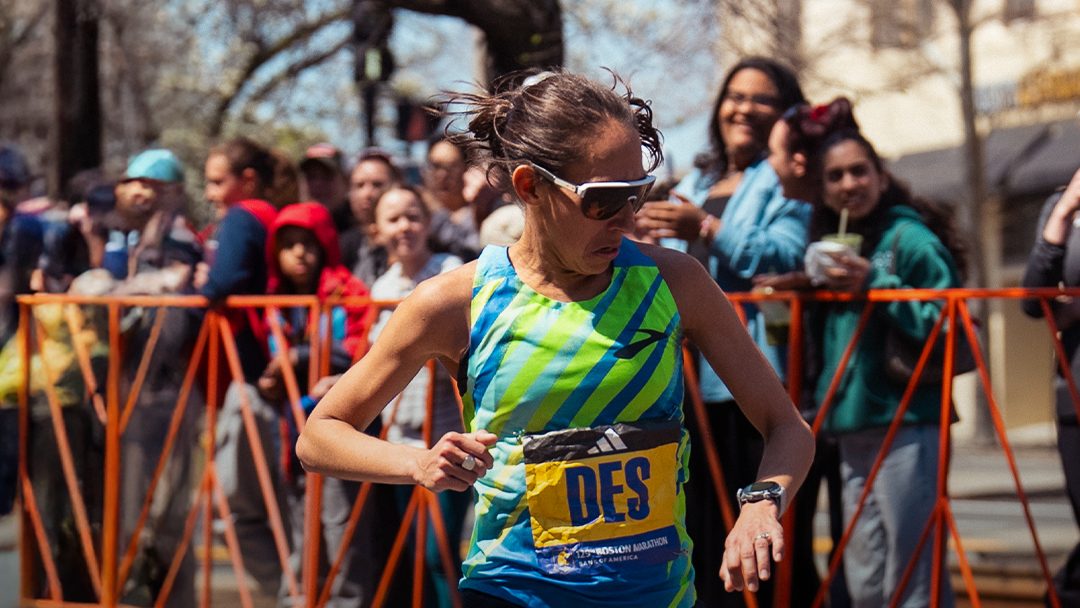
Linden at the 2025 Boston Marathon, just after announcing her retirement from professional marathoning. Photo: Coros
A bit over a month later, she found herself on the Western States 100 course for the event’s Memorial Day Training Camp. A few months earlier, with no idea of Linden’s imminent retirement, Brooks teammate Joe “Stringbean” McConaughy had asked her if she would pace him at the 2026 Western States 100. Knowing that by then she’d be well clear of her final Boston Marathon, she agreed, but rightly wanted to see the section she’d be pacing — the 16 miles from Foresthill to Rucky Chucky — ahead of time. She’d been sandbagged by trail runners before, being told that something would be runnable and then being taken on something she says, “I feel is bananas. I’m like, ‘This is hiking!’”
But her Western States 100 pacing gig was highly runnable, and the day left an impression. She recounts the classic ultrarunner experience, saying, “Even being out there for the tiny amount I was, I’d be like, This is the dumbest thing that people could do. Why would you do this? It’s the middle of the day, and it’s so hot. And then we’d cool off, hit an aid station. I’d be like, This is so much fun. I’m having an awesome time.” Like many who catch the ultrarunning bug, she says, “I think ultimately I left with, This is an intriguing puzzle that I would love to try and tackle.”
Marathon des Sables
In many ways, it’s not hard to imagine why Linden chose something like the Marathon des Sables as her first big post-marathon goal. She says, “It’s just so foreign, and it’s so different. And it demands that I train in a way that is not marathon training. And so it allows me to kind of set that marathon stuff aside for a bit.”
She signed up for the race last April and recruited her good friend Magda Boulet to run it too. Like Linden, Boulet was a highly successful marathon runner before switching to trails and winning the 2015 Western States 100 and 2019 Leadville 100 Mile. In between, she won the 2018 Marathon des Sables. While Boulet had long been discussing trails with Linden, it was Linden who convinced Boulet to sign up for Marathon des Sables again, and not the other way around. According to Linden, “She didn’t hesitate as much as I thought she would.”

Linden running on trails in New Zealand. Photo: Andy Cochrane
Given the uniqueness of Marathon des Sables, Linden has been leaning on Boulet’s experience for gear and nutrition. She did a sweat test to dial in her electrolyte balance before she left, and she tested a custom pack. She is intimidated by the distance: “I’ve never done 100k, so already that’s a big jump in distance for me. And then you sandwich it in between a couple of long days already, and then you put in all the other factors of nutrition, or lack of sleep,” Linden pauses, “I don’t really know, I’m just going to have to take it day by day.”
Future Goals
Linden is relishing the opportunity to learn something new after racing the same event for so many years. She says, “It’s been really easy to stay motivated and be like, ‘What’s the next thing that I can take on as a challenge, and how else can I push myself, and what else can I learn about myself, and what else can I learn about running?’” If there’s one thing for certain, the Marathon des Sables will help answer at least some of those questions.
“It’s kind of cool that there are just so many different ways to enjoy our sport, and they’re all very different and unique. And when one thing’s done, you don’t have to be done with the sport. There are all kinds of different ways to keep exploring.”

Linden has found a new way to stay in the sport — less as a competitor and more as a runner. Photo: Andy Cochrane
Linden has come a long way from playing soccer as a kid and running on the side. “I feel like when I started, I wouldn’t even say I categorize myself as a runner. I’m a competitor. I like to compete, and running was just what it happened to be.” Although Linden still talks about high-mileage weeks and sweat testing and training, she also says, “Now I see myself as a runner, where maybe it’s for exploration, maybe it’s to de-stress, maybe it’s for performance, but I think I’ve evolved from competitor to runner. And I think that runner part — as long as I can stay healthy — will stick around for a very long time.”
Call for Comments
- Do you know of any other runners who’ve made such a big leap in running disciplines?
- How has following Des Linden’s career influenced your running?

