Although women’s participation in ultrarunning is on the rise, there is still surprisingly little known about many female-specific physiological challenges faced by ultra-endurance athletes. The recently launched Women’s Health Programme aims to change that by bringing a data- and science-driven change to the way females approach the sport.
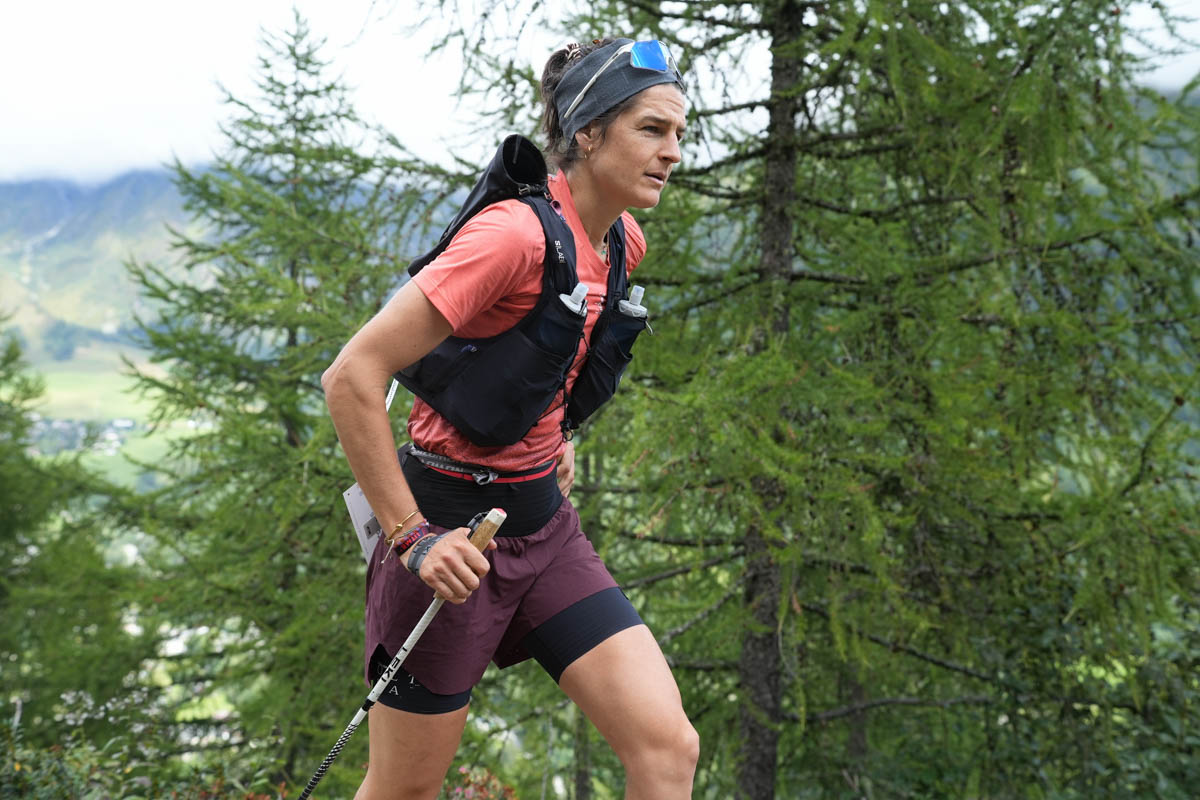
Camille Bruyas, who was second at the 2025 UTMB, is one of the elite runners involved in the Women’s Health Programme. Photo: iRunFar/Eszter Horanyi
By convening a field of medical experts, researchers, and professional athletes, the program — created by Ultra Sport Science and supported by UTMB — will collect data at top international races to better understand female bodies, with the goal of improving the safety, well-being, and long-term participation of female athletes in ultrarunning.
The need for more data and research is apparent. According to data from the International Trail Runners Association (ITRA), female participation in trail running has increased from 16% in 2007 to 30.5% in 2025. However, few studies examine the specific physiological and psychological factors relating to female performance. As Dr. Stacy Sims, an athlete, exercise physiologist, and nutrition scientist, often says, “Women are not small men,” and more research is needed to understand the differences. The Women’s Health Programme aims to use scientific studies, questionnaires, and athlete feedback to better understand how female athletes operate during endurance events. Key research areas will include menstrual health, pregnancy and post-partum, hormonal health, and hydration and gut issues.

Blandine L’Hirondel, finishing third at the 2023 UTMB, is one of several elite athletes involved with the Women’s Health Programme. Photo: iRunFar/Meghan Hicks
Ultra Sports Science, the organization behind the project, is a non-profit dedicated to improving the health and safety of endurance athletes. Dr. Sandrine Nail-Billaud, an ultrarunner and lead researcher at Ultra Sports Science, is helping to coordinate the project. She explains that “the data will ultimately be used as a stepping stone for providing clear advice to the public. We want our data to be accessible to all athletes, whatever their level, so that they can apply these principles to their training and competition.”
There are several elite athletes associated with the project, including French runners Marion Delespierre, Blandine L’Hirondel, and Camille Bruyas. Delespierre, who is also a sports physician, will also be contributing to the programme. “These are issues that I work with daily in my clinic,” she says, “so of course they’re important to me on both a professional level and as an athlete. Having access to more female-specific studies will make way for better treatments and support in the future.”

Marion Delespierre, who is a sports physician in addition to a professional runner, believes the Women’s Health Programme will produce valuable data. Photo: iRunFar/Bryon Powell
The first year of the Women’s Health Programme will use the 2026 UTMB as an “open-air laboratory … enabling access to a highly diverse and representative pool of athletes while allowing large-scale data collection and cross-cultural analysis.” According to Nail-Billaud, the program will host a congress during the UTMB festival with sessions open to both the public and research specialists, during which experts will present the results of ongoing studies on mental health, gynecological issues, and digestive problems, along with video testimonials from athletes involved in the program.

