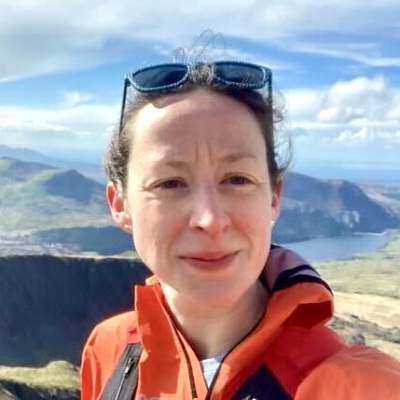
It’s two and a half weeks after the 2026 Barkley Marathons on the day we speak, and Great Britain’s Damian Hall is recovering well. Physically, at least, he has no niggles, and he is back to running. But mentally, spiritually? “No, those bits take forever,” he laughs as he pours a cup of tea. “Yeah, I could have done a bit better, but not much better, because it’s sort of impossible.”
Commiserations and congratulations are due: on Hall’s third attempt at Barkley — a notorious and mostly unfinishable loop race in the forested hills of Tennessee that annually captures global attention — this year, the course won again, leaving him returning to camp without all of his pages on his third of five possible laps and facing taps, played on the bugle for him by his friend and competitor, John Kelly.
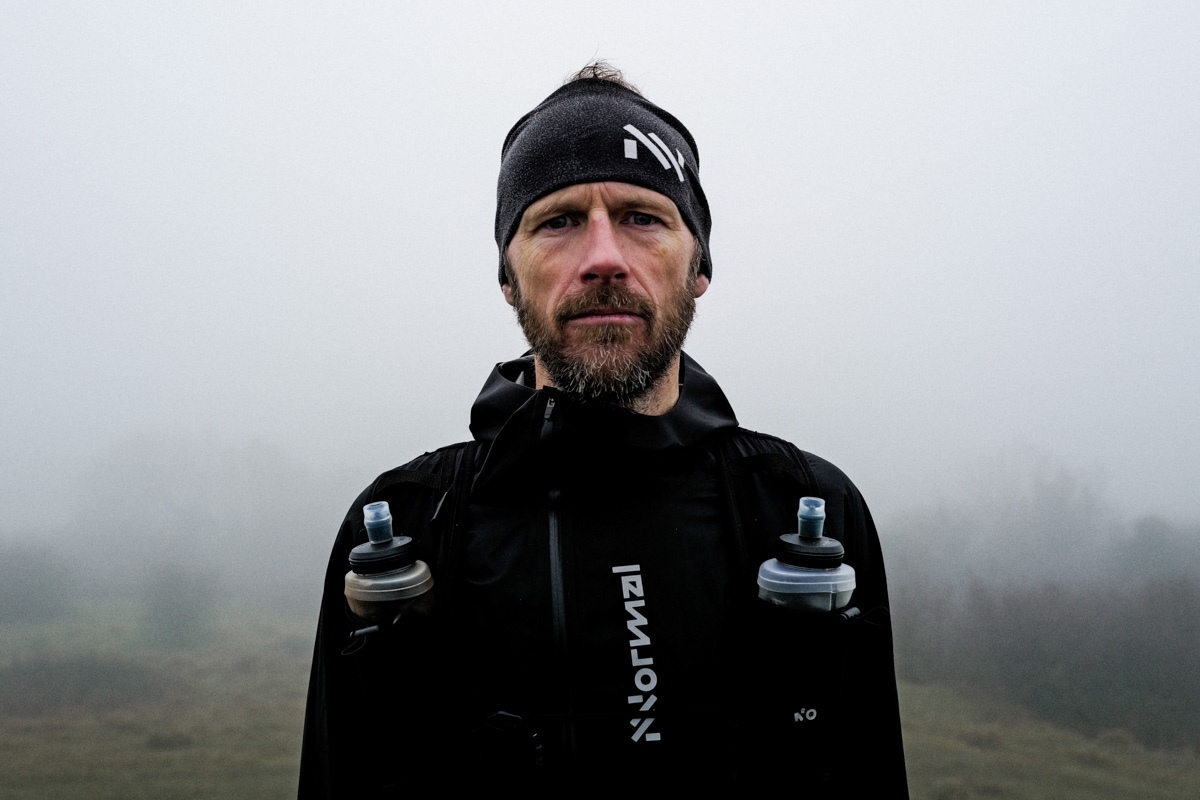
Damian Hall: A bog-bothering, tea-drinking, British ultrarunner. Photo: NNormal/David Miller
Hall is known for many things in the ultrarunning and trail running worlds. He’s a bog-bothering, tea-drinking, British ultrarunner. He started ultrarunning in his mid-30s and quickly started accumulating an impressive list of accolades. At the 2023 Barkley Marathons, he was identified on Keith Dunn’s X feed, which provides the only on-site updates from the event in cryptic form, as the “Guy with Mohawk.” At the 2026 event, he was “The Path Finder.” He represented Great Britain at the 2016 Trail World Championships, holds numerous course records, and came in fifth at the 2018 UTMB. He is sponsored by NNormal, coaches 2024 Barkley Marathons finisher Jasmin Paris, and is coached by David Roche. He’s a dad, an author of two books about running, and just about to release his third. He’s funny, kind, and conscientious. He’s the co-founder of Into Ultra, a charity that helps remove some financial barriers to people getting into ultrarunning. But the label that sticks with him throughout all his adventures is climate activist.
The Green Runners
Hall co-founded The Green Runners in 2022 alongside Dan Lawson, Darren Evans, Paris, and others who were impassioned about approaching the sport in a more environmentally conscious way. The Green Runners now has over 3,000 members worldwide. Anyone can join; it just involves a monthly membership fee of 2£ ($2.66) and a pledge to change a behavior aligned with the organization’s four environmental pillars: how to travel, how to fuel, how to kit up, and how to speak out. Members receive a patch to sew onto clothing — swerving the production of yet more apparel — and join a community that puts the planet first in a sport that relies on its wellbeing.

Hall runs close to home in the U.K. as much as possible to minimize his environmental impact. Photo: NNormal/Summit Fever Media
Within weeks of the founders signing the pledge in 2022, UTMB picked up Dacia — a car company — as a high-carbon title sponsor. Hall remembers, “We’re like, ‘Oh, that’s the biggest race in our sport … what do we do?” They started a petition, and with the race fast approaching, it quickly gained traction, reaching 3,000 signatures within about a week, including some well-known figures in the sport. It was a prime example of, “Build it, and they will come,” Hall says, and he notes that UTMB no longer has Dacia as its title sponsor. This is great news, but the work is seemingly never over: “It’s still a big problem in our sport.”
Personal Pledge
Hall has pledged to fly only once a year for races. He’s well within that goal, having only flown three times in the last seven years, all of which were for the Barkley Marathons. Even this invites criticism, though, something which used to bother Hall. He is more comfortable with it now, given the size of the crisis, because he understands he can only do so much individually, and he’s doing what he can within his own life and as an advocate. Climate-related guilt is embedded in everything we do. Indeed, Hall’s 2022 book, “We Can’t Run Away From This,” about the impact the sport has on climate change, begins by saying, “There’s a very good chance you’ll regret reading it.” The content is tough going, but Hall’s assured grip on the subject matter and groan-worthy humor make for an easy narrative. But as per The Green Runners’ central pillars, our contribution to the solution is in our travel choices, our kit, and our fuel — and it’s easy to feel overwhelmed and slightly powerless.
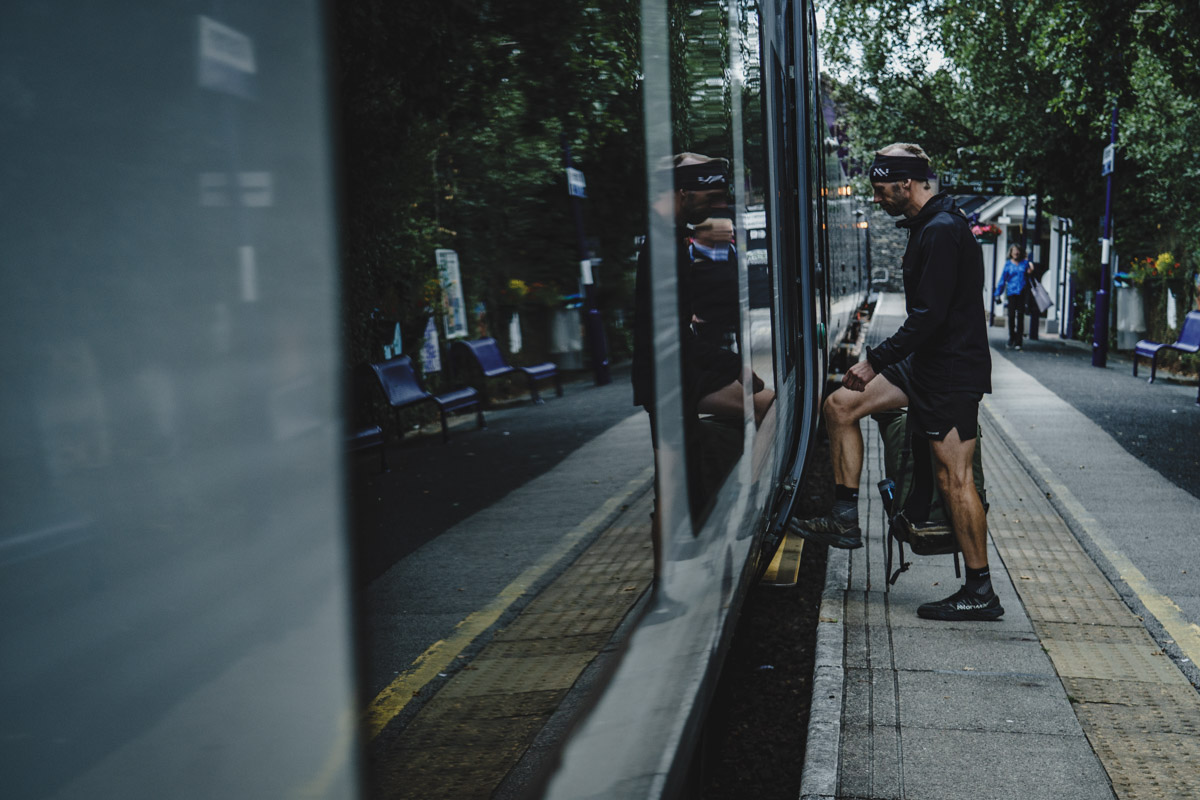
Hall using public transport to get between locations during one of his big adventures in the U.K. Photo: NNormal/Summit Fever Media
The message, Hall asserts, is not about stopping people from chasing their running dreams just because they involve planes. He refers to an interview on a podcast where he began to feel awkward about flying to the U.S. for the Barkley Marathons and started apologizing for it. The host stopped him and said, “Look, we’re all reasonable people here.” The word “reasonable” resonated strongly with Hall as a good guiding principle. He reasons that in 2024, when Paris became the first woman to finish the Barkley Marathons, The Green Runners saw a big bump in interest, followers, and membership. “And of course,” says Hall, “There would have been a couple of people tutting or shaking their heads.” But ultimately, these two Brits’ presence on that global stage boosts awareness for The Green Runners’ message.
Nonetheless, the weight of the task can be tiring. In 2024, The Green Runners had a stall at the U.K.’s National Running Show in Birmingham, which they called The Village Green. They sold books and pre-loved clothing, but primarily provided a space for people to learn more about what they do, with talks from well-known runners, including Nicky Spinks, Emma Stuart, Paris, Jack Scott, and Renee McGregor. Hall says it took a lot of fundraising and planning, and he needed a break from climate change advocacy afterward. “I did come away from that with really good vibes,” he says, “But doing this work is exhausting, on several levels. It’s the practical stuff, but also the emotional and existential stuff, and feeling gloomy, or like you’re not doing enough, or like it’s a battle we can’t win.” The emotional weight is heavy, Hall thinks, partly “because I’ve got kids, and you feel like, ‘Are we doing enough for the next generation?’”
UTMB
In interviews with Hall and in his book “We Can’t Run Away From This,” he is always quick to point out that he advocates for care for the environment, having already raced a lot of the international races that he’s wanted to. He raced UTMB four times, including his fifth-place finish in 2018, which he still cites as likely the best performance of his career. His relationship with the race is the subject of an award-winning film called “Underdog,” and he still speaks fondly of the event, a faraway look in his eye as he recalls it. “The crowds are incredible,” he says. “The course is pretty good. I mean, there are more spectacular and harder courses, but it is a special route, and then also the competitive element … it was really exciting. It still is. That race is still the pinnacle of our sport, really.”

Hall at the finish line of the 2017 UTMB with his kids. Photo: iRunFar/Bryon Powell
Hall highlights the democratic nature of the UTMB entry process, compared to other high-level races with lottery systems, saying it might take a few years of collecting stones, but most people can eventually sign up and run it. “But then that’s when it gets frustrating,” he says, “when they make terrible decisions, such as sponsorship, which is my real bugbear now.”
The Green Runners have had several discussions with UTMB. “And to their credit,” says Hall, “they did reach out to us.” He continues, “But it was quite clear that what happens is, you might have a sustainability lead, or someone is in a sustainability role in these bigger organizations, but they’re not necessarily consulted on the commercial things. So they’re told to reduce the plastic waste or something, and yet the commercial departments are making totally different decisions that totally contradict all of that.” As such, Hall believes it’s not up to individuals alone to solve their own carbon footprint, a phrase he points out was coined by the oil company British Petroleum. The idea behind the term was that people would look to themselves and each other to fix the planet, rather than the oil company. “There’s quite a nice phrase that comes from my coach, David Roche,” Hall says, “which is, ‘Shout at your politicians, not your neighbors.’” We can do what we can on an individual level, but, Hall continues, “Those companies and governments can obviously make huge, far bigger decisions that will have far more impact. And some of them slowly are.”
Finding Running
These are, perhaps, moral debates that Hall didn’t expect to be questioning when he first started out in the sport while in school. Of running as a child, he says, “I wasn’t very enthusiastic, because it wasn’t cool. Football was cool, so I wanted to play football, and I wasn’t very good at football.” Running was simply a means to stay fit. Eventually, he got a job as a football journalist, which, at the time, was a dream job. After spending time in Australia, he moved back to the U.K. in 2011, and, feeling a bit unfit, signed up for the Bath Half. “I loved the event itself. I loved the training. I love that sort of sweet exhaustion of pushing yourself when you’re really tired.”
Running slowly began to move to the forefront of Hall’s life. “There was a big moment years ago,” says Hall. “I was playing five-a-side football in Bath, and I realized I didn’t actually want to, because I didn’t want to get injured for my running.” After playing football for most of his life, Hall was turning a corner.
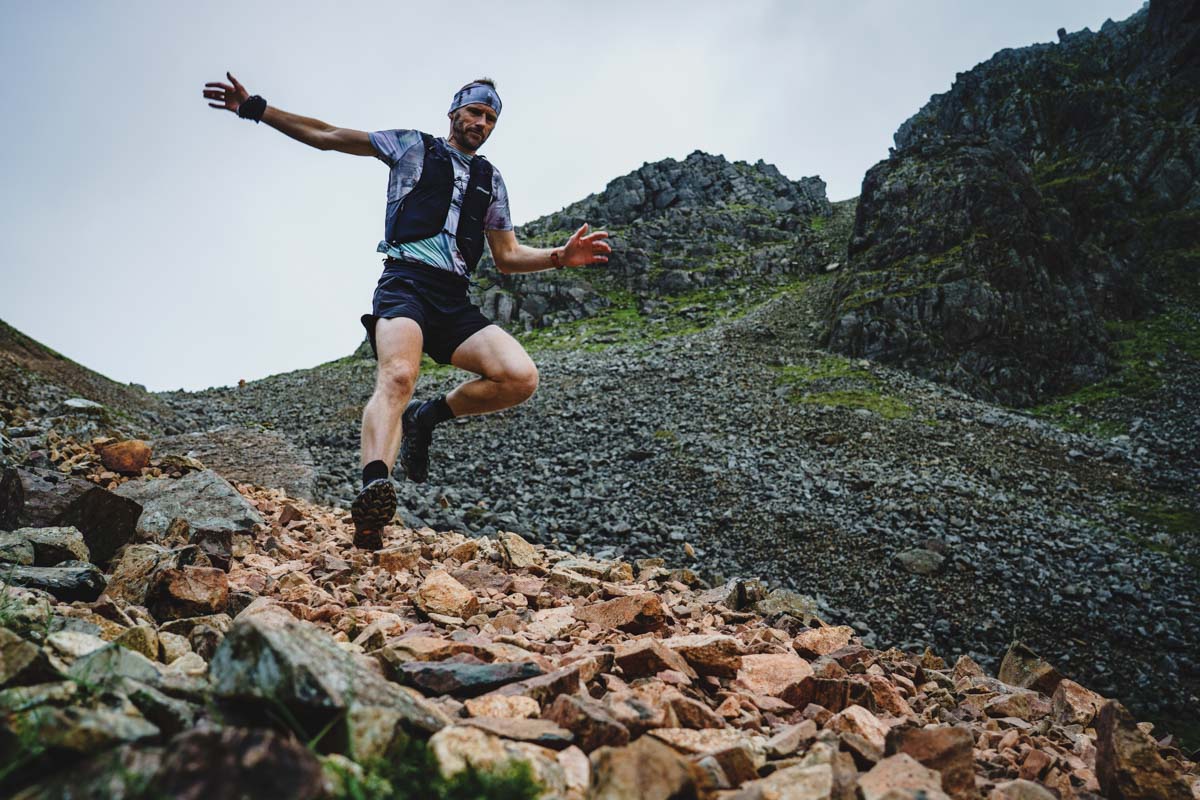
After football came running. Photo: NNormal/Summit Fever Media
In the grips of that evangelical stage of running, Hall approached the magazine he was writing for with a pitch to write about running a marathon. “They said, ‘Absolutely, but not about your marathon. We’re gonna’ send you on an ultramarathon.’” Hall raced the inaugural edition of The Wall in 2012, a 69-mile (110 kilometers) event in Northumberland taking in the historic Hadrian’s Wall. Hall says there was a lot of rain, he was “woefully undertrained,” but he loved it.
There was a distinct moment at the end of The Wall when Hall began to feel, in his words, “smitten” with the sport of ultrarunning. He was hiking, certain that he couldn’t run anymore because his feet and legs hurt too much, when he realized there was only a mile to go until the finish. “And I was running again, and I remember thinking, ‘That was amazing.’ My brain had said, ‘That’s enough,’ but actually I had loads more. And that’s always stayed with me.” Hall ran his first 100k and 100-mile races the following year, then the 2014 Spine Race, a 268-mile race on the U.K.’s Pennine Way, where he finished fourth. “So that’s quite an escalation, I think.” Afterward, he says, “All I could think was I just wanted the whole year to disappear so I could do the Spine Race again.” He had properly caught the bug.
Midlife Running Success and the Future
Just four years after his first ultra, Hall represented Great Britain at the 2016 Trail World Championships. He was 40 years old. In the decade since then, he was seventh at the 2017 Lavaredo Ultra Trail, sixth at the 2018 Madeira Island Ultra-Trail, second at the 2018 Mozart 100 Mile, and set a fastest known time on the Pennine Way in 2020. He also won the 2023 Winter Spine Race and 2025 Northern Traverse, a 300-kilometer, five-day event across the Lake District. To emphasise the point, this is all in Hall’s fifth decade. “I’ve still got 90% of that wonder and passion and curiosity. I still love it.”

Hall takes victory in the 2023 Winter Spine Race. Photo: @wild_aperture
The next big goal in Hall’s sights is finishing the Barkley Marathons. He is one of only three people in the event’s 31-year history to have made it to the final, fifth loop without finishing.
For Hall, longevity is tantamount to this and other future goals. It’s the subject of his forthcoming book, “Run Forever,” which comes out on April 9 of this year, and explores ways to approach the sport in midlife to foster a long and healthy relationship with it. It’s ostensibly tied to his previous book about the sport’s position within the climate crisis, in that the central idea is of a sustainable runner. “I turned 50 a few months ago, and of course, it’s like … recovery is a bit slower.” He explains that when he came to running in his mid-30s, he was still improving, and now “you suddenly realize, ‘Oh, I haven’t been able to get past that 10k PB for a while.’”
“It is quite hard to accept,” he says, “because for years, you just feel youthful invincibility. Especially in ultrarunning when you go, ‘I can run 100 miles. Actually, I can run 200! I can do anything!’”
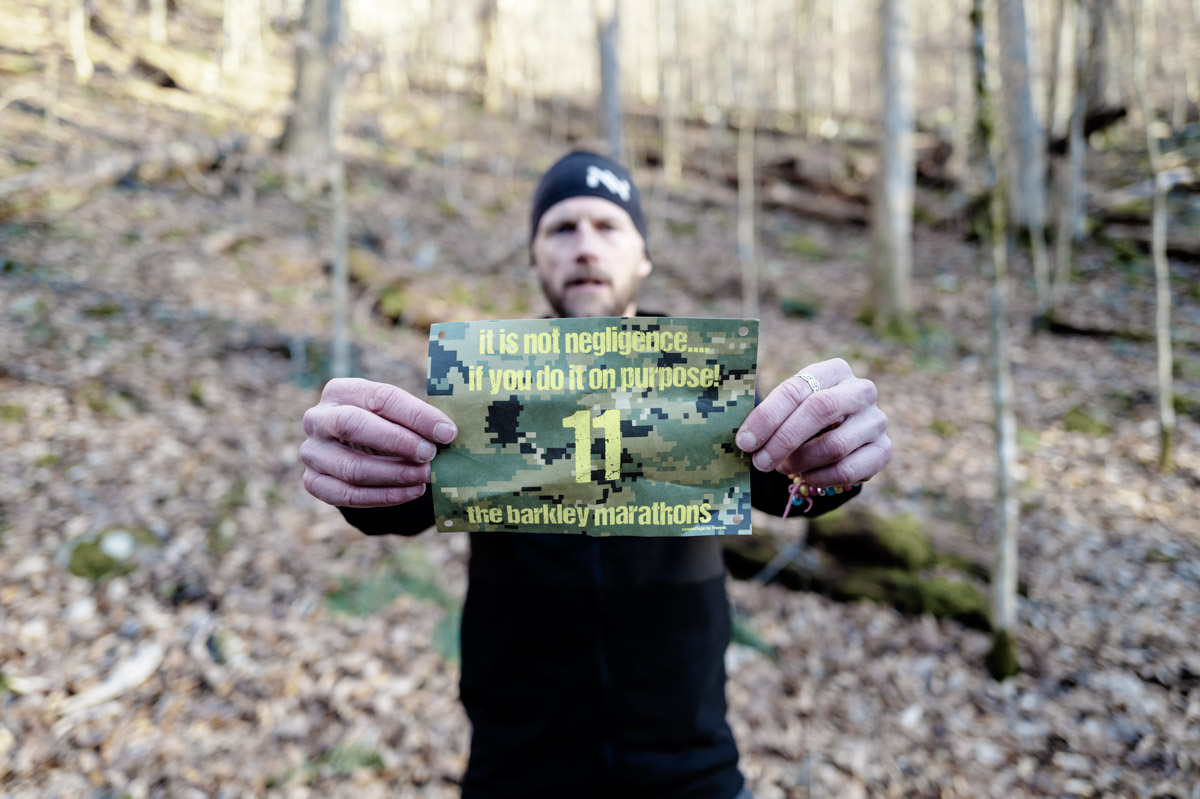
Hall holds up his number ahead of the 2026 Barkley Marathons. Photo: NNormal/David Miller
Aging is inevitable, but Hall is interested in how we can build longevity and remain the best athletes possible. For his book, he has interviewed experts and other master athletes, and has written a chapter from Pete Stables on strength and conditioning, and another from sports dietitian Renee McGregor on perimenopause and menopause. Hall himself is evidence of the great mental benefits that can come with the passing years. “When I was a bit younger,” he says, “I guess it was about trying to win, or do the best I could, and now … it’s trying to bring my values and ethics into my run.”
Hall stretches out his legs, the teapot long since empty, and lets the early spring sun warm his face. “I suppose that’s what gives me a strong ‘why’ when I’m in a race or a difficult challenge,” says Hall. “That gives me a strong purpose.” Running against climate change, supporting people financially to get into the sport through the charity Into Ultra, these seem like more sustainable motivations than simply running to win. In body, in environment, and in purpose, he is the sustainable athlete. Hall may offer inspiration for physical longevity into older age, but he’s an example of finding longevity in motivation as well.
Call for Comments
- Do you consider your climate and environmental impact when racing and running?
- Do you have a Damian Hall story you could share?