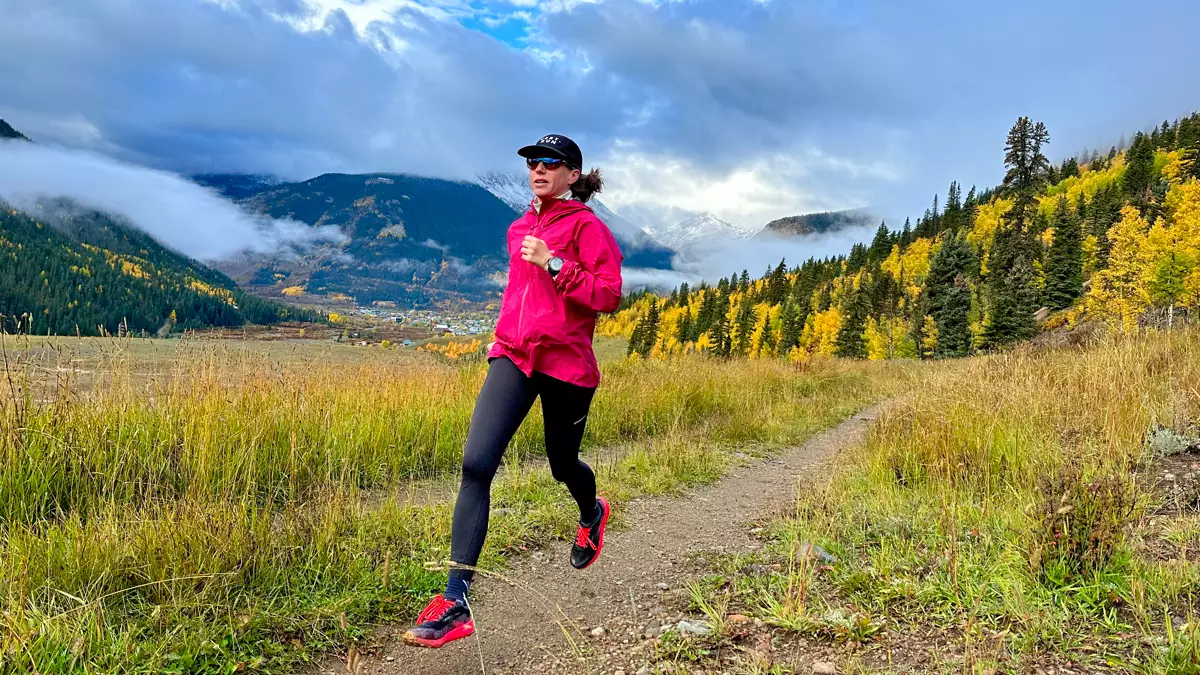
Editor-in-Chief Meghan Hicks testing trail running shoes above Silverton, Colorado. Photo: iRunFar/Bryon Powell
It is a glorious time to be a trail runner. With over 300 models on the market, there is a perfect shoe for every foot, terrain, and distance. The only downside is the overwhelming number of choices. Let us help you find the best pair for you! To help you make the right choice, we’ve tested hundreds of models, including penning full reviews of more than 60 current models in our current trail shoe reviews hub.
For nearly 20 years, iRunFar has obsessively followed trail running footwear. Founder Bryon Powell compiled this guide with input from our 15-person test team, editorial staff, and the wider reader community.
Below, we’ve selected 13 top contenders to meet the needs of most runners. You can also jump to our buying advice, FAQs, or our testing methodology.
[Editor’s Note: Updated May 9 to add a full review of the Nike ACG Pegasus Trail, recategorized and reorganized our top picks, rescaled our rating system, and update pricing. May 4, 2026 added link to the full review of the Nike ACG Pegasus Trail. May 2, 2026 added Altra Experience Wild 3+ review and info on the just released Nike ACG Pegasus as well as confirming pricing and availability. April 11, 2026 updated with FAQs and more details in testing section. March 30, 2026 updated to replace the Altra Experience Wild 2 with the improved Experience Wild 3+ and confirm pricing throughout.]
Best Trail Running Shoes
| SHOE (Click for review) |
SCORE | PRICE | BEST FOR | WEIGHT | DROP | BUY NOW |
|---|---|---|---|---|---|---|
| Nike ACG Pegasus Trail | 9.3 | $155 | Road-to-Trail | 10.4 oz | 8 mm | Men | Women |
| Hoka Speedgoat 7 | 9.2 | $165 | Cushioning | 9.1 oz | 5 mm | Men | Women |
| Hoka Tecton X 3 | 9.1 | $275 | Ultramarathons | 9.3 oz | 5 mm | Men | Women |
| La Sportiva Prodigio Pro | 9.0 | $225 | Technical Speed | 9.4 oz | 6 mm | Men | Women |
| Saucony Peregrine 16 | 9.0 | $150 | Value | 9.5 oz | 4 mm | Men | Women |
| Brooks Cascadia 19 | 8.9 | $150 | Beginners | 10.7 oz | 6 mm | Men | Women |
| Altra Lone Peak 9 | 8.9 | $145 | Zero-Drop | 10.3 oz | 0 mm | Men | Women |
| La Sportiva Akasha II | 8.7 | $195 | Burly Adventures | 11.5 oz | 6 mm | Men | Women |
| Inov8 TrailTalon | 8.6 | $160 | Mud | 9.7 oz | 6 mm | Men | Women |
| Salomon Speedcross 6 | 8.5 | $150 | Soft Ground | 10.4 oz | 10 mm | Men | Women |
| Altra Experience Wild 3+ | 8.4 | $165 | Low Drop | 9.8 oz | 4 mm | Men | Women |
| Topo Ultraventure 4 | 8.3 | $155 | Wide Toebox | 10.1 oz | 5 mm | Men | Women |
| On Cloudultra Pro | 8.3 | $260 | Versatile Speed | 9.2 oz | 6 mm | Men | Women |
Best Overall Trail Running Shoe: Nike ACG Pegasus Trail ($155)
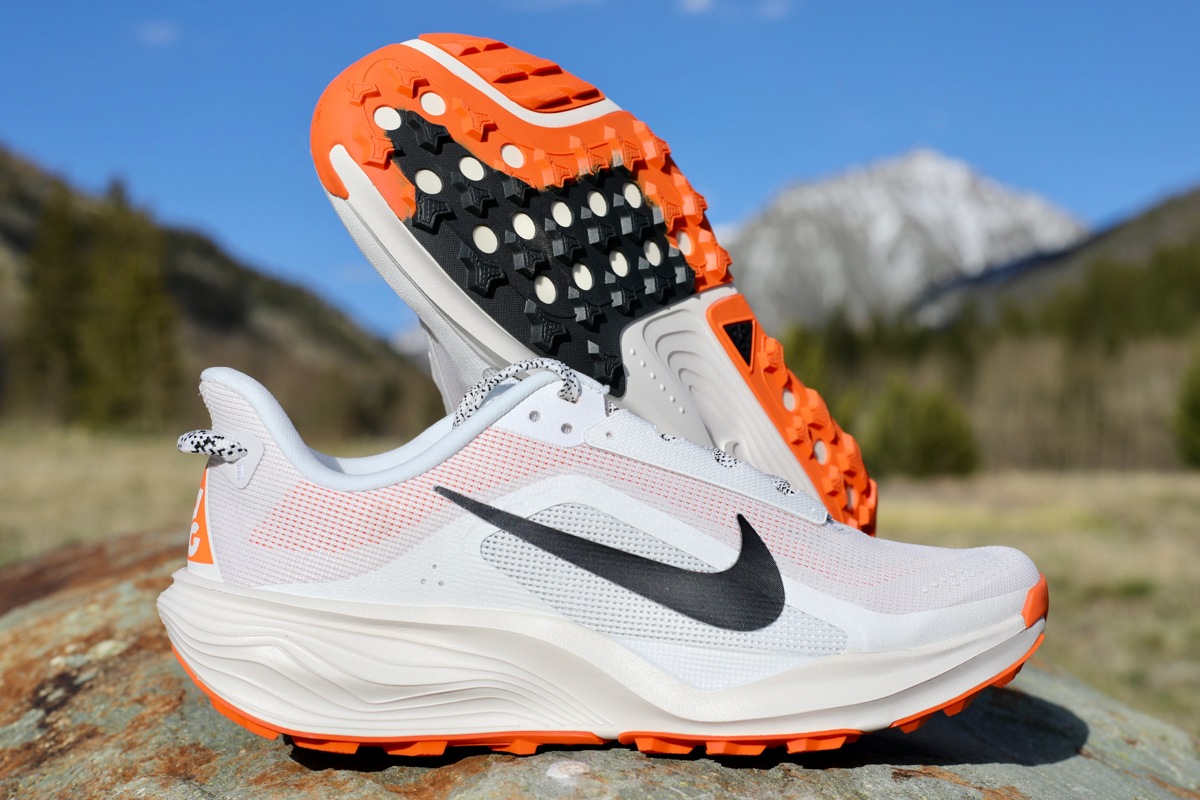
The Nike ACG Pegasus. Photo: iRunFar/Bryon Powell
Actual Weight (U.S. men’s 9): 10.4 ounces (295 grams) | Drop: 8 millimeters
Pros:
- A dialed-in upper
- Responsive midsole foam
- Great insole
Cons:
- Highly technical terrain is a stretch
The Nike ACG Pegasus Trail is an all-around trail shoe that does it all well. It’s an excellent option for those who spend long days on the trails or run on a mix of roads and trails. The ACG Pegasus Trail’s strengths come from the ridiculously great ReactX midsole foam, which one tester of a previous version that used the same foam said “felt alive.” The brand has many decades of designing top-notch footwear, so it’s no surprise the shoe is excellently constructed and plenty durable.
Its improved outsole design, improved outsole compound (All Terrain Compound 2.0), slight thickening of the midsole (2 to 4 millimeters), and a slightly more accommodating toebox mean that the ACG Pegasus Trail is better able to tackle the trail as well as long distances than its predecessor, which was already a great shoe.
For the second-straight iteration, the Peg Trail tacked on a few grams, but the shoe remains noticeably lighter than early models in this line and plenty light for a daily trainer.
The ACG Pegasus Trail won’t be your top choice in sloppy trails or if you’re looking for a fast and light option for shorter trail races — although it’s improved in both these areas — but it’s an excellent choice for almost everything else. In fact, one tester noted the earlier Pegasus Trail 3 would be “the one shoe I’d take on vacation if I don’t know the conditions I’ll be running in,” and that holds just as true with today’s ACG Pegasus Trail, if not more so. It’s the one-shoe trail quiver that adeptly handles paved roads, as well.
Still, you might want to skip the Pegasus Trail on the rockiest and burliest of runs. It’s simply not designed to be the most protective of shoes, and better options exist for such outings, like the La Sportiva Akasha II described below.
Full Nike ACG Pegasus Trail review.
Shop the Men's Nike ACG Pegasus TrailShop the Women's Nike ACG Pegasus Trail
If the ACG Peg Trail’s predecessor, the Nike Pegasus Trail 5, is your all-time favorite, this is your last chance to pick up a pair before they’re gone forever!
Shop the Men's Nike Pegasus Trail 5Shop the Women's Nike Pegasus Trail 5
Best Cushioned Trail Running Shoe: Hoka Speedgoat 7 ($165)
Actual Weight (U.S. men’s 9): 9.1 ounces (257 grams) | Drop: 5 millimeters
Pros:
- Long-distance shoe for a slew of conditions
- Return to livelier cushioning that was missing in more recent models
- Great traction
Cons:
- Just a bit too much shoe for some runners’ liking
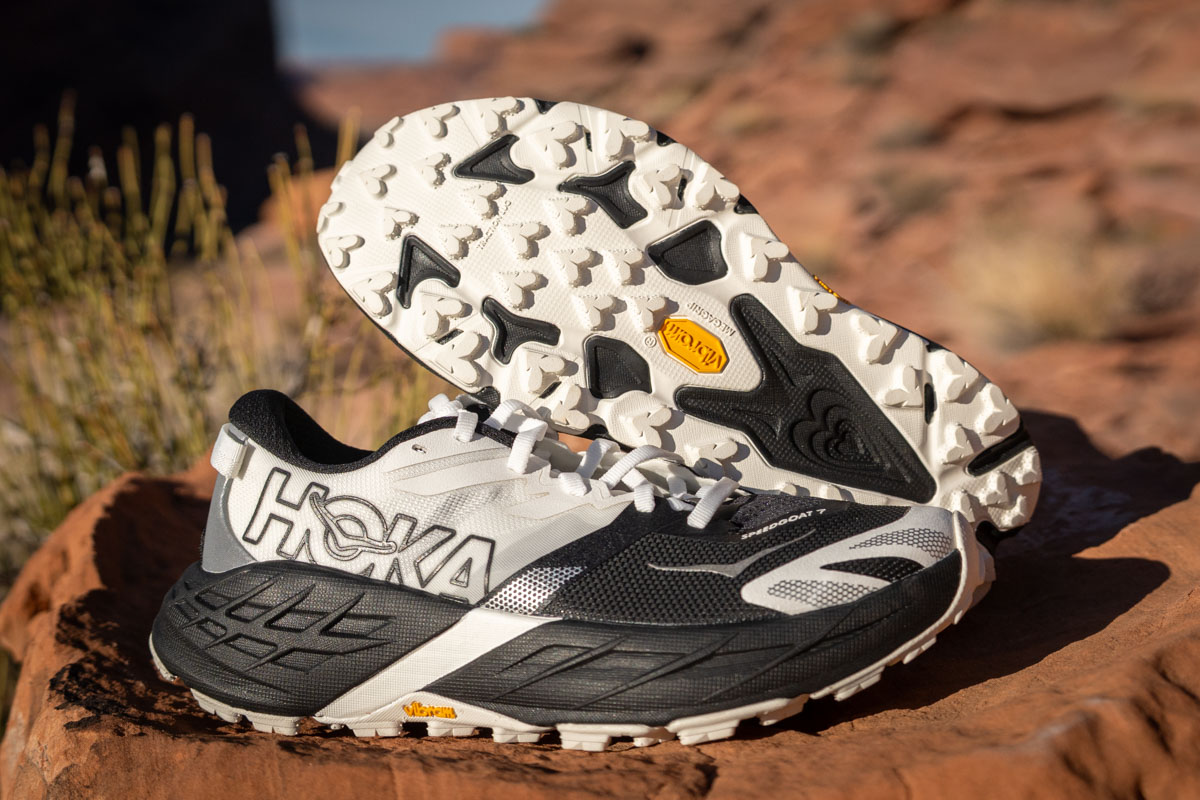
The Hoka Speedgoat 7. Photo: iRunFar/Eszter Horanyi
With a breadth of well-cushioned trail shoes on the market these days, the Hoka Speedgoat 7 really is the standout of the group. The Hoka Speedgoat was a hit when it launched and, has largely remained so. That said, if we’re honest, recent versions of the shoe had swung slightly away from the core feel of the shoe. When the shoe trended one way, some appreciated the changes, while vocal others didn’t, with those camps taking opposite views when the pendulum swung the other way.
While it has plenty of cushioning, that cushioning isn’t so excessive as to get in the way for many trail runners. In fact, detractors of the prior Speedgoat 6 complained that it was too firm. Hoka responded by tuning the Speedgoat 7 to a cushier return to its roots. Further underfoot, there are also generous lugs made from Vibram Megagrip, which yield strong traction in most conditions. That traction has only improved with the earlier addition of Vibram’s Traction Lug, which provides a larger outsole surface area through textured lugs.
The other significant upgrade to the Speedgoat 7 is the model continuing to add more structure to the upper in a positive way. This greatly aids midfoot lockdown, increasing confidence on uneven terrain.
Overall, the Hoka Speedgoat 7 is a comfy shoe that can go the distance on any trail.
Full Hoka Speedgoat 7 review.
Shop the Men's Hoka Speedgoat 7Shop the Women's Hoka Speedgoat 7
Best Trail Running Shoe for Beginners: Brooks Cascadia 19 ($150)
Actual Weight (U.S. men’s 9): 10.7 ounces (303 grams) | Drop: 6 millimeters
Pros:
- An effective everyday road-to-trail shoe
- An increasingly agile option
Cons:
- A voluminous forefoot may make fit challenging for runners with narrow forefeet
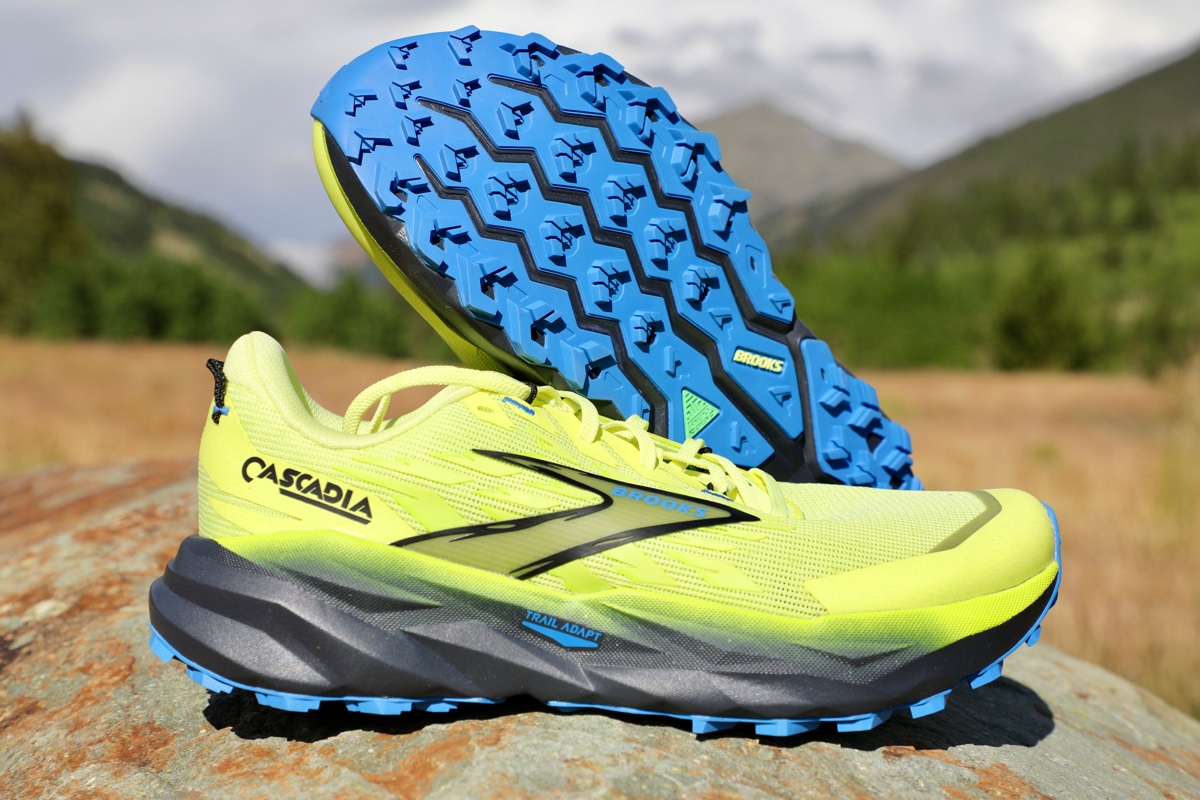
The Brooks Cascadia 19. All shoe photos iRunFar/Bryon Powell unless noted.
The Brooks Cascadia has a long legacy of predictable protection. With a history dating back to the early 2000s, Brooks found a winning formula in the Cascadia that it has kept going for nearly two decades. If I had to recommend a pair of trail shoes to a new trail runner about whom I had no additional details, I’d point them toward the Brooks Cascadia 19.
Why? It’s a trail shoe that performs well on a variety of trail conditions while also still being a smooth ride on pavement as a road-to-trail shoe. Indeed, this latest iteration only makes the Cascadia an even more runnable shoe. In addition, the Cascadia’s moderate 6-millimeter heel-to-toe drop should make the shoe accessible for most runners.
The biggest changes with the Cascadia 19 are a reduction in drop from 8 to 6 millimeters and an upgrade to midsole foam, making the shoe feel even livelier. The shoes continue to provide the stable, moderately cushioned ride for which the Cascadia is known. In addition, the Ballistic Rock Shield offers plenty of protection on rocky terrain.
The Cascadia 19’s only shortcomings show up only in fringe-use cases, such as prolonged off-camber running, where the roomy forefoot can feel too roomy, and scenarios in which only extremely lugged shoes will provide traction.
Full Brooks Cascadia 19 review.
Shop the Men's Brooks Cascadia 19Shop the Women's Brooks Cascadia 19
Best Zero-Drop Trail Running Shoe: Altra Lone Peak 9 ($145)
Actual Weight (U.S. men’s 9): 10.3 ounces (293 grams) | Drop: 0 millimeters
Pros:
- Incredibly roomy toebox while maintaining good lockdown
- Updates don’t break what works
Cons:
- A strong generalist shoe in a field of top-notch specialty shoes
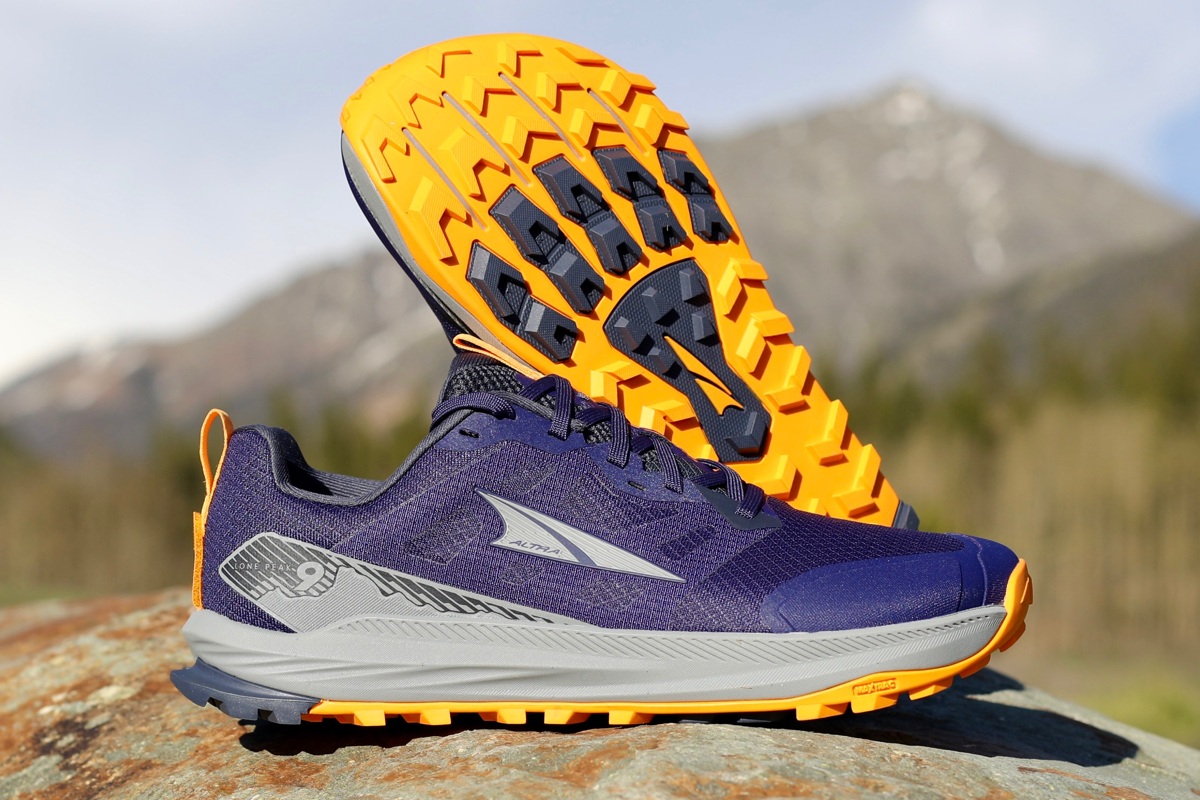
The Altra Lone Peak 9.
The Altra Lone Peak 9 is so many things to so many people. For many trail runners, it’s their everyday trail shoe, from a short spin on the roads to an easy run in the local park to a 100-mile race across rugged terrain. For others, it’s an excellent daily wear (and occasional run) option for increasing lower leg strength and mobility outside of running. It’s no different among hikers, who’ve flocked to the Lone Peak line since its introduction.
So, what’s the secret to the Lone Peak’s success? A moderate amount of cushioning atop a grippy outsole with a marvelously roomy toebox.
The Lone Peak 9 perfectly continues the line’s comfortable upper, adequate cushioning, and generous toebox. The toe bumper has been beefed up again after a one-version reduction, resulting in safer toes and, along with other updates, a more durable shoe. Testers found it “ran lighter” than its weight.
Underfoot, the shoe is as cushioned as ever. The shoe continues to provide solid traction for most trail conditions. Overall, the Lone Peak 9 is a nimble, responsive, and yet remarkably comfortable ride with excellent ground feel.
Note that for some, Altra’s zero-drop platform is a significant advantage, while for others, it presents a challenge. If you’re new to low- or no-drop shoes, gradually build your mileage in Altras, letting any sore or tight calves or Achilles tendons recover between efforts.
Full Altra Lone Peak 9 review.
Shop the Men's Altra Lone Peak 9Shop the Women's Altra Lone Peak 9
Best Trail Running Shoe for Mud: Inov8 TrailTalon ($160)
Actual Weight (U.S. men’s 9): 9.7 ounces (276 grams) | Drop: 6 millimeters
Pros:
- Excels in rain and mud
- Versatile outsole
- An anatomically precise fit, with the shoe available in standard or wide fits
Cons:
- Runs small
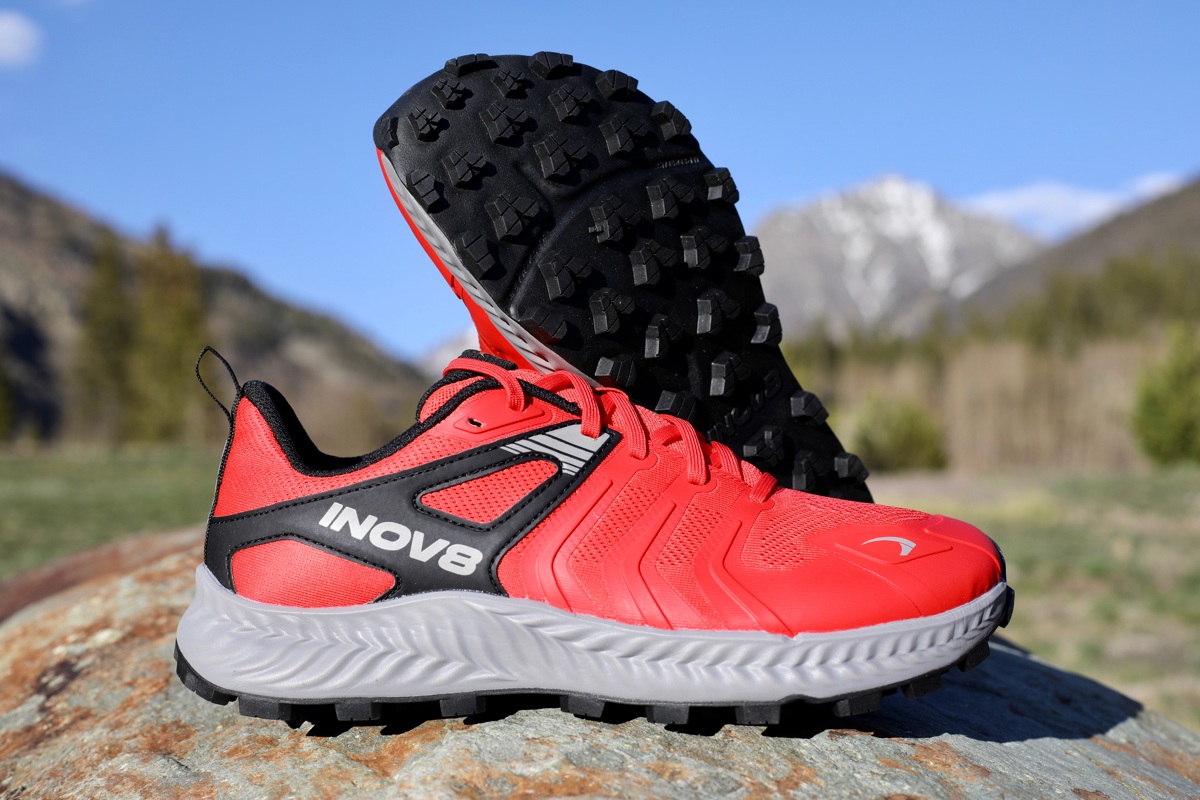
The Inov8 TrailTalon.
The Inov8 TrailTalon sits as the brand’s most versatile in its trail running range, evolving from its Roclite series. Compared to Inov8’s reputation for mud-devouring, uber-lugged shoes, and the more recent, lower-profile Trailfly, the TrailTalon’s multidirectional 6-millimeter lugs offer an ideal middle ground for everyday trail use, while being more than grippy enough for all but the most extreme conditions.
The upper offers a secure, pressure-free fit and withstands the elements well. Underfoot, the light and responsive Powerflow Pro cushioning creates a relatively low midsole heights of 18 millimeters at the heel and 12 millimeters at the toe, while the graphene-infused outsole rubber provides standout grip on wet and slippery terrain.
Within Inov8’s broader lineup, the TrailTalon emerges as a reliable do-everything workhorse. Against the wider market, it distinguishes itself with an anatomical fit, roomy toebox, confident traction, and inherently stable ride that results in a nimble, secure experience on wet, muddy, and uneven trails.
Read our full Inov8 TrailTalon review.
Shop the Men's Inov8 TrailTalonShop the Women's Inov8 TrailTalon
Additional Outstanding Trail Running Shoes
With such extreme terrain diversity in trail running and the specific needs of our feet and bodies, there is no single best trail running shoe for everyone and every condition. However, in this section, we profile six generalist trail running shoe models that cover a broad range of conditions under which they excel.
Hoka Tecton X 3 ($275)
Actual Weight (U.S. men’s 9): 9.3 ounces (265 grams) | Drop: 5 millimeters
Pros:
- Lightweight and stable
- Great traction on a variety of trails
Cons:
- The built-in gaiter will alienate some
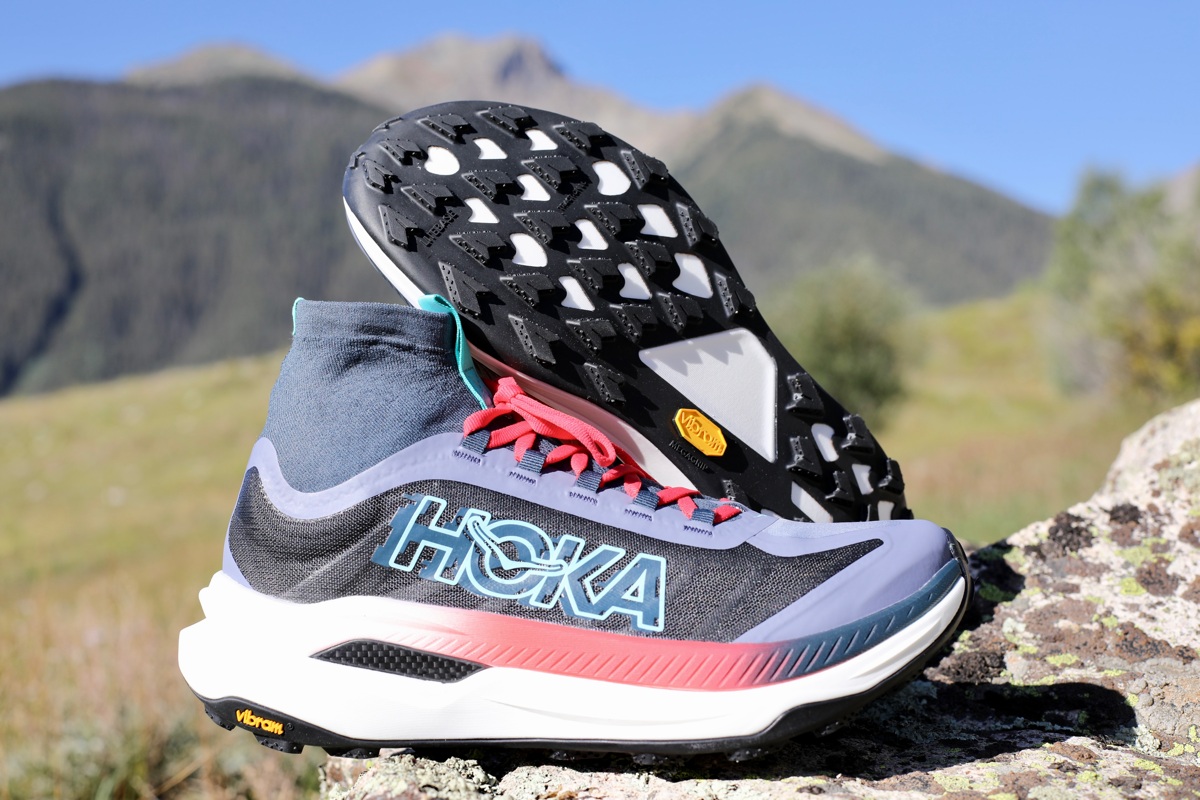
The Hoka Tecton X 3.
The Hoka Tecton X 3 is a lightweight, maximal ultra-distance racing shoe. Two layers of super-light PEBA in the midsole help keep the highly cushioned shoe from feeling clunky, while carbon plates support forward propulsion. In this newest version of the shoe, Hoka added winglets to the carbon plates to enhance lateral stability. Indeed, our tester found that the Tecton X 3 is among the most stable of the high-stack, lightweight, carbon-plated shoes she’s tried. Other, less obvious updates include a bit more room in the toebox, while maintaining a secure midfoot lockdown, and tweaks to the outsole lug design.
Now in its third iteration, the Tecton has seen some significant changes since its original launch. The most notable update in the current model is the addition of a knit gaiter. If you don’t love built-in gaiters, this might be a deterrent, if not a deal-breaker. However, if you’re open to — or even enticed by — the ankle gaiter, then you’ll find a lot to love about the latest Tecton.
The gaiter makes the shoe slightly annoying to put on, especially when it’s fresh out of the box. However, after initial skepticism, our tester begrudgingly appreciated the gaiter’s effectiveness at keeping trail debris out of her shoes, especially on Oregon’s South Sister, which typically requires a mid-descent break to dump volcanic scree out of the shoes. Thanks to the Tecton’s gaiter, no pause was needed.
Read our full Hoka Tecton X 3 review.
Shop the Men's Hoka Tecton X 3Shop the Women's Hoka Tecton X 3
La Sportiva Prodigio Pro ($225)
Actual Weight (U.S. men’s 9.5): 9.4 ounces (267 grams) | Drop: 6 millimeters
Pros:
- A lightweight and nimble feel that still offers substantial protection
- Between its sticky rubber, 4-millimeter lugs, and lug design, one of the best all-around outsole designs we’ve tested
Cons:
- Quite expensive for a non-plated shoe
- Some may find the upper unforgiving at longer ultra distances
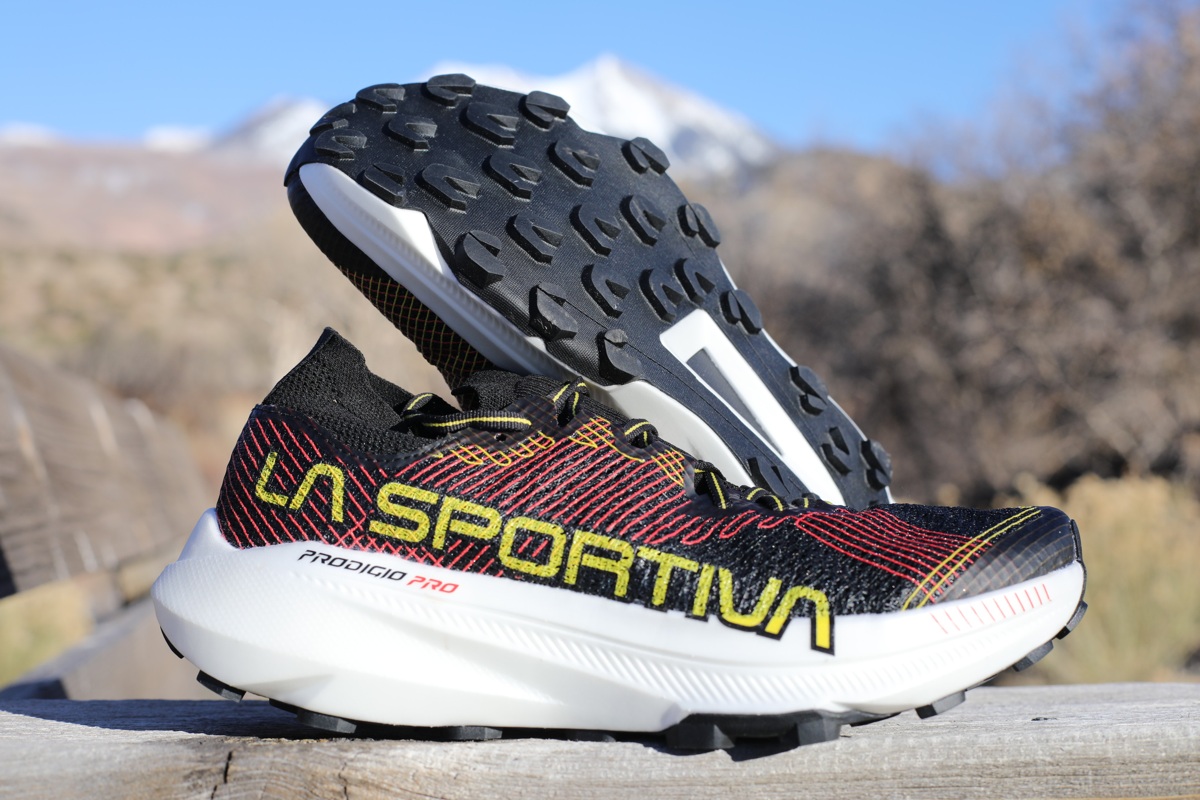
The La Sportiva Prodigio Pro.
The La Sportiva Prodigio Pro arrives as the high-performance racing sibling to the standard Prodigio, elevating the line with premium materials and a focus on speed. The shoe features a knitted upper with Power Wire that creates an incredibly secure, locked-down fit. Testers noted that the upper is durable and confidence-inspiring on technical ground. The fit runs small enough that sizing up a half size is highly recommended, and even then, not everyone finds the shoe accommodating for distances beyond 50k.
Underfoot is where the shoe truly distinguishes itself. It utilizes a dual-density midsole featuring a nitrogen-infused TPU core caged within EVA foam. This setup delivers a ride that is simultaneously light, soft, and responsive, absorbing rocks and roots without feeling squishy. A nylon rock plate adds barely there protection that shields the foot while maintaining the shoe’s flexible and springy character.
The outsole is composed of La Sportiva’s stickiest compound, FriXion white rubber, molded into 4-millimeter chevron lugs. This aggressive tread pattern digs effectively into loose surfaces and provides exceptional purchase on wet rocks. The shoe features a versatile 6-millimeter drop and a stack height (34 millimeters at the heel/28 millimeters at the toe) that feels cushioned enough for long distances, as evidenced by it being the second-most-worn shoe at the 2025 Hardrock 100.
Overall, the Prodigio Pro is a top-tier option for runners seeking a precise and agile shoe that can handle everything from a fast trail 10k to a rugged 50-mile trail run. While the $225 price tag and snug fit might give some pause, the combination of elite traction and a lively, protective midsole makes it a standout for technical mountain running.
Again, the Prodigio Pro runs small, so please do yourself a favor and go a half size up from your normal trail shoes unless you’re normally wearing trail shoes from La Sportiva or Norda.
Full La Sportiva Prodigio Pro review.
Shop the Men's La Sportiva Prodigio ProShop the Women's La Sportiva Prodigio Pro
Saucony Peregrine 16 ($150)
Actual Weight (U.S. men’s 9): 9.5 ounces (269 grams) | Drop: 4 millimeters
Pros:
- It is a great all-around trail shoe at a reasonable price and light weight
- It’s good grip in a variety of conditions got even better with the switch to a Vibram Megagrip outsole
- Additional midsole cushioning makes the shoe more versatile without killing the shoe’s essence
Cons:
- Loss of tread depth for scenarios where bite matters more than stickiness
- Roomier upper is slightly less athletic feeling than before
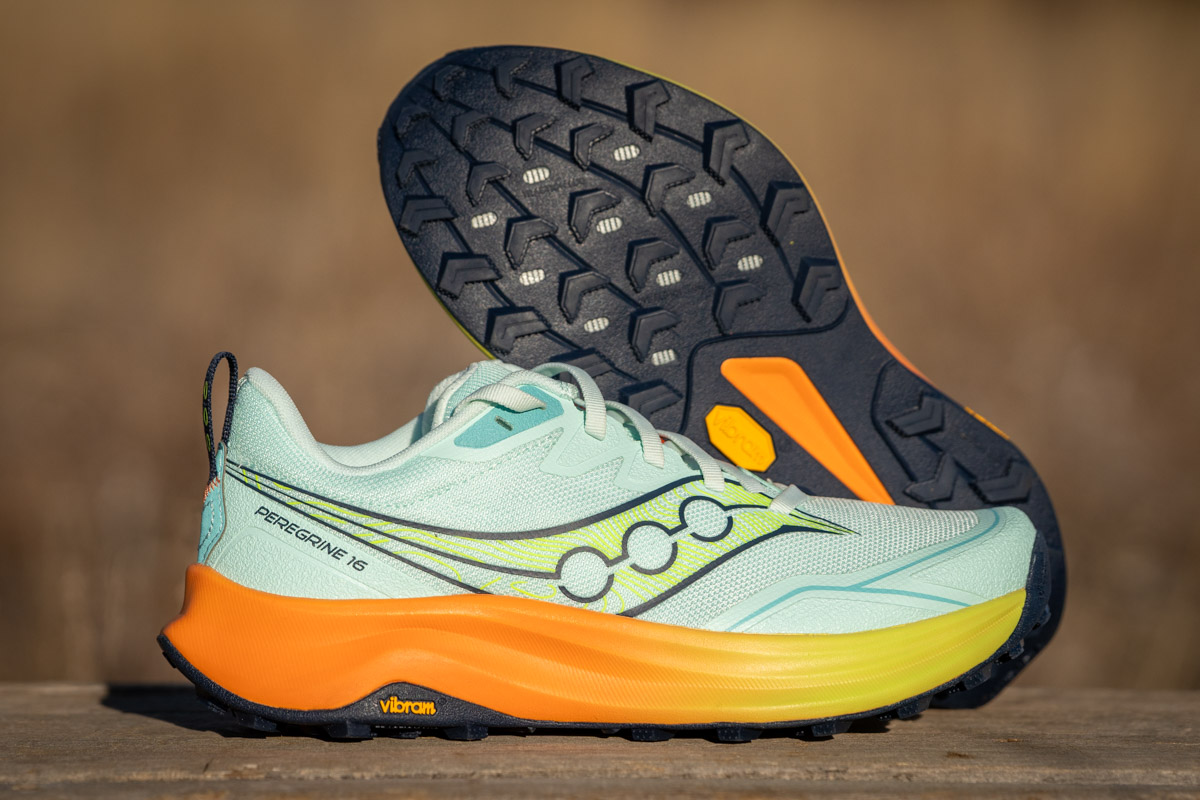
The Saucony Peregrine 16. Photo: iRunFar/Eszter Horanyi
Over the past decade, the Saucony Peregrine has evolved from a trail racing shoe to something more akin to a classic, everyday trail shoe. That’s even more the case with the Saucony Peregrine 16. Saucony added 4 mm of midsole foam throughout and switched to a Vibram Megagrip outsole while cutting the lug depth from 5 to 4 millimeters. Through all these changes, the weight barely budged. At the same time, it became grippier in nearly all conditions, a bit smoother on the roads, and considerably more comfortable for the longest of trail runs.
Overall, the Peregrine 16 still won’t wow you with bells and whistles, but it’s an even better combination of traction, mild cushioning, sufficient underfoot protection, a breathable yet locked-down upper, and is reasonably lightweight. It just performs, and that’s awesome.
You can read our full Saucony Peregrine 16 review.
Shop the Men's Saucony Peregrine 16Shop the Women's Saucony Peregrine 16
Topo Ultraventure 4 ($155)
Actual Weight (U.S. men’s 9): 10.1 ounces (285 grams) | Drop: 5 millimeters
Pros:
- Gloriously accommodating toebox
- A highly versatile outsole
Cons:
- Fans of the Ultraventure 2 might miss its slightly lower height and greater ground feel
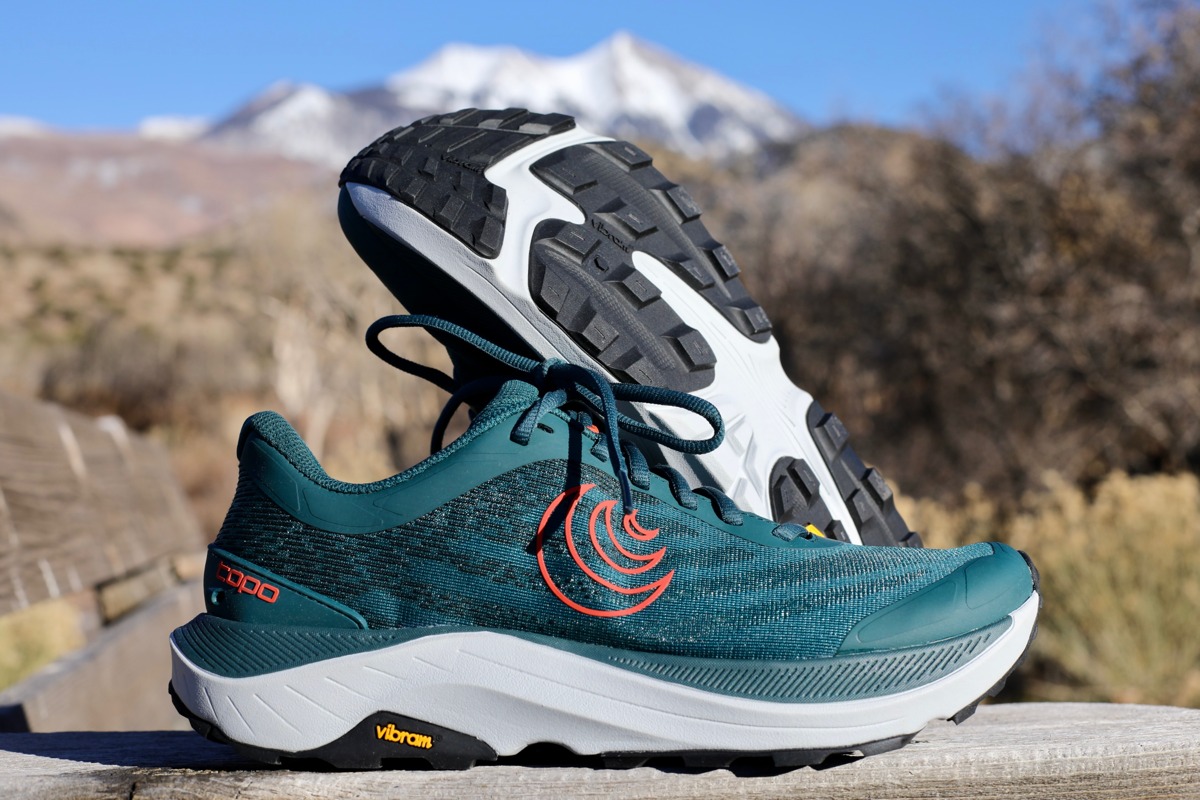
The Topo Ultraventure 4.
The Topo Ultraventure 4 is the latest evolution of Topo’s best-selling trail shoe. With ample cushioning and a bit higher stack of 35 millimeters at the heel and 30 millimeters in the forefoot than the brand’s typically lower-profile models, it’s built for runners seeking long-distance support and a plush underfoot feel.
While it retains much of what worked in its predecessor, the Ultraventure 4 features targeted upper updates to enhance durability in abrasion-prone areas. Topo’s ZipFoam adds a bit more energy to the midsole, and the broad, shallow multidirectional lugs provide reliable traction on mild to moderate trails while remaining versatile enough for mixed terrain and road.
With Topo’s signature roomy toebox, lightweight construction, and a trail-ready Vibram outsole, the Ultraventure 4 is well positioned to remain a crowd favorite.
Read our full Topo Ultraventure 4 review.
Shop the Men's Topo Ultraventure 4Shop the Women's Topo Ultraventure 4
On Cloudultra Pro ($260)
Actual Weight (U.S. men’s 9): 9.2 ounces (262 grams) | Drop: 6 millimeters
Pros:
- Comfortable, broken-in feel from day one
- Soft, protective cushioning with mild responsiveness
- Durable outsole and upper
Cons:
- Slightly narrow toebox may require sizing up
- Large mesh allows dust and water to enter easily
- Can feel unstable on fast, technical descents
- Very expensive for a non-carbon-plated shoe
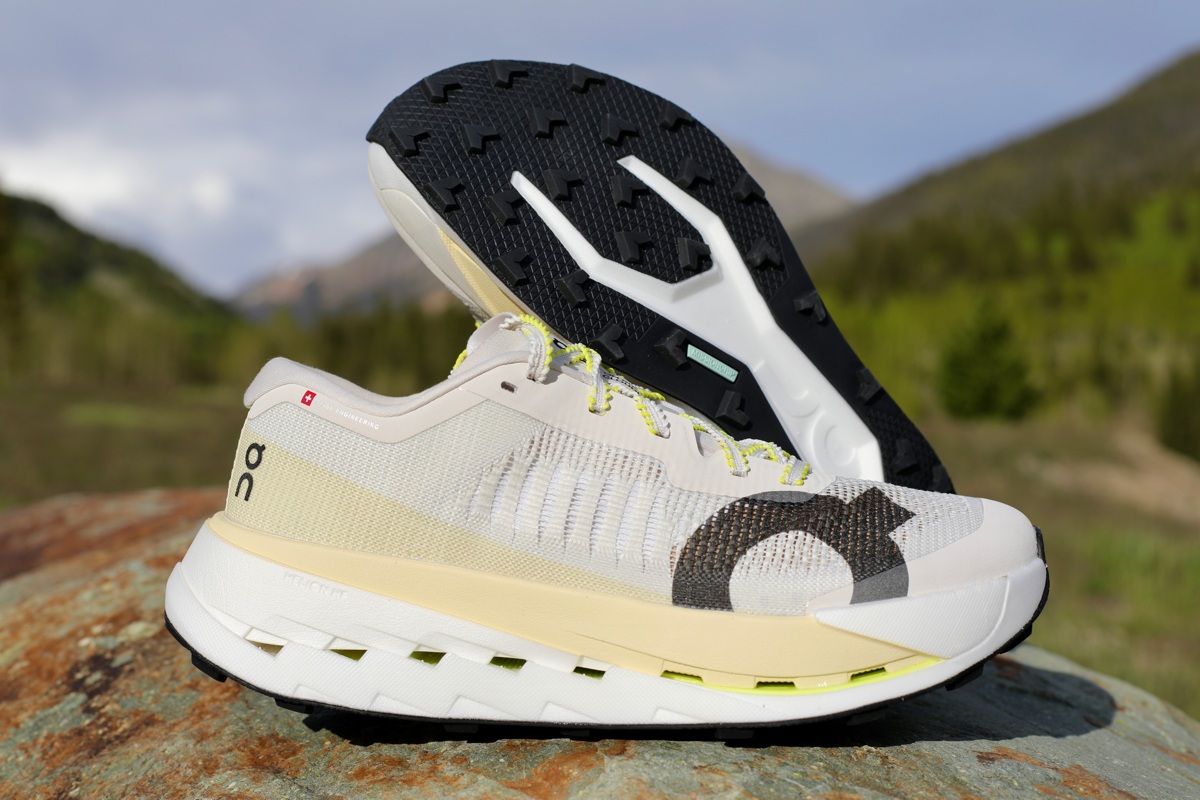
The On Cloudultra Pro.
The On Cloudultra Pro is a comfortable, highly cushioned trail shoe that works well for long runs and daily training on a wide range of terrain. The midsole is soft and protective without feeling disconnected from the ground, and the nylon plate adds a touch of responsiveness while keeping the ride more stable than a full carbon setup. The shoe feels broken in right out of the box and remains comfortable for hours at a time, especially on moderate trails and smoother singletrack.
The upper is breathable and drains well, which makes it a strong choice for warm-weather running. The tradeoff is that the large-pore mesh allows fine dust and water to enter easily, and it would likely struggle in cold or consistently wet conditions. Traction is reliable on everything from dry dirt and gravel to slick mud and wet surfaces, and durability has been solid with no issues in the outsole or upper. The shoe can feel a bit unstable on fast, technical descents due to the plated platform, and runners with wider feet may want to size up a half size for more room in the toebox.
Overall, the Cloudultra Pro is a versatile option for long runs, easy days, and efforts where comfort takes precedence over precision. It handles a mix of terrain well and offers a smooth, protective ride, though it’s less suited to highly technical routes or all-day wet conditions.
For the full story, check out our in-depth On Cloudultra Pro review.
Shop the Men's On Cloudultra ProShop the Women's On Cloudultra Pro
La Sportiva Akasha II ($195)
Actual Weight (U.S. men’s 9): 11.5 ounces (325 grams) | Drop: 6 millimeters
Pros:
- All-day comfort with plenty of protection
Cons:
- The heaviest shoe on this list
- Expensive

The La Sportiva Akasha II.
If you want a set-it-and-forget-it shoe, consider the La Sportiva Akasha II. It’s an all-day, all-mountain, all-the-miles shoe. Underfoot, the Akasha II uses the same midsole and outsole as its predecessor, providing plenty of traction and comfort and offering a ton of durability. While it’s the heaviest shoe on this list, it feels lighter on the foot than its weight would suggest.
On top of that platform sits a moderate-fit upper that successfully blends the midfoot lockdown that’s essential for navigating mountainous terrain with enough give and forgiveness to stay comfortable as long as you want to run. This second version of the Akasha includes minor tweaks to the upper to improve its breathability, durability, and protection simultaneously.
So, if you loved the original Akasha, be sure to try the Akasha II if you’re looking for a trail shoe you never have to think about!
Full La Sportiva Akasha II review.
Shop the Men's La Sportiva Akasha IIShop the Women's La Sportiva Akasha II
Altra Experience Wild 3+ ($165)
Actual Weight (U.S. men’s 9): 9.8 ounces (272 grams) | Drop: 4 millimeters
Pros:
- The wide Altra toebox without zero-drop!
- All day comfort, stable
- Updated Vibram Megagrip outsole
Cons:
- Poor midfoot lockdown on very steep descents
- Overly padded tongue
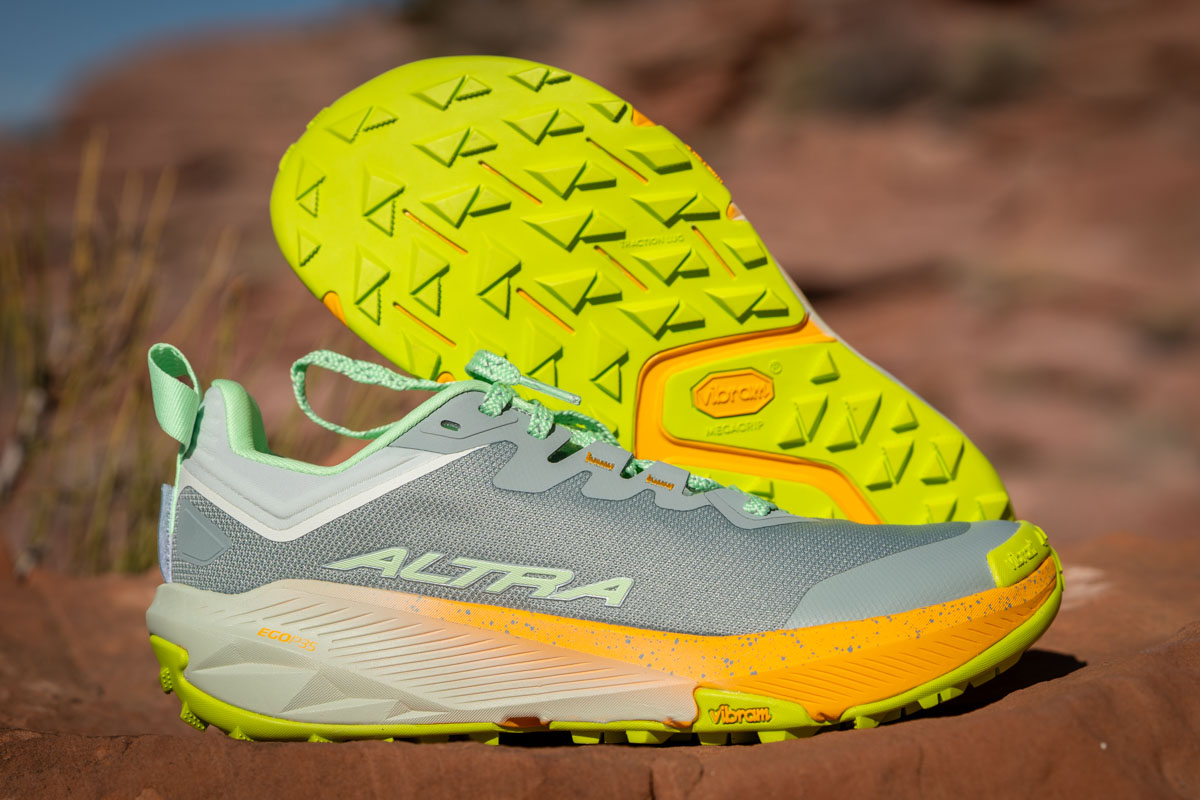
The Altra Experience Wild 3+
As the only non-zero-drop trail shoe in the brand’s lineup, the Altra Experience Wild 3+ offers all the advantages of Altra shoes — including the wide toebox and overall comfort — to those who can’t run in zero-drop shoes. This 4-millimeter drop shoe is a great option for everyday running, especially for those who like low-drop shoes or are curious about zero drop and want to transition gradually.
With this update, Altra released two versions of this shoe: the Altra Experience Wild 3 ($150) and the Experience Wild 3+ ($165), with the biggest difference between the two being the full Vibram Megagrip outsole on the 3+. Given that our biggest gripe with the previous version of the shoe was a slippery outsole, the upgraded rubber is a huge improvement, putting the shoe more into the technical trail runner category.
Like previous versions, this shoe is ideal for longer miles and performs best on terrain that’s not overly steep. True to the construction of many Altra shoes, the upper — especially through the midfoot and forefoot — is relatively unstructured, making midfoot lockdown a challenge. Even when laced tightly, we found that our feet would slip up against the front of the shoe on the steepest descents. It feels like perhaps the shoe is a step away from just a wide toebox and toward a wider shoe in general.
That said, for nearly any other running scenario, the shoe is incredibly comfortable, and the toebox allows for plenty of toe splay. The premium mesh upper material has more structure than the Experience Wild 2, making it more confidence inspiring on off-camber terrain. The heel collar also has a bit more structure and effectively locks the heel in, while the tongue again has ample — and potentially too much — padding against the wide, soft laces.
This isn’t a shoe for extremes — whether on steep and technical trail or fast miles on pavement — but with the new outsole, this shoe can do most things quite well. The new Altra EGO P35 midsole foam feels efficient and comfortable, and the 32-millimeter stack height under the heel provides enough cushion for all but the rockiest terrain. There is significantly less sole flare through the forefoot in this newest version, making it feel less like a clown shoe and more agile in technical terrain, while the gentle rocker allows for a smooth transition through the stride. The beefed-up toe bumper also adds to the overall trail worthiness of the shoe, and the build-in gaiter attachment system makes it easy to add extra protection against debris and sand.
Full Altra Experience Wild 3+ review.
Shop the Men's Altra Experience Wild 3+Shop the Women's Altra Experience Wild 3+
And, for the moment, the Experience Wild 2 is on sale while REI clears out its remaining stock!
Men's Altra Experience Wild Sold Out!Shop the Women's Altra Experience Wild 2
Salomon Speedcross 6 ($150)
Actual Weight (U.S. men’s 9): 10.4 ounces (295 grams) | Drop: 10 millimeters
Pros:
- An outsole and upper combo that works great in sloppy conditions
- Improved fit
Cons:
- Can trap heat and moisture

The Salomon Speedcross 6.
If the Brooks Cascadia is impressive for its longevity, then the Salomon Speedcross line is equally impressive in standing the test of time. Why? Since launching in 2006, the Speedcross is only on its sixth major iteration in over 15 years! It remains a top-performing and top-selling product.
The Speedcross line is special because it combines a well-lugged outsole with a bombproof upper. No matter the terrain or the conditions, you can count on the Salomon Speedcross 6 to get you where you’re going.
The already amazing combination that is the Speedcross was again improved in the Speedcross 6, this time by making the shoe more comfortable. How? Well, Salomon simplified the toebox construction and improved the midsole.
Not only does the Salomon Speedcross 6 now stand up to longer runs, but it’s also still an incredibly durable shoe that’ll withstand many miles.
Full Salomon Speedcross 6 review.
Shop the Men's Salomon Speedcross 6Shop the Women's Salomon Speedcross 6
Guides to More Specialized Trail Running Shoes
While we included some cushioned trail shoes in this guide, we take a deeper dive into this category with our dedicated Best Cushioned Trail Running Shoes guide, which contains a larger set of maximally to moderately cushioned trail running shoes.
We’ve intentionally focused most of our picks above on a wide variety of generalist, everyday trail running shoes. But what if you’re looking for something speedier for a workout, race, or just for fun? Check out our dedicated Best Lightweight Trail Racing Shoes guide to see some fast and furious trail racing models.
And if many of your runs will see you switching from pavement to trail and back again, or you’ll be spending lots of time on dirt roads, take a look at our Best Road-to-Trail Shoes guide for some apropos picks!

Jeff Rome tests the Saucony Peregrine in wet conditions. Photo: iRunFar/Eszter Horanyi
Things to Consider When Choosing Trail Running Shoes
Benefits of Trail Running Shoes
First off, what are trail running shoes, and what are their benefits?
Trail running shoes provide several benefits over road running shoes when you head off-pavement — primarily increased traction, protection, and durability.
Trail shoes often offer more traction than road running shoes by having deeper, more widely spaced outsole lugs that penetrate in mud, snow, dust, and gravel to grip the ground. In addition, a trail shoe’s lugs are often made of a slightly softer and stickier rubber that is grippier on rocks but less durable on pavement.
The extra protection of trail shoes applies to both the top and bottom of the foot. Often, a trail shoe’s upper will have a thicker cap around the toes to offer some protection when you inevitably kick a rock or root. Burlier trail shoes can have more extensive reinforcements and overlays to protect the top of your foot.

Bryon Powell testing out a variety of trail running shoes. Photo: iRunFar/Meghan Hicks
Unlike road surfaces, the variability of trails can lead to rocks or roots poking through and irritating or injuring the bottom of your feet. Rock plates, found on many trail shoes, can provide push-through protection against sharp objects on the trail. Trail shoes with thick midsoles or very deep lugs might skip a rock plate if those components provide adequate separation between the trail and the sole of the foot.
When used for their intended purpose of running on trails, trail running shoes can be more durable than their road running cousins. This increased durability is primarily achieved through material choice and construction patterns in the upper. First, the choice of the primary material, whether it be mesh, a knit material, or something else, is often selected for its ability to withstand the conditions that trails throw at it. Second, fabric or thin-film overlays are applied over areas of the shoe’s upper that are more susceptible to wear, such as flex points in the front of the shoe or any area more likely to collect and self-abrade with dirt.
Separately, some trail shoe outsoles are constructed in a way that reduces the likelihood of detaching from the midsole, which is less of a consideration for road shoes.

The Brooks Cascadia is goat-approved. Photo: iRunFar/Annie Behrend
Size and Fit
How should you choose the size of your trail running shoes? If you already own a pair of running shoes or other athletic shoes, you can start by trying the size that works for you with those, particularly if you’re sticking with the same brand.
In general, you’ll want roughly a thumb’s width between the end of your longest toe and the end of your shoe. Much less, and you could end up with blisters under your toenails as well as a greater chance of injuring a toe when you kick an obstacle.
If you have too much extra room, you’ll be more prone to sliding around in your shoe, which is unpleasant on uneven terrain, and you’ll be more likely to catch your toe on a rock or root.
Once you’ve got the length dialed in, ensure you can achieve a snug fit across the midfoot, from the front of the ankle to just behind your toes. This midfoot lockdown is important for keeping your foot firmly atop the outsole while making any lateral motions navigating the trail and when climbing and descending steep sections of trail.
Folks also have heels with varying volumes, so once your midfoot is locked down, you’ll want to see that your heel doesn’t move too much side to side or up and down relative to the shoe.
Finally, there’s the toebox, which is the forward cavity of a shoe where your toes go. Some people prefer generous toeboxes like those found in Altra and Topo shoes, such as the Altra Lone Peak 9, Altra Experience Wild 3+, or Topo Ultraventure 4, while others prefer a more moderate toebox. Toeboxes tend to be narrower in trail shoes aimed at faster or more technical running.
Toebox size is a matter of personal feel and preference. Some shoes, particularly specialist shoes meant for shorter-distance racing, very technical terrain, or very steep conditions, may have a more precise fit in the toebox, but you still don’t want your toes smashed together.
If you’re aiming for ultra-distance efforts, you might choose a shoe that has at least moderate room for your toes to wiggle in the toebox, as well as a midfoot lockdown that’s less aggressive and more forgiving as your feet start to swell after hours on the trail.
Should you size up in trail running shoes? In most cases, you should not size up — at least in comparison to other athletic shoes. You want a trail shoe that locks your foot in place with a proper fit, and that’s not too long, such that you could more easily catch a toe on obstacles.
A decade ago, a person might have gone a half size up in trail running shoes, as some brands had only precise fits that were great when running fast on trails or navigating technical terrain, but were less forgiving in more relaxed trail running situations. Now, almost every brand offers trail shoes in various fits, so you can choose more accommodating models rather than moving up half a size. That said, we here at iRunFar are quick to note when specific models, like the La Sportiva Prodigio Pro, definitely warrant going up half a size, or whether someone on the edge of sizes might want to err on the high or low side.
Although it has become increasingly rare with the proliferation of trail shoes that offer more accommodating fits, occasionally an ultrarunner may pack a pair of trail shoes that are a half size up for events of half a day or longer to help cope with swelling feet, although such shoes are rarely used in practice.

Meghan Hicks testing trail running shoes in New Zealand’s scenic Matukituki Valley. Photo: iRunFar/Bryon Powell
Heel-to-Toe Drop
Heel-to-toe drop, or more simply, drop, refers to the difference in height from the heel to the toe of a shoe. Currently, heel-to-toe drop in trail shoes varies from 0 to 12 millimeters. Among runners, you might as well ask about religion, sex, or politics before asking for opinions on heel-to-toe drop. However, we firmly believe that the right answer is what works for you.
There’s an appealing argument that humans’ natural biomechanics are based on no heel-to-toe drop, as found in the Altra Lone Peak 9. This is an easier proposition for younger runners, those gradually easing into running, or those accustomed to no-drop or low-drop shoes, such as the Altra Experience Wild 3+ at a 4-millimeter drop or the Saucony Peregrine 16 or Topo Ultraventure 4, both at a 5-millimeter drop.
Individuals with a longer history of running in traditional running shoes may want to stick to trail shoes with a higher 8- to 12-millimeter drop, such as the Nike ACG Pegasus Trail or Salomon Speedcross 6, or gradually transition down to lower-drop shoes if desired. These days, most trail shoes feature moderate drops of 6 to 8 millimeters, such as the Brooks Cascadia 19, Inov8 TrailTalon, or La Sportiva Prodigio Pro, which appear to work well for a wide range of runners.
It’s worth noting that the small but growing number of trail shoes with thick, highly rockered midsoles can lessen the traditional applicability of heel-to-toe drop numbers. Such models include the Hoka Speedgoat 7, Hoka Tecton X 3, and On Cloudultra Pro.

Bryon Powell running in some zero-drop Altra Lone Peaks. Photo: iRunFar/Meghan Hicks
Lugs
Lugs refer to the protrusions of material on the bottom of a shoe’s outsole. While road running shoes often have minimal lugs, trail shoes generally have lugs that are 3 to 6 millimeters deep, like the Saucony Peregrine 16. Some trail shoes designed specifically for muddy conditions can have lugs as deep as 8 to 12 millimeters! Take a look at the Inov8 MudTalon Speed and our full guide to the best trail running shoes for mud, perfect for the luggiest of trail conditions.
Let’s zoom out to consider how deep our trail running shoe’s lugs should be.
This is a classic “it depends” question. Keep in mind that good technique can make running in mud more effective, and shoes with lugs that are 5 to 6 millimeters tall and more widely spaced can be great for wet, muddy, or otherwise sloppy conditions.
Most other trail shoes will have 3- to 5-millimeter lugs that are a bit more closely spaced and work in a great variety of conditions, such that unless you live in a notoriously wet environment, they are likely to work as your everyday trail shoe.
For extreme muddy conditions, there are a few trail shoes with widely spaced 7- to 8-millimeter lugs that are primarily suitable for steep climbing and descending in very wet and muddy terrain, and are likely a specialist addition to one’s quiver of trail shoes. There are even shoes for fell running in the U.K. with 12-millimeter lugs!

Bryon Powell putting the lugs of the Brooks Catamount to the test. Photo: iRunFar/Meghan Hicks
Midsole Cushioning
The midsole is the spongy component between the outsole and your foot. These days, midsoles are made from a wide variety of foams, ranging from minimal thickness to nearly 3 centimeters of material. For more midsole cushion, consider the Hoka Speedgoat 7, Hoka Tecton X 3, or On Cloudultra Pro. We’ve also got an entire guide dedicated to helping you find the best cushioned trail running shoes.
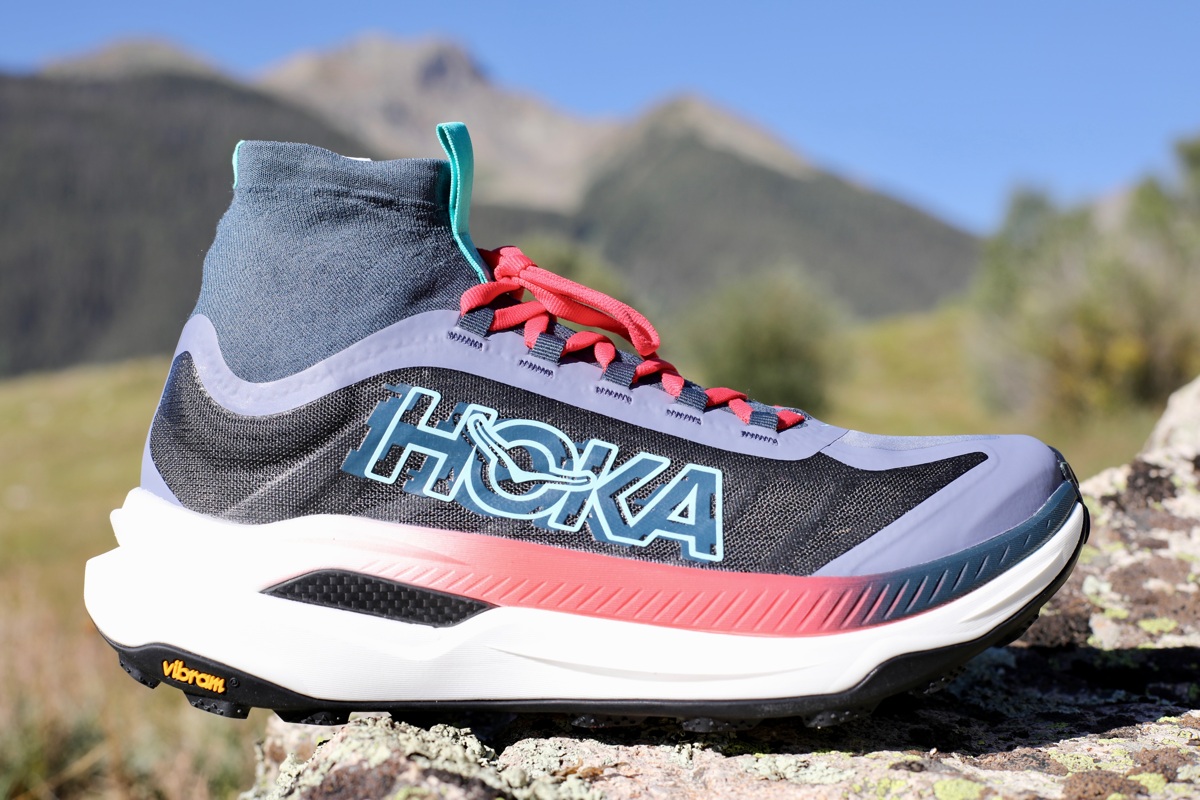
The generous midsole of the Hoka Tecton X 3. Photo: iRunFar/Bryon Powell
Rock Plate
A rock plate is a layer of deformation-resistant material, whether a plastic sheet, carbon plate, or other, that sits somewhere between a shoe’s outsole and the sock liner (aka, insole). The rock plate aims to prevent injury to the bottom of the foot as rocks or roots push through the shoe from below. Rock plates vary in length from the entire length of a shoe to the forefoot only.
Traditionally, rock plates were a staple feature of trail running shoes. Even today, a strong majority of trail running shoes have some sort of rock plate that runs from the forefoot through at least the midfoot, if not the entire length of the shoe.
With the rise of highly cushioned trail running shoes, brands have begun to eliminate rock plates from many of these models, as the shoes’ cushioning provides sufficient foot protection. On the other end of the spectrum, some racing-oriented models omit rock plates both for weight savings and to allow for a more natural ground feel.
Waterproof Shoes
Should I buy waterproof trail running shoes? In most cases, you shouldn’t buy waterproof trail running shoes for your trail runs. If it’s snowy or rainy, waterproof shoes can be more comfortable for walking down the street, shoveling the sidewalk, or doing yard work. On the other hand, there are pretty limited conditions where waterproof shoes will keep your feet dry when running.
Waterproof shoes may keep your feet dry if it’s not raining but there’s some moisture on the ground, such as dew or shallow puddles. Likewise, a waterproof shoe can keep your feet dry if you’re running when an inch or two of snow is on the ground.
If it’s actually raining, water will run down your leg, into the shoe through the ankle collar, and stay in your shoe with nowhere to drain. This same scenario would occur when running in anything more than a few inches of snow, unless you’re wearing running gaiters. Waterproof shoes are similarly futile if the temperature is much more than 50 degrees Fahrenheit outside, as foot sweat will collect in your shoes and lead to wet feet.
One side benefit of waterproof shoes is that they can add a bit of warmth if it’s cold or windy. However, after a couple of hours of running in cold and dry conditions, you may still end up with damp running socks due to foot sweat. Still, whether your feet are wet or dry, waterproof shoes can keep your feet a bit warmer.
If you feel the need for waterproof trail shoes, many of the most popular trail shoe models come in a waterproof version, including the Altra Lone Peak 9 Waterproof, Brooks Cascadia 19 GTX, Nike Pegasus Trail 5 Gore-Tex, and Salomon Speedcross 6 Gore-Tex.

Meghan Hicks of iRunFar testing trail shoes high in Colorado’s San Juan Mountains.
Frequently Asked Questions about Trail Running Shoes
Can I use trail shoes on the road?
Yes, you absolutely can use trail shoes on the road. In fact, for more than a decade, iRunFar founder Bryon Powell did nearly all of his road running in trail shoes. While road shoes are better optimized for pounding the pavement, a strong majority of trail shoes will perform just fine. In fact, many trail runners routinely have on-road stretches somewhere during their “trail runs.”
The main downsides of taking trail shoes onto the tarmac are slightly faster outsole wear and, sometimes, an uncomfortable ride. For the most part, trail shoes have a softer outsole compound than road shoes. This tradeoff yields better grip on off-road surfaces, at the cost of less abrasion resistance. A subset of trail shoes have fairly aggressive lug patterns. Deeper and more widely spaced lugs that are an asset on soft terrain aren’t usually as comfortable on road stretches with a more disjoined forward roll and the discomfort from the discrete lugs pushing upward into the shoe.
There are shoes marketed as road-to-trail, hybrid, or gravel shoes, and these should generally be comfortable on road as well as off it. However, to reiterate, plenty of standard trail shoes will fair just fine on the roads, with the Nike ACG Pegasus Trail our top pick in this regard. If you’re looking specifically a shoe that can handle a variety of surfaces, you can check out our guide to the Best Road-to-Trail Shoes.
How many miles should trail shoes last?
Once you find a brand and model that work for you, it’s reasonable to aim to run 400 to 500 miles in a pair of trail shoes with an upper limit 100 or so miles beyond that. While you may hear anecdotes of people getting 800 or even 1,000 miles out of the pair of shoe, they’re likely dealing with decreased performance and increased injury risk at that point. Some racing-oriented trail shoes explicitly make tradeoffs that decrease durability and lifespan.
- Expected Lifespan: 400–500 miles
- Upper Limit: 600 miles
- Signs of Retirement: Midsole compression, lug wear, or “dead” feel.
A host of factors can decrease the expected lifespan of trail shoes including more abrasive environments, off-trail use, higher body weights, and inefficient gaits
You can often gain some extra miles out of a pair with good maintenance. That can include a quick rinse after a particularly muddy run, rotating between different pairs of shoes, and quickly drying your shoes after your runs.
Waterproof or Breathable: Which is Better?
The iRunFar Test Team has a near unanimous consensus that there’s no use in having waterproof trail shoes. Whether you’re dealing with stream crossings, deep puddles, or rain, water will find a way to get into your trail shoes and, if they have a waterproof membrane, the water won’t have an easy easy out creating a fishbowl effect. On the other hand, a trail shoe built with a breathable upper material and hydrophobic (water-hating) materials will help your shoe hold onto less water and more quickly let out the water that does get into the shoe.
While there are arguably some fringe use cases for waterproof trail shoes, those instances are so rare that we don’t test waterproof trail shoes. Those fringe cases might involve morning dew on short grass, shallow puddles, or running through a couple inches of snow as well as the providing some warmth as a wind and vapor barrier in extremely cold temperatures.
How Should Trail Shoes Fit Compared to Road Shoes?
Most runners wear the same size road and trail shoes. A runner on the edge of sizes might skew the half size up in trail shoes to allow for a bit more space between the front of one’s toes and the front of the shoe, both for a bit more shoe between any kicked obstacles and one’s toes as well as more spare room in the toe box in case one’s feet shifts forward during descents.
Do not automatically buy a half or full size up in trail shoes, especially if you’ll be encountering steep descents. Have a too-large-for-you shoe can mean you feet shift forward in the now too voluminous shoe on steep descents leading to one’s toe banging into the front of the shoes, which is exactly when this move was meant to prevent.
Ultramarathon runners may have a spare pair of shoes that are intentionally a half size larger to wear in the later portions of a race if they encounter foot swelling or another issue that the extra space might address.
What’s a Rock Plate and Do I Need One?
A rock plate is a piece of plastic, fabric, or other material found somewhere between a trail shoe’s outsole and insole meant to provide push through protection such that sharp rocks or other objects don’t bruise or otherwise irritate the bottom of one’s feet. With the ever growing stack heights of trail shoes, rock plates are becoming less common as the combination of a thick midsole and outsole provide enough inherent protection to make a rock plate redundant. On the other hand, lower stack height shoe will often still use a rock plate.
Why You Should Trust Us
Led by iRunFar founder and Gear Editor Bryon Powell, the team at iRunFar has tracked and tested the best trail running shoes available since 2008.
Starting with a database of over 300 dedicated trail running shoes currently available on the market, the 12 dedicated members of the iRunFar Test Team lace up more than 100 models of trail running shoes every year before logging tens of thousands of miles and millions of vertical feet across a wide range of geographies worldwide to compile the list of our top picks.
We’ve created this guide using the iRunFar Test Team’s over 100 years of combined trail running shoe testing experience, additional insights from iRunFar’s other expert writers, extensive research, and the input of hundreds of iRunFar readers. We aim to balance the incredibly in-depth experiences of our team with the broader experience of the trail running world to develop an even fuller picture of what’s actually performing the best in the field.
With the frequent release of new trail running shoes and even more frequent revision of existing models, this is a living document. We’re continually testing dozens of models of trail shoes. We update this guide as often as our expert team updates its thoughts on the best trail shoes available! Want proof? We likely have full reviews for well over 50 trail shoes currently on the market… and those are only our favorite shoes!
Any model added to this guide for the first time has been tested for at least 100 miles, and often a few hundred miles. We will update this guide based on after few as 50 miles of testing, but only when a listed model received an incremental update, one or more testers has verified the new model is worthy of continued inclusion, and their testing has focused on the real world performance of known feature updates. Most often, this testing is done my the Test Team member who reviewed the previous model and any shorter duration updates are subject to continued testing.

Byron Powell has been geeking out on trail shoes for a couple of decades! Photo: iRunFar/Meghan Hicks